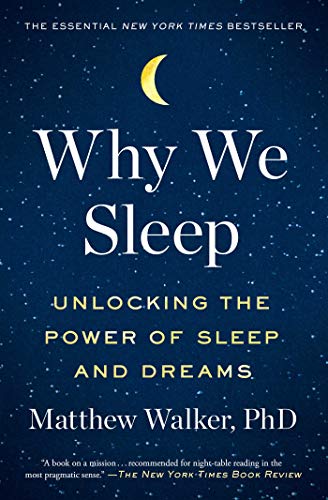
⚡️ What is Why We Sleep About?
I used to think that sleeping four or five hours a night was a badge of honor, a sign that I was outworking everyone else. Then I read this book, and honestly? It scared the life out of me. Matthew Walker, a neuroscientist who has dedicated his career to the study of slumber, makes a case so airtight and terrifying that you’ll want to go to bed immediately after reading the first chapter. He argues that we are currently in the midst of a silent sleep loss epidemic that is quite literally killing us. More summaries by Matthew Walker
The central thesis of the author’s case is that sleep isn’t a luxury or even just one of the three pillars of health alongside diet and exercise. It’s the foundation upon which those other two pillars sit. Whether it’s your immune system’s ability to fight off cancer, your brain’s capacity to learn new information, or your heart’s ability to keep pumping, everything is regulated by those eight hours of shut-eye we so casually discard. If you enjoy science book summaries that challenge your daily habits, this is the ultimate wake-up call.
🚀 The Book in 3 Sentences
- Sleep is the single most effective thing we can do to reset our brain and body health each day, acting as a biological dishwasher for the brain.
- Chronic sleep deprivation (getting less than 7–8 hours) is linked to every major killer in the developed world, including Alzheimer’s, cancer, obesity, and diabetes.
- Society’s structural neglect of sleep—through early school start times and “hustle culture”—is creating a public health crisis that costs billions in lost productivity and lives.
🎨 Impressions
Reading this book felt like being sat down by a very concerned, very brilliant friend who tells you that you’ve been doing everything wrong for twenty years. Walker doesn’t pull his punches. I found myself dog-earing pages every few minutes because the statistics are just that staggering. Did you know that when daylight savings time steals just one hour of sleep from us in the spring, there’s a 24% spike in heart attacks the following day? That’s not a coincidence; it’s a direct physiological response to sleep loss.
I’ll be honest: there were moments where the tone felt almost too alarmist. It’s the kind of book that can actually keep you awake at night worrying about not sleeping, which is a bit ironic. However, the sheer volume of peer-reviewed data makes it impossible to dismiss his claims. It’s changed how I look at my phone after 9 PM and how I schedule my morning workouts. It’s rare for a book to fundamentally alter my daily schedule, but this one did it within the first fifty pages.
📖 Who Should Read Why We Sleep?
If you’re an ambitious professional who thinks you can “catch up on sleep at the weekend,” you need this book immediately—mostly because Walker proves that “sleep debt” isn’t something you can ever truly pay back. Parents of teenagers should also pay close attention, as the chapters on school start times and adolescent brain development are eye-opening. However, if you already suffer from severe clinical insomnia, tread carefully; some of the more dire health warnings might spike your anxiety and make it even harder to drift off.
☘️ How This Book Changed My Thinking
Before reading Why We Sleep, I viewed sleep as a negotiable commodity—something I could trade for extra work or social time. Now, I treat my eight-hour sleep window as a non-negotiable medical appointment. I stopped thinking of sleep as “off-time” and started seeing it as the most active, productive state my brain enters all day.
- I quit the “morning hero” routine of waking up at 5 AM when I didn’t get to bed until midnight; the extra hour of sleep is worth more than the extra hour of emails.
- I became much more empathetic toward my own moods, realizing that my irritability or lack of focus is usually just a biological cry for more REM sleep.
- I installed blackout curtains and adjusted my thermostat to 65°F (18.3°C), because I finally understood that temperature is just as important as light for triggering sleep.
✍️ 3 Quotes That Stuck With Me
- “The shorter your sleep, the shorter your life.” — This is the book’s thesis in seven words, and it’s haunted me ever since I read it.
- “Sleep is the single most effective thing we can do to reset our brain and body health each day — our mother nature’s best effort yet at contra-death.” — It frames sleep as a survival mechanism rather than a passive state.
- “Humans are the only species that deliberately deprive themselves of sleep without any apparent gain.” — A stinging reminder of how our modern culture works against our biology.
📒 Summary + Notes
The book’s narrative arc moves from the biological mechanics of sleep to the devastating consequences of its absence, finally ending with a roadmap for a more rested society. Walker starts by dismantling the myth that we can survive on six hours. He explains that your brain needs both NREM (Non-Rapid Eye Movement) sleep for physical repair and memory pruning, and REM sleep for emotional processing and creativity. You can’t just have one or the other; you need the full cycle to function as a human being.
As the author’s case builds, he connects the dots between our lack of sleep and the rise in Alzheimer’s disease. During deep sleep, a “glymphatic system” opens up in the brain to wash away metabolic waste, including the amyloid plaques associated with dementia. When you skip sleep, you’re effectively skipping your brain’s nightly cleaning service. By the end of the book, you realize that our current societal structure—early school times, late-night blue light, and caffeine addiction—is a recipe for a slow-motion health disaster.
🧠 Core Ideas Explained Simply
Sleep is a complex biological process, but Walker breaks it down into a few levers you can actually control.
The Two-Force Model (Adenosine vs. Circadian Rhythm)
Why do you feel tired at night? It’s a tug-of-war between two different systems. Adenosine is a chemical that builds up in your brain every second you’re awake, creating “sleep pressure.” Meanwhile, your Circadian Rhythm is an internal clock that signals alertness based on light. Caffeine works by temporarily blocking the adenosine receptors—it doesn’t remove the pressure, it just hides the signal. This is why you crash when the caffeine wears off; the adenosine has been piling up the whole time you were “awake.”
REM Sleep as Emotional First Aid
Ever noticed how a problem seems less world-ending after a good night’s sleep? That’s REM sleep at work. Walker describes it as a form of “overnight therapy” where the brain processes difficult emotions while stripping away the painful “sting” of the memory. Without enough REM, your amygdala (the brain’s emotional center) becomes 60% more reactive. Are you actually angry at your coworker, or did you just miss your last 90 minutes of REM sleep this morning?
The Night Owl Survival Strategy
Society loves to reward early risers, but Walker reveals that being a “night owl” isn’t a character flaw—it’s genetic. Evolutionarily, it made sense for a tribe to have different sleep schedules so that someone was awake and alert for predators during more of the 24-hour cycle. When we force night owls to start work at 8 AM, we are effectively giving them permanent jet lag and causing long-term damage to their cardiovascular systems.
1: To Sleep…
Ever wondered why every living species sleeps despite it being an evolutionary “mistake” where you can’t hunt or mate? Walker opens by highlighting the absurdity of sleep from a survival standpoint, only to flip the script: it must be the most important function we have if it survived the brutal filter of evolution. He introduces the fact that there isn’t a single organ in the body or process in the brain that isn’t optimally enhanced by sleep or detrimentally impaired by its lack.
2: Caffeine, Jet Lag, and Melatonin
Think of your sleep drive as a biological hourglass. This chapter is the one that will make you rethink your 4 PM espresso. Walker explains how adenosine builds up and how caffeine masks that build-up, leading to a massive crash once the drug is metabolized. He also clarifies that melatonin is not a sleep-generator but a sleep-signaler—the “master of ceremonies” who starts the race but doesn’t actually run it.
3: Defining and Generating Sleep
If you could peek inside a sleeping brain, you’d see two entirely different worlds battling for dominance. Walker breaks down the architecture of sleep: NREM and REM. He makes a crucial point: the brain does different things at different times. Deep NREM dominates the first half of the night, while REM dominates the second. If you wake up two hours early, you aren’t just losing 25% of your sleep; you might be losing 60% to 90% of your REM sleep.
4: Ape-ing Around
Why did humans move from sleeping in trees to sleeping on the ground? This shift was the catalyst for our massive brain growth. Sleeping on the ground allowed for much deeper REM sleep because we didn’t have to worry about falling out of a tree. This “REM-rich” sleep fueled our creativity and social complexity, separating us from other primates who still sleep in the canopy.
5: Changes in Sleep Through the Life Span
Sleep isn’t a static requirement that stays the same from birth to death. Walker tracks how sleep changes from the womb (where we spend almost all our time in a REM-like state) to old age. He dispels the myth that elderly people need less sleep; they simply struggle to generate the sleep they need, which contributes to cognitive decline. He also makes a passionate plea for letting teenagers sleep in, noting that their biological clocks are naturally shifted later.
6: Your Mother and Shakespeare Knew
“Sleep on it” isn’t just a cliché; it’s a neurological necessity. This chapter highlights sleep’s role in memory. Before learning, sleep prepares your brain to soak up new information. After learning, sleep “saves” those memories so you don’t forget them. Walker shares studies showing that sleep can even help you solve problems you couldn’t crack while awake by making new connections between distant ideas.
7: Too Extreme for the Guinness Book of World Records
What happens when you push the human body past its breaking point? Walker recounts the terrifying story of Peter Tripp, a DJ who stayed awake for 201 hours and suffered permanent psychological damage. The most chilling takeaway here is that sleepy people don’t know how sleepy they are. Your brain lies to you, telling you that you’re “fine” to drive when your reaction times are actually worse than if you were legally drunk.
8: Cancer, Heart Attacks, and a Shorter Life
Imagine a slow-motion car crash happening inside your arteries every time you pull an all-nighter. This is the heavy-hitter chapter. Walker links sleep deprivation to:
- A 200% increase in the risk of a fatal heart attack.
- The suppression of “Natural Killer Cells” that attack cancer.
- A complete disruption of blood sugar levels, putting you in a pre-diabetic state after just one week of short sleep.
9: Routinely Psychotic
Dreaming is arguably the most creative state the human brain can enter. Walker explains that during REM sleep, the brain is actually more active in some areas than it is during the day. He describes dreaming as a state of “regulated psychosis” where we see things that aren’t there, believe things that couldn’t happen, and lose our sense of time—all within a safe, paralyzed body.
10: Dreaming as Creative Therapy
Can a dream act as a form of overnight therapy? Walker presents evidence that dreaming about a traumatic event helps us move past it. It’s the only time our brain is completely devoid of the anxiety-triggering molecule noradrenaline. This allows us to re-process upsetting memories in a calm, safe chemical environment, effectively “healing” us while we sleep.
11: Dream Control
Is it possible to stay conscious while you’re deep in a dream? Walker touches on lucid dreaming, confirming that it is a real, scientifically verifiable phenomenon. While it’s a fascinating area of study, he notes that most people don’t do it, and its evolutionary purpose is still being debated. It’s one of the few places in the book where he admits we still have much to learn.
12: Things That Go Bump in the Night
For some, the transition into sleep isn’t a peaceful slide but a terrifying glitch. This chapter covers insomnia, sleepwalking, and the heartbreaking condition known as Fatal Familial Insomnia, where a person simply stops being able to sleep and eventually dies. Walker uses these extremes to show just how delicate and vital the sleep architecture is.
13: iPads and Nightcaps
We are the first species to ever deliberately deprive ourselves of sleep for no apparent gain. This chapter looks at the modern environment: LED screens, alcohol, and central heating. Alcohol is a particular villain here; it doesn’t help you sleep, it just sedates you, which is not the same thing. It effectively wipes out your REM sleep, which is why you feel like a zombie the day after a few drinks.
14: Hurting and Helping Sleep
Our schools and offices are essentially designed to make us sick through sleep deprivation. Walker argues that the medical profession is one of the worst offenders, with resident doctors working 30-hour shifts. He cites a shocking statistic: doctors on these shifts are 460% more likely to make serious diagnostic errors than those on a well-rested schedule. Why are we trusting our lives to people who are biologically impaired?
15: Sleep and Society
How much is a sleepy workforce costing the global economy? Billions. Walker suggests that companies should reward sleep rather than punishing it. He envisions a world where “sleep tracking” is integrated into health insurance and where city lighting is designed to protect our circadian rhythms. It’s an optimistic look at how we could solve this crisis if we treated it with the seriousness of a pandemic.
16: A New Vision for Sleep in the Twenty-First Century
What would a world look like if we actually prioritized our biological needs? In this final chapter, Walker summarizes his “Sleep Bill of Rights.” He leaves us with a simple but profound thought: the bridge between despair and hope is often just a good night’s sleep. The book ends not with a warning, but with an invitation to reclaim the most powerful health-insurance policy known to man.
⚖️ A Critical Perspective
While Why We Sleep is a masterpiece of science communication, it’s not without its critics. Some researchers, notably Alexey Guzey, have pointed out that Walker occasionally exaggerates the data to make a point—for instance, the claim that “short sleep kills you” doesn’t always account for the fact that some people are naturally short sleepers due to a rare genetic mutation. Additionally, the book can be quite prescriptive; it doesn’t offer much solace for those with chronic insomnia other than telling them how dangerous their condition is, which can lead to “orthosomnia” or anxiety about getting perfect sleep. It’s a brilliant book, but remember that the “8-hour rule” is a biological average, not a rigid law for every single human being.
🔄 How It Compares
Compare this to Arianna Huffington’s The Sleep Revolution. While Huffington focuses on the cultural and personal narrative of burnout and recovery, Walker provides the hard-core neurobiological evidence. If Huffington’s book is the “why” from a lifestyle perspective, Walker’s is the “how” and “what” from a laboratory perspective. It is significantly more dense and scientific than most popular sleep books.
🔑 Key Takeaways
If you take nothing else away, let these four shifts in perspective change your night tonight.
- The “Sleep Window” is more important than the “Sleep Length”—going to bed and waking up at the same time every day, even on weekends, is the #1 way to improve sleep quality.
- Caffeine has a half-life of about 6 hours; that coffee at 4 PM means 25% of the caffeine is still swirling in your brain at midnight.
- Physical cooling is the biological trigger for sleep; your core temperature needs to drop by about 2–3 degrees Fahrenheit to initiate slumber.
- Sleep is the only time your brain’s “waste management system” (the glymphatic system) turns on to clear out the toxins that lead to Alzheimer’s.
💬 Frequently Asked Questions
What is the main argument of Why We Sleep?
Matthew Walker argues that sleep is the most vital biological function for human health. He demonstrates that chronic sleep deprivation—anything less than 7–8 hours—is a leading cause of cancer, Alzheimer’s, and heart disease, and that modern society is currently suffering from a lethal sleep loss epidemic.
Can you really catch up on sleep on the weekends?
No, the brain has no capacity to store a sleep debt and pay it back later. While sleeping in on Saturday might make you feel slightly better, it doesn’t reverse the biological damage or the lost memory consolidation that occurred during the week’s sleep-deprived nights.
Is Why We Sleep worth reading?
Absolutely, though with a caveat. It is one of the most important health books of the last decade, but it can be very alarming. If you’re looking for a scientific reason to change your lifestyle, it’s perfect; if you’re a high-anxiety insomniac, it might be a bit overwhelming.
What are the best tips for better sleep according to Matthew Walker?
The two most impactful tips are regularity (going to bed and waking up at the same time every day) and keeping your bedroom cool (around 65°F or 18°C). He also recommends avoiding caffeine after noon and dimming lights an hour before you plan to sleep.
Why is blue light from phones bad for sleep?
Blue light mimics daylight, which tricks the pineal gland into suppressing the release of melatonin. Even a short glance at a screen can delay the onset of melatonin by several hours, making it significantly harder for your brain to realize it is time to transition into sleep.
Conclusion
At the end of the day, Why We Sleep is more than just a science book; it’s a manifesto for a different way of living. It forces you to confront the reality that we are biological creatures with non-negotiable needs. You can’t “hack” your way out of needing eight hours of rest, no matter how many productivity gurus tell you otherwise. The author isn’t trying to sell you a supplement or a fancy mattress; he’s trying to give you back the life-extending power that you already possess for free.
If there’s one thing you should remember, it’s this: sleep is the price we pay for the ability to be awake, alert, and healthy. Every time you cut your sleep short, you are borrowing from your future self—and the interest rates on that loan are high enough to kill you. So, finish this summary, put your phone in another room, and go to bed. Your brain will thank you in the morning. This is the end of my look at this transformative science book—I hope it helps you rest easier tonight.
More From Matthew Walker →
Discover more from AI Book Summary
Subscribe to get the latest posts sent to your email.