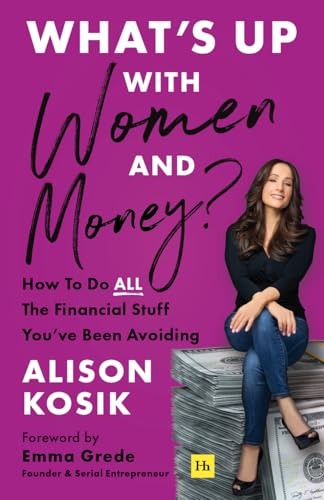
⚡️ What is What’s Up With Women and Money? about?
What’s Up With Women and Money? is a comprehensive guide addressing the unique financial challenges women face throughout their lives. Authored by financial experts Jean Chatzky and Sharon Epperson, this book dives deep into the gender wealth gap, examining societal, psychological, and systemic barriers that hinder women’s financial progress. Through research-backed insights and real-life stories, the authors provide actionable strategies for overcoming these obstacles, building confidence, and achieving financial independence. The book covers everything from closing pay gaps and investing wisely to navigating major life transitions like marriage, motherhood, and widowhood.
🚀 The Book in 3 Sentences
- What’s Up With Women and Money? reveals the systemic and psychological barriers creating the gender wealth gap and provides practical solutions to overcome them.
- The book empowers women with essential financial knowledge and confidence-building techniques to take control of their money at every life stage.
- By addressing both external challenges and internal mindsets, it offers a roadmap for women to build lasting wealth and financial security.
🎨 Impressions
I found What’s Up With Women and Money? to be an eye-opening and empowering resource that addresses crucial financial issues often overlooked in traditional finance literature. Chatzky and Epperson masterfully blend research with relatable stories, making complex topics accessible while maintaining a supportive tone. The book’s focus on actionable strategies rather than just statistics makes it particularly valuable for women seeking practical solutions to their financial challenges.
📖 Who Should Read What’s Up With Women and Money??
This book is essential reading for women at any financial stage who want to understand and overcome gender-specific money challenges. It’s particularly valuable for young women starting their careers, mothers balancing family finances, women navigating divorce or widowhood, and anyone seeking to build long-term wealth. The strategies outlined are especially helpful for women who feel intimidated by investing or financial planning.
☘️ How the Book Changed Me
Reading What’s Up With Women and Money? transformed my approach to personal finance by helping me recognize and address my own unconscious biases about money.
- I became more proactive in negotiating salary increases and advocating for my worth at work using the book’s negotiation techniques.
- I started investing more confidently after understanding how my risk tolerance was influenced by societal conditioning rather than personal preference.
- I established a financial community with other women, creating accountability and support for long-term wealth building.
✍️ My Top 3 Quotes
- “Financial confidence isn’t about knowing everything—it’s about knowing you can figure things out and ask for help when needed.”
- “The gender wealth gap won’t close on its own; women must become intentional about building wealth and challenging systemic barriers.”
- “Money isn’t just about numbers—it’s about values, choices, and the life you want to create for yourself and future generations.”
📒 Summary + Notes
What’s Up With Women and Money? provides a comprehensive framework for understanding and overcoming the unique financial challenges women face. The authors combine research, personal stories, and actionable strategies to address everything from pay gaps to retirement planning. Each chapter builds on the previous one, creating a complete roadmap for financial empowerment that addresses both practical skills and psychological barriers.
Chapter 1: The Financial Gender Gap
This chapter establishes the foundation by examining the stark statistics behind the gender wealth gap. The authors reveal how women earn less, invest less, and retire with significantly less money than men. They explore the systemic factors contributing to this gap, including workplace discrimination, caregiving responsibilities, and societal conditioning around money. The chapter emphasizes that understanding these disparities is the first step toward overcoming them.
- Women control about one-third of global wealth yet face unique challenges in accumulating it
- The motherhood penalty significantly impacts lifetime earnings and wealth potential
- Financial literacy gaps begin early and compound over women’s lifetimes
Chapter 2: Building Financial Confidence
The authors address the confidence gap that often holds women back financially. They explore how societal messages and personal experiences shape women’s relationships with money, frequently leading to hesitation in financial decision-making. The chapter provides practical exercises for building financial self-assurance and overcoming money fears. It emphasizes that confidence comes from knowledge and experience, not inherent talent.
- Financial confidence is a skill that can be developed through education and practice
- Women often underestimate their financial knowledge and abilities compared to men
- Small, consistent actions build momentum toward greater financial empowerment
Chapter 3: Mastering Money Fundamentals
This chapter covers essential financial skills every woman needs, from budgeting and saving to understanding credit and debt management. The authors break down complex concepts into manageable steps, emphasizing that financial literacy is the foundation of independence. They provide actionable strategies for creating emergency funds, managing debt effectively, and developing healthy money habits that support long-term goals.
- Creating a spending plan that aligns with personal values and priorities
- Understanding credit scores and how to improve them strategically
- Techniques for automating savings to build wealth consistently
Chapter 4: Investing for Your Future
Chatzky and Epperson tackle the investing gap, explaining why women often avoid investing and how this impacts their long-term wealth. They demystify investment concepts, risk management, and portfolio diversification in accessible language. The chapter provides specific techniques for getting started with investing, even with small amounts of money, and addresses common fears that prevent women from participating in the market.
- Compound interest works most effectively when you start investing early
- Women’s longer lifespans make investing even more critical for retirement security
- Low-cost index funds provide an excellent entry point for new investors
Chapter 5: Closing the Pay Gap
This chapter focuses on actionable strategies for addressing wage disparities and advancing professionally. The authors provide negotiation tactics, resources for salary research, and approaches for discussing compensation confidently. They also explore alternative paths to increasing income through side hustles, entrepreneurship, and skill development. The chapter emphasizes that women must advocate for their worth in the workplace.
- Preparation is key to successful salary negotiations and discussions about raises
- Women benefit from practicing negotiation conversations before actual meetings
- Building multiple income streams provides greater financial security and independence
Chapter 6: Navigating Life Transitions
The authors address how major life events impact women’s financial health and provide guidance for navigating these transitions successfully. They cover marriage, divorce, widowhood, parenthood, and caregiving responsibilities, offering specific techniques for protecting financial interests during these periods. The chapter emphasizes the importance of planning ahead and seeking professional advice when necessary.
- Financial conversations with partners should happen early and continue regularly
- Divorce requires careful financial planning to secure long-term stability
- Caregiving responsibilities should be factored into retirement and savings plans
Chapter 7: Creating Your Wealth Legacy
The final chapter focuses on long-term wealth building and legacy planning. The authors discuss retirement planning, estate planning, and philanthropy as components of a comprehensive financial strategy. They emphasize that women’s longer lifespans require unique planning approaches and provide strategies for ensuring financial security throughout life. The chapter concludes with an empowering call to action for women to take control of their financial futures.
- Retirement planning must account for potentially decades of post-work life
- Estate planning is essential for everyone, regardless of wealth level
- Teaching financial literacy to the next generation creates lasting change
Key Takeaways
What’s Up With Women and Money? provides essential insights for overcoming gender-specific financial challenges through practical knowledge and mindset shifts. The book empowers women with actionable strategies to build wealth and confidence at every life stage.
- The gender wealth gap is real but can be overcome through education and intentional action
- Financial confidence is built through knowledge, experience, and community support
- Investing is non-negotiable for women’s long-term financial security
- Life transitions require proactive financial planning and professional guidance
- Building wealth is a journey best undertaken with support and accountability
Conclusion
What’s Up With Women and Money? is an essential resource for any woman seeking financial empowerment and independence. By addressing both systemic barriers and personal mindsets, Chatzky and Epperson provide a comprehensive roadmap for closing the gender wealth gap. The book’s combination of research, practical strategies, and inspirational stories makes it both informative and motivating. I highly recommend reading the full book to gain all the insights and tools needed to transform your relationship with money and build lasting wealth.
More From Jean Chatzky; Sharon Epperson →
Discover more from AI Book Summary
Subscribe to get the latest posts sent to your email.