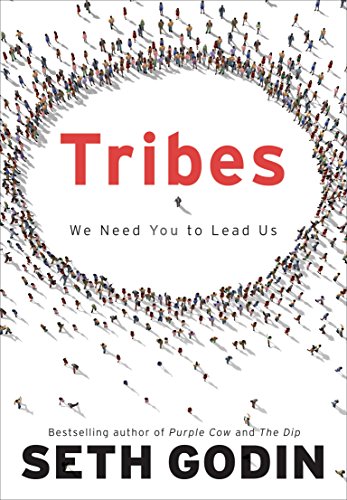
⚡️ What is Tribes About?
I just finished reading Tribes by Seth Godin, and I can’t stop thinking about how much time we waste waiting for permission. The central thesis is simple but stinging: the world is now organized into small groups—tribes—connected by ideas and the internet, and these groups are starving for leaders. Godin argues that the old model of ‘management’ is dead, replaced by the need for people who are willing to be uncomfortable and lead those who are already looking for a way to connect. If you’ve ever felt like you’re ‘just’ an employee or ‘just’ a freelancer, this book is designed to make you feel deeply uneasy about that label.
You’ll find more summaries by Seth Godin on this site, but this one is the most provocative for anyone stuck in a middle-management rut. It’s not a tactical manual on how to run a Facebook group; it’s a philosophical push to stop being a sheep and start being a heretic. Why are we so afraid of leading when the cost of doing so has never been lower? This is a core question in many marketing book summaries, but Godin makes it personal here.
🚀 The Book in 3 Sentences
- A tribe is any group of people, large or small, who are connected to one another, a leader, and an idea.
- Leadership is the act of challenging the status quo and connecting people, whereas management is merely the act of making a system work efficiently.
- The internet has eliminated the traditional barriers to leadership (cost, geography, and gatekeepers), leaving ‘fear’ as the only remaining obstacle.
🎨 Impressions
Honestly, this book felt like a bucket of cold water to the face. It’s incredibly short—you could probably finish it during a long lunch—but it lingers. I found myself dog-earing pages where Godin attacks the ‘factory’ mindset of the 20th century. He doesn’t hold back on calling out our desire for safety as a form of cowardice. It’s frustrating at times because he doesn’t give you a 10-step checklist, but that’s actually his point: if there were a checklist, it wouldn’t be leadership; it would be management.
I loved the distinction he makes between a crowd and a tribe. A crowd is just people standing around. A tribe is people talking to each other. It made me realize how many ‘communities’ online are actually just crowds waiting for someone to say something interesting. It’s a call to arms for the heretics who are tired of the status quo but don’t think they have the ‘authority’ to change it. You don’t need a title to lead, you just need to care enough to start the conversation.
📖 Who Should Read Tribes?
If you’re a mid-level manager who feels like your ideas are being ignored, read this tonight. If you’re an entrepreneur trying to figure out how to build a ‘loyal’ customer base, this will flip your perspective on its head. However, if you’re looking for a technical guide on SEO, social media algorithms, or data analytics, you should skip this. This is about the ‘why’ and the ‘who,’ not the ‘how’ of the platform.
☘️ How This Book Changed My Thinking
Before reading this, I thought leadership was something you were ‘given’ by a company or a promotion. Now, I see it as a choice you make every Tuesday morning.
- I stopped trying to appeal to ‘everyone’ and started looking for the small group of people who are actually obsessed with the same niche ideas I am.
- I realized that being ‘wrong’ isn’t the disaster I thought it was—the real disaster is being ignored because I was too afraid to be interesting.
- I shifted from ‘managing’ my to-do list to ‘leading’ my projects, which means looking for ways to break things rather than just polishing them.
✍️ 3 Quotes That Stuck With Me
- “A tribe is a group of people connected to one another, connected to a leader, and connected to an idea.” — This is the perfect litmus test for any community you’re trying to build.
- “Leadership is not management. Management is about manipulating resources to get a job done.” — This helped me stop confusing ‘being busy’ with ‘being a leader.’
- “The only thing holding you back is your own fear.” — It’s blunt, a bit cliché, but in the context of the book, it feels like a heavy truth.
📒 Summary + Notes
Tribes is less of a business book and more of a manifesto for the digital age. Godin’s core argument is that we’ve moved from an economy of ‘mass’ to an economy of ‘connection.’ In the old days, you needed a factory and a huge advertising budget to reach people. Today, you just need a laptop and a vision that people can rally around. He spends most of the book trying to convince the reader that the barriers to entry have vanished. The ‘gatekeepers’ have been fired, and the only person who can stop you from leading is yourself.
The book follows a narrative arc of deconstructing our fear of being ‘the heretic.’ Godin wants you to believe that the safest thing you can do in your career is to be remarkable and lead. Following the rules and staying invisible used to be the path to a 40-year career and a gold watch; now, it’s the path to being outsourced or automated. By the end, the author expects you to stop asking ‘How do I get more followers?’ and start asking ‘How do I create more value for the tribe I already have?’
1: The Tribe and the Crowd
What makes a group of people a tribe instead of just a crowd? Godin starts by defining the two essential ingredients: a shared interest and a way to communicate. If you have 500 people in a room but they can’t talk to each other and don’t care about the same thing, you have a crowd. But if you have 10 people who are obsessed with growing organic kale and they have a Slack channel to share tips, you have a tribe. Are you building a bridge for communication, or are you just yelling into a megaphone?
2: Leadership vs. Management
Management is about efficiency, while leadership is about change. This section hits hard because most of us spend our lives trying to be better managers of our time, our inbox, and our employees. But management is about maintaining the status quo. It’s about doing what we did yesterday, but slightly faster and cheaper. Leadership, on the other hand, is about deciding that the status quo is no longer acceptable. Do you want to be the person who keeps the trains running on time, or the person who decides where the tracks should go in the first place?
3: The Fear of Being Wrong
Why do we hesitate to lead? Godin argues it’s a lizard-brain survival mechanism. We are biologically wired to fear being cast out of the group. In our ancestral past, being ‘cast out’ meant death. Today, it just means a few mean comments on social media, yet our brains react with the same level of intensity. He suggests that the most successful leaders aren’t the ones who aren’t afraid; they are the ones who acknowledge the fear and do it anyway. It’s about being willing to be ‘wrong’ in public.
4: The Heretics
A surprising claim in this chapter is that every tribe needs a heretic. A heretic is someone who challenges the ‘way we’ve always done things.’ Without a heretic, a tribe becomes stagnant and eventually dies. Being a heretic isn’t about being a jerk; it’s about having a vision for a better future that requires breaking a few rules. Are you willing to be the person who says, ‘This isn’t working,’ even if it makes people uncomfortable?
5: The New Tools of Connection
Imagine a world where you don’t need a printing press or a TV station to reach 10,000 people. We live in that world. This chapter maps out how the internet has democratized the tools of leadership. You can start a movement with a hashtag. You can fund a project with a Kickstarter. The ‘infrastructure’ of leadership is now free. This leaves us with a stark reality: if you aren’t leading, it’s not because you lack the tools; it’s because you lack the will.
6: Tightening the Circle
“Preaching to the choir” is usually used as an insult, but Godin argues it’s the most important thing a leader can do. You shouldn’t waste your time trying to convert the skeptics. Instead, spend your energy making the ‘true believers’ even more connected and powerful. A leader’s job is to strengthen the bonds within the tribe. When the bonds are tight, the tribe grows organically because the members start doing the recruiting for you.
⚖️ A Critical Perspective
While Tribes is incredibly inspiring, it’s also undeniably vague. Godin provides the ‘why’ with plenty of enthusiasm, but if you’re looking for a structural roadmap or case studies with hard data, you’ll be disappointed. He oversimplifies the risk of ‘being a heretic’—in many corporate environments, challenging the status quo doesn’t make you a leader; it just gets you fired. Furthermore, in 2025, the challenge isn’t just starting a tribe; it’s maintaining one in an attention economy that is far more fragmented than it was when this book was written in 2008. It’s a great mindset shift, but it’s not a full business strategy.
🔄 How It Compares
Compare this to Zero to One by Peter Thiel. While Thiel focuses on the technical and economic necessity of building something new (the ‘how’ of monopoly), Godin focuses entirely on the human element of connection (the ‘who’ of leadership). Thiel is about building the plane; Godin is about convincing the passengers to trust you enough to fly it. If you want hard-nosed business logic, read Thiel. If you want the emotional fire to start, read Godin.
🔑 Key Takeaways
These are the actionable shifts you can make to start leading today:
- Don’t find a tribe, build one: Stop looking for a group to join and start connecting the people who are already in your orbit.
- Focus on the 1,000 True Fans: You don’t need millions of followers; you need a small group of people who care deeply.
- Challenge one rule a week: Start small by questioning a minor ‘status quo’ process at work to build your leadership muscles.
- Tighten the communication loop: Give your tribe a way to talk to each other without you being the bottleneck.
💬 Frequently Asked Questions
What is the difference between a tribe and a crowd?
According to Godin, a tribe is distinct from a crowd because it has a shared interest and a way to communicate. A crowd is just a group of people; a tribe is a group of people who are connected to each other and to a leader.
Is the book Tribes still relevant in 2025?
Yes, though the platforms have changed. While Godin mentions older tools, the principle that people crave connection and leadership in a noisy digital world is more true now than ever. The barrier to entry for leadership remains zero.
Do you need a title to lead a tribe?
Absolutely not. Godin argues that titles are for managers, not leaders. Leadership is a choice and an action, not a permission slip granted by a corporation. You lead by connecting people around a shared idea.
What does Godin mean by ‘The Heretic’?
A heretic is someone who challenges the status quo. Godin believes that every successful tribe needs a heretic to push boundaries and prevent stagnation. Heretics are the ones who drive change and attract a following.
What is the biggest obstacle to leadership?
The only thing holding most people back from leading is fear—specifically the fear of being wrong or being criticized. Godin makes the case that once you overcome the internal lizard brain, the tools to lead are already in your hands.
Conclusion
Tribes is a short, punchy reminder that we are living in a unique moment in history. For the first time, you don’t need to be rich, famous, or powerful to start a movement. You just need to be willing to be uncomfortable and connect people who are looking for a leader. The world is full of tribes that are currently ‘leaderless’—waiting for someone to step up and say, ‘Follow me.’
If you take one thing away from Tribes, let it be this: waiting for permission is a losing strategy. The most ‘dangerous’ thing you can do is to be safe and quiet. Whether you are in marketing, non-profits, or a corporate job, your value lies in your ability to lead, not just follow the manual. It’s time to find your heretics and start building. Check out more marketing book summaries to see how this fits into the broader world of modern business.
More From Seth Godin →
Discover more from AI Book Summary
Subscribe to get the latest posts sent to your email.