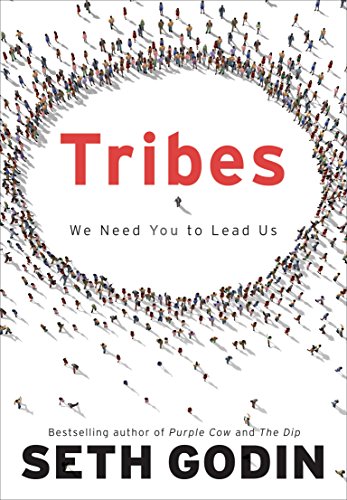
⚡️ What is Tribes about?
Tribes explores how ordinary people can become leaders who create meaningful change by gathering and inspiring groups of like-minded individuals. Seth Godin argues that in today’s interconnected world, tribes – groups united by shared interests, values, and goals – are the fundamental units of social change. The book demonstrates how technology has made it easier than ever to form and lead these tribes, and why leadership is no longer reserved for those with formal authority. Godin challenges readers to step up and lead by creating movements around their passions, confronting the status quo, and embracing the responsibility that comes with guiding others toward a better future.
🚀 The Book in 3 Sentences
- Tribes are groups of people connected to one another, connected to a leader, and connected to an idea that inspires their passion.
- Leadership today is about creating change you believe in by giving tribes the tools and platform to connect and grow.
- Anyone can lead a tribe if they’re willing to challenge the status quo, commit to a vision, and inspire others to follow.
🎨 Impressions
Godin’s Tribes is both inspiring and practical, demystifying leadership while challenging readers to step into their potential. The book brilliantly connects timeless leadership principles with our modern digital landscape, showing how tribes have always been at the heart of human progress but are now more accessible than ever. I appreciate how Godin avoids jargon and instead focuses on actionable insights that anyone can implement, regardless of their position or authority.
📖 Who Should Read Tribes?
This book is essential for entrepreneurs, managers, community organizers, and anyone seeking to make a difference by bringing people together around a shared purpose. If you’ve ever wanted to create change but felt limited by your lack of formal authority, Tribes will give you both the framework and the confidence to lead. It’s particularly valuable for those in creative fields, non-profit work, or anyone passionate about building movements that matter.
☘️ How the Book Changed Me
Reading Tribes fundamentally shifted my understanding of leadership from a position of authority to a function of passion and connection.
- I now recognize opportunities to lead tribes in my everyday life, from professional settings to community interests, rather than waiting for permission or title.
- I’ve become more deliberate about identifying and connecting with people who share my values and vision, understanding that collective action creates meaningful change.
- I’ve embraced the discomfort of challenging the status quo, realizing that true leadership requires courage to push against resistance for something you believe in.
✍️ My Top 3 Quotes
- “Tribes need leadership. Sometimes one person leads, sometimes more. People want connection and growth and something new. They want change.”
- “Leadership is the creation of change that you believe in.”
- “The secret of leadership is simple: Do what you believe in. Paint a picture of the future. Go there. People will follow.”
📒 Summary + Notes
Tribes by Seth Godin is a compelling manifesto for modern leadership in a connected world. The book argues that humanity has always organized itself into tribes – groups united by shared interests, values, and communication – and that today’s digital tools make it easier than ever to form and lead these collectives. Godin posits that we’re facing a leadership shortage, not because there aren’t capable people, but because we’ve been conditioned to believe that leadership requires formal authority or permission. The book systematically dismantles this myth, showing how anyone can become a leader by finding their tribe, creating a movement around shared passion, and having the courage to challenge the status quo.
Chapter 1: We Need You to Lead Us
Godin opens with a powerful call to action, declaring that there’s a leadership vacuum in our world that needs filling. He explains that throughout history, tribes have been the basic unit of human organization, and today’s technology has made it easier than ever to form them. The chapter emphasizes that leadership isn’t about management or control but about creating change you believe in.
- Human beings have always formed tribes based on shared interests, geography, or beliefs, and these groups naturally seek leaders.
- Modern technology has removed geographical barriers, making it possible to create global tribes around any niche interest or cause.
- Godin challenges readers to recognize their own leadership potential and step up to fill the void in their respective fields.
Chapter 2: Becoming a Leader
This chapter explores the journey to leadership, emphasizing that it’s a choice rather than a position. Godin argues that becoming a leader requires overcoming fear, embracing change, and committing to a vision. He highlights that leaders are made, not born, and that the path to leadership involves continuous learning and adaptation.
- Leadership begins with a decision to make a difference and take responsibility for creating change.
- Fear is the biggest obstacle to leadership, particularly fear of criticism and fear of failure.
- Successful leaders of tribes are those who can articulate a compelling future and inspire others to work toward it together.
Chapter 3: The Challenge of Today
Godin examines the unique leadership challenges of our time, including information overload, rapid change, and diminishing trust in institutions. He argues that these challenges create unprecedented opportunities for those willing to lead tribes that cut through the noise and offer genuine connection and value.
- Today’s world suffers from too many choices and not enough genuine connection, creating a hunger for authentic leadership.
- The collapse of traditional hierarchies has created space for new forms of leadership based on passion rather than position.
- Modern leaders must navigate complexity while providing clarity and direction for their tribes.
Chapter 4: The Tribes We Lead
This chapter defines what makes a tribe and explores the different types of tribes that exist. Godin explains that tribes consist of three elements: a shared interest, a way to communicate, and a leader to guide them. He provides examples of successful tribes across various domains.
- Effective tribes have a clear narrative that members can identify with and share with others.
- Technology has transformed how tribes form and communicate, enabling connections that were previously impossible.
- Successful leaders understand their tribe’s culture and work to enhance rather than control it.
Chapter 5: The Tightrope
Godin discusses the delicate balance leaders must maintain between pushing their tribe forward and moving too fast. He introduces the concept of heretics – those who challenge the status quo – and explains that effective leadership requires walking the line between innovation and maintaining group cohesion.
- Leaders must constantly gauge how much change their tribes can absorb at once to avoid alienating members. li>The most effective leaders are heretics who challenge existing systems but do so in ways that bring people along rather than pushing them away.
- Finding the right pace of change is crucial – too slow and you lose momentum, too fast and you lose followers.
Chapter 6: The Lust for Control
This chapter examines how the desire for control undermines effective leadership. Godin argues that the industrial era’s management mindset focused on compliance and standardization is obsolete in today’s world of tribes. He explains that leadership succeeds when it empowers rather than controls.
- Traditional management focuses on control, while leadership focuses on enabling and inspiring.
- The more you try to control your tribe, the less likely it is to grow and innovate on its own.
- Trust is the foundation of effective leadership in tribes – trusting your members and earning their trust in return.
Chapter 7: Creating a Movement
Godin outlines the steps to creating a movement, starting with identifying a shared passion and building a platform for connection. He emphasizes that successful movements address a fundamental human need and provide a sense of belonging that transcends individual interests.
- Movements begin with a compelling story that resonates with people’s existing worldview and desires. li>Successful leaders of tribes create platforms that facilitate connection and communication among members.
- Movements grow when members are empowered to spread the message and recruit others to the cause.
Chapter 8: Stability
This chapter challenges the notion that stability is desirable or even possible in today’s rapidly changing world. Godin argues that the pursuit of stability often leads to stagnation, and that leaders of tribes must embrace change as the only constant.
- The desire for stability is often a mask for fear of change and uncertainty.
- Successful tribes thrive on dynamic change and continuous evolution rather than static stability.
- Leaders must create psychological safety within their tribes, allowing members to experiment and take risks without fear of punishment.
Chapter 9: Is It Worth It?
Godin addresses the personal costs and rewards of leadership, acknowledging that leading tribes often involves criticism, isolation, and sacrifice. However, he argues that the fulfillment of creating meaningful change and connecting with others makes it worthwhile.
- Leadership inevitably brings criticism from those invested in the status quo and those who feel threatened by change. li>The rewards of leading tribes are not primarily financial but come from the satisfaction of making a difference.
- Leaders must find intrinsic motivation that sustains them through the inevitable challenges and setbacks.
Chapter 10: Making the Ruckus
This chapter celebrates the disruptive nature of true leadership, encouraging readers to challenge existing systems and create positive trouble. Godin argues that meaningful progress only happens when someone is willing to make a ruckus and challenge what everyone else accepts as normal.
- Effective leaders are willing to be heretics who question established practices and propose better alternatives.
- Making a ruckus isn’t about creating chaos for its own sake but about disrupting systems that no longer serve their purpose.
- The most powerful tribes form around ideas that challenge conventional wisdom and offer a new way forward.
Chapter 11: The Biggest Opportunity
Godin identifies the unprecedented opportunity that exists today for those willing to lead. He explains that the barriers to leadership have never been lower, while the potential impact has never been higher, creating a unique moment in human history for tribe-building.
- Today’s digital tools have democratized leadership, making it possible for anyone with passion and vision to build a tribe.
- The biggest opportunities exist at the intersections of fields where conventional thinking is weakest.
- Successful leaders recognize that they don’t need permission to begin leading – only the courage to start.
Chapter 12: Leadership vs. Management
This chapter clearly distinguishes between leadership and management, explaining that they require different mindsets and skills. Godin argues that while management focuses on maintaining systems and processes, leadership focuses on creating change and inspiring people.
- Management seeks compliance and consistency, while leadership seeks commitment and creativity.
- Organizations need both managers and leaders, but the skills required for each are fundamentally different.
- Leading tribes requires embracing uncertainty and ambiguity rather than trying to eliminate them.
Chapter 13: How It Works
Godin provides practical insights into the mechanics of leading tribes effectively. He explains how successful leaders create platforms for connection, establish clear values, and empower members to take ownership of the tribe’s direction.
- Effective leaders of tribes create environments where members can find each other and share their passion.
- Successful tribes have clear boundaries that define who belongs and what the movement stands for.
- Leadership works best when it creates more leaders rather than more followers.
Chapter 14: The Element of Need
This chapter explores how effective leaders identify and address fundamental human needs through their tribes. Godin argues that successful movements tap into deep-seated desires for connection, meaning, and recognition.
- Successful tribes address genuine human needs that aren’t being met by existing structures.
- Leaders must understand the deeper motivations that drive people to seek connection and belonging.
- The most powerful tribes provide members with a sense of identity and purpose that transcends their individual concerns.
Chapter 15: The Faith of the Leader
Godin discusses the importance of faith in leadership – not necessarily religious faith, but faith in one’s vision, one’s tribe, and the possibility of change. He explains that this faith is what sustains leaders through challenges and enables them to inspire others.
- Leaders must have faith in their vision even when evidence of its success is not yet apparent.
- The faith of the leader is contagious, spreading to members of the tribe and strengthening their commitment.
- True leadership requires believing in people’s potential to rise to the occasion and exceed expectations.
Chapter 16: The Charisma Myth
This chapter debunks the myth that leadership requires charisma or extraordinary personal qualities. Godin argues that effective leadership comes from authenticity, passion, and commitment rather than innate charm or magnetism.
- Charisma is often a byproduct of genuine passion and commitment to a cause, not a prerequisite for leadership.
- Authenticity is far more important than charisma when leading tribes – people can sense when a leader genuinely believes in their message.
- Leadership is accessible to anyone who cares deeply about something and is willing to take responsibility for making change happen.
Chapter 17: Leadership on the Balcony
Godin introduces the metaphor of “leadership on the balcony” – the ability to step back and see the bigger picture while still being engaged with the tribe. He explains that effective leaders must balance participation with perspective.
- Leaders must regularly step back from the day-to-day activities of their tribes to gain perspective and see larger patterns.
- The balcony view allows leaders to identify obstacles, opportunities, and the overall health of the movement.
- Successful leaders alternate between participating in the tribe’s activities and observing from a distance to maintain strategic clarity.
Chapter 18: The Secret of Leadership
In this pivotal chapter, Godin reveals what he sees as the core secret of leadership: the courage to challenge the status quo. He explains that true leadership begins when someone decides that change is necessary and takes responsibility for making it happen.
- The secret of leadership is simply the willingness to stand up and say “This can be better” and then work to make it so.
- Leaders of tribes don’t wait for permission or authority – they step into the void and create change themselves.
- Leadership is ultimately about taking responsibility for the future and inspiring others to share that responsibility.
Chapter 19: The Art of Leadership
Godin explores leadership as an art form rather than a science, emphasizing that it requires creativity, intuition, and adaptability. He explains that like any art, leadership improves with practice and benefits from studying the work of others.
- Leadership is an art that balances vision with practicality, passion with discipline, and inspiration with execution.
- The art of leading tribes involves reading the culture and understanding what motivates people to connect and contribute.
- Like any art form, leadership requires continuous learning, experimentation, and refinement of one’s approach.
Chapter 20: The Commitment
In the final chapter, Godin emphasizes that leadership ultimately comes down to commitment – the decision to stick with a vision through challenges and setbacks. He argues that this unwavering commitment is what separates true leaders from those who merely talk about change.
- Leadership requires the commitment to see things through even when faced with doubt, resistance, and temporary failure. li>The most successful tribes are built by leaders who demonstrate unwavering commitment to their vision and values.
- Commitment inspires commitment – when tribe members see their leader’s dedication, they’re more likely to invest their own time and energy.
Key Takeaways
Tribes offers profound insights into how leadership works in our connected world, providing both inspiration and practical guidance for anyone wanting to make a difference. The book demonstrates that leadership is accessible to everyone willing to step up, challenge the status quo, and connect with others around a shared vision.
- Leadership is about creating change you believe in, not about holding a position of authority.
- Tribes form naturally around shared interests, values, and communication platforms, and they need leaders to guide them.
- Technology has democratized leadership, making it possible for anyone with passion and commitment to build a tribe and create change.
- Successful leaders empower rather than control, creating environments where tribe members can connect and contribute.
- Leadership requires courage to challenge the status quo, faith in your vision, and commitment to see it through.
Conclusion
Tribes by Seth Godin is more than just a book about leadership – it’s a call to action for anyone who has ever wanted to make a difference in the world. By demystifying leadership and showing how tribes form and grow, Godin empowers readers to step into their own leadership potential. The book challenges us to move beyond waiting for permission and instead take responsibility for creating the change we wish to see. Whether you’re looking to lead at work, in your community, or around a personal passion, the principles in Tribes provide a roadmap for building meaningful connections and driving positive change. I highly recommend reading the full book to dive deeper into these transformative ideas and begin your own journey as a tribe leader.
More From Seth Godin →
Discover more from AI Book Summary
Subscribe to get the latest posts sent to your email.