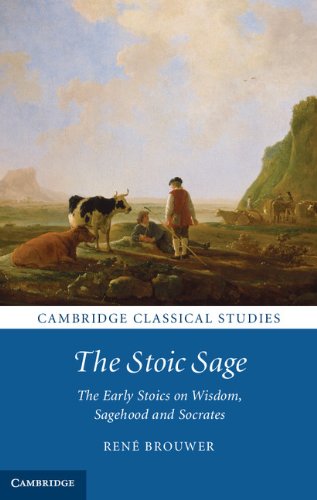
⚡️ What is The Stoic Sage about?
The Stoic Sage by Rene Brouwer explores the ancient philosophy of Stoicism through the lens of its ultimate ideal: the Sage. This profound work delves into the concept of the Stoic sage as a person who has achieved perfect wisdom and virtue, living in complete accordance with nature. Brouwer examines how this seemingly unattainable ideal serves as a guiding principle for modern practitioners, offering practical insights into how we can apply Stoic principles to navigate life’s challenges with grace and resilience. The book bridges ancient wisdom with contemporary application, making Stoicism accessible and relevant for today’s readers.
🚀 The Book in 3 Sentences
- The Stoic Sage presents the ideal of Stoic wisdom as a practical aspiration rather than an impossible standard, offering readers a roadmap for personal development.
- Brouwer masterfully connects ancient Stoic teachings with modern psychological insights, demonstrating how Stoic principles can transform our approach to life’s challenges.
- The book argues that while perfect sagehood may be unattainable, the pursuit itself cultivates resilience, wisdom, and tranquility in our daily lives.
🎨 Impressions
Reading The Stoic Sage was a transformative experience that deepened my understanding of Stoic philosophy beyond superficial self-help advice. Brouwer’s scholarly yet accessible approach makes complex philosophical concepts digestible without sacrificing depth. The book strikes a perfect balance between academic rigor and practical application, making it valuable for both newcomers to Stoicism and seasoned practitioners seeking to deepen their practice.
📖 Who Should Read The Stoic Sage?
The Stoic Sage is ideal for anyone interested in philosophy, personal development, or seeking practical tools for emotional resilience. It particularly resonates with those facing life transitions, dealing with stress or anxiety, or searching for meaning in chaotic times. The book is especially valuable for readers who have dabbled in Stoicism but want to explore its deeper dimensions beyond basic principles.
☘️ How the Book Changed Me
How my life / behaviour / thoughts / ideas have changed as a result of reading the book.
- I’ve developed a more nuanced understanding of Stic wisdom, moving beyond simplistic interpretations to embrace its complexity and depth.
- The book transformed my approach to setbacks, helping me view them as opportunities for growth rather than purely negative experiences.
- I’ve incorporated regular Stoic reflections into my daily routine, creating space for contemplation and self-examination that wasn’t previously there.
✍️ My Top 3 Quotes
- “The sage is not one who never errs, but one who continually strives toward wisdom, recognizing that the journey itself is the destination.”
- “In the pursuit of sagehood, we do not eliminate passion but transform it into the fuel for virtuous action and clear thinking.”
- “Freedom is not the absence of constraints but the ability to maintain our inner equilibrium regardless of external circumstances.”
📒 Summary + Notes
The Stoic Sage presents a comprehensive exploration of Stoic philosophy centered on the ideal of the sage. Brouwer meticulously examines the historical development of this concept while making it relevant to contemporary readers. The book balances theoretical understanding with practical application, offering readers not just knowledge but tools for transformation. Through each chapter, we journey deeper into the heart of Stoic wisdom, uncovering how its ancient principles remain remarkably applicable to modern challenges.
Chapter 1: The Ideal of the Stoic Sage
Brouwer introduces the concept of the Stoic sage as the embodiment of perfect wisdom and virtue. He explains that while this ideal may seem impossibly remote, it serves as a north star for philosophical practice. The chapter examines how the ancient Stoics conceived of the sage as someone who had achieved complete freedom from passion, error, and irrationality, living in perfect harmony with nature and reason.
- The sage as an aspirational ideal rather than a realistic expectation
- Historical context of the sage concept in ancient Stoicism
- The tension between theoretical idealism and practical application
Chapter 2: The Origins of Stoic Wisdom
This chapter delves into the historical foundations of Stoicism, tracing its development from its origins in ancient Greece to its evolution in Rome. Brouwer highlights key figures such as Zeno, Cleanthes, Chrysippus, and later Roman Stoics like Seneca, Epictetus, and Marcus Aurelius. The author shows how each contributed to the development of the sage ideal while adapting it to their cultural contexts.
- The three periods of Stoicism: Early, Middle, and Late
- Key differences between Greek and Roman Stoicism
- How historical context shaped the development of Stoic principles
Chapter 3: The Four Cardinal Virtues
Brouwer examines the four cardinal virtues—wisdom, courage, justice, and temperance—as the foundation of the Stoic sage’s character. He explains how these virtues are interconnected and how developing them leads to a flourishing life. The chapter provides practical guidance on cultivating each virtue in daily life, showing how they work together to create a harmonious personality.
- Wisdom as the ability to navigate complex situations with discernment
- Courage as facing both physical and moral challenges with fortitude
- Justice as treating others fairly and contributing to the common good
- Temperance as exercising self-control and moderation in all things
Chapter 4: The Dichotomy of Control
This chapter explores one of the most practical Stoic concepts: the dichotomy of control. Brouwer explains how distinguishing between what is within our control and what is not forms the basis of Stoic practice. He provides numerous examples and exercises to help readers apply this distinction in their daily lives, reducing anxiety and increasing focus on what truly matters.
- The power of focusing exclusively on what we can control
- How to categorize events and concerns accurately
- Practical techniques for letting go of what we cannot control
Chapter 5: Emotions and the Sage
Brouwer tackles the complex relationship between Stoicism and emotions, clarifying common misconceptions. He explains that the Stoic sage is not emotionless but has transformed passions into rational responses. The chapter explores the Stoic theory of emotions and provides guidance on managing emotional reactions while maintaining humanity and connection.
- The difference between passion and rational emotion in Stoic thought
- Techniques for examining and reframing emotional responses
- How the sage experiences joy, love, and other positive emotions
Chapter 6: Stoic Practices for Daily Life
This chapter provides a practical toolkit of Stoic exercises and practices that readers can incorporate into their daily routines. Brouwer details techniques such as morning and evening reflections, negative visualization, the view from above, and self-imposed challenges. Each practice is explained with clear instructions and examples of how it contributes to the development of wisdom and tranquility.
- Morning preparation and evening review as bookends to the day
- The contemplation of impermanence through negative visualization
- Gaining perspective through the view from above exercise
- Voluntary discomfort as a means of building resilience
Chapter 7: Relationships and the Stoic Sage
Brouwer addresses how Stoic principles apply to interpersonal relationships, challenging the notion that Stoicism promotes isolation or indifference. He explains how the Stoic sage engages with others from a foundation of wisdom, virtue, and understanding. The chapter provides guidance on navigating difficult relationships, practicing forgiveness, and contributing to the community while maintaining inner peace.
- The Stoic concept of oikeiôsis (natural affection and affiliation)
- Applying the dichotomy of control to relationships
- Practicing empathy without being overwhelmed by others’ emotions
Chapter 8: Adversity and the Sage’s Resilience
This chapter examines how the Stoic sage faces life’s inevitable hardships with resilience and equanimity. Brouwer explores the Stoic approach to suffering, loss, and failure, showing how these experiences can be opportunities for growth rather than sources of despair. He provides practical strategies for reframing adversity and maintaining inner stability during external turmoil.
- Turning obstacles into opportunities through cognitive reframing
- Amor fati: the love of one’s fate
- The Stoic practice of premeditation of adversity
Key Takeaways
The Stoic Sage offers profound insights into how we can cultivate wisdom and resilience in our daily lives. The book bridges ancient philosophy with modern practicality, making Stoic principles accessible and applicable.
- The pursuit of sagehood is valuable not as a destination but as a transformative journey
- Stoicism provides practical tools for distinguishing what we can control from what we cannot
- The four cardinal virtues form the foundation of a flourishing life
- Emotions are not to be eliminated but understood and transformed
- Daily Stoic practices create incremental improvements that compound over time
Conclusion
The Stoic Sage is more than a philosophical treatise—it is a practical guide to living with wisdom and tranquility in a chaotic world. Brouwer masterfully shows how the ancient ideal of the Stoic sage can inform and transform our modern lives, not by turning us into unfeeling automatons but by helping us become more fully human. While perfect sagehood may remain beyond our grasp, the pursuit itself cultivates the virtues and resilience we need to navigate life’s challenges with grace and dignity. This book is an invaluable resource for anyone seeking to deepen their understanding of Stoicism and apply its timeless principles to contemporary challenges.
More From Rene Brouwer →
Discover more from AI Book Summary
Subscribe to get the latest posts sent to your email.