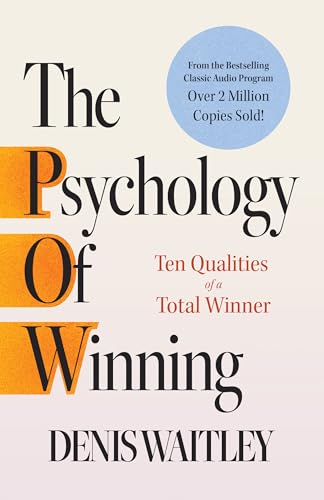
⚡️ What is The Psychology of Winning about?
The Psychology of Winning is a transformative work by Denis Waitley that explores the mental frameworks and behavioral patterns distinguishing high achievers from average performers. Having studied Olympic athletes, astronauts, and top executives, Waitley distills decades of research into actionable principles that anyone can apply to revolutionize their personal and professional existence. The book reveals that winning isn’t about luck or innate talent, but rather about cultivating specific psychological qualities that create a foundation for sustained success.
Waitley introduces the concept of the total winner—someone who has mastered ten distinct dimensions of self-mastery. Through compelling real-world examples and practical exercises, he demonstrates how to reprogram your mental computer, break limiting beliefs, and develop the self-image necessary for peak performance. This isn’t merely about achieving external victories; it’s about becoming the kind of person who naturally attracts success through their internal state of being and consistently applies proven success techniques.
🚀 The Book in 3 Sentences
- The Psychology of Winning reveals that success is an inside job, requiring the cultivation of ten specific self-mastery qualities that transform ordinary individuals into total winners.
- Denis Waitley demonstrates that your self-image acts as a thermostat regulating your achievement level, and by altering your internal programming through winning strategies, you can dramatically elevate your external results.
- Through practical success techniques and mental discipline, this book provides a roadmap for developing unstoppable self-motivation, unshakeable self-esteem, and the mindset required for lifelong achievement.
🎨 Impressions
Reading The Psychology of Winning felt like receiving a masterclass from a mentor who genuinely understands the mechanics of human potential. I was immediately struck by Waitley’s ability to blend scientific research with deeply human storytelling, making complex psychological concepts accessible and immediately applicable. The book doesn’t offer empty platitudes or quick fixes; instead, it presents a rigorous framework for personal transformation that respects the reader’s intelligence while challenging their current limitations.
What impressed me most was Waitley’s emphasis on the interconnectedness of the ten winning qualities. Rather than treating self-esteem, self-discipline, and self-motivation as isolated traits, he weaves them into a cohesive ecosystem where improvement in one area naturally elevates the others. The writing style is direct and empowering, with each chapter building upon the last to create a comprehensive blueprint for becoming a total winner. This isn’t just another self-help book—it is a definitive guide to rewiring your psyche for maximum performance using evidence-based winning strategies.
📖 Who Should Read The Psychology of Winning?
The Psychology of Winning is essential reading for anyone feeling stuck in their current circumstances and seeking a proven system for breakthrough achievement. Whether you’re an entrepreneur looking to scale your business, an athlete aiming for peak performance, or a professional navigating career transitions, Waitley’s principles provide the psychological foundation necessary for sustained excellence. The book particularly resonates with individuals who recognize that external tactics and strategies alone aren’t enough—they need to address the internal barriers preventing their success.
If you struggle with self-doubt, procrastination, or inconsistent motivation, this book offers the specific success techniques needed to rewire those patterns. It is also invaluable for coaches, mentors, and leaders who want to understand the psychology behind high-performance teams. Students and young professionals will find the early chapters on self-awareness and self-esteem foundational for building a winning life trajectory. Ultimately, anyone committed to becoming the best version of themselves—not just in one area, but as a complete human being—will find The Psychology of Winning to be an indispensable resource.
☘️ How the Book Changed Me
Before encountering The Psychology of Winning, I operated under the false assumption that success required grinding harder and working longer hours. Denis Waitley taught me that achievement is actually a function of self-image engineering, not just effort accumulation. I began to see how my internal thermostat was set to mediocrity, and more importantly, how to systematically raise that set-point through conscious mental programming and consistent application of winning strategies.
- I shifted from wishful thinking to positive self-expectancy, aligning my self-talk with desired outcomes rather than fear-based limitations.
- I stopped sabotaging myself before big opportunities, instead trusting my preparation and internal winner’s edge to carry me through challenges.
- I developed daily success techniques including visualization and goal-review sessions that keep me aligned with my highest priorities.
- I began treating setbacks as temporary feedback rather than permanent identity labels, using Waitley’s laboratory mindset to extract lessons from every outcome.
✍️ My Top 3 Quotes
- “The winner’s edge is not in a gifted birth, a high IQ, or in talent. The winner’s edge is all in the attitude, not aptitude. Attitude is the criterion for success.”
- “Our limitations and success will be based, most often, on your own expectations for ourselves. What the mind dwells upon, the body acts upon.”
- “You are what you think about all day long. You are also what you say to yourself all day long.”
📒 Summary + Notes
The Psychology of Winning presents a comprehensive framework for achieving total success through the systematic development of ten interconnected self-mastery qualities. Denis Waitley argues that winning isn’t a matter of luck or genetics, but rather the result of conditioning your mind and emotions to function at optimal levels. The book draws from Waitley’s extensive research with top performers—including astronauts, Olympic champions, and business leaders—to demonstrate that consistent winners share specific psychological patterns that can be learned and internalized by anyone willing to do the work.
At its core, this work teaches that your self-image acts as an internal thermostat, regulating how much success you allow yourself to experience. By utilizing proven winning strategies to upgrade this self-image, you simultaneously improve your self-esteem, self-motivation, and self-discipline. Waitley emphasizes that these aren’t abstract concepts but practical tools that require daily application. The book provides specific exercises for each of the ten qualities, from building positive self-awareness to mastering self-projection. Through these success techniques, readers learn to replace negative programming with empowering beliefs and develop the resilient mindset necessary for navigating life’s challenges.
Chapter 1: Positive Self-Awareness
Self-awareness forms the foundation upon which all other winning qualities are built. Waitley explains that most people operate on mental autopilot, reacting to circumstances rather than consciously creating their reality through informed choices. True winners develop the habit of objective self-observation, regularly examining their thoughts, emotions, and behaviors without harsh judgment. This quality involves understanding your unique strengths, acknowledging your weaknesses with honesty, and recognizing the behavioral patterns that either propel you forward or hold you back from your potential.
I learned that self-awareness isn’t self-consciousness; it is about being the scientist of your own experience. Winners ask themselves probing questions: Why do I react this way? What triggers my defensive responses? Which activities energize me versus drain me? By maintaining this honest introspection, you gain the power to interrupt negative cycles before they manifest in destructive behaviors. Waitley provides practical exercises for increasing self-awareness, including daily reflection periods and feedback solicitation from trusted mentors. When you develop this winner’s edge, you stop being a victim of circumstance and become the architect of your responses.
- Objective observation allows you to see your blind spots without emotional distortion or defensive rationalization.
- Winners maintain a behavior journal to track patterns between their thoughts and external results.
- Self-awareness creates the response gap—the space between stimulus and reaction where conscious choice lives.
- Understanding your energy patterns helps you schedule high-cognitive tasks during peak performance windows.
Chapter 2: Positive Self-Esteem
Self-esteem is the reputation you have with yourself—the cumulative scorecard of how well you keep promises to yourself and maintain your personal integrity. Waitley distinguishes between false pride, which relies on comparison with others, and genuine self-esteem, which stems from alignment with your own values and standards. Total winners cultivate an internal locus of evaluation, meaning they define success by their own metrics rather than seeking external validation or approval from society.
The chapter reveals that high self-esteem isn’t about arrogance; it is about deep self-respect and radical self-acceptance. Waitley demonstrates that you cannot outperform your self-image for long, making this quality crucial for sustainable achievement. I discovered practical methods for rebuilding damaged self-esteem, including the practice of making and keeping small promises to yourself daily. The book teaches that every time you choose the harder right over the easier wrong, you deposit currency into your self-esteem bank account. Winners also practice self-forgiveness, understanding that perfection isn’t possible, but alignment with one’s highest values is mandatory.
- Integrity with oneself builds the foundation for confidence that external circumstances cannot shake.
- Making and keeping small promises to yourself creates a virtuous cycle of self-trust.
- Winners separate their intrinsic worth from their external achievements or material possessions.
- High self-esteem enables you to handle criticism constructively without collapsing into defensiveness.
Chapter 3: Positive Self-Control
Self-control represents the ability to delay gratification and manage your emotional states, particularly when facing pressure or temptation. Waitley frames this not as restriction, but as liberation—the freedom to choose your response rather than being controlled by impulses, emotions, or external events. Winners understand that emotions are tools to be managed and directed, not masters to be obeyed without question. This quality separates those who react from those who create.
This chapter explores the adventure of self-discovery through the lens of emotional intelligence and response management. I learned that self-control isn’t about suppressing feelings, but about channeling them productively toward desired outcomes. Waitley introduces concepts like the expanded response gap—the moment between stimulus and response where conscious choice occurs. By expanding this gap through mindfulness and preparation, winners avoid the destructive reactions that derail average performers. The book provides techniques for maintaining equilibrium during crises, including breathing exercises and mental rehearsal of high-pressure scenarios.
- Delayed gratification is the single greatest predictor of long-term success across all life domains.
- Emotional management allows you to access your intelligence even when adrenaline is high.
- Winners practice the “do it now” principle to overcome procrastination and build momentum.
- Self-control creates the consistency that builds trust with others and confidence within yourself.
Chapter 4: Positive Self-Motivation
Self-motivation is the internal engine that drives action without external prodding, rewards, or supervision. Waitley explains that winners don’t wait to feel motivated; they take action first, knowing that motivation follows movement rather than preceding it. This quality involves connecting daily tasks to larger purposes, creating an emotional fuel that sustains effort during difficult periods when willpower alone fails. The chapter dismantles the myth that you must feel like doing something to start it.
I discovered that winners operate on commitment, not feelings—they move forward despite discomfort, boredom, or fear. Waitley provides strategies for maintaining momentum, including the technique of mental rehearsal and the importance of celebrating small incremental wins. Self-motivation also requires protecting your mental environment, carefully filtering the inputs that influence your mindset. Winners surround themselves with supportive victors rather than complacent victims. By developing this self-starting power, you eliminate the need for external accountability and become the primary driver of your own success, capable of initiating necessary actions regardless of external conditions.
- Action precedes motivation—winners start moving and let the feelings catch up.
- Connecting tasks to core values creates sustainable energy beyond willpower.
- Winners design trigger environments that make productive behavior the path of least resistance.
- Celebrating micro-victories maintains dopamine levels during long-term projects.
Chapter 5: Positive Self-Expectancy
Self-expectancy functions as the mental soundtrack playing in your subconscious mind, determining what you believe is possible for yourself. Waitley emphasizes that you consistently live up or down to your own expectations, making this quality a self-fulfilling prophecy of success or failure. Winners maintain positive self-expectancy even when current evidence suggests otherwise, trusting in the process of growth. This isn’t blind optimism but calculated confidence based on preparation.
This chapter taught me that expectation isn’t just hope; it is a form of neurological programming. Your nervous system responds to vividly imagined experiences as if they were real, allowing you to pre-experience success before it manifests physically. Waitley explains how to tune your mental radio to frequencies of possibility rather than limitation. Winners practice detailed visualization, creating mental movies of desired outcomes. I learned to catch myself when expecting failure or disappointment, consciously shifting to expect the best while preparing for challenges. This positive self-expectancy creates a magnetic pull toward desired outcomes.
- Expectation becomes experience—your brain finds evidence to confirm its beliefs.
- Winners use mental movies to rehearse success before physical execution.
- Maintaining positive expectancy during setbacks requires faith in the process.
- Your self-talk predicts your performance more accurately than your current skills.
Chapter 6: Positive Self-Image
Your self-image is the internal picture you hold of yourself, operating like a cybernetic mechanism that guides your behaviors to match that picture. Waitley reveals that all improvement must begin with an improved self-image because you cannot consistently behave in a manner inconsistent with how you see yourself. This chapter provides the technical understanding of how to upgrade your mental operating system through systematic imprinting. The self-image acts as a thermostat, maintaining your comfort zone.
I discovered that the self-image is changeable through relaxed visualization and repetition. By spending time in alpha states visualizing your ideal self performing at peak levels, you gradually overwrite limiting self-concepts. Waitley draws from cybernetics to explain why willpower alone fails—if your self-image remains that of a failure, you will unconsciously sabotage success to maintain consistency. The chapter offers practical exercises for theater-of-the-mind work, including creating detailed sensory-rich scenes of achievement. Winners understand that self-image work isn’t vanity; it is the foundational engineering required for all lasting change.
- The self-image acts as a thermostat, returning you to familiar comfort zones.
- Change requires imaginal practice—vividly seeing yourself as already successful.
- Your comfort zone expands only as fast as your self-image allows.
- Winners update their identity narrative before attempting new behaviors.
Chapter 7: Positive Self-Direction
Self-direction is the quality of having clear, written goals and a defined sense of purpose that guides daily decision-making. Waitley distinguishes between wishful thinking and goal-directed living, emphasizing that winners know exactly what they want and why they want it. Without this internal compass, you drift on the currents of circumstance and other people’s agendas. Goals function as magnets, attracting the necessary resources for their achievement.
This chapter transformed my understanding of goal-setting from vague desires to precise targeting. I learned that effective goals must be specific, measurable, and deadline-oriented, creating the psychological tension necessary for creative solution-finding. Waitley introduces the concept that clearly defined objectives attract the necessary resources, people, and opportunities for their achievement. Winners review their goals daily, keeping their compass aligned with true north. The book provides frameworks for long-range life planning, breaking down daunting objectives into manageable action steps. With self-direction, every small decision becomes easy because you filter choices through your predetermined destination.
- Written goals crystallize vague wishes into actionable targets.
- Goals create psychological tension that activates your creative problem-solving abilities.
- Winners distinguish between outcome goals and process goals, focusing on controllable actions.
- Daily goal review maintains focus amidst distractions and competing priorities.
Chapter 8: Positive Self-Discipline
Self-discipline represents the ability to give yourself a command and then follow it, paying the price of success in advance through consistent effort. Waitley presents discipline not as punishment, but as the bridge between goals and accomplishment—the quality that turns potential into reality. Winners understand that excellence requires repetitive, sometimes monotonous practice long before results become visible to others. This is the winner’s price tag.
The chapter reframes discipline as self-love and self-respect rather than deprivation or harsh restriction. I learned that the pain of discipline weighs ounces while the pain of regret weighs tons. Winners develop habits of immediate action, refusing to procrastinate on important tasks. Waitley provides strategies for building willpower muscles through progressive challenges, starting with small victories that build cumulative confidence. This quality involves managing the temptation to quit when progress seems slow, understanding that compound interest applies to personal development. Self-discipline creates the reliability that turns potential into performance.
- Discipline is freedom—it provides the structure that enables creativity and spontaneity.
- Winners embrace the boring basics that compound into extraordinary results.
- The “do it now” habit eliminates the energy drain of procrastination.
- Self-discipline requires self-compassion—getting back on track without self-condemnation.
Chapter 9: Positive Self-Dimension
Self-dimension encompasses creativity, humor, and the ability to see possibilities where others see only problems. Waitley explains that winners maintain a childlike curiosity and cognitive flexibility, refusing to be trapped by conventional thinking or rigid methodologies. This quality involves tapping into the right brain’s intuitive, holistic processing to find innovative solutions. It represents the creative edge that separates top performers from competent plodders.
I discovered that creativity isn’t limited to artistic pursuits; it is the essential skill for navigating an increasingly complex and unpredictable world. Winners practice possibility thinking, asking “how can I?” instead of “can I?” The chapter teaches techniques for breaking mental blocks, including brainstorming without self-censorship and cross-pollinating ideas from unrelated fields. Waitley emphasizes that humor serves as a critical release valve, preventing winners from taking themselves too seriously while maintaining perspective during crises. By developing this creative dimension, you become resourceful rather than resource-dependent.
- Possibility thinking opens solutions that problem-focused thinking misses.
- Humor provides perspective distance during high-stress situations.
- Winners practice lateral thinking, borrowing solutions from unrelated domains.
- Creativity requires mental whitespace—unscheduled time for incubation and insight.
Chapter 10: Positive Self-Projection
Self-projection is the ability to communicate confidence, warmth, and credibility through your physical presence, voice, and attitude. Waitley explains that winners master the external signals that influence how others respond to them, creating an aura of competence and trustworthiness. This isn’t about deception or manipulation; it is about aligning your external presentation with your internal winning reality. Your physiology affects your psychology.
The chapter covers the mechanics of charisma, including posture, eye contact, voice modulation, and the winner’s walk. I learned that by adopting the physical patterns of confidence, you generate corresponding emotional states through biofeedback loops. Waitley provides exercises for improving communication impact, emphasizing that winners listen more than they speak and ask better questions. Self-projection also involves dressing and grooming in ways that signal self-respect. By mastering these external arts, winners create positive first impressions, build rapport instantly, and influence others ethically.
- Body language creates biochemical changes that affect your confidence levels.
- Winners master the first four minutes of any interaction to establish rapport.
- Vocal variety and pausing increase the weight of your words.
- Authentic self-projection requires internal congruence—alignment between beliefs and behaviors.
Key Takeaways
The Psychology of Winning provides a comprehensive operating system for achieving peak performance across all life domains. The central lesson is that winning is a learned behavior pattern, not a genetic lottery—by systematically developing the ten self-mastery qualities, anyone can elevate their baseline of achievement. The book demonstrates that internal change must precede external results; your self-image acts as a thermostat controlling your success temperature, and upgrading this internal picture is the highest-leverage activity available for transformation.
- Winning is an inside job—external results always follow internal changes in self-image and expectancy.
- Self-direction prevents drift by establishing clear goals that act as decision-making filters for daily choices.
- Self-discipline compounds—small consistent actions create massive results that appear as overnight success.
- Creative self-dimension separates winners from competitors by enabling innovative problem-solving under pressure.
- Holistic integration is required—you cannot sustain high achievement with weak self-esteem or poor self-control.
Conclusion
The Psychology of Winning stands as a timeless manual for anyone committed to transcending their current limitations and operating at their full potential. Denis Waitley doesn’t offer magic bullets or overnight transformations; instead, he provides a disciplined approach to rewiring your psychological infrastructure for lasting excellence. By implementing the ten qualities of total winners—from self-awareness through self-projection—you create an integrated personality capable of withstanding adversity while capitalizing on opportunity.
I encourage you to approach this book not as passive reading material, but as a workbook for personal revolution. Take time to complete the exercises, reflect on the questions posed, and gradually implement these winning strategies into your daily routine. Remember that The Psychology of Winning isn’t about becoming perfect; it is about becoming progressively better through conscious choice and disciplined action. Whether you’re seeking to improve your career, relationships, health, or overall life satisfaction, the principles within these pages provide the foundation for genuine transformation.
More From Denis Waitley →
Discover more from AI Book Summary
Subscribe to get the latest posts sent to your email.