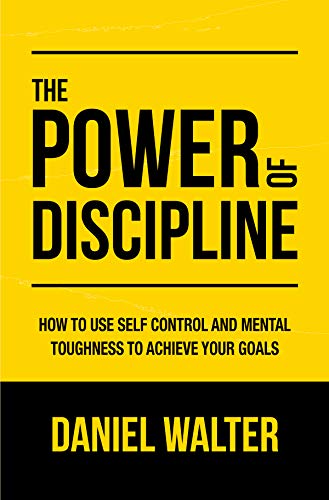
⚡️ What is The Power of Discipline About?
Have you ever felt like your own brain was actively working against your bank account or your fitness goals? It’s a frustrating cycle: you set a goal, feel a surge of motivation, and then watch it evaporate the moment a bag of chips or a Netflix notification appears. In More summaries by Daniel Walter, the author argues that this isn’t a character flaw—it’s biology. Walter treats discipline as a physiological muscle rather than a mystical gift, pulling from his background in cognitive neuroscience to show why our brains naturally crave the path of least resistance. This isn’t just another productivity book summaries entry that tells you to “just try harder.” It’s a manual for outsmarting your own DNA.
Walter’s central thesis is simple: motivation is a feeling, but discipline is a system. If you’re waiting to “feel like it” before you start working, you’ve already lost. The book is short, punchy, and designed to be read in a single sitting, focusing on how to dismantle the four biological tendencies that keep us stuck in mediocrity. I finished this book last week and I’ve already started applying the 10-minute rule to my evening scrolling habit. It’s a refreshing take that prioritizes consistency over intensity.
🚀 The Book in 3 Sentences
- Self-discipline is the ability to act in your long-term interest even when your short-term brain is screaming for dopamine.
- Our brains are biologically wired for consistency and comfort, meaning any growth will feel like a threat until you train yourself to associate discomfort with progress.
- Success isn’t found in heroic bursts of effort but in the invisible routines of morning and evening habits that remove the need for decision-making.
🎨 Impressions
Honestly, I expected this to be another generic self-help manifesto, but Walter’s neuroscience angle gives it a bit more teeth. He doesn’t sugarcoat the fact that building discipline sucks at first. What I liked most was his dismissal of “perfect planning.” There’s a moment early on where he calls out people who spend more time color-coding their planners than actually doing the work. It felt like a personal attack, and honestly, I needed that. It’s a thin book—about 130 pages—so there’s no fluff to wade through.
One thing that surprised me was the focus on the “40% Rule.” I’ve heard it in military contexts before, but Walter explains the brain chemistry behind why we feel exhausted long before we’re actually done. It makes you realize that your internal “low battery” warning is usually a lie. I did find the section on meditation a bit standard, but his take on the Dunning-Kruger effect as a barrier to discipline was a unique connection I hadn’t seen elsewhere. If you’re tired of 500-page books that could have been a blog post, this is for you.
📖 Who Should Read The Power of Discipline?
This book is perfect for the “chronic starter”—the person who has five unfinished projects in their garage and three half-read books on their nightstand. If you find yourself constantly derailed by minor temptations, Walter’s framework provides the structural support you’re missing. However, if you’re already a high-performer looking for advanced bio-hacking or deep organizational systems, you might find this a bit too foundational. This is for the person who needs to get off the couch and stay off it.
☘️ How This Book Changed My Thinking
Before reading this, I thought discipline was something you either had or you didn’t. I blamed my lack of willpower on my personality. Now, I view it as a logistical problem. If I’m failing, it’s because my environment or my routine is making the wrong choice too easy.
- I stopped trying to “wait for the right mood” to work and started using the 10-minute rule for everything I dread.
- I realized that my craving for consistency was actually a fear of loss, which helped me push through the discomfort of starting new habits.
- I’ve shifted my focus from the end goal to the ritual, understanding that the routine is the only thing I can actually control.
✍️ 3 Quotes That Stuck With Me
- “Self-discipline is the foundation of achieving any amount of success in your life.” — This reminds me that without it, talent is basically useless.
- “Perfection doesn’t exist; start when you are 70% sure you will succeed.” — This quote cured my paralysis by analysis almost instantly.
- “You’ve done only 40% of the work you’re capable of completing when you start to lose energy.” — A great mental mantra for that mid-afternoon slump.
📒 Summary + Notes
Walter builds his case by first tearing down our biological defenses. He explains that our brains are survival machines, not success machines. Survival requires conservation of energy, which is why your brain tries to talk you out of that 6 AM run. To overcome this, the author suggests we need to stop fighting our nature and start hacking it. He moves from the “why” of our laziness to the “how” of our transformation, focusing on micro-habits that aggregate into massive shifts over time.
The narrative arc of the book leads you from understanding your biological resistance to implementing a fortress-like routine. By the end, Walter wants you to believe that discipline isn’t a burden, but a form of freedom. When you have discipline, you’re no longer a slave to your moods or the whims of your environment. You become the architect of your own day.
🧠 Core Ideas Explained Simply
Discipline often feels like a foreign language, so Walter breaks it down into these digestible concepts.
The 10-Minute Rule
When an impulse strikes—whether it’s the urge to check your phone or eat a cookie—tell yourself you can have it, but only after waiting 10 minutes. Most of our impulses are like waves; they peak and then dissolve. By the time the timer goes off, the brain’s “craving center” has usually moved on to something else. It’s a simple way to create a gap between stimulus and response.
The 70% Rule for Action
Why do we spend weeks planning a three-day project? Walter argues that wait-time is just procrastination in a suit. He suggests that once you are 70% certain of a plan, you must act. This prevents the “perfectionist’s trap” where we use planning as a way to avoid the actual risk of doing the work. Action produces data that planning never could.
Biological Homeostasis
Your brain wants everything to stay exactly the same because the “current state” hasn’t killed you yet. When you try to change, your brain perceives it as a threat to your survival. Recognizing this “craving for consistency” helps you realize that feeling uncomfortable isn’t a sign that something is wrong—it’s a sign that your brain is attempting to maintain a status quo that you’ve outgrown.
1: The Definition of Self-Discipline
Is discipline just a fancy word for being miserable? Walter starts by reclaiming the term, defining it as the ability to choose your “best self” over your “current self.” He notes that it’s the only skill that makes all other skills possible. Without it, your knowledge, talent, and opportunities are just potential energy that never turns into anything useful.
2: Our Biological Cravings for Consistency
Why is it so hard to leave a job you hate or a habit that’s killing you? Walter explains that we have a deep-seated fear of loss and failure that outweighs our desire for gain. We are hardwired to prefer a known negative over an unknown positive. To combat this, the book suggests writing down the pros and cons of staying the same vs. changing, then walking away for 24 hours to let the rational brain take over the emotional one.
3: The Dunning-Kruger Effect
If you think you’re already pretty disciplined, you might be in trouble. Walter highlights this psychological phenomenon where people with low ability in a skill overestimate their competence. This is dangerous because if you think you’re “fine,” you’ll never do the hard work of practicing discipline. The solution? Seek brutal feedback from people who are actually achieving what you want to achieve. Stop being your own judge.
4: The Procrastination Trap
Ever noticed how you suddenly feel the need to clean the baseboards when you have a big report due? Walter identifies two types of procrastination: choosing instant gratification (the easy fun) and “productive” procrastination (planning instead of doing). He argues that the more you procrastinate, the more it becomes your default setting. You aren’t just “lazy” today; you’re training your brain to be lazy forever. Breaking this requires starting a task within seconds of thinking of it.
5: Unrealistic Expectations
We fail because we think it will be easier than it actually is. When the reality of the “grind” sets in, we quit because our expectations weren’t met. Walter suggests doing a “pre-mortem” on your goals. Ask yourself exactly how much time and pain this will cost. If you aren’t willing to pay that specific price, don’t even start. Being realistic is more disciplined than being optimistic.
6: The Power of Routines
Why do successful people wear the same clothes or eat the same breakfast? It’s not a lack of style; it’s decision conservation. Walter emphasizes that a morning and evening routine removes the need to use willpower early in the day. Your morning routine should be a series of non-negotiable wins that build momentum, while your evening routine should set the stage for the next day’s success.
7: Impulse Control Hacks
Imagine you’re at mile 20 of a marathon and your legs feel like lead—are you actually done? The 40% rule says no. Walter teaches us to acknowledge the discomfort without identifying with it. He also pushes the 10-minute rule as a way to “surf the urge” of cravings. These aren’t just tricks; they are ways of physically retraining the neural pathways in your prefrontal cortex.
8: Seeking Discomfort
Comfort is a slow death for discipline. The book makes a compelling case for doing things you hate on purpose—cold showers, hard workouts, or difficult conversations. By voluntarily stepping into discomfort, you build a “tolerance” for it. Then, when a goal requires you to be uncomfortable, you don’t panic. You’ve been there before.
9: Mindfulness and Meditation
Can sitting still really make you more disciplined? Walter says yes, because discipline is essentially the ability to notice a distraction and choose not to follow it. Meditation is just a gym for your focus. It helps you detach from the “chatter” of your mind that tells you to quit when things get hard. It turns you from a participant in your impulses to an observer of them.
10: Full Commitment and Pacing
Are you “trying” to reach your goal, or are you “committed” to it? Walter argues that the word “try” is a built-in excuse for failure. 100% commitment is actually easier than 98% commitment because it removes the internal debate. He also warns against burning out by pacing yourself. Success is a marathon, not a sprint, and if you go too hard on day one, your brain will revolt on day two.
11: Creating Positive Associations
Willpower eventually runs dry, so what takes over? You have to find a way to enjoy the process. Walter suggests creating rituals that make the hard work feel like a reward. If you only focus on the end result, you’ll be miserable for 99% of the journey. By associating the work itself with something positive—like a specific coffee you only drink while writing—you trick your brain into wanting to do the work.
⚖️ A Critical Perspective
While the book is highly actionable, it does oversimplify some of the neuroscience. Walter presents the brain as a fairly simple machine, which ignores the complexity of trauma or clinical conditions like ADHD that can’t always be solved with a “10-minute rule.” I also found the meditation advice a bit generic—most readers have heard “just breathe” a thousand times by now. However, as a primer for someone who needs a kick in the pants, it’s very effective. It focuses on what you can do *right now* rather than getting lost in theory.
🔄 How It Compares
Compared to James Clear’s Atomic Habits, Walter’s book is much more focused on the mental grit and internal resistance of the brain than the environmental cues of habit stacking. While Clear focuses on making things easy, Walter focuses on making you strong enough to handle things when they are hard. It’s less of a blueprint for systems and more of a training manual for mental toughness.
🔑 Key Takeaways
These are the fundamental shifts required to turn discipline into a permanent trait.
- Discipline is a skill that can be built through repeated exposure to minor discomfort.
- The 40% Rule: You are capable of much more than your brain tells you when you first feel tired.
- Routines are essential because they automate good choices, saving your willpower for the things that actually matter.
- Stop waiting for 100% certainty; the 70% rule ensures that you build momentum through action rather than stalling through planning.
💬 Frequently Asked Questions
What is the main argument of The Power of Discipline?
Daniel Walter argues that self-discipline is a trainable mental muscle, not an innate trait. He claims that by understanding our biological tendency toward comfort and using specific tools like the 10-minute rule and daily routines, we can override our brain’s natural resistance to hard work and achieve long-term goals.
What is the 10-minute rule for impulse control?
The 10-minute rule is a technique where you delay acting on an unproductive impulse for ten minutes. By creating this time gap, the initial surge of dopamine-driven craving usually subsides, allowing your rational prefrontal cortex to regain control and make a better decision that aligns with your long-term interests.
Is The Power of Discipline worth reading for beginners?
Yes, it is an excellent entry-point for beginners because it is short, practical, and avoids overly academic jargon. While it may feel basic to those who have read extensively in the productivity genre, its focus on actionable “micro-habits” makes it highly effective for someone struggling to get started.
What does Walter say about the 40% rule?
Walter explains the 40% rule as a mental threshold where your body tells you it’s exhausted, even though you have 60% of your actual capacity remaining. It is a biological safety mechanism designed to conserve energy. Learning to acknowledge this “false wall” allows you to push through and achieve more.
Who should read this book in simple terms?
Anyone who feels like they are constantly “getting in their own way” or struggling with procrastination should read this book. It is for people who need a straightforward, scientific explanation for why they lack self-control and a set of clear instructions on how to physically build that willpower muscle.
Conclusion
At the end of the day, Daniel Walter isn’t trying to sell you a miracle. He’s selling you a mirror. The Power of Discipline forces you to look at your daily choices and realize that the only thing standing between you and your goals is a set of biological impulses that you’ve been letting run the show. If you take away only one thing from this book, let it be the realization that “feeling like it” is a luxury you don’t need. You can do the work while tired. You can do the work while bored. You can do the work while your brain is begging for a distraction.
The transition from a life of whim to a life of will doesn’t happen overnight, but it does happen one 10-minute delay at a time. This book is a solid, no-nonsense addition to your productivity shelf. It reminds us that while we can’t change our DNA, we can certainly change our response to it. So, stop planning, stop “trying,” and start doing—even if you’re only 70% sure of the way forward.
More From Daniel Walter →
Discover more from AI Book Summary
Subscribe to get the latest posts sent to your email.