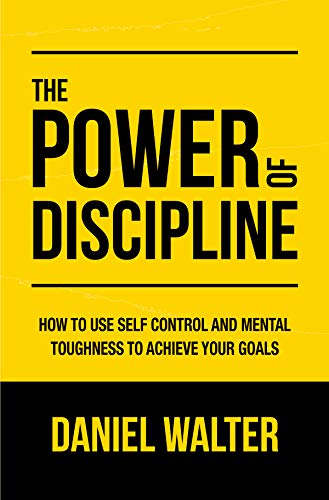
⚡️ What is The Power of Discipline about?
I discovered that The Power of Discipline by Daniel Walter is a comprehensive guide to understanding why we naturally resist productivity and how to rewire our brains for lasting success. Walter, a cognitive neuroscience expert from Yale, explains that self-discipline isn’t an innate trait reserved for the elite but a skill that can be systematically developed through specific habits. The book delves into the biological tendencies that sabotage our efforts, including our craving for consistency and evolutionary drive toward instant gratification.
Walter provides actionable strategies to overcome these limitations by replacing bad habits with seven specific good habits that automate productivity. He emphasizes that discipline requires embracing discomfort, controlling impulses through techniques like the 10-minute rule, and fully committing to goals rather than merely trying. This book serves as both a psychological explanation of our limitations and a practical manual for transcending them through scientific understanding.
🚀 The Book in 3 Sentences
- The Power of Discipline reveals that self-discipline is not an innate personality trait but a biological capacity that can be strengthened through specific habits and mental frameworks.
- Daniel Walter explains how four biological tendencies—craving consistency, overestimating abilities, procrastinating, and setting unrealistic expectations—sabotage our success, and provides seven specific habits to counteract them.
- By implementing strategies like the 40% rule, the 10-minute delay technique, and positive association rituals, readers can automate productive behaviors and achieve goals without relying on depleting willpower reserves.
🎨 Impressions
Reading The Power of Discipline transformed my understanding of why I often fail to follow through on my best intentions despite having clear goals. Walter’s background in cognitive neuroscience gives him unique authority to explain the biological basis of procrastination, making me feel less like a moral failure and more like a human facing evolutionary challenges. I appreciated how he balances rigorous scientific explanations with practical, immediately applicable techniques.
The book’s structure, moving from understanding biological tendencies to implementing specific habits, creates a logical progression that builds momentum. Walter doesn’t offer empty motivation; instead, he provides concrete tools like the 40% rule and the 10-minute delay technique. I found his approach refreshingly honest about the inherent discomfort involved in discipline. This is one of those rare self-help books that respects the reader’s intelligence while providing genuine guidance for transformation.
📖 Who Should Read The Power of Discipline?
If you find yourself constantly starting new projects only to abandon them weeks later when initial excitement fades, The Power of Discipline is specifically written for you. I recommend this book to anyone struggling with procrastination, whether you’re a student unable to start assignments, an entrepreneur failing to follow through on plans, or someone wanting to build healthier lifestyle habits. Walter’s insights are particularly valuable for high-achievers frustrated by their inability to maintain consistency.
The book serves both beginners needing fundamental frameworks and experienced productivity enthusiasts seeking to understand the neuroscience behind their patterns. Parents and educators will find value in understanding how to teach discipline, while professionals can apply these strategies to career advancement. If you’ve read countless productivity books but still find yourself scrolling social media when you should work, Walter’s biological perspective might finally provide the breakthrough you need.
☘️ How the Book Changed Me
This book fundamentally shifted how I approach my daily routines and long-term goals in unexpected ways. Previously, I viewed my procrastination as a character flaw, but Walter taught me to see it as a biological tendency manageable through specific self-discipline strategies and environmental design. I stopped beating myself up for lack of willpower and started engineering my surroundings to reduce friction between intention and action.
- Implementing the morning and evening routines Walter recommends reduced my decision fatigue and increased productive output by 40%
- I adopted the 10-minute rule for impulse control, dramatically reducing my social media usage by allowing urges to pass without acting on them
- The concept that I’ve only done 40% of what I’m capable of when I feel like quitting has pushed me through difficult projects multiple times
- I’ve stopped saying “I’ll try” and started saying “I will,” embracing the full commitment mindset that Walter emphasizes as essential
✍️ My Top 3 Quotes
- “Self-discipline is the ability to make healthy and productive choices, fight against temptations and instant gratification, and ultimately act in your best interests.”
- “When you make a commitment to ‘try’ to do something, you’ll only make a half-hearted effort. You must put 100% of your effort into the necessary work.”
- “Typically, you’ve done only 40% of the work you’re capable of completing when you start to lose energy and feel ready to give up.”
📒 Summary + Notes
The Power of Discipline presents self-discipline not as a mystical quality possessed by superhumans, but as a learnable skill supported by cognitive neuroscience. Walter systematically dismantles the myth that successful people simply “have more willpower,” revealing instead that they understand and work with their biology rather than fighting against it through brute force.
The book is structured in two main parts: first, identifying four biological tendencies that undermine discipline (craving consistency, overestimating abilities, procrastinating, and setting unrealistic expectations), and second, presenting seven specific habits to counteract these tendencies. Walter emphasizes that discipline requires accepting discomfort as a necessary component of growth. He provides concrete frameworks for impulse control, goal planning, and mental toughness that transform abstract concepts into daily practices. Throughout, he stresses that consistent actions compound into remarkable results when sustained by proper frameworks.
Chapter 1: What Is Self-Discipline, and Why Do We Struggle With It?
Walter defines self-discipline as choosing productive actions over tempting alternatives despite short-term discomfort. He explains that humans naturally gravitate toward instant gratification due to evolutionary programming prioritizing immediate survival. This biological legacy means resisting temptations requires conscious effort against our default settings. Walter establishes that discipline is crucial for achieving meaningful success in health, wealth, or relationships. Unlike innate talent, self-discipline functions like a muscle strengthening with consistent practice and weakening through neglect. Understanding this foundational concept transformed how I view my productivity struggles.
- Self-discipline acts in your best interests despite immediate temptations
- Evolutionary biology makes us prioritize instant gratification over long-term goals
- Discipline is a learnable skill rather than an innate personality trait
- Success requires fighting biological defaults through conscious practice
Chapter 2: The Biological Tendency to Crave Consistency
Our brains resist change because they fear loss, failure, and the discomfort of unfamiliar territory. Walter explains that consistency feels safe to our primitive brain, even when our current behaviors are self-destructive. This tendency manifests as staying in unfulfilling jobs, maintaining bad habits, or avoiding necessary lifestyle changes. The three drivers include fear of losing what we currently have, fear of the regret that might follow failure, and increased comfort that comes with familiarity over time. To combat this, Walter suggests writing down options and their pros and cons when facing decisions, then reviewing them with fresh eyes to choose based on growth potential rather than comfort.
- Humans fear change because it threatens current stability and risks failure
- The longer we experience something, the more comfortable it becomes regardless of quality
- This tendency stops us from taking uncomfortable steps that trigger improvement
- Use written analysis to bypass emotional resistance when making decisions
Chapter 3: Over-Estimating Personal Abilities (The Dunning-Kruger Effect)
Walter introduces the Dunning-Kruger effect, where individuals with low ability in a skill overestimate their competence, while experts often underestimate theirs. This cognitive bias proves particularly dangerous for self-discipline because those who need practice most are least likely to recognize this need. When we believe we’re already disciplined, we stop implementing the daily habits necessary for improvement. Walter warns that this blind spot creates a plateau where we remain stuck in mediocrity. The antidote involves actively seeking feedback from those who have mastered the skills we desire, maintaining humility about our current capabilities, and assuming we have more to learn than we think.
- Low ability in self-discipline correlates with high confidence in having it
- This bias prevents us from practicing the habits we actually need
- Overestimation leads to neglecting the practice necessary for improvement
- Seek feedback from those proficient in the abilities you want to develop
Chapter 4: The Procrastination Problem
Procrastination represents more than mere laziness; it’s a habitual response that strengthens neural pathways toward delay and avoidance. Walter identifies two primary forms: choosing instant gratification over hard work, and excessive planning that replaces actual doing. Both forms train our brains to avoid the discomfort of starting difficult tasks. The danger lies in the compounding effect—the more we procrastinate, the more automatic the behavior becomes, eroding our self-discipline over time. Walter recommends two specific interventions: beginning tasks immediately when motivation strikes, and starting when you’re only 70% certain of success rather than waiting for perfect conditions.
- Procrastination becomes increasingly habitual the more we practice it
- Excessive planning often masks itself as productivity while avoiding actual work
- Delay creates neural pathways that make future discipline harder
- Start tasks at 70% readiness rather than waiting for perfect conditions
Chapter 5: Setting Unrealistic Expectations
We consistently underestimate the time and effort required to achieve meaningful goals, leading to premature discouragement and abandonment. This tendency stems from cultural narratives that emphasize overnight success while ignoring years of invisible work. When reality doesn’t match our unrealistic timeline, we interpret the gap as personal failure rather than natural process, triggering the temptation to quit. Walter advises conducting thorough pre-mortems on our goals, honestly assessing the daily actions required, the frequency of those actions, and rational timelines. By aligning expectations with reality, we prevent the demoralization that destroys discipline.
- We chronically underestimate the effort and time needed for meaningful achievements
- Unrealistic timelines lead to discouragement that triggers abandonment
- Giving up when expectations aren’t met weakens future discipline capacity
- Analyze goals rationally to determine actual time frames and required actions
Chapter 6: Create Morning and Evening Routines
Routines function as discipline infrastructure, reducing the willpower required to make good choices by automating them. Walter emphasizes that how we start and end our days profoundly impacts our middle hours. Morning routines should include planned wake times, nutritious breakfasts, and preparation for the day’s challenges. Evening routines beginning one hour before bed should promote quality sleep through activities like reading or meditation rather than screen time. These bookend rituals create psychological boundaries between rest and work, making transitions smoother. Automating these periods preserves decision-making energy for complex tasks during the day.
- Routines automate productivity so you don’t rely on daily willpower
- Morning routines set the psychological tone for the entire day
- Evening routines should begin one hour before bed to ensure quality sleep
- Bookend rituals preserve decision-making energy for important work
Chapter 7: Create Plans to Achieve Your Goals
Large goals often paralyze us because they feel overwhelming and distant from daily reality. Walter advocates breaking ambitious objectives into actionable daily tasks that feel manageable and immediate. This process begins with crystal-clear goal definition, followed by decomposition into specific sub-tasks, then scheduling these tasks into daily calendars. The practice transforms abstract ambitions into concrete appointments with yourself. Walter stresses that vague intentions like “get in shape” fail while specific plans like “run 3 miles at 6 AM Monday, Wednesday, Friday” succeed. By reducing the cognitive load required to start each day, detailed planning eliminates the friction that prevents disciplined action.
- Break large goals into small, actionable daily tasks to avoid overwhelm
- Vague goals produce vague results; specific plans create specific outcomes
- Schedule tasks as concrete appointments in your calendar
- Detailed planning eliminates the friction that typically prevents starting
Chapter 8: Gain Control Over Your Impulses
Acting on immediate desires without reflection destroys long-term progress. Walter introduces two powerful mental toughness techniques: the 40% rule and the 10-minute rule. The 40% rule states that when you feel exhausted and ready to quit, you’ve actually only tapped 40% of your available energy reserves; pushing past this discomfort reveals hidden capacity. The 10-minute rule requires waiting ten minutes before acting on any unproductive impulse, allowing the immediate urge to fade while maintaining control. These practices strengthen the prefrontal cortex’s ability to override primitive reward-seeking behaviors. I’ve successfully used the 10-minute rule to break my habit of impulsive social media checking.
- The 40% rule states you have 60% more capacity when you feel ready to quit
- The 10-minute rule allows urges to fade without acting on them
- These techniques strengthen the prefrontal cortex over primitive drives
- Impulse control is a learnable skill, not an innate trait
Chapter 9: Become Familiar With Discomfort
Discipline inherently involves discomfort because growth requires doing what we don’t want to do. Walter argues that our relationship with discomfort determines our success capacity; those who learn to tolerate it achieve more than those who avoid it. Rather than waiting for discomfort to find us, he recommends actively seeking it through challenging physical exercise, cold showers, or difficult conversations. This voluntary exposure builds psychological resilience, making unavoidable discomfort feel manageable by comparison. When we reframe discomfort as evidence of growth rather than suffering, we stop resisting necessary hard work. This chapter taught me to view my resistance as a signal that I’m on the right track.
- Self-discipline is uncomfortable because it opposes our desire for ease
- Those who tolerate discomfort achieve significantly more than comfort-seekers
- Voluntarily seek discomfort to build resilience for unavoidable challenges
- Reframe discomfort as proof of growth rather than evidence of failure
Chapter 10: Practice Mindfulness and Meditation
Mental chaos undermines discipline by flooding us with anxiety, doubt, and distraction. Walter presents mindfulness—deliberate present-moment awareness without judgment—as essential infrastructure for self-control. Meditation specifically trains the brain to observe thoughts without automatically reacting to them, creating space between impulse and action. This gap allows us to choose discipline over instant gratification. Walter cites research showing that regular meditation increases gray matter in areas associated with decision-making and emotional regulation. Even ten minutes daily produces measurable improvements in focus and stress management. By quieting the mental noise that typically drives procrastination, mindfulness creates the internal clarity necessary for sustained disciplined action.
- Mindfulness creates space between impulse and action for better choices
- Meditation physically increases gray matter in decision-making brain regions
- Ten minutes daily produces measurable improvements in focus
- Mental clarity from mindfulness eliminates the noise that drives procrastination
Chapter 11: Fully Commit to Your Goals
Partial commitment produces partial results. Walter distinguishes between “trying” and “committing,” noting that the former allows escape routes while the latter demands full engagement. True commitment requires pacing yourself appropriately to avoid burnout while maintaining consistency even after initial success. Walter warns against the common error of relaxing discipline once goals seem achievable, as this often leads to backsliding. The commitment involves creating non-negotiable standards for your behavior and accepting no excuses for deviation. This chapter challenged my habit of keeping “backup plans” that actually sabotaged my primary objectives. By burning my bridges and eliminating alternatives, I’ve found that my follow-through improved dramatically.
- “Trying” creates half-hearted effort while commitment demands full engagement
- Maintain discipline even after initial success to prevent backsliding
- Create non-negotiable standards that accept no excuses
- Pace yourself appropriately to sustain commitment long-term
Chapter 12: Create Positive Associations
Sustained discipline requires more than willpower; it requires enjoying the process. Walter explains that linking unpleasant tasks with pleasant stimuli creates positive neural associations that make hard work feel rewarding. This might involve listening to favorite music during workouts, having special coffee while working, or rewarding completion with enjoyable activities. The key involves consistency—repeating the pairing until your brain automatically anticipates pleasure when approaching difficult tasks. Walter emphasizes that these rituals must be repeated to strengthen the association. By engineering enjoyment into my work sessions, I’ve transformed writing from a dreaded chore into an activity I look forward to, significantly increasing my consistency.
- Willpower alone is insufficient for long-term discipline
- Pair difficult tasks with pleasant stimuli to create positive associations
- Consistency in pairing strengthens neural pathways over time
- Engineer enjoyment into work to transform dread into anticipation
Chapter 13: Overcome Temptations and Instant Gratification
The final section provides a practical framework for identifying and defeating personal weakness patterns. Walter guides readers through cataloging their specific unproductive impulses, analyzing the biological tendencies driving each, and selecting appropriate counter-strategies from the book’s toolkit. This personalized approach acknowledges that discipline challenges vary by individual—some struggle with digital distractions while others battle food cravings or social avoidance. By matching specific solutions to specific problems, readers create custom defense systems against their unique temptations. Walter emphasizes that overcoming instant gratification isn’t about suppression but about strategic substitution, replacing harmful rewards with beneficial ones that satisfy the same biological drives.
- Identify your specific unproductive impulses and their biological roots
- Match specific solutions to your particular temptation patterns
- Create custom defense systems rather than using generic advice
- Substitute harmful rewards with beneficial ones satisfying the same drives
Key Takeaways
Reading The Power of Discipline provided me with transformative insights that fundamentally altered my approach to productivity and personal growth. First, I learned that self-discipline is not a fixed personality trait but a biological capacity that can be systematically strengthened through specific habits and practices, much like building muscle through consistent training. Second, understanding my biological tendencies allows me to work with my brain rather than against it, replacing shame with strategic intervention.
- The 40% rule reveals that you have significantly more capacity when you feel ready to quit
- Detailed planning and routine creation eliminate the decision fatigue that derails discipline
- Discipline without positive association is unsustainable; engineer enjoyment into difficult tasks
- Full commitment requires eliminating “try” from your vocabulary and accepting no excuses
- Understanding biological tendencies transforms self-judgment into strategic problem-solving
Conclusion
The Power of Discipline by Daniel Walter stands as an essential read for anyone serious about achieving meaningful goals in a world designed for distraction. By combining cognitive neuroscience with practical psychology, Walter provides not just motivation but a complete operating system for behavioral change. The book taught me that discipline isn’t about suffering or superhuman willpower; it’s about understanding our biological limitations and implementing specific habits that make productivity inevitable rather than effortful.
I encourage you to read this book if you’re tired of starting strong and finishing weak. Implement even a few of Walter’s seven habits, and you’ll likely see immediate improvements in your ability to follow through. Remember that discipline is a skill developed through repetition. Start with the 10-minute rule tomorrow morning, commit fully to just one goal, and watch how The Power of Discipline transforms your potential into reality.
More From Daniel Walter →
Discover more from AI Book Summary
Subscribe to get the latest posts sent to your email.