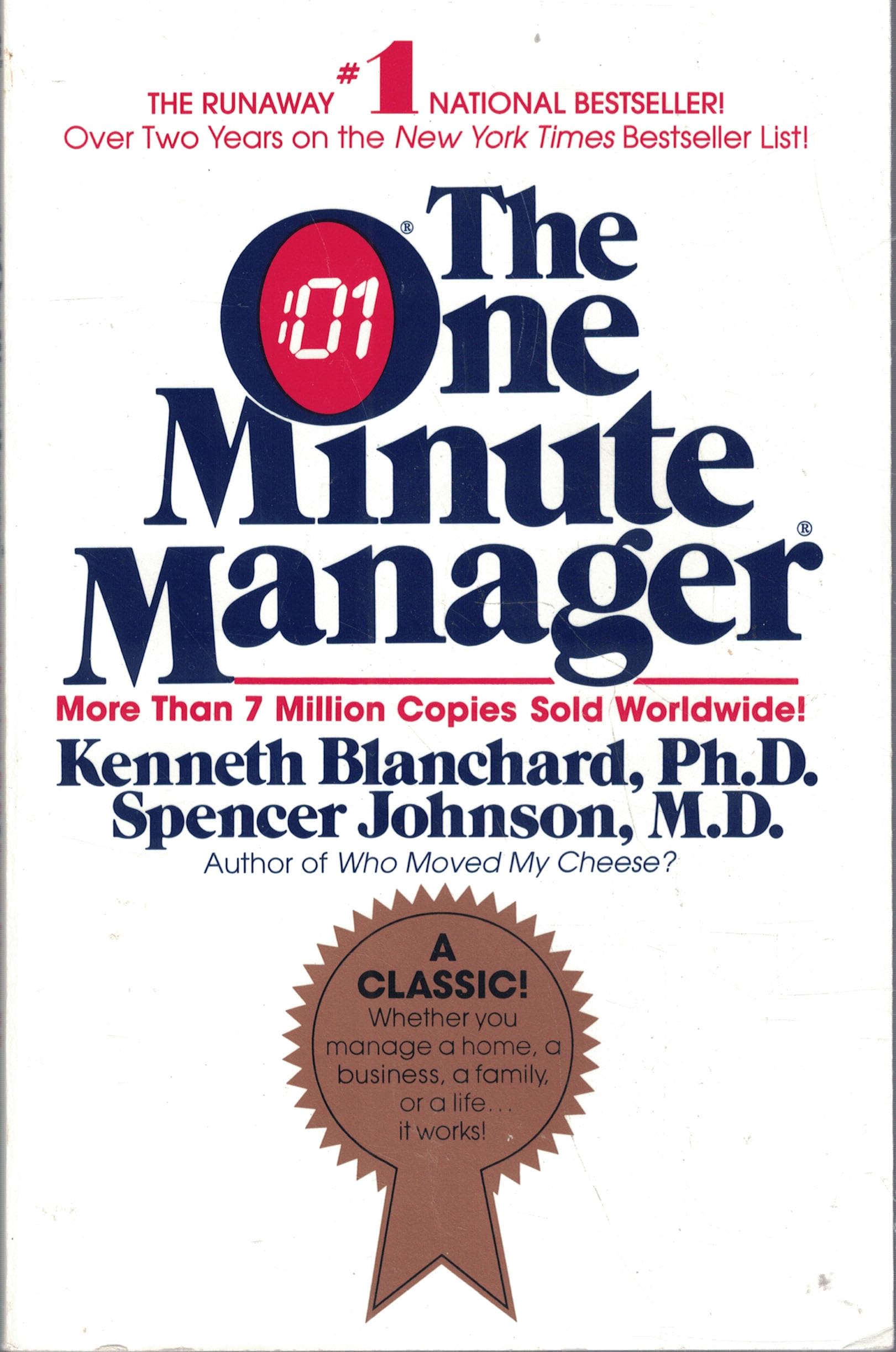
⚡️ What is The One Minute Manager About?
Most business books are dense, 300-page slogs that could have been an email. This isn’t one of them. In roughly 100 pages, More summaries by Kenneth Blanchard; Spencer Johnson present a management fable that has sold over 15 million copies and been translated into 47 languages. It’s a deceptively simple story about a young man searching for the perfect boss—someone who gets results without burning people out. What he finds is a framework built on the idea that management shouldn’t be a full-time job of babysitting, but a series of precise, high-impact interventions.
The central thesis is that people are your most expensive and valuable resource, yet most organizations treat them like machines that only need an annual oil change (the dreaded yearly review). These authors argue that by setting crystal-clear goals and providing immediate, specific feedback, you can get out of your employees’ way and let them actually do their jobs. It’s a foundational text in Management book summaries because it prioritizes human psychology over corporate bureaucracy.
🚀 The Book in 3 Sentences
- Effective management is achieved through three simple tools: One Minute Goals, One Minute Praisings, and One Minute Reprimands.
- The goal is to catch people doing something right rather than waiting for them to fail, fostering a culture of self-management and high morale.
- By keeping interactions brief and focused, managers save time and empower their teams to take ownership of their own performance.
🎨 Impressions
I’ll be honest: when I first picked this up, I thought it was going to be total fluff. The “fable” format can feel a bit dated, and the dialogue between the young man and the manager is undeniably cheesy. It feels like a children’s book for executives. But once I got past the 1980s corporate aesthetic, I realized why it’s a classic. It’s a direct attack on the “seagull manager”—the boss who flies in, makes a lot of noise, poops on everyone, and then flies away.
What I found most refreshing was the lack of jargon. The authors don’t try to sound smart; they try to be useful. I dog-eared the section on “catching people doing something right” because it’s so counter-intuitive to how most offices run. We’re usually so busy putting out fires that we ignore the people who are actually doing their jobs well. It’s a convicting read if you’ve ever realized you only talk to your direct reports when something is broken. Is it simplistic? Yes. But most managers I know can’t even get these three simple things right, so maybe simple is exactly what we need.
📖 Who Should Read The One Minute Manager?
If you’ve just been promoted to your first leadership role and feel like you’re drowning in meetings, this is your survival guide. It’s also perfect for the “accidental manager”—the person who was great at their job and suddenly found themselves in charge of other people without any training. However, if you’re looking for a deep dive into organizational design or complex labor relations, you’ll find this frustratingly thin. It’s for the practitioner who wants a framework they can start using by Tuesday morning.
☘️ How This Book Changed My Thinking
Before reading this, I thought being a “good boss” meant being constantly available and involved in every decision. I thought “supportive” meant “present.”
- I stopped seeing my time as a manager as a quantity game and started seeing it as a quality game; sixty seconds of clarity is better than an hour of vague check-ins.
- I shifted from “catching mistakes” to actively hunting for wins. It changed the entire energy of my team’s Slack channel.
- I realized that if an employee doesn’t know exactly what success looks like on one sheet of paper, it’s my fault they’re underperforming, not theirs.
✍️ 3 Quotes That Stuck With Me
- “People who feel good about themselves produce good results.” — This is the ultimate rebuttal to the ‘management by fear’ school of thought.
- “Help people reach their full potential: catch them doing something right.” — It’s a simple shift that completely flips the traditional power dynamic.
- “The best minute I spend is the one I invest in people.” — A reminder that management isn’t an interruption of our work; it IS our work.
📒 Summary + Notes
The book follows a young man’s quest to find an effective manager. He discovers that most managers fall into two camps: the “hard-nosed” autocrats who get results but lose people, and the “nice” democrats who keep people happy but lose results. The One Minute Manager represents a third way. He claims he doesn’t make decisions for his people; he simply sets the stage for them to manage themselves. This self-sufficiency is the ultimate goal of the framework.
The logic is based on behavioral science. By shortening the feedback loop between an action and its consequence (whether positive or negative), you accelerate learning. Most corporate systems do the opposite—they wait months to tell someone they’re doing a great job or a terrible one. By then, the lesson is lost. The One Minute Manager argues that clarity and speed are the most compassionate things you can provide as a leader. By the end of the book, you realize that being a ‘One Minute Manager’ isn’t about being lazy; it’s about being incredibly disciplined with your communication.
The Search
What if the world’s most effective manager wasn’t a workaholic or a genius, but just someone who understood human nature? The story begins with a young man traveling the globe, interviewing managers who either cared too much about the bottom line or too much about being liked. He was looking for the “middle way”—a manager who could produce profit and happy people simultaneously. He eventually hears of a legendary manager in a nearby town and schedules a meeting, skeptical that such a person exists.
The One Minute Manager
The manager the young man meets is surprisingly relaxed and doesn’t seem very busy at all. He explains that his job isn’t to do the work, but to help his people succeed so they can do the work themselves. He refuses to solve the young man’s problems for him, instead directing him to speak with his subordinates. This sets the tone for the entire philosophy: the manager’s success is entirely dependent on the success of his team, and that success comes from feeling good about oneself.
The First Secret: One Minute Goals
Have you ever started a job and realized three months in that you have no idea what ‘success’ actually looks like? The first secret is simple: all performance starts with clear goals. Every employee should have their goals written down on a single sheet of paper—no more than 250 words. The idea is that it should take less than a minute to read. This prevents the “moving goalposts” phenomenon that kills morale in most companies. If you can’t describe what you’re trying to achieve in a minute, you don’t understand the goal well enough yet.
The Second Secret: One Minute Praisings
Most of us are conditioned to wait for the annual review to hear we’re doing a good job—which is frankly ridiculous. The second secret is to catch people doing something right and tell them immediately. This isn’t just a generic “good job.” You have to be specific about what they did right and tell them how it helps the organization. Then, you pause for a moment of silence to let them *feel* how good it feels. It’s about reinforcing the specific behaviors you want to see again, not just being “nice.”
The Third Secret: One Minute Reprimands
What happens when someone messes up? In most offices, the boss fumes silently for weeks and then blows up. The One Minute Reprimand is the opposite: you address the mistake immediately. The reprimand is split into two halves. First, you tell them exactly what they did wrong and how you feel about it (frustrated, worried, etc.). Then, in the second half, you remind them how much you value them as a person and that you’re only angry because their performance was below their high standards. You attack the behavior, never the person. Once it’s over, it’s over—no lingering resentment.
The Best Manager Explains
The manager sits back and explains that people are like bowling. If you bowled but couldn’t see the pins, you wouldn’t be very excited to play. Goals are the pins; feedback is seeing them fall. He argues that most managers keep the pins behind a curtain and then yell at the bowler for not getting a strike. By being transparent and fast with feedback, you’re just giving people the information they need to stay motivated and course-correct in real-time. It’s not about control; it’s about clarity.
Why One Minute Goals Work
Is it really possible to manage someone in sixty seconds? The manager explains that most “performance problems” are actually communication problems. When people know exactly what they are being evaluated on, they don’t need you to watch them. They watch themselves. He points out that hiring a “winner” is expensive, but you can hire someone with potential and turn them into a winner by giving them a clear target. You can’t hit a target you can’t see, and 1-minute goals ensure the target is always in focus.
Why One Minute Praisings Work
Think about how we teach a child to walk. We don’t wait until they can run a marathon to cheer; we cheer when they just stand up and wobble. Most managers do the opposite with employees—they wait for perfection before offering a crumb of praise. This kills the learning process. Praising “approximate” successes in the beginning builds the confidence necessary to reach actual success later. It’s behavioral psychology 101: behavior that is rewarded is repeated. Why wouldn’t you use that to your advantage?
Why One Minute Reprimands Work
Correcting someone immediately prevents “gunnysacking.” This is when a manager stores up all their grievances in a big sack and then dumps them all over an employee during a review. By dealing with mistakes as they happen, the emotional stakes stay low. You’re only talking about one specific event, not the person’s entire character. Because you end the reprimand with a reminder of the person’s worth, they walk away feeling encouraged to do better, not defeated. You want them focused on their work, not on how much they hate you.
⚖️ A Critical Perspective
While the book’s simplicity is its strength, it’s also its greatest weakness. It treats management like training a puppy, which can feel patronizing to highly skilled professionals. In the modern knowledge economy, many “goals” are too complex to fit on a single page, and “reprimands” can feel overly aggressive in a culture that prizes psychological safety. Additionally, the book assumes every employee is a “potential winner” who just needs clarity—ignoring the reality of toxic personalities or profound skill gaps that no amount of one-minute feedback can fix. It’s a great starting point, but it lacks the nuance required for high-stakes, complex team dynamics.
🔄 How It Compares
Compared to Kim Scott’s Radical Candor, this book is much more focused on the mechanics of feedback rather than the relationship-building behind it. While Scott emphasizes “Caring Personally” as a prerequisite for “Challenging Directly,” Blanchard and Johnson focus on the efficiency and speed of the intervention. The One Minute Manager is the “lite” version of the feedback revolution—easier to implement but less emotionally complex.
🔑 Key Takeaways
Management is about removing friction, not creating it. Here is the core of the method:
- The 80/20 rule applies to management: 80% of your results come from 20% of your goals. Keep those goals visible and brief.
- Feedback must be immediate. Delaying praise or a reprimand makes it ineffective and leads to resentment.
- Always separate the behavior from the person. You can hate the mistake while still believing in the individual.
- Self-management is the ultimate efficiency. If you do your job right as a manager, you should become progressively less necessary for daily operations.
💬 Frequently Asked Questions
What is the main argument of The One Minute Manager?
The book argues that effective management doesn’t require a massive time investment. By using three techniques—One Minute Goals, One Minute Praisings, and One Minute Reprimands—managers can provide the clarity and feedback necessary for employees to manage themselves effectively, leading to both higher productivity and better team morale.
What are the three secrets of the One Minute Manager?
The three secrets are: 1. One Minute Goals (writing each goal on a single page), 2. One Minute Praisings (catching someone doing something right and telling them immediately), and 3. One Minute Reprimands (correcting a mistake as soon as it happens while reaffirming the person’s value afterward).
Is The One Minute Manager still relevant in 2025?
Yes, though its application has changed. In a world of remote work and digital communication, the need for immediate, clear feedback is even higher. While the term “reprimand” has evolved into “redirect,” the underlying behavioral science of short feedback loops remains a core pillar of effective leadership.
Does a One Minute Reprimand really work?
It works because it is specific and immediate. By addressing the behavior rather than the person, and by following up the critique with a reminder of the person’s worth, you avoid the defensiveness that usually kills performance. It keeps the focus on improvement rather than punishment.
Who should use the One Minute Manager techniques?
Anyone in a leadership role, from corporate executives to parents. The framework is designed for anyone who wants to help others perform better without spending their entire day micromanaging. It is especially useful for those who want to build a culture of autonomy and high accountability.
Conclusion
At the end of the day, The One Minute Manager is a book about respect. It respects the manager’s time by cutting out the fluff, and it respects the employee by being honest and direct. We’ve all worked for the boss who leaves us guessing, or the one who only speaks up when things are on fire. Blanchard and Johnson offer a simple, actionable alternative that turns management into a series of small, intentional moments rather than a looming cloud of anxiety.
If you take away just one thing, let it be the power of the pause. Whether it’s pausing to celebrate a win or pausing after a reprimand to let the lesson sink in, it’s those brief moments of human connection that drive performance. This classic remains a staple in Management book summaries because, despite all our new technology and fancy HR platforms, people still just want to know what the goal is and how they’re doing. Sometimes, being a great leader really does only take a minute.
More From Kenneth Blanchard; Spencer Johnson →
Discover more from AI Book Summary
Subscribe to get the latest posts sent to your email.