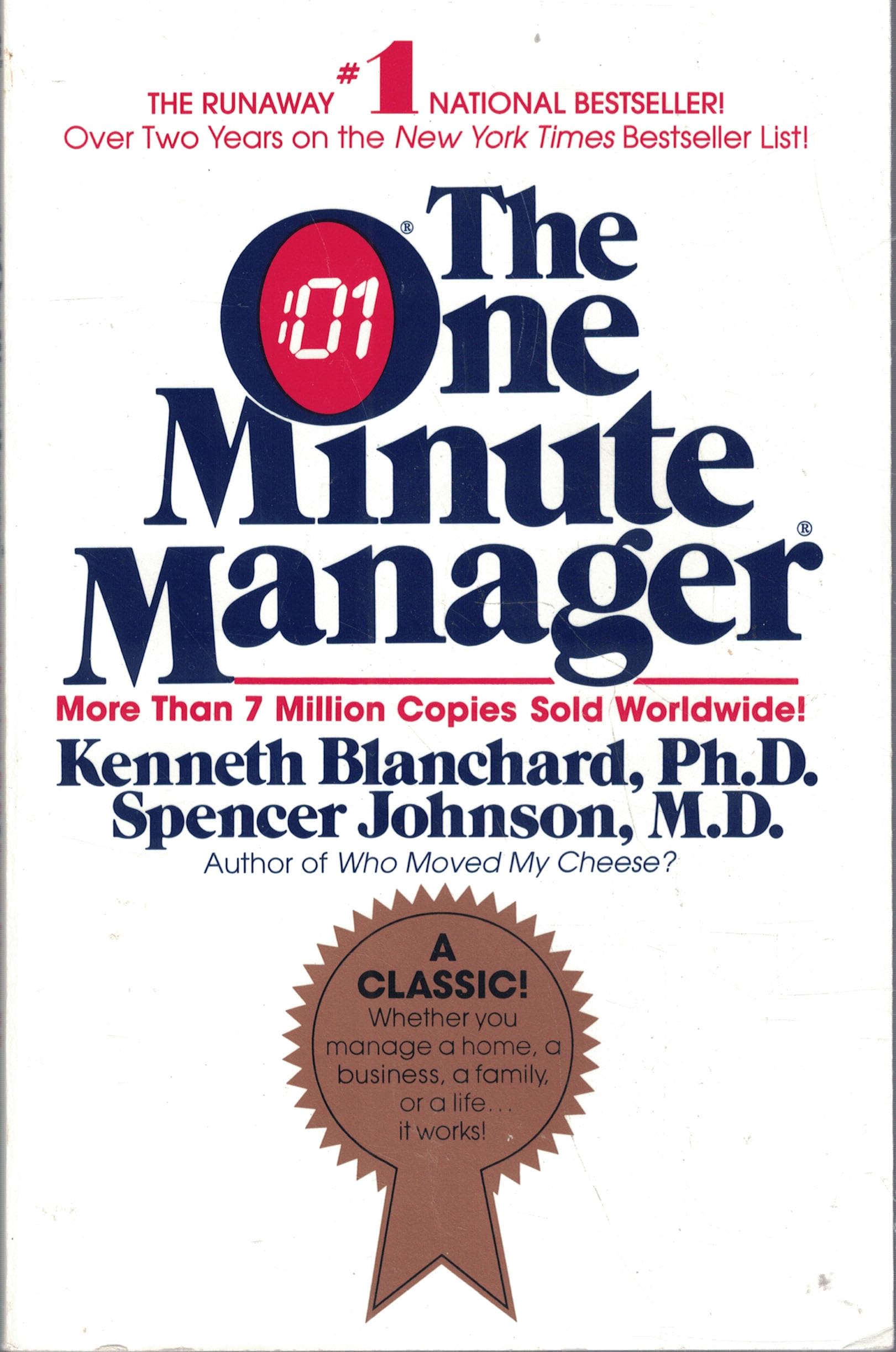
⚡️ What is The One Minute Manager about?
The One Minute Manager is a concise yet powerful management parable that reveals three practical techniques for effective leadership. The book follows a young man’s journey to discover a manager who achieves both outstanding results and employee satisfaction. Through allegorical storytelling, Blanchard and Johnson demonstrate how managers can accomplish more by focusing on three simple yet profound principles: setting clear One Minute Goals, providing immediate One Minute Praisings, and delivering constructive One Minute Reprimands. The book presents management not as a complex, time-consuming endeavor, but as a series of purposeful, minute-long interactions that empower employees and drive organizational success.
🚀 The Book in 3 Sentences
- The One Minute Manager teaches that effective management is about setting clear, concise goals that can be reviewed in just one minute, ensuring everyone understands expectations.
- Successful managers catch people doing things right and provide immediate, specific praise rather than only focusing on mistakes.
- When corrections are needed, they should be delivered promptly, specifically addressing the behavior rather than the person, and always ending with reaffirmation of the individual’s value.
🎨 Impressions
The One Minute Manager surprised me with its simplicity and profound wisdom. Rather than presenting complex theories, the book delivers practical, actionable techniques that any manager can implement immediately. What impressed me most was how the authors balanced achieving results while maintaining humanity in the workplace. The parable format makes the concepts memorable and accessible, proving that management doesn’t need to be complicated to be effective. This book demonstrates that the most powerful management strategies are often the simplest.
📖 Who Should Read The One Minute Manager?
The One Minute Manager is essential reading for anyone in a leadership position, from CEOs to team supervisors. It’s particularly valuable for new managers seeking foundational principles, experienced leaders looking to refresh their approach, and entrepreneurs building company cultures. The book is also beneficial for employees who want to understand effective management practices and parents who can apply these principles in family settings. Anyone responsible for guiding others toward achieving goals will find transformative value in these techniques.
☘️ How the Book Changed Me
Reading The One Minute Manager fundamentally transformed my approach to leadership and management.
- I shifted from focusing solely on results to understanding that people who feel good about themselves produce good results, creating a more positive and productive work environment.
- I learned to provide immediate feedback rather than waiting for formal performance reviews, which significantly improved my team’s performance and engagement.
- I adopted the practice of setting clear, concise goals that fit on a single page, eliminating confusion and aligning my team around shared objectives.
✍️ My Top 3 Quotes
- “People who feel good about themselves produce good results.”
- “The best minute I spend is the one I invest in people.”
- “Feedback is the breakfast of champions.”
📒 Summary + Notes
The One Minute Manager presents a revolutionary approach to leadership through three simple yet powerful techniques. This classic management book demonstrates that effective leadership doesn’t require complex systems or excessive time investment. Instead, it focuses on clear communication, immediate feedback, and genuine care for people. The following chapters reveal these transformative management strategies that have helped millions of leaders worldwide achieve better results while creating more satisfying work environments.
Chapter 1: The Search
The book opens with a young man searching for an effective manager. He interviews various managers, finding two types: those who are autocratic and results-oriented, and those who are democratic and people-oriented. Both types prove to be only partially effective because they focus exclusively on either results or people, not both. The young man eventually hears about a special manager who achieves outstanding results while maintaining high employee satisfaction. Intrigued by this seemingly impossible balance, he sets out to meet this remarkable leader.
- The search highlights that most managers are either task-oriented or people-oriented, rarely both.
- The young man’s journey represents the quest for balanced, effective leadership that produces results while valuing people.
- This chapter establishes the central question: Can a manager be both effective and humane?
Chapter 2: The One Minute Manager
The young man meets the enigmatic One Minute Manager, who surprises him with his calm demeanor and efficient approach to leadership. The manager explains that he holds brief weekly meetings focused on accomplishments, challenges, and future plans, but allows his team to make decisions. He reveals his core philosophy through a plaque on his wall: “People who feel good about themselves produce good results.” When asked about his title, he explains that he gets significant results while investing minimal time by focusing on what truly matters, but refuses to elaborate further, instead directing the young man to his team members.
- The manager demonstrates that effective leadership doesn’t require constant oversight or lengthy meetings.
- The connection between self-worth and performance establishes the foundation for the One Minute Manager’s approach.
- This chapter introduces the central mystery: What are the secrets behind the One Minute Manager’s success?
Chapter 3: The First Secret: One Minute Goals
The young man meets with Mr. Trenell, who reveals the first secret: One Minute Goal Setting. Trenell explains that most performance problems stem from employees not knowing what’s expected of them. In contrast, the One Minute Manager’s philosophy emphasizes “no surprises.” Each employee writes down 5-6 key goals with performance standards, keeping each description under 250 words. These goals are reviewed frequently to ensure alignment. This practice eliminates confusion about responsibilities and allows employees to self-monitor their progress, as they clearly understand what’s expected.
- Clear goals are the foundation of effective performance, eliminating ambiguity about expectations.
- The 250-word limit forces clarity and focus, ensuring goals are easily understood and remembered.
- Regular review of goals keeps them top-of-mind and allows for course correction when needed.
- This secret addresses the fundamental question: “What am I supposed to do?”
Chapter 4: The Second Secret: One Minute Praisings
The young man then speaks with Mr. Levy, who shares the second secret: One Minute Praisings. Levy explains that most managers focus on catching people doing things wrong, while the One Minute Manager catches people doing things right. When the manager observes good performance, he immediately provides specific praise for the action. This approach is particularly important for new employees or those tackling new responsibilities. The company motto reflects this philosophy: “Help people reach their full potential: catch them doing something right.” This immediate positive reinforcement builds confidence and encourages repetition of desired behaviors.
- Immediate praise for specific actions reinforces positive behavior more effectively than delayed feedback.
- The approach mirrors how children learn language, building on small successes rather than punishing mistakes.
- This secret transforms the traditional management focus from error-finding to success-recognition.
- Consistent praising builds employee confidence and motivation, even during challenging times.
Chapter 5: The Third Secret: One Minute Reprimands
The final secret is revealed by Ms. Brown: One Minute Reprimands. When the One Minute Manager learns about a mistake, he addresses it immediately. He expresses his feelings about the specific behavior, not the person, making it clear that he values the individual but disapproves of the action. The reprimand is brief, direct, and followed by a reaffirmation of the person’s value. Importantly, the company culture allows people to laugh at their mistakes, removing the shame associated with errors. This approach ensures that issues are addressed promptly without damaging relationships.
- Immediate feedback about mistakes allows for quick correction and prevents small issues from becoming major problems.
- The focus is on the behavior, not the person, maintaining the individual’s dignity while addressing the issue.
- Reprimands end with reaffirmation of the person’s value, separating the action from the individual’s worth.
- The ability to laugh at mistakes creates a psychologically safe environment where learning can occur.
Chapter 6: The Best Manager Explains
In the final chapter, the One Minute Manager explains the reasoning behind his three secrets. He clarifies that “one minute” is symbolic of efficient management, though many interactions do take about a minute. He shares his philosophy that companies invest heavily in salaries but neglect investing in people’s development. His desk note reads: “The best minute I spend is the one I invest in people.” Using a bowling analogy, he explains that people can’t perform well if they don’t know where the pins are—clear goals are essential. He emphasizes that “feedback is the breakfast of champions” and that everyone is a potential winner if properly guided. The manager believes in hiring people with potential and training them, rather than only seeking proven performers.
- The symbolic “one minute” represents efficiency in management interactions, not literally timed exchanges.
- The bowling analogy perfectly illustrates why clear goals (knowing where the pins are) are essential for performance.
- The manager’s philosophy views people as investments rather than expenses, emphasizing development over mere supervision.
- The book concludes with the young man joining the organization and eventually becoming a One Minute Manager himself, pledging to share these secrets with others.
Key Takeaways
The One Minute Manager offers profound insights that can transform any leadership approach. These key principles represent the essence of effective management and can be implemented immediately for significant impact.
- Clear goals are non-negotiable—people cannot perform well if they don’t know what’s expected of them.
- Immediate positive reinforcement is more powerful than delayed praise or punishment.
- Address mistakes promptly and specifically, focusing on behaviors rather than personal attributes.
- Invest in people development—the highest return comes from helping others reach their potential.
- Balance results and relationships—true effectiveness requires attention to both outcomes and people.
Conclusion
The One Minute Manager demonstrates that effective leadership doesn’t require complex systems or excessive time investment. By implementing these three simple techniques—clear goal setting, immediate praise, and prompt reprimands—managers can achieve outstanding results while creating positive work environments. The book’s enduring popularity testifies to the timeless wisdom of these principles. Whether you’re a new manager or an experienced leader, these strategies can transform your approach and help you bring out the best in your team. I highly recommend reading the full book to fully absorb these powerful concepts and begin your journey to becoming a One Minute Manager.
More From Kenneth Blanchard; Spencer Johnson →