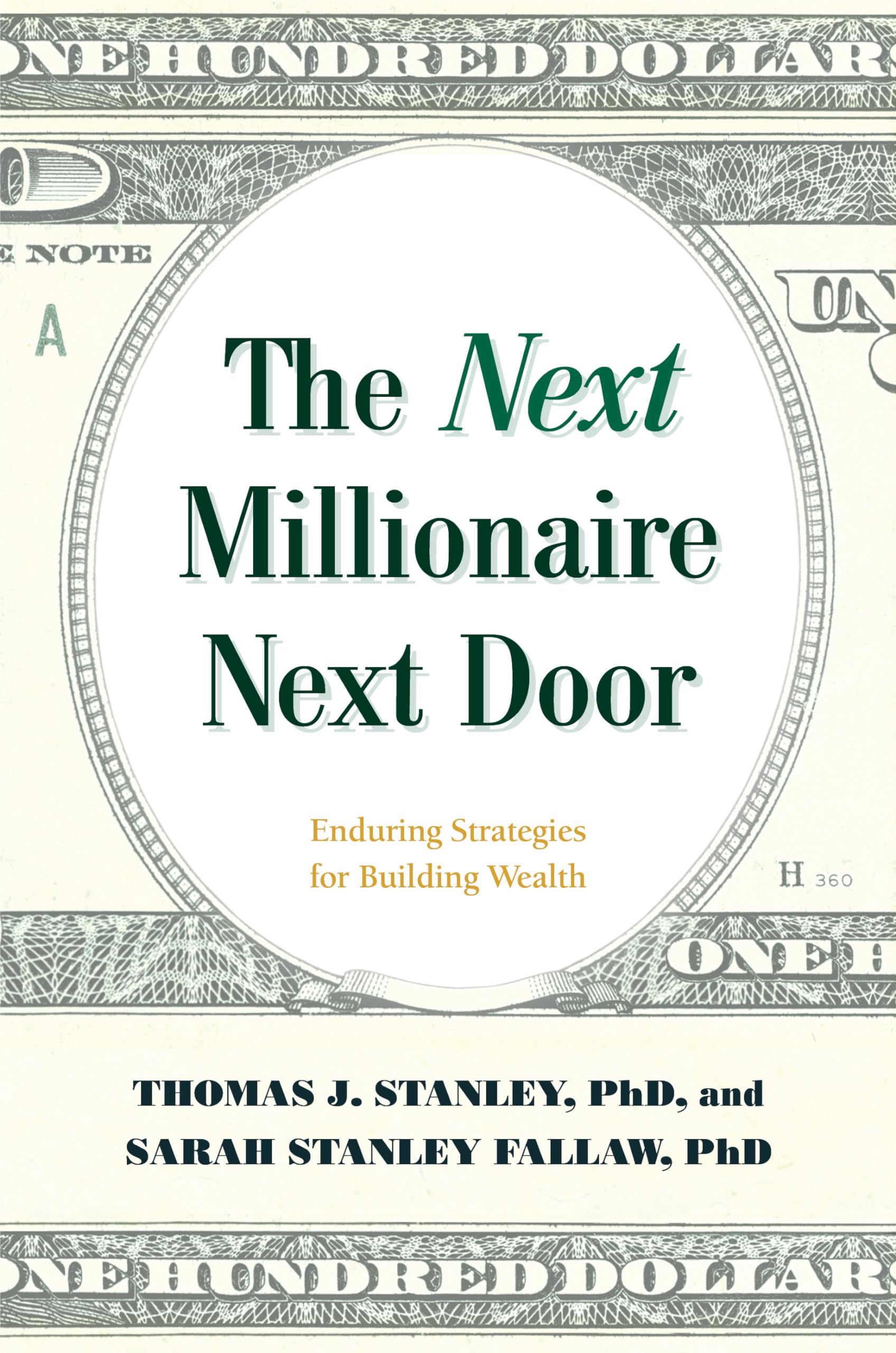
⚡️ What is The Next Millionaire Next Door About?
Ever feel like you’re running a race where the finish line keeps moving? You get a raise, you buy a slightly nicer car, you upgrade the kitchen, and somehow, your bank account looks exactly the same as it did three years ago. This is the central puzzle that More summaries by Thomas J. Stanley; Sarah Stanley Fallaw tackle in their follow-up to the 1996 classic. They argue that most of what we think we know about “rich people” is a carefully marketed lie. Real wealth isn’t the Ferrari in the driveway; it’s the assets you own that you don’t show off.
The authors use decades of survey data to show that the “millionaire next door” is still very much alive, though they face new temptations in the age of social media. It’s a sobering, data-driven look at how regular people—teachers, engineers, small business owners—quietly build fortunes while their high-earning neighbors are often just one missed paycheck away from disaster. If you’ve ever felt guilty for not “keeping up with the Joneses,” this book is your permission slip to stop trying. You can find more wisdom like this in our finance book summaries section.
🚀 The Book in 3 Sentences
- Wealth is what you accumulate, not what you spend, and it is most often achieved through a combination of frugality, discipline, and a high savings rate rather than a massive inheritance.
- The biggest threat to building wealth is “Social Motivated Consumption”—the urge to buy things to signal status to others.
- Being a “Prodigious Accumulator of Wealth” (PAW) requires ignoring the hyper-consumption culture and focusing on financial independence over outward displays of riches.
🎨 Impressions
I’ll be honest: reading this book felt like a cold shower. In a world where every 22-year-old “guru” on YouTube is flashing a rented Lamborghini, Stanley and Fallaw’s insistence on used cars and modest homes feels almost radical. It’s not a flashy book. It doesn’t promise you’ll be rich by Tuesday. But it’s incredibly grounding because it’s based on math and human psychology rather than hype. I found myself looking at my Amazon cart and wondering, “Am I buying this because I need it, or because I want to feel like a person who owns this?”
What frustrated me occasionally was the repetitive nature of the data. Yes, we get it—millionaires drive Toyotas. But the repetition serves a purpose: it’s trying to deprogram years of consumerist brainwashing. It’s an unsexy message, but it’s the kind of unsexy that actually works. I dog-eared the section on “Economic Outpatient Care” (parents giving too much money to adult children) because it’s a trap I see so many well-meaning families fall into without realizing they are actually crippling their kids’ financial future.
📖 Who Should Read The Next Millionaire Next Door?
This is for the person who earns a good income but feels like they have nothing to show for it. If you’re a high-earner living paycheck to paycheck, this is your wake-up call. However, if you’re looking for complex stock-picking strategies or advanced tax loopholes, you’ll be disappointed. This is a book about the psychology and habits of wealth, not the technicalities of the market. It’s also a must-read for parents who want to raise financially literate kids who don’t rely on the “Bank of Mom and Dad” forever.
☘️ How This Book Changed My Thinking
Before reading this, I subconsciously equated wealth with high-end brands. Now, I see those brands as a potential “wealth tax” people pay to look important.
- I stopped viewing my income as “spending money” and started viewing it as “seed money” for investments.
- I became much more critical of “lifestyle creep”—the tendency to spend more just because you’re earning more.
- I realized that financial independence is the ultimate luxury, far more valuable than any watch or designer bag.
✍️ 3 Quotes That Stuck With Me
- “Wealth is more often the result of a lifestyle of hard work, perseverance, planning, and, most of all, self-discipline.” — This reminds me that there’s no secret shortcut; it’s a grind.
- “Many people who live in expensive homes and drive luxury cars do not actually have much wealth.” — A simple reminder that the “image” of wealth is often the enemy of actual wealth.
- “Financial independence is more important than displaying high social status.” — This is the book’s North Star; if you value what others think over your own freedom, you’ll never be rich.
📒 Summary + Notes
The central argument of the book is that building wealth is a behavioral challenge, not a knowledge problem. The authors break down people into two groups: UAWs (Under Accumulators of Wealth) and PAWs (Prodigious Accumulators of Wealth). A UAW might earn $250,000 a year but spend $245,000 to maintain a specific image. A PAW might earn $80,000 but live on $50,000 and invest the rest. Over twenty years, the PAW will be far wealthier than the high-earner. The book essentially begs you to choose which one you want to be.
Throughout the narrative, the authors dismantle the myth that you need a high-profile job or a massive inheritance to be a millionaire. Most of the people they surveyed are self-made, first-generation wealthy. They didn’t win the lottery; they just didn’t buy the new iPhone every year. The authors want you to believe that the path to a seven-figure net worth is paved with boring choices: staying married, living in the same house for twenty years, and driving a car until the wheels fall off.
1: The Millionaire Next Door is Still There
Does the “millionaire next door” archetype still exist in a world of $1,000 smartphones and influencer culture? The authors start by confirming that despite the 2008 crash and the rise of digital “flexing,” the fundamental profile of the American millionaire hasn’t changed. They are still mostly business owners or specialized professionals who live in modest neighborhoods. Why don’t we see them? Because they don’t want to be seen. They value privacy and security over the “oohs and aahs” of their neighbors.
2: Ignoring the Myths
Society has a weird obsession with making sure you look like you’ve made it before you actually have. This chapter tackles the myths that wealth is synonymous with income and that the “rich” are all trust-fund babies. The data shows that 80% of millionaires are self-made. Are you letting the media’s portrayal of wealth dictate your spending habits? If you believe that all millionaires wear Rolexes, you’ll buy a Rolex the moment you get a bonus, effectively killing your chance to actually become a millionaire.
3: Influences on Wealth
Think back to the first time you saw your parents talk about money—was it a whispered argument or a calm lesson? The authors explore how our upbringing shapes our “money script.” They introduce the concept of “Economic Outpatient Care” (EOC). This is when parents provide ongoing financial support to adult children. The shocking takeaway? The more money adult children receive from their parents, the less wealth they typically accumulate. It acts as a “de-motivator” for self-reliance. If you’re a parent, the best thing you can give your kids isn’t a down payment; it’s a work ethic.
4: Freedom to Consume
It’s surprisingly easy to spend your way into a very comfortable state of being broke. This chapter hits hard on the “lure of the lifestyle.” The authors point out that our environment dictates our spending. If you live in a neighborhood where everyone has a pool and a luxury SUV, you’ll feel “poor” without them, regardless of your net worth. Millionaires next door tend to live in “non-prestige” neighborhoods because it lowers the social pressure to spend. How much of your paycheck is going toward maintaining an image for people you don’t even like?
5: Strengths for Wealth Building
What if the secret to wealth isn’t a high IQ, but just being really good at saying ‘no’ to yourself? The authors look at the personality traits of successful wealth builders. Discipline is the number one factor. It’s the ability to stick to a budget when your friends are going on expensive vacations. They also mention “Grit”—the resilience to keep going when a business venture fails or the market dips. It’s about playing “great defense” with your money. Anyone can learn to be disciplined; not everyone can be a genius. That’s actually very encouraging news.
6: Getting to Work
You don’t need a fancy tech startup to build a seven-figure net worth. This chapter examines the occupations of the wealthy. Many are in “unsexy” businesses: welding, mobile home parks, pest control. These industries often have high barriers to entry but aren’t trendy, meaning there’s less competition and more stability. The authors also warn about “high-status” jobs like law or medicine. Why? Because these professions often require a “high-consumption” lifestyle to maintain professional credibility. A plumber can drive a used Ford F-150 and no one blinks; a high-end lawyer is often expected to drive a BMW, which drains their wealth-building potential.
7: Investing: Finding Resources
Let’s talk about the actual mechanics of the money moving from your paycheck into something that grows. Millionaires next door are “intentional” investors. They spend more time planning their investments than the average person. They don’t chase hot tips or “get rich quick” schemes. Instead, they focus on low-turnover, tax-efficient investments. They are “buy and hold” masters. The authors emphasize that you don’t need to be a Wall Street wizard; you just need to be patient and consistent. Time in the market beats timing the market every single time.
⚖️ A Critical Perspective
While the data is robust, the book can feel a bit dismissive of the structural economic changes that have occurred since the 1990s. The cost of housing and education has outpaced inflation dramatically, making the “frugality” advice harder to implement for Gen Z and Millennials than it was for the original “Millionaire Next Door.” Additionally, the authors’ focus on extreme frugality can sometimes border on joylessness—there’s little discussion on how to enjoy your money while you’re still young enough to use it. Finally, the heavy reliance on survey data means we’re seeing what people report doing, which isn’t always 100% accurate, though the trends are hard to ignore.
🔄 How It Compares
Compared to Ramit Sethi’s I Will Teach You to Be Rich, this book is much more focused on the “defense” side of money—saving and not spending. While Ramit encourages “conscious spending” on things you love, Stanley and Fallaw lean much harder into a lifestyle of consistent, across-the-board frugality. The Next Millionaire Next Door is the sociological “why” and “who,” whereas Ramit provides the tactical “how-to” for the modern era.
🔑 Key Takeaways
Building wealth is a marathon of boring, disciplined choices rather than a sprint of high-risk gambles.
- Income is not wealth: Wealth is the net worth you’ve kept, not the size of your paycheck.
- Watch out for “Status Signaling”: The more you try to look rich, the less likely you are to actually be rich.
- Discipline > Intelligence: Consistent saving and investing matter more than having a genius-level IQ or a high-status job title.
- EOC is Dangerous: Providing too much financial help to adult children often hinders their ability to build their own wealth.
💬 Frequently Asked Questions
What is the main argument of The Next Millionaire Next Door?
The book argues that wealth in America is primarily built through self-discipline, frugality, and ignoring social pressure to spend. It posits that most millionaires live modest lives in middle-class neighborhoods and that high income does not guarantee wealth if consumption is equally high.
How is this book different from the original Millionaire Next Door?
While the core message remains the same, this version uses updated data to show that the millionaire profile hasn’t changed. It also addresses modern challenges like the influence of social media on spending habits and the increased cost of living in the 21st century.
Is The Next Millionaire Next Door worth reading in 2025?
Yes, it’s a necessary reality check. In an era of “hustle culture” and digital flexing, its data-driven approach to building wealth through boring consistency is more relevant than ever. It provides a sobering counter-narrative to the “get rich quick” schemes prevalent online.
What is a PAW vs. a UAW?
A PAW (Prodigious Accumulator of Wealth) is someone who has a net worth much higher than expected for their age and income level. A UAW (Under Accumulator of Wealth) has a net worth significantly lower, usually due to high consumption and a lack of investment.
Who should read The Next Millionaire Next Door?
This book is perfect for anyone who wants a realistic, data-backed roadmap to financial independence. It is especially useful for high-income earners who struggle with “lifestyle creep” and parents who want to avoid making their children financially dependent.
Conclusion
At its heart, The Next Millionaire Next Door is a book about freedom. It’s about the freedom to quit a job you hate, the freedom to retire early, and the freedom from the exhausting cycle of trying to impress people who aren’t even looking. It reminds us that every time we choose to save rather than spend, we are buying a piece of our future self. The path to wealth isn’t found in a luxury showroom; it’s found in the quiet, daily decisions to live below your means.
If you take only one thing from this book, let it be this: you cannot spend your way to wealth. No matter how much you earn, if your expenses rise with your income, you are simply a higher-paid version of a broke person. Build your life around your own values, not the values of a marketing department. That is the true secret of the millionaire next door. For more insights on mastering your money, check out our other finance book summaries.
More From Thomas J. Stanley; Sarah Stanley Fallaw →
Discover more from AI Book Summary
Subscribe to get the latest posts sent to your email.