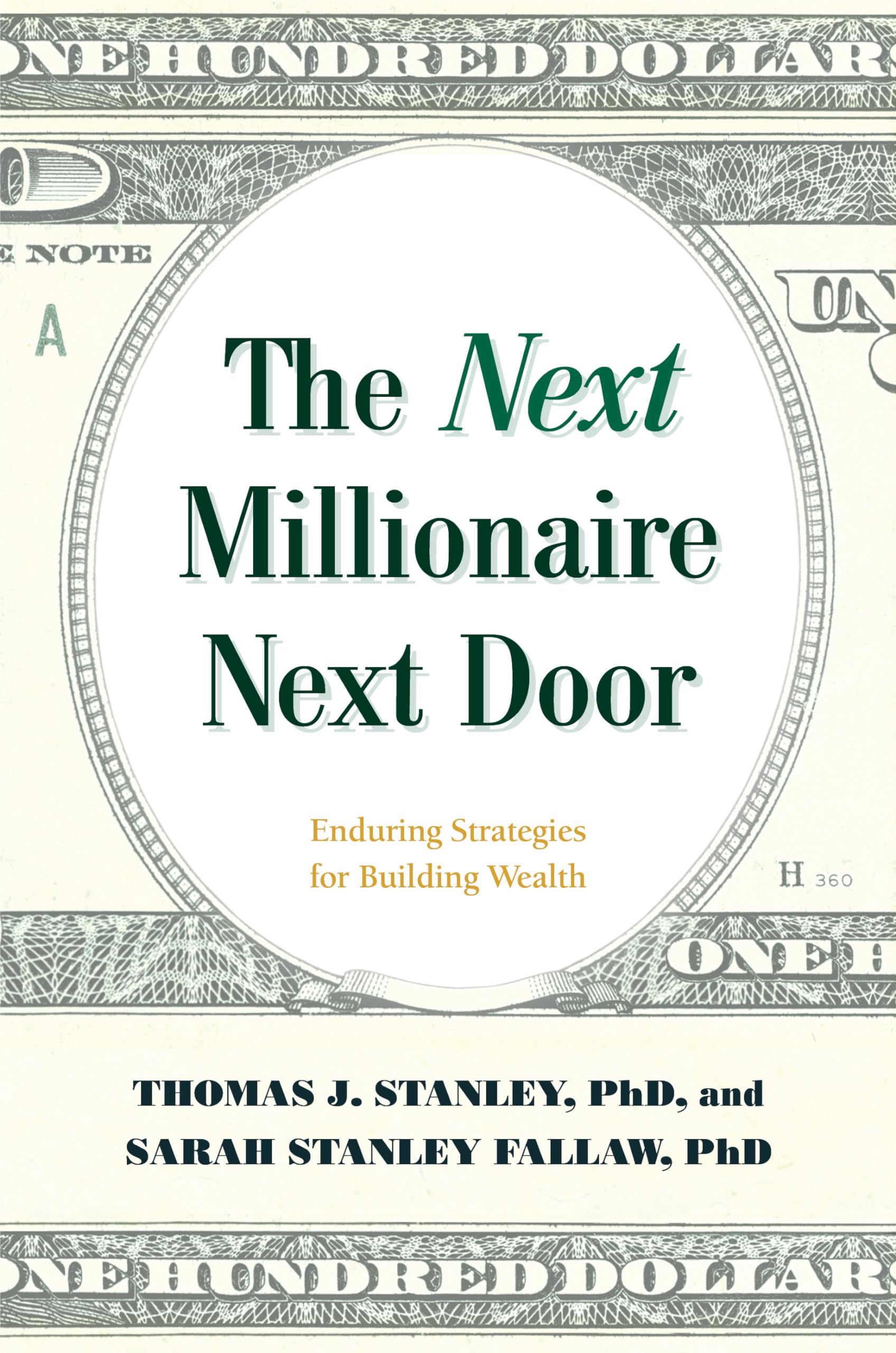
⚡️ What is The Next Millionaire Next Door about?
The Next Millionaire Next Door explores the timeless principles of wealth building in today’s economic landscape. This book, a continuation of Thomas Stanley’s groundbreaking work, updates and expands on the habits and characteristics of ordinary people who accumulate extraordinary wealth. Stanley and Fallaw reveal that most millionaires don’t fit the Hollywood stereotype—they’re your neighbors, living modestly while building substantial net worth. The book combines decades of research with fresh data to show how anyone can achieve financial independence through discipline, smart decision-making, and consistent wealth-building strategies.
🚀 The Book in 3 Sentences
- Wealth building in The Next Millionaire Next Door is built on fundamental habits like living below your means, consistent investing, and avoiding lifestyle inflation.
- Financial independence is achievable for anyone regardless of income level through disciplined saving, smart investing, and long-term planning.
- The true millionaires next door are often unassuming individuals who prioritize financial security over social status and material possessions.
🎨 Impressions
Reading The Next Millionaire Next Door was both enlightening and refreshing. Unlike many finance books that promise quick riches, this one emphasizes the timeless virtues of patience, discipline, and consistency. What impressed me most was how the authors backed their insights with concrete data and real-world examples, making the wealth-building strategies feel accessible and achievable regardless of your current financial situation. The book’s emphasis on values over material possessions resonated deeply, especially in our increasingly consumerist society.
📖 Who Should Read The Next Millionaire Next Door?
The Next Millionaire Next Door is essential reading for anyone serious about building long-term wealth, regardless of their current income or net worth. It’s particularly valuable for young professionals starting their financial journey, parents who want to teach their children sound money principles, and those who feel trapped in the cycle of earning and spending without accumulating wealth. The book’s practical approach makes it suitable for both financial novices and those already on their path to financial independence.
☘️ How the Book Changed Me
How my life / behaviour / thoughts / ideas have changed as a result of reading the book.
- I’ve completely reevaluated my definition of success, focusing more on financial independence rather than social status symbols.
- I’ve implemented a more systematic approach to budgeting and tracking expenses, identifying areas where I was unconscious overspending.
- I’ve shifted my investment strategy to be more consistent and long-term focused, reducing emotional decision-making.
- I’ve started educating my children about money management principles from the book to set them up for future financial success.
✍️ My Top 3 Quotes
- “Building wealth has little to do with your income or investment returns and lots to do with your savings rate.”
- “Financial independence isn’t about being rich; it’s about having choices and freedom.”
- “The next millionaire next door doesn’t look like a millionaire—they act like one.”
📒 Summary + Notes
The Next Millionaire Next Door provides a comprehensive blueprint for building sustainable wealth in today’s economy. The book challenges conventional wisdom about wealth and reveals that most millionaires are not the high-spending, luxury-car-driving individuals portrayed in media. Instead, they are ordinary people who have mastered fundamental financial principles and applied them consistently over time. Through research-backed insights and practical advice, the authors demonstrate that wealth accumulation is achievable for anyone willing to adopt the right habits and mindset.
Chapter 1: The New Millionaire Next Door
This chapter introduces the concept of the modern millionaire next door and how they differ from common stereotypes. The authors explain that while the world has changed since the original book was published, the fundamental principles of wealth building remain remarkably consistent. They reveal that today’s millionaires are often even more understated than their predecessors, recognizing that true wealth provides security and freedom rather than status symbols.
- Wealth is relative – true millionaires focus on net worth rather than income
- The economic landscape has changed but core wealth principles remain timeless
- Modern millionaires prioritize financial independence over social status
Chapter 2: Building Wealth Is a Choice
This chapter emphasizes that wealth building begins with a conscious decision. The authors argue that most people have more control over their financial destiny than they realize. They introduce the concept of the “wealth equation,” which states that building wealth requires allocating resources efficiently—specifically, time, energy, and money. The chapter provides compelling evidence that those who become financially independent typically make intentional choices early in their lives that compound over time.
- Financial success starts with making a conscious commitment to building wealth
- The wealth equation: Building wealth = (Human capital + Investment capital) × Allocation efficiency
- Small, consistent decisions have more impact than occasional large ones
Chapter 3: The Importance of Financial Literacy
Stanley and Fallaw stress that financial literacy is the foundation of wealth building. They explain that understanding basic financial concepts like compound interest, asset allocation, and risk management is essential for making informed decisions. The chapter highlights the financial education gap in America and provides practical advice for improving financial literacy at any age. The authors demonstrate that those with higher financial literacy tend to accumulate wealth more efficiently, regardless of their income level.
- Financial literacy is the cornerstone of effective wealth building
- Understanding basic financial concepts leads to better decision-making
- Continuous financial education is necessary in our ever-changing economic environment
Chapter 4: Income, Expenses, and the Path to Wealth
This chapter dives into the relationship between income, expenses, and wealth accumulation. The authors argue that while increasing income can accelerate wealth building, controlling expenses is often more critical. They introduce the concept of “playing great defense”—that is, minimizing unnecessary expenses and avoiding lifestyle inflation. The chapter provides specific strategies for tracking expenses, identifying wasteful spending, and creating a budget that supports wealth accumulation rather than consumption.
- Wealth building is more about controlling expenses than increasing income
- Playing “great defense” means minimizing unnecessary spending and living below your means
- Lifestyle inflation is the greatest enemy of wealth accumulation for most people
Chapter 5: The Investment Habits of Millionaires
In this chapter, the authors explore the investment strategies and habits of those who successfully build wealth. They find that most millionaires are not stock pickers or market timers but instead focus on consistent, long-term investing in low-cost index funds. The chapter emphasizes the importance of starting early, reinvesting dividends, and avoiding emotional investing decisions. The authors provide specific asset allocation recommendations based on age, risk tolerance, and financial goals.
- Successful investors focus on consistent, long-term strategies rather than market timing
- Low-cost index funds are the investment vehicle of choice for most millionaires
- Automating investments removes emotion and ensures consistency in wealth building
Chapter 6: The Crucial Role of Spender/Investor Profiles
This chapter introduces the concept of spender/investor profiles and their impact on wealth accumulation. The authors identify several distinct profiles based on research, showing how different approaches to money affect financial outcomes. They explain that understanding your natural tendencies can help you develop strategies to overcome weaknesses and leverage strengths. The chapter provides a self-assessment tool for readers to identify their own profile and offers customized advice for each type.
- Understanding your natural money personality is crucial for developing effective wealth strategies
- Different spender/investor profiles require different approaches to money management
- Self-awareness allows you to compensate for natural tendencies that hinder wealth building
Chapter 7: The Influence of Social Environment
The authors examine how social environment impacts wealth-building behaviors and outcomes. They explain that people tend to adopt the financial habits of those they associate with most closely. The chapter provides strategies for evaluating whether your social environment supports or hinders your financial goals. It offers practical advice for finding mentors and building relationships with those who have achieved the financial success you desire, while also maintaining healthy boundaries with those who encourage unnecessary consumption.
- Your social circle significantly influences your financial behaviors and outcomes
- Wealth builders intentionally surround themselves with financially responsible individuals
- Breaking away from consumption-oriented social groups is often necessary for financial success
Chapter 8: The Impact of Family Background
This chapter explores how family background and upbringing affect financial behaviors and wealth accumulation. The authors acknowledge that while some advantages come from wealthy families, many self-made millionaires come from modest backgrounds. They identify specific family factors that correlate with wealth-building success, including early exposure to financial concepts, parental modeling of responsible money management, and being taught delayed gratification. The chapter provides advice for overcoming disadvantages from one’s family background.
- Early exposure to financial concepts significantly impacts adult wealth accumulation
- Parental modeling of responsible money management is crucial for developing wealth-building habits
- Overcoming disadvantages from family background is possible through education and conscious effort
Chapter 9: The Adversity Advantage
In this chapter, the authors challenge the notion that adversity is always a barrier to wealth building. They present research showing that overcoming certain types of adversity can actually build resilience and financial discipline. The chapter profiles millionaires who faced significant obstacles early in life and explains how these experiences shaped their approach to money. The authors argue that developing a growth mindset and reframing challenges as opportunities are key components of the adversity advantage.
- Overcoming adversity can build resilience and financial discipline that aid wealth building
- Many self-made millionaires credit early struggles with developing their financial work ethic
- Reframing challenges as opportunities is essential for turning adversity into advantage
Chapter 10: The Time Paradox
This chapter explores the relationship between time and wealth building. The authors introduce the concept of the “time paradox”—that those who appear to have less time (the busy, successful professionals) often build more wealth, while those with more discretionary time often accumulate less. The chapter explains that productivity, focus, and efficient use of time are more important than the quantity of time available. It provides strategies for maximizing productivity and allocating time to high-value activities that support wealth building.
- Productive use of time is more important than quantity of time for wealth building
- Successful wealth builders prioritize activities that offer the highest financial return
- Developing time efficiency skills is essential for balancing wealth building with other life priorities
Chapter 11: The Next Generation and Wealth
The authors focus on teaching financial principles to the next generation in this chapter. They explain that wealth building is a multi-generational endeavor that requires passing knowledge, values, and habits to children. The chapter provides age-appropriate strategies for teaching children about money, from preschool through college. The authors emphasize the importance of modeling responsible financial behavior and creating experiences that build financial competence rather than simply providing financial resources.
- Teaching financial literacy to children is one of the greatest gifts parents can provide
- Age-appropriate financial education builds competence and confidence in money management
- Modeling responsible financial behavior is more effective than lecturing about it
Chapter 12: Building Your Wealth Plan
In the final chapter, the authors provide a comprehensive framework for creating a personalized wealth-building plan. They walk readers through assessing their current financial situation, setting realistic goals, and developing specific strategies to achieve those goals. The chapter emphasizes that wealth building is a marathon, not a sprint, and requires consistency and discipline over time. It includes worksheets, action steps, and resources for implementing the principles discussed throughout the book.
- A personalized wealth plan is essential for translating knowledge into action
- Regular assessment and adjustment of your financial strategy is necessary for long-term success
- Consistency and discipline are more important than sophisticated strategies or high income
Key Takeaways
The Next Millionaire Next Door provides timeless wisdom for building sustainable wealth in today’s economy. The book emphasizes that wealth accumulation is less about income and more about habits, mindset, and consistent application of fundamental financial principles. By understanding and implementing these strategies, anyone can work toward financial independence regardless of their starting point.
- Wealth building begins with a conscious decision and commitment to financial independence
- Controlling expenses and living below your means is more critical than increasing income
- Consistent, long-term investing in low-cost index funds is the strategy of most millionaires
- Your social environment and relationships significantly impact your financial behaviors
- Teaching financial literacy to the next generation is essential for multi-generational wealth
Conclusion
The Next Millionaire Next Door offers a refreshing perspective on wealth building that challenges our cultural assumptions about success and prosperity. By focusing on timeless principles rather than quick fixes, the book provides a realistic roadmap to financial independence for anyone willing to adopt the habits and mindset of the millionaires next door. The authors demonstrate that true wealth isn’t about conspicuous consumption but about security, freedom, and the ability to live life on your own terms. I highly recommend reading the full book to gain deeper insights into these transformative wealth-building strategies.
More From Thomas J. Stanley; Sarah Stanley Fallaw →
Discover more from AI Book Summary
Subscribe to get the latest posts sent to your email.