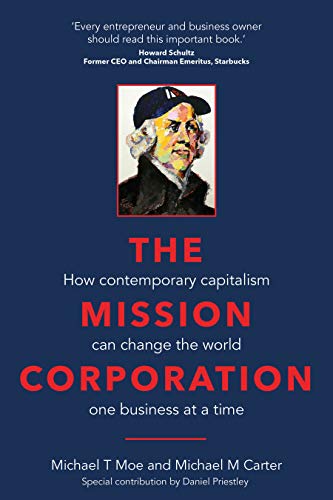
⚡️ What is The Mission Corporation about?
The Mission Corporation by Daniel Priestley is a transformative guide that reimagines business as a force for positive change. This book presents a revolutionary framework for building companies that prioritize meaningful impact alongside profitability. Priestley argues that modern businesses must evolve beyond profit-only motives to address societal challenges while creating sustainable value. The Mission Corporation methodology provides actionable strategies for entrepreneurs and leaders to embed purpose into their organizational DNA, ensuring their ventures contribute to solving global problems while achieving commercial success.
🚀 The Book in 3 Sentences
- The Mission Corporation demonstrates how businesses can thrive by aligning profit with purpose, creating organizations that solve meaningful problems while generating sustainable returns.
- Priestley presents a comprehensive framework for building mission-driven enterprises that attract talent, customers, and investors who share their values and vision.
- The book provides practical strategies for embedding purpose into every aspect of business operations, transforming how companies measure success and create lasting impact in the world.
🎨 Impressions
Reading The Mission Corporation was a revelation that fundamentally shifted my perspective on business purpose. Priestley masterfully blends inspiring vision with actionable frameworks, making the concept of mission-driven entrepreneurship accessible and compelling. What impressed me most was how the book addresses the practical challenges of implementing purpose without sacrificing profitability, offering real-world examples and concrete strategies that bridge the gap between idealism and execution.
📖 Who Should Read The Mission Corporation?
The Mission Corporation is essential reading for entrepreneurs and business leaders seeking to build ventures that create both profit and purpose. It’s particularly valuable for founders launching new businesses, executives reimagining existing organizations, and investors interested in the growing landscape of impact-driven enterprises. Anyone feeling disconnected from the deeper meaning of their work will find transformative insights in Priestley’s approach to aligning business success with positive societal impact.
☘️ How the Book Changed Me
How my life / behaviour / thoughts / ideas have changed as a result of reading the book.
- I’ve fundamentally reevaluated how I define business success, now prioritizing impact metrics alongside financial returns in all my professional endeavors.
- The book inspired me to conduct a purpose audit of my current business practices, identifying areas where I can better align operations with meaningful societal contributions.
- I’ve adopted Priestley’s framework for stakeholder engagement, transforming how I communicate our mission to attract customers, employees, and partners who share our values.
✍️ My Top 3 Quotes
- “The most successful businesses of the future won’t be those that maximize profit at all costs, but those that solve meaningful problems and create value for all stakeholders.”
- “Purpose isn’t a marketing slogan or corporate social responsibility initiative—it’s the fundamental reason your business exists and the foundation of sustainable competitive advantage.”
- “When your mission becomes your business model, you don’t have to choose between doing well and doing good—you create an organization that does both by design.”
📒 Summary + Notes
The Mission Corporation presents a revolutionary approach to building businesses that generate both profit and positive impact. Daniel Priestley guides readers through a comprehensive framework for embedding purpose into every aspect of organizational design and operations. The following chapters provide actionable insights for creating enterprises that address societal challenges while achieving sustainable commercial success.
Chapter 1: The Purpose Paradigm Shift
Priestley introduces the fundamental shift from profit-only to purpose-driven business models, explaining why traditional approaches are becoming obsolete in today’s interconnected world. He presents compelling evidence that mission-aligned companies outperform their conventional counterparts across multiple metrics, including employee engagement, customer loyalty, and long-term profitability.
- The evolution of business purpose from shareholder primacy to stakeholder value creation
- Case studies of successful mission-driven companies that have disrupted their industries
- How societal challenges present unprecedented opportunities for innovative entrepreneurs
Chapter 2: Defining Your Mission
This chapter provides a practical framework for discovering and articulating a compelling business mission that addresses genuine needs. Priestley guides readers through exercises to identify their unique intersection of passion, skills, and market opportunities, emphasizing that authentic missions emerge from deep self-reflection and market understanding.
- The Mission Matrix tool for aligning personal purpose with market opportunities
- Techniques for crafting mission statements that inspire action and guide decision-making
- Common pitfalls in mission development and how to avoid them
Chapter 3: Building the Foundation
Priestley outlines the structural elements needed to support a mission-driven organization, from governance models to legal structures that reinforce purpose. He explains how to design organizational DNA that embeds purpose into operations rather than treating it as an add-on initiative.
- Legal structures that protect mission integrity while enabling growth and investment
- Governance frameworks that balance stakeholder interests and maintain mission focus
- Creating organizational systems that reinforce purpose at every level
Chapter 4: Impact Measurement
This chapter revolutionizes how businesses measure success, introducing comprehensive frameworks for tracking both financial and impact metrics. Priestley demonstrates how meaningful measurement systems drive better decision-making and stakeholder communication.
- Beyond ESG: developing customized impact metrics aligned with your specific mission
- Integrated reporting frameworks that communicate holistic value creation
- Using data analytics to optimize both impact and financial performance simultaneously
Chapter 5: Stakeholder Engagement
Priestley explores strategies for engaging stakeholders who share your mission, creating a powerful ecosystem of support. He provides communication frameworks that attract mission-aligned talent, customers, investors, and partners.
- Techniques for identifying and connecting with values-aligned stakeholders
- Communication strategies that resonate with purpose-driven audiences
- Building community around your mission to create competitive advantage
Chapter 6: Innovation for Impact
This chapter demonstrates how mission focus drives innovation, showing how purpose-aligned companies develop breakthrough solutions to pressing challenges. Priestley presents methodologies for systematic innovation that addresses both market needs and societal problems.
- Design thinking approaches for creating solutions with embedded positive impact
- Case studies of mission-driven innovations that disrupted industries
- Balancing financial viability with impact goals in product development
Chapter 7: Scaling Your Mission
Priestley addresses the unique challenges of growing a mission-driven organization without compromising core values. He provides strategies for sustainable scaling that maintains purpose integrity while expanding reach and impact.
- Leadership development approaches that preserve mission focus across growth phases
- Structural adaptations needed for scaling impact-driven organizations
- Funding strategies that align with mission values and support sustainable growth
Chapter 8: The Future of Business
The final chapter explores emerging trends in purpose-driven business and the future of capitalism. Priestley paints a compelling picture of how mission corporations will lead the next wave of economic and social transformation.
- Predictions for the evolution of stakeholder capitalism and impact investing
- Preparing your organization for future challenges and opportunities
- Your role in the global movement toward business as a force for good
Key Takeaways
The Mission Corporation provides essential insights for building businesses that thrive by creating meaningful impact. These key lessons summarize the most valuable concepts from Priestley’s transformative work.
- The Mission Corporation framework demonstrates that purpose and profit are mutually reinforcing when properly aligned, creating sustainable competitive advantage.
- Defining an authentic mission requires deep self-reflection and market understanding, leading to opportunities that create both value and impact.
- Comprehensive impact measurement integrated with financial metrics provides the data needed for informed decision-making and stakeholder communication.
- Building a stakeholder ecosystem around shared mission creates resilience, innovation, and long-term success.
- Scaling a mission-driven organization requires intentional design to preserve purpose while expanding reach and impact.
Conclusion
The Mission Corporation offers a timely and essential roadmap for building businesses that address our world’s most pressing challenges while achieving sustainable success. Daniel Priestley has created a comprehensive framework that transforms how we think about business purpose, providing practical strategies for embedding mission into every aspect of organizational design and operations. By implementing the principles of The Mission Corporation, entrepreneurs and leaders can create enterprises that generate both meaningful impact and robust profitability, leading the way toward a more sustainable and equitable future. I highly recommend this transformative book to anyone seeking to build or reimagine a business that makes a genuine difference in the world.
More From Daniel Priestley →
Discover more from AI Book Summary
Subscribe to get the latest posts sent to your email.