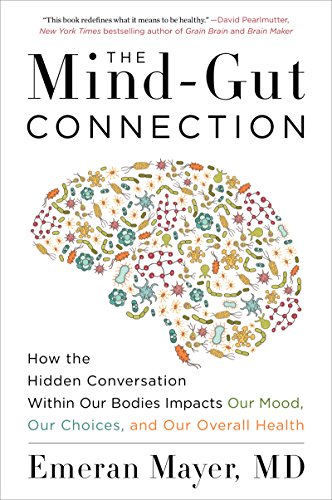
⚡️ What is The Mind-Gut Connection About?
Ever had a “gut feeling” that turned out to be dead right? Or felt those fluttery butterflies before a first date? We usually dismiss these as metaphors, but More summaries by Emeran Mayer suggest they’re actually literal biological data points. In his book, Mayer argues that our brains and guts are locked in a 24/7 high-speed conversation that dictates everything from our weight to our deepest anxieties. It’s a fascinating look at how our “second brain”—the enteric nervous system—operates with a level of independence that’s almost spooky.
Mayer is a gastroenterologist who has spent decades looking at the plumbing of the human body, but he realized early on that you can’t fix the pipes without looking at the computer running the system. He bridges the gap between hard-core biology and the squishy world of emotions. This isn’t just another diet book; it’s a science book summary that explains why your microbiome might be the real reason you’re feeling burned out or blue. If you’ve ever felt like your body was working against your mind, this framework explains exactly why that happens and how to sync them back up.
🚀 The Book in 3 Sentences
- The gut and brain are connected via a bidirectional “superhighway” involving the vagus nerve, hormones, and trillions of microbes.
- Our microbiome acts as a chemical factory, producing 95% of the body’s serotonin and influencing our emotional responses and decision-making.
- Modern health issues like anxiety, obesity, and autoimmune diseases are often the result of a broken dialogue caused by stress, antibiotics, and the Western diet.
🎨 Impressions
I finished this book feeling both empowered and a little bit like a biological puppet. It’s wild to think that a significant chunk of my “mood” isn’t coming from my thoughts, but from the bacteria living in my large intestine. Mayer’s tone is refreshingly academic yet accessible. He doesn’t make wild, unproven claims like a lot of “biohackers” do; he’s honest about what we don’t know yet. I dog-eared the sections on the vagus nerve because it finally explained why chronic stress feels so physically destructive—it’s literally short-circuiting the communication lines between your head and your heart.
Honestly, I found the early chapters on evolutionary biology a bit slow, but once he gets into the impact of the Western diet and early childhood development, it’s impossible to put down. It changed how I look at a plate of food. I’m no longer just eating for calories or macros; I’m eating to keep my internal “tenants” happy so they don’t send inflammatory signals to my brain. It’s a shift from seeing the body as a machine to seeing it as an ecosystem. You’ll never look at a course of antibiotics the same way again after reading this.
📖 Who Should Read The Mind-Gut Connection?
If you’re someone who struggles with “mysterious” digestive issues or chronic low-level anxiety that therapy hasn’t quite touched, this is a must-read. It’s also perfect for parents who want to understand how a child’s early environment shapes their long-term health. However, if you’re looking for a 7-day meal plan or a quick-fix supplement list, you won’t find it here. This is for the reader who wants to understand the *why* behind their biology before they start changing the *what*.
☘️ How This Book Changed My Thinking
Before reading this, I thought my brain was the absolute monarch of my body. Now, I see it more like a constitutional monarchy—it has power, but it’s constantly being lobbied by the trillions of microbes in my gut.
- I stopped viewing “gut feelings” as irrational and started paying attention to physical cues during big decisions.
- I’ve become much more cautious about fermented foods vs. processed snacks, realizing that I’m literally feeding my mood.
- I prioritize “vagal tone” through breathing and cold exposure because I understand the mechanical link between a calm gut and a calm mind.
✍️ 3 Quotes That Stuck With Me
- “The gut is the only organ in the body that has its own independent nervous system, a network of 100 million neurons.” — This blew my mind; it’s literally a second brain.
- “Our gut microbes are like a vast chemical factory that produces thousands of metabolites.” — It made me realize we are more chemistry than we are anatomy.
- “The mind-gut connection is not a one-way street; it’s a constant, bidirectional dialogue.” — This is the central thesis that reframes all of human health.
📒 Summary + Notes
The central argument of The Mind-Gut Connection is that we have ignored a fundamental pillar of health: the communication loop between the brain and the digestive system. Mayer builds his case by showing that the gut isn’t just for digestion; it’s a sensory organ that monitors our internal state and reports back to the brain. This system, developed over millions of years, is designed to keep us safe. When you’re stressed, your brain tells your gut to slow down or speed up. But the real breakthrough is the discovery that it works the other way around: your gut bacteria can produce neurochemicals that change how your brain perceives the world.
Mayer wants us to believe that the modern epidemic of “diseases of civilization”—depression, IBS, obesity—is largely a failure of this mind-gut dialogue. We have decimated our microbial diversity through over-sanitization and poor diet, leading to “leaky” communication. By the end of the book, he makes a compelling case for a holistic approach to health that treats the mind and gut as a single, integrated unit. He moves from the microscopic (bacteria) to the macroscopic (our environment), showing that true health requires a return to a more natural, fiber-rich, and lower-stress lifestyle.
🧠 Core Ideas Explained Simply
The communication between your head and your belly can be complex, so let’s break down the mechanics that make it work.
The Vagus Nerve: The Information Superhighway
Think of the vagus nerve as a high-speed fiber-optic cable running from your brainstem to your gut. It’s the primary channel for the mind-gut connection. About 90% of the fibers in the vagus nerve actually carry information *up* from the gut to the brain, not the other way around. This means your brain is constantly being updated on what’s happening in your digestive tract, which then influences your subconscious emotional state. If your gut is inflamed, the vagus nerve sends a “danger” signal to the brain, which can manifest as anxiety or low mood.
The Microbial Chemical Factory
Why do microbes even care about our mood? Because we are their home. These microbes have evolved the ability to produce neurotransmitters like serotonin, dopamine, and GABA. When they break down fiber, they produce short-chain fatty acids that act as signals to our immune system and brain. If you feed them the wrong things (like sugar and processed fats), they produce metabolites that can cause neuroinflammation. Essentially, your gut bacteria are like little pharmacists living inside you, dispensing either “calm” or “chaos” chemicals depending on how you treat them.
The Leaky Gut and Neuroinflammation
Under chronic stress, the lining of your gut becomes more permeable—this is the “leaky gut” you’ve likely heard about. This isn’t just about digestion; it allows bacterial components to leak into your bloodstream, triggering an immune response. That immune response doesn’t stay in the gut; it travels to the brain and activates microglia, the brain’s immune cells. This leads to “brain fog” and is increasingly linked to neurodegenerative diseases. It’s a physical explanation for why a stressed life leads to a scattered brain.
1: Our Body’s Hidden Conversation
Why do we have a “gut feeling”? Mayer starts by explaining that the gut and the brain have been evolving together since the very first multicellular organisms. In the beginning, there was only a gut. The brain actually evolved *out* of the need to find more food for the gut. This puts the digestive system in a much more prominent role than most Western doctors give it credit for. It’s not a subservient pipe; it’s the original command center. He introduces the Enteric Nervous System (ENS), which can operate even if the vagus nerve is cut. Have you ever considered that you have a 100-million-neuron computer in your belly that’s capable of its own “thinking”?
2: How Your Mind Communicates with Your Gut
Imagine your brain as a CEO sending frantic memos to the factory floor. When you perceive a threat—whether it’s a tiger or an annoying email—your brain’s limbic system triggers the fight-or-flight response. This immediately redirects blood flow away from the gut, slows down digestion, and changes the acidity of your stomach. Mayer points out that even *thinking* about a stressful event can change your gut’s contraction patterns. He shares clinical stories of patients whose chronic digestive pain was actually a physical manifestation of repressed emotional trauma. The mind literally writes its stories on the walls of the gut.
3: How Your Gut Communicates with Your Brain
The feedback loop isn’t a one-way street. Mayer digs into how the gut sends signals back up to the brain to influence our decisions. He discusses the concept of “somatic markers”—those physical sensations that tell us if a choice feels right or wrong. Our brain stores a library of these gut sensations from past experiences. When we face a new decision, the brain “pings” the gut to see how we felt last time. If you’ve ever made a “gut call” that saved you from a bad investment or a bad relationship, you were using this ancient biological database. We aren’t just thinking with our heads; we’re thinking with our whole bodies.
4: The Microbiome: The Powerhouse of the Mind-Gut Connection
You aren’t just “you”—you’re a walking, talking ecosystem. This chapter is where Mayer introduces the trillions of microbes that live in our large intestine. He calls them the “invisible powerhouse.” They don’t just sit there; they actively participate in the conversation. They can influence our cravings (ever wondered why you *need* chocolate?), our weight, and even our social behavior. He references studies where transferring the gut bacteria from an anxious mouse into a calm mouse actually transferred the anxiety as well. It’s a staggering realization: part of our personality might actually be microbial.
5: The Mind-Gut Connection in Childhood and Early Life
The first 1,000 days of your life essentially hard-wired how you handle stress today. Mayer explains how the microbiome is established at birth (vaginal vs. C-section) and further shaped by breastfeeding and early environment. If this window is disrupted by excessive antibiotics or high-stress parenting, the mind-gut connection can be permanently calibrated to a “high-alert” state. This increases the risk of anxiety and inflammatory diseases later in life. It’s a sobering look at how the hygiene hypothesis—our obsession with being too clean—might be making our children’s internal ecosystems fragile and reactive.
6: Understanding Stress and the Gut
Is your job literally eating you from the inside out? Mayer breaks down the difference between acute stress (which is adaptive) and chronic stress (which is toxic). Chronic stress keeps the gut in a constant state of low-level inflammation. It alters the type of bacteria that can survive, favoring those that thrive in an inflammatory environment. This creates a vicious cycle: stress ruins the gut, and a ruined gut sends stress signals back to the brain. He argues that we can’t solve gut issues without addressing the psychological stress that keeps the system on edge. Meditation isn’t just for your mind; it’s for your microbes.
7: The Gut and Mood: Depression and Anxiety
Could your anxiety actually be a cry for help from your colon? Mayer looks at the burgeoning field of “psychobiotics”—probiotics that could potentially treat mental health issues. He notes that many people with IBS also suffer from anxiety or depression, and it’s not a coincidence. When the gut’s chemical factory is producing the wrong metabolites, it directly affects the brain’s emotional processing centers. He doesn’t suggest that probiotics are a magic cure for depression, but he argues that we can’t ignore the biological foundation of these conditions. Treating the gut might be the missing piece in modern psychiatry.
8: Food, Diet, and the Mind-Gut Connection
What if I told you that “healthy” eating is actually about feeding your tenants, not yourself? Mayer compares the gut microbiome of hunter-gatherers to that of average Americans. The difference is shocking: we have lost about 40% of our microbial diversity. The reason? A lack of plant-based fiber and an over-reliance on animal fats and sugars. This “Western diet” essentially starves our beneficial microbes, causing them to eat away at our gut’s protective mucus lining. He advocates for a diet rich in variety, fermented foods, and polyphenols to restore the diversity that our ancestors took for granted.
9: The Future of Health
We’re standing on the edge of a medicine that looks more like gardening than chemistry. In the final chapter, Mayer looks toward a future where a simple stool sample could help a doctor tailor your diet, your exercise, and even your mental health treatments. He calls for a shift toward “personalized medicine.” The era of the “one size fits all” pill is ending. Instead, we will focus on nurturing the mind-gut connection through lifestyle changes that respect our evolutionary roots. He ends on a hopeful note: while we’ve done a lot of damage to our internal ecosystems, they are remarkably resilient if we give them the right tools to heal.
⚖️ A Critical Perspective
While Mayer is a brilliant scientist, I think he occasionally leans too heavily on animal studies to make points about human behavior. Mice aren’t humans, and what works in a sterile lab mouse doesn’t always translate to a stressed-out office worker. Also, since this was originally published in 2016, some of the specific probiotic strains he mentions have been debated in newer research. He’s a bit vague on actionable steps—you’ll find yourself wishing for a bit more “do this, then that.” That said, his caution is a sign of integrity; he refuses to sell snake oil in a field that’s currently full of it.
🔄 How It Compares
Compare this to Giulia Enders’ *Gut*. While Enders’ book is a whimsical and hilarious primer on the mechanics of pooping and digestion, Mayer’s book is much more focused on the *neurology* and the psychological impact. If Enders tells you how the machine works, Mayer tells you how the machine affects your personality. It’s a deeper, more academic (but still readable) dig into the brain-body link.
🔑 Key Takeaways
These are the core lessons for anyone looking to optimize their internal communication system.
- **Feed the many, not the one:** Diversity in plant-based foods is the only way to maintain a resilient microbiome. Aim for 30 different plants a week.
- **Respect the first 1,000 days:** Be mindful of antibiotic use in early childhood; it has long-term implications for the gut-brain axis.
- **Manage stress at the source:** You cannot fix your gut if you are in a state of chronic fight-or-flight; the brain will always override the gut’s attempts to heal.
- **Listen to your somatic markers:** Pay attention to physical sensations during decision-making; your gut has a massive database of past experiences that your conscious mind might forget.
💬 Frequently Asked Questions
What is the main argument of The Mind-Gut Connection?
Emeran Mayer argues that the gut and brain are in constant, bidirectional communication. This “mind-gut connection” means that our emotional state affects our digestive health, and conversely, our gut microbiome produces chemicals that influence our mood, anxiety levels, and even our decision-making processes, making the gut a “second brain.”
Can gut health really fix depression and anxiety?
While not a “cure-all,” Mayer shows that gut health is a foundational component of mental well-being. The gut produces 95% of the body’s serotonin. Disruptions in gut microbes can lead to neuroinflammation, which is strongly linked to depression. Improving the microbiome can mitigate these symptoms and support overall mental resilience.
What are psychobiotics according to the book?
Psychobiotics are specific strains of live bacteria (probiotics) that, when ingested in adequate amounts, produce a health benefit in patients suffering from psychiatric illness. They work by modulating the signals sent through the vagus nerve and reducing systemic inflammation, potentially offering a new frontier for treating anxiety and mood disorders.
How does stress impact the gut-brain axis?
Chronic stress triggers the fight-or-flight response, which physically alters the gut environment by changing blood flow and acidity. This can cause “leaky gut,” where bacterial toxins enter the bloodstream, triggering immune responses that reach the brain. This creates a cycle where a stressed brain creates a distressed, inflamed gut.
Is The Mind-Gut Connection worth reading for weight loss?
Yes, but not as a typical diet book. Mayer explains how certain gut microbes can influence cravings and metabolic efficiency. By focusing on microbiome diversity through a plant-rich diet rather than calorie counting, you can change the signals your gut sends to your brain regarding hunger and fat storage.
Conclusion
The Mind-Gut Connection is one of those rare books that makes you feel like you’ve been given a user manual for a part of your body you didn’t even know was complicated. It moves the conversation of health away from “what can I fix?” to “how can I listen?” We’ve spent too long treating the gut like a simple disposal unit and the brain like an isolated computer. Mayer shows us that they are one system, and you cannot heal one while ignoring the other.
The one thing you should take away from this is that your internal ecosystem is a reflection of your external choices. Every time you eat, every time you breathe, and every time you choose how to react to stress, you are sending a signal to trillions of microbes that help determine how you feel tomorrow. It’s a huge responsibility, but also a massive opportunity to take control of your well-being. If you’re ready to start listening to what your body is actually saying, read the book title naturally one last time: The Mind-Gut Connection is the best place to start. Don’t forget to check out our other science book summaries for more ways to optimize your health.
More From Emeran Mayer →
Discover more from AI Book Summary
Subscribe to get the latest posts sent to your email.