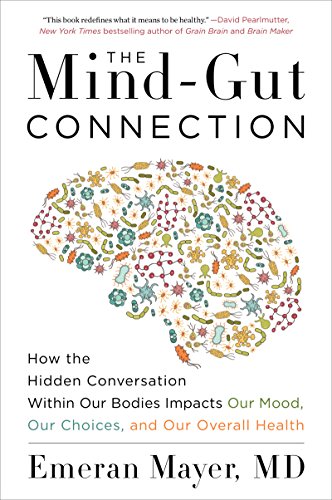
⚡️ What is The Mind-Gut Connection about?
I discovered that The Mind-Gut Connection by Emeran Mayer explores the profound bidirectional communication system between our brain and gastrointestinal tract, revealing how this ancient biological connection influences everything from emotional states to decision-making processes. Mayer, a world-renowned gastroenterologist and neuroscientist, presents compelling evidence that the gut functions not merely as a digestive organ but as the body’s largest sensory interface, containing its own nervous system—the enteric nervous system—capable of autonomous function while maintaining constant dialogue with the brain. I learned that the gut microbiome acts as a crucial regulator of mental wellness, immune function, and neurotransmitter production, with over 95% of the body’s serotonin synthesized in the gut rather than the brain. The book illuminates how modern lifestyles characterized by processed diets, chronic stress, and antibiotic overuse have disrupted this delicate ecosystem, potentially contributing to the epidemic of depression, anxiety, and autoimmune disorders. Mayer argues that understanding and optimizing this hidden conversation is essential for anyone seeking genuine holistic health, offering evidence-based strategies to restore microbial diversity and rebalance the gut-brain axis for improved psychological and physical well-being.
🚀 The Book in 3 Sentences
- The Mind-Gut Connection reveals that our gut microbiome and enteric nervous system profoundly influence brain function, emotional regulation, and cognitive processes through complex bidirectional signaling pathways involving neural, hormonal, and immune channels.
- Modern environmental factors—including highly processed diets, chronic psychological stress, antibiotic overuse, and hyper-hygiene—have dramatically reduced gut microbial diversity compared to our ancestors, creating a biological vulnerability to inflammatory and psychiatric diseases.
- By implementing targeted interventions including diverse plant-based nutrition, stress reduction techniques, and strategic psychobiotics, we can heal this ancient communication system and restore both mental and physical health.
🎨 Impressions
Reading The Mind-Gut Connection fundamentally transformed my understanding of human physiology, challenging the Cartesian dualism that has dominated Western medicine by presenting a holistic model where emotional experiences are literally embodied in gut tissues. I was particularly struck by Mayer’s ability to translate complex neurobiological concepts—such as vagal nerve signaling and microbial metabolite production—into accessible narratives without sacrificing scientific rigor or oversimplifying the evidence. The integration of evolutionary biology, clinical case studies from Mayer’s 40-year career, and cutting-edge molecular science creates a compelling argument for viewing the gut as a sophisticated sensory organ rather than a simple digestive tube. I appreciated the author’s scientific skepticism regarding probiotic hype while maintaining enthusiasm for the robust evidence supporting brain-gut communication. However, I found some sections detailing microbial genetics and molecular pathways quite dense, requiring careful attention to fully grasp the implications. Overall, the book left me with profound respect for the wisdom of the body and a new framework for listening to what my gut communicates about my emotional and physical state.
📖 Who Should Read The Mind-Gut Connection?
I would recommend The Mind-Gut Connection to anyone struggling with unexplained digestive issues, anxiety, depression, or autoimmune conditions who suspects their symptoms might be interconnected through biological pathways rather than separate coincidences. Healthcare practitioners—including physicians, psychologists, nutritionists, and therapists—will find invaluable insights for treating patients with treatment-resistant conditions by understanding the gut-brain axis as an integrated system rather than isolated organs. Individuals interested in preventive medicine, longevity, and personalized health optimization will appreciate the evolutionary perspective on how modern lifestyles compromise our microbial ecosystems and what interventions can restore diversity. The book proves essential reading for parents and pediatric professionals, as Mayer emphasizes the critical importance of the first thousand days of life for establishing healthy gut-brain connections in infants through birth mode, breastfeeding, and early environmental exposure. While some sections contain technical scientific terminology regarding immunology and neuroscience, Mayer’s engaging writing style makes the content accessible to general readers with a genuine interest in health transformation.
☘️ How the Book Changed Me
This book revolutionized my approach to health and decision-making by revealing the constant molecular dialogue occurring between my gut and brain, fundamentally shifting how I interpret bodily signals.
- I began viewing my digestive symptoms not as isolated mechanical failures but as sophisticated signals from my enteric nervous system indicating stress, emotional distress, or dietary mismatches requiring holistic intervention.
- I radically modified my diet to prioritize diverse plant fibers and fermented foods that support microbial richness, moving away from restrictive eating patterns toward nutritional abundance.
- I implemented stress management practices specifically timed around meals, recognizing that my emotional state during eating directly impacts nutrient absorption, gastric secretion, and microbial health.
- I stopped taking antibiotics casually, understanding their profound and potentially permanent impact on my gut ecosystem and consequently my long-term mental health resilience.
- I started trusting my “gut feelings” as legitimate neurobiological signals rather than irrational intuitions, leading to more authentic decision-making in personal and professional contexts.
✍️ My Top 3 Quotes
- “The gut is not only the organ that digests our food and extracts the nutrients we need to survive; it is also the largest sensory organ in the body, equipped with its own nervous system and capable of influencing our emotions, our decisions, and our overall well-being.”
- “Your gut microbiome is like a fingerprint—unique to you—but unlike a fingerprint, it is constantly changing in response to what you eat, how you feel, and the environment you live in.”
- “Gut feelings are not just metaphors; they are real physiological signals that travel from the gut to the brain via the vagus nerve, informing our emotional state and intuitive judgments.”
📒 Summary + Notes
The Mind-Gut Connection by Emeran Mayer represents a paradigm shift in our understanding of human health, revealing the sophisticated communication network linking our gastrointestinal system to our brain through multiple parallel pathways. I discovered that this connection evolved over millions of years to optimize survival, with the gut acting as both a digestive processor and a sophisticated sensory organ containing over 100 million neurons—more than the spinal cord—allowing independent information processing. The book extensively covers the gut microbiome’s role in producing neurotransmitters, with the gut synthesizing the vast majority of the body’s serotonin and dopamine, challenging traditional notions of brain-centric mental health. I learned that modern lifestyles have reduced microbial diversity by approximately 40% compared to hunter-gatherer populations, correlating with rising rates of inflammatory and psychiatric disorders. Mayer presents compelling evidence that conditions like depression, anxiety, Parkinson’s disease, and autism may involve gut dysfunction as a primary contributing factor. The author advocates for an integrated approach to health that honors this ancient connection through dietary interventions, stress management, reduction of unnecessary antibiotic use, and targeted psychobiotics that modulate the gut-brain axis.
Chapter 1: The Gut-Brain Revolution
In this foundational chapter, Mayer introduces the revolutionary concept that the gut and brain maintain constant bidirectional communication that fundamentally shapes our health, behavior, and emotional life. I learned that this connection represents one of the most ancient biological systems in evolutionary history, predating the development of the centralized brain itself by millions of years. Mayer explains how the gut contains its own “brain”—the enteric nervous system—which originally developed when simple organisms needed to process food efficiently without centralized neural control. This remarkable system retains significant autonomy today, capable of initiating local reflexes and independent decision-making regarding digestion, yet remains in intimate communication with the cranial brain through the vagus nerve. The chapter establishes the framework for understanding why emotional stress inevitably manifests as physical gut symptoms and why digestive distress alters our mood. Mayer shares compelling clinical anecdotes demonstrating how patients with chronic gut disorders frequently present with co-morbid psychiatric symptoms, revealing the inadequacy of treating these systems in isolation.
- The enteric nervous system operates with neural complexity comparable to the spinal cord, containing over 100 million neurons capable of autonomous function.
- Evolutionary biology reveals that gut feelings predate conscious thought, representing our most ancient form of environmental processing.
- Stress signals travel bidirectionally between brain and gut within milliseconds, creating measurable physiological changes in both organs simultaneously.
- Clinical studies demonstrate that gut disorders correlate highly with anxiety and depression, suggesting shared pathophysiology rather than coincidental occurrence.
Chapter 2: The Microbiome: Your Hidden Organ
Here, Mayer introduces the microbiome as a virtual organ essential to human health, comprising trillions of microorganisms that outnumber human cells and possess 150 times more genes than the human genome. I learned that these microbes vastly expand our metabolic capabilities beyond what our own DNA encodes, allowing us to extract energy from complex plant fibers and synthesize essential vitamins. The chapter details the critical colonization process during birth and early infancy, explaining how vaginal delivery and breastfeeding establish lifelong microbial patterns that influence immune development and brain maturation. Mayer presents compelling research showing that germ-free mice exhibit altered brain development, exaggerated stress responses, and impaired social behavior, proving that microbes are necessary for normal neurological function. I was alarmed to learn about the dramatic reduction in microbial diversity in modern Western populations, correlating with increased rates of autoimmune diseases, allergies, and psychiatric disorders. The chapter explores how antibiotics, while life-saving, can cause permanent ecosystem damage, particularly when administered during critical developmental windows.
- Microbial genes outnumber human genes by a factor of 150 to 1, effectively expanding our functional genetic potential.
- The first thousand days of life determine lifetime microbial diversity, making early environmental exposure crucial for immune and neural development.
- Germ-free animals display altered behavior and brain chemistry, demonstrating the necessity of microbes for normal neurobiological function.
- Modern hygiene and antibiotic use have reduced gut diversity by approximately 40% compared to hunter-gatherer populations.
Chapter 3: The Language of the Gut-Brain Dialogue
This chapter delves into the molecular mechanisms of brain-gut communication, revealing how microbes influence our thoughts and feelings through multiple distinct pathways. I discovered that specific bacterial strains produce neurotransmitters identical to those in the brain—including GABA, serotonin, dopamine, and acetylcholine—capable of modulating neural circuits directly. Mayer explains the vagus nerve as the primary information highway, carrying signals from gut to brainstem and limbic system, regulating mood, anxiety, and cognitive processing with remarkable speed. The chapter covers the immune-mediated pathway, where microbial metabolites stimulate gut immune cells to release cytokines that influence brain inflammation and neuroplasticity. I was fascinated by the explanation of short-chain fatty acids—particularly butyrate, propionate, and acetate—which microbes produce from dietary fiber and which modulate gene expression in brain cells, enhancing the blood-brain barrier’s integrity. The text discusses how microbial signals can influence systemic inflammation levels, affecting neural protection and cognitive function across the lifespan.
- Specific bacterial strains produce neurotransmitters that modulate brain function, including species that synthesize GABA and serotonin.
- The vagus nerve transmits gut signals to emotional processing centers in the brain, creating rapid communication between gut microbes and mood regulation.
- Short-chain fatty acids from fiber fermentation regulate brain inflammation and enhance the integrity of the blood-brain barrier.
- Immune molecules called cytokines act as chemical messengers between gut microbes and brain cells, affecting neuroplasticity.
Chapter 4: Stress, Emotions, and Disease
Mayer explores how psychological stress creates physiological changes in the gut that can lead to chronic disease states, presenting a unified theory of mind-body medicine. I learned that stress hormones like cortisol and norepinephrine alter gut motility, secretion, permeability, and microbial composition within minutes of a stressful episode. The chapter details the “leaky gut” phenomenon, where chronic stress increases intestinal permeability, allowing bacterial components to enter the bloodstream and trigger systemic inflammation that can reach the brain, contributing to depression, anxiety, and cognitive decline. Mayer presents research showing that stress changes microbial behavior and gene expression, making some pathogens more virulent while reducing beneficial species diversity. I was struck by the evidence that early life stress—such as maternal separation or childhood trauma—permanently alters the gut-brain axis, increasing vulnerability to functional gastrointestinal disorders and psychiatric illness later in life. The chapter explains why cognitive behavioral therapy can improve IBS symptoms not merely through psychological mechanisms but by actually changing gut microbial composition and reducing inflammatory markers.
- Chronic stress increases intestinal permeability and systemic inflammation, creating a physiological pathway between psychological distress and physical disease.
- Early life trauma permanently alters gut-brain communication patterns, programming lifelong vulnerability to digestive and mental health disorders.
- Psychological interventions can modify gut microbial composition, demonstrating the malleability of the microbiome through mind-based therapies.
- Stress hormones directly alter bacterial gene expression, changing microbial behavior from symbiotic to potentially harmful.
Chapter 5: Optimizing Your Mind-Gut Connection
The final chapter provides practical, evidence-based strategies for healing and optimizing the gut-brain axis, moving beyond theoretical science into actionable lifestyle medicine. Mayer emphasizes dietary diversity—particularly consuming 30 or more different plant species weekly to feed beneficial microbes—rather than restrictive or fad diets that may further reduce microbial richness. I learned that fermented foods provide live cultures that can temporarily modulate the microbiome, while prebiotic fibers from onions, garlic, legumes, and whole grains nourish existing beneficial populations. The chapter covers stress reduction techniques including meditation, yoga, and deep breathing exercises, which reduce cortisol levels and improve gut barrier function within weeks of regular practice. Mayer discusses the emerging field of psychobiotics—specific probiotic strains with demonstrated mental health benefits—while cautioning that commercial supplements vary widely in quality and efficacy. I appreciated the guidance on avoiding unnecessary antibiotics, the importance of outdoor exposure for environmental microbiome diversity, and how physical exercise independently increases beneficial gut bacteria. The chapter concludes with a vision of personalized medicine where gut microbiome analysis informs individualized dietary and therapeutic interventions.
- Dietary diversity increases microbial richness more than specific supplements, requiring consumption of varied plant fibers to support ecosystem complexity.
- Chronic stress reduction is essential for maintaining gut barrier integrity, with mindfulness practices showing measurable impact on microbial composition.
- Psychobiotics represent a promising frontier for mental health treatment, with specific strains demonstrating anxiolytic and antidepressant effects.
- Environmental exposure to nature increases microbial diversity, suggesting benefits from outdoor activities and contact with soil microorganisms.
Key Takeaways
After reading The Mind-Gut Connection, I understood that optimal health requires treating the gut-brain axis as an integrated system rather than separate medical specialties. The most profound insight was that my emotional experiences are literally embodied in my gut tissues through constant molecular dialogue involving neurotransmitters, immune cytokines, and microbial metabolites. I learned that microbial diversity serves as the foundation of both physical resilience and psychological well-being, necessitating dietary variety and environmental exposure rather than sterile living conditions. The book taught me to recognize digestive symptoms as potential indicators of psychological distress or environmental toxicity requiring holistic intervention rather than merely suppressing symptoms. I now understand that intuition represents genuine neurobiological information processing through the vagus nerve rather than mystical thinking, warranting attention in decision-making processes.
- The gut produces neurotransmitters that profoundly influence mood and cognition, with 95% of serotonin synthesized in the gastrointestinal tract.
- Microbial diversity correlates directly with overall health resilience, requiring diverse plant-based nutrition to maintain ecosystem complexity.
- Stress management is as crucial as diet for gut health, with psychological states directly altering intestinal permeability and microbial composition.
- Intuition reflects real physiological signals from the gut-brain axis, representing ancient survival mechanisms that inform modern decision-making.
- Early life experiences permanently shape the gut-brain connection, making the first three years critical for establishing lifelong health trajectories.
Conclusion
The Mind-Gut Connection by Emeran Mayer offers a revolutionary framework for understanding human health that bridges ancient evolutionary biology with cutting-edge neuroscience, challenging us to abandon fragmented medical approaches in favor of holistic care. As I reflected on Mayer’s synthesis of forty years of clinical research, I realized that healing requires synchronizing our mental and digestive processes rather than treating them as unrelated domains. The book provides a compelling mandate to respect the wisdom embedded in our enteric nervous system and the microbial ecosystems we host, recognizing that our thoughts and our gut health are inextricably linked. By implementing the strategies outlined—embracing dietary diversity, managing chronic stress, avoiding unnecessary antibiotic use, and cultivating interoceptive awareness—I believe we can restore the biological foundations essential for thriving. This work represents essential reading for anyone seeking to understand the biological roots of their emotions and the physical manifestations of their thoughts, offering a roadmap for optimizing The Mind-Gut Connection to achieve lasting wellness.
More From Emeran Mayer →
Discover more from AI Book Summary
Subscribe to get the latest posts sent to your email.