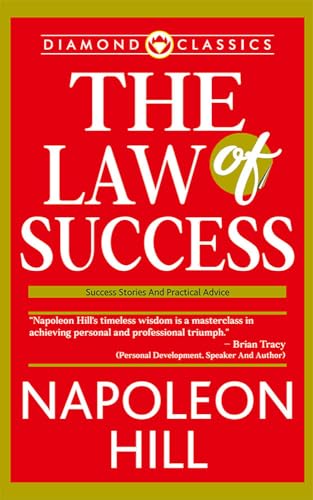
⚡️ What is The Laws of Success about?
The Laws of Success is Napoleon Hill’s monumental, foundational work—a 16-lesson course originally published in 1928 as a multi-volume set. It serves as the detailed blueprint from which his more famous “Think and Grow Rich” was later condensed. This book is not a simple collection of motivational quotes; it’s a comprehensive philosophy of personal achievement. Hill spent over two decades studying more than 500 successful individuals, including Andrew Carnegie and Henry Ford, to distill their shared principles into actionable laws. The book covers everything from defining a definite purpose and building self-confidence to mastering the art of cooperation and applying the golden rule. It’s a deep dive into the mindset, habits, and character traits required to achieve extraordinary success in any endeavor.
🚀 The Book in 3 Sentences
- Success is an exact science governed by timeless principles, or The Laws of Success, which anyone can learn and apply to achieve their goals.
- Mastering your own mind through a definite chief aim, unwavering self-confidence, and harmonious cooperation is the key to unlocking your potential.
- True, lasting achievement is the result of a well-rounded character built upon discipline, integrity, and a relentless drive to provide more value than you receive.
🎨 Impressions
Diving into The Laws of Success felt like enrolling in a masterclass for life. It’s dense, profound, and far more of a practical textbook than a casual read. Hill’s writing is direct and authoritative, demanding active participation rather than passive consumption. What struck me most was its timelessness; despite being nearly a century old, the principles are incredibly relevant. It’s not about get-rich-quick schemes but about building a solid foundation of character and mindset. This book requires you to do the work, offering exercises and self-analysis questions at every turn. It’s a challenging but ultimately rewarding journey into the science of personal achievement.
📖 Who Should Read The Laws of Success?
This book is for the ambitious and the committed. It’s perfect for entrepreneurs, business leaders, sales professionals, and anyone who feels stuck and is ready for a fundamental transformation. If you’re seeking quick fixes or superficial motivation, look elsewhere. But if you’re prepared to engage in deep self-reflection and build a success-oriented character from the ground up, The Laws of Success strategies are your definitive guide. It is for those who understand that true success is an inside-out job.
☘️ How the Book Changed Me
Reading this book was a paradigm shift. I moved from being a passive wisher to an active architect of my future. The most significant change was the creation of my Definite Chief Aim; I now have a written, specific purpose that acts as a filter for all my decisions. My perspective on failure has completely transformed—I now see it as a necessary lesson, not a final verdict. I’ve also become more intentional about my associations, actively seeking to form a Master Mind group rather than just networking casually.
- I now operate from a written Definite Chief Aim, which provides unparalleled clarity and focus.
- I consciously practice the Habit of Doing More Than Paid For, which has dramatically improved my professional reputation.
- I’ve reframed failure as a stepping stone, analyzing setbacks for lessons rather than dwelling on disappointment.
- I am far more deliberate about who I spend my time with, understanding the profound impact of my environment.
✍️ My Top 3 Quotes
- “Whatever the mind of man can conceive and believe, it can achieve.”
- “Both poverty and riches are the offspring of thought.”
- “There are no limitations to the mind except those we acknowledge.”
📒 Summary + Notes
The Laws of Success is structured as a course with 16 lessons, each building upon the last. It begins with the internal foundation of a definite purpose and self-confidence, then moves to character traits like self-control and enthusiasm, and finally covers external actions like leadership and cooperation. Hill masterfully blends practical business advice with a more philosophical, almost spiritual, understanding of the mind’s power. Each lesson is packed with actionable advice, real-world examples from his studies of successful men, and exercises for self-analysis. This summary will walk through each lesson to extract its core wisdom and practical The Laws of Success techniques.
Lesson 1: The Master Mind
Hill defines the Master Mind as the “coordination of knowledge and effort, in a spirit of harmony, between two or more people, for the attainment of a definite purpose.” This is the foundational lesson. Success is not a solo journey. By aligning with others, you tap into a collective intelligence and energy that is greater than the sum of its parts. This isn’t just about networking; it’s about creating a synergistic alliance where everyone benefits. This principle is the engine that powers all other laws, providing the support, accountability, and diverse perspectives needed to achieve massive goals. It’s the secret behind the success of every great enterprise.
- Your Master Mind group should be chosen with care, based on compatibility and shared objectives.
- The spirit of harmony is non-negotiable; discord breaks the power of the alliance.
- Economic and psychic advantages are the two main benefits of a Master Mind alliance.
- Henry Ford’s success was largely attributed to his well-chosen Master Mind group.
- Surround yourself with people who challenge you and complement your skills.
Lesson 2: A Definite Chief Aim
You cannot hit a target you cannot see. This lesson hammers home the absolute necessity of having a single, well-defined, and written-down major purpose in life. This Definite Chief Aim acts as a magnet, attracting the people, resources, and opportunities needed to achieve it. It focuses your thoughts and energies, preventing you from drifting aimlessly. Hill insists that you must be willing to burn your bridges behind you, committing wholly to this one aim. This clarity of purpose is the starting point of all achievement, transforming vague desires into concrete plans and, ultimately, realities.
- Write out your Definite Chief Aim clearly and specifically, including a deadline.
- Read it aloud daily, morning and night, to impress it upon your subconscious mind.
- Identify what you will give in return for achieving your aim (service, value).
- Stop drifting; a definite purpose eliminates indecisiveness and wasted effort.
- Your obsession with your chief aim will drive you to overcome any obstacle.
Lesson 3: Self-Confidence
Self-confidence is the state of mind necessary to convince both yourself and others that you are capable of achieving your Definite Chief Aim. Hill argues that confidence is a quality that can be developed through autosuggestion and the principle of habit. He provides a formula for building self-confidence involving affirmations and the elimination of negative thoughts. You must first believe in yourself before you can expect anyone else to. This lesson is about building an unshakable foundation of faith in your own abilities, which is essential for taking risks, facing criticism, and persisting through adversity.
- Use Hill’s five-point self-confidence formula daily to program your subconscious mind.
- Consciously eliminate fear and negative thoughts by focusing on your strengths and goals.
- Know that you have the ability to achieve your Definite Chief Aim.
- Self-confidence is built through the repetition of positive thoughts and actions.
- Dress and act the part; your physiology influences your psychology.
Lesson 4: The Habit of Saving
Financial independence is a critical component of success and freedom. This lesson is not just about scrimping and saving; it’s about developing the discipline of systematic saving. Hill advises that you should save a definite percentage of your income, regardless of how small it may be. This habit builds financial discipline, creates a sense of security, and provides the capital needed to seize opportunities when they arise. It’s about proving to yourself that you can control your finances, which translates to greater control over other areas of your life. The Habit of Saving is the foundation upon which financial fortune is built.
- Pay yourself first by saving a fixed percentage of all income before you pay any other bills.
- Start small, but be consistent; the habit is more important than the amount initially.
- Your savings fund provides freedom and a safety net, reducing fear and anxiety.
- Do not tell anyone about your savings; keep it to yourself to build discipline.
- This habit demonstrates self-control, a trait essential for all other forms of success.
Lesson 5: Initiative and Leadership
Success comes to those who take initiative. This lesson defines initiative as the “doing-thing” that leaders must possess. It’s about seeing what needs to be done and doing it without being told. Leadership, Hill argues, is built upon initiative. He outlines the major attributes of a leader, including unwavering courage, self-control, a keen sense of justice, and definiteness of decision. This lesson is a call to action, urging you to step out of the crowd, take responsibility, and become a leader in your chosen field. It’s about proactively creating circumstances rather than merely reacting to them.
- The best way to secure leadership is to do the thing without being told to do it.
- Leaders make decisions quickly and change them slowly, if at all.
- Emulate the qualities of great leaders: courage, self-discipline, and a strong sense of justice.
- Initiative closes the door on procrastination and opens the door to opportunity.
- True leaders inspire cooperation, not demand obedience.
Lesson 6: Imagination
Imagination is the workshop where all plans are created. Hill distinguishes between two types of imagination: synthetic imagination (rearranging existing concepts into new combinations) and creative imagination (the faculty through which “hunches” and “inspirations” are received). Success begins with a plan, and all plans are formed in the imagination. This lesson teaches you to cultivate this powerful faculty. It’s not just for artists; it’s the tool of the inventor, the entrepreneur, and the problem-solver. Your ability to visualize your goal and imagine the steps to get there is crucial to your achievement.
- Organized thought, directed through imagination, is the beginning of all successful achievement.
- Use your synthetic imagination to improve upon existing methods and ideas.
- Quiet your mind to tap into creative imagination for flashes of insight and inspiration.
- Your Definite Chief Aim provides the raw material for your imagination to work with.
- Personal success stories are often born from a single idea conceived in the imagination.
Lesson 7: Enthusiasm
Enthusiasm is a vital force that you can radiate and amplify at will. It’s the “vital moving force” that impels action. Hill describes enthusiasm as a state of mind that inspires and draws others to you. A person without enthusiasm is like a car without fuel. This lesson teaches you to transmute the emotion of enthusiasm into a habit. It’s about doing your work with a genuine sense of purpose and excitement, which not only makes you more effective but also makes you more persuasive and attractive to others. Enthusiasm is contagious and is a key ingredient of a pleasing personality.
- To be enthusiastic, you must love your work or find a way to infuse it with purpose.
- Enthusiasm is a powerful sales tool; it sells your ideas, your services, and yourself.
- Your enthusiasm level directly impacts the quality of your work and your results.
- It is a state of mind that can be cultivated through self-suggestion and focus.
- Enthusiasm can compensate for a lack of experience or knowledge.
Lesson 8: Self-Control
If enthusiasm is the accelerator, self-control is the steering wheel and the brake. This lesson is about the mastery of your emotions. Hill states that you must control your emotions if you are to control your destiny. He places a special emphasis on controlling the three most destructive emotions: fear, jealousy, and envy. Self-control is the balance that allows you to direct your enthusiasm and other positive traits constructively. Without it, you become a victim of circumstance and your own emotional volatility. It is the hallmark of a mature and effective person.
- Control your thoughts and you will control your emotions and your destiny.
- React calmly and deliberately to provocations; never act on impulse.
- Self-control directs your enthusiasm, preventing it from becoming destructive.
- Keep an open mind and practice tolerance to avoid negative emotions like hatred and anger.
- Direct your thoughts toward your Definite Chief Aim, not toward your dislikes.
Lesson 9: Habit of Doing More Than Paid For
This is one of the most important laws for securing favorable opportunities and advancement. The Habit of Doing More Than Paid For is the law of increasing returns. By rendering more and better service than you are paid for, you set yourself apart from the masses and attract the attention of those who can help you. It’s not about being a doormat; it’s about demonstrating your value and building a reputation for excellence. This habit builds a sense of fairness and goodwill that inevitably comes back to you in the form of promotions, new business, and unexpected opportunities.
- This habit is the law of contrast; it makes you stand out from those who do only what’s required.
- It provides you with invaluable experience and a reputation for excellence.
- The law of compensation ensures that you will eventually be rewarded for your extra effort.
- Perform this service with a pleasing attitude and without expectation of immediate reward.
- This habit puts you on the side of the law of justice, which always wins in the end.
Lesson 10: A Pleasing Personality
Your personality is the sum total of all your characteristics and habits. A pleasing personality is one that is attractive to others and is a critical asset in all walks of life. Hill identifies the key factors of a pleasing personality, including a positive mental attitude, flexibility of mind, sincerity of purpose, and a proper sense of humor. This lesson is about becoming a person others want to associate with. Your ability to get along with and influence people is directly tied to the attractiveness of your personality. It’s the lens through which others see your other talents.
- A pleasing personality is built upon a foundation of a positive mental attitude.
- Be a good listener; show genuine interest in other people.
- Your facial expressions and body language are powerful components of your personality.
- Control your tone of voice to ensure it is pleasing and persuasive.
- Avoid gossip, sarcasm, and negativity, as they are major personality repellers.
Lesson 11: Accurate Thought
Accurate Thought is the process of separating facts from mere information and then organizing those facts into usable plans. Hill warns against the dangers of acting on rumors or unverified opinions. This lesson teaches you to think critically and analytically. It involves two major steps: induction (the gathering of facts through investigation) and deduction (the creation of plans from those facts). In an age of information overload, the ability to discern fact from fiction is more important than ever. Accurate thought is the foundation of sound decision-making and effective planning.
- Separate facts from “hearsay” or unverified information before forming opinions.
- When you don’t have the facts, admit it and seek them out diligently.
- Organize your facts into two groups: those that are relevant and those that are irrelevant.
- Use deductive reasoning to create workable plans from your established facts.
- Guard against bias and prejudice, which are the enemies of accurate thought.
Lesson 12: Concentration
Concentration is the act of focusing the mind on a single desire until it becomes a burning obsession. It is the ability to control your attention and direct it where you will. This lesson explains that concentration is the key to mastering the other 12 lessons. Without the ability to concentrate, your efforts will be scattered and ineffective. Hill provides techniques for developing concentration, including focusing on a single task at a time and creating a quiet space for deep thought. Concentration allows you to harness the full power of your mind and apply it toward the attainment of your Definite Chief Aim.
- Concentrate on one single task at a time for maximum efficiency and effectiveness.
- Your habits control your life; control your habits by controlling your thoughts.
- Develop concentration through daily practice, starting with short periods and increasing gradually.
- Keep your mind focused on your Definite Chief Aim, not on your fears or worries.
- A Master Mind group can help you maintain focus and concentration.
Lesson 13: Cooperation
Cooperation is the beginning of all organized effort. This lesson expands on the Master Mind principle, emphasizing its application in all human relationships. There are two forms of cooperation: the cooperation between a group of people who have a common aim (like a business), and the cooperation between the conscious and subconscious mind. Hill stresses that you must be willing to cooperate with others before you can expect their cooperation. This principle is essential for leadership, negotiation, and building a successful team. It’s about creating a win-win environment where everyone benefits.
- Cooperation is the foundation of all successful teamwork and leadership.
- You will get cooperation in proportion to the cooperation you give.
- Power is derived from organized effort, which requires cooperation.
- Learn to cooperate with those who do not agree with you; this is a mark of a leader.
- Harmonious cooperation is the key to unlocking the power of your Master Mind group.
Lesson 14: Profiting by Failure
Hill reframes failure as a temporary condition and a necessary stepping stone to success. He argues that failure is a universal teacher, offering lessons that cannot be learned in any other way. This lesson is about building resilience and learning from adversity. Thomas Edison is cited as a prime example, who viewed his 10,000 failed attempts to create the light bulb not as failures, but as 10,000 ways that didn’t work. By analyzing your setbacks and extracting the lesson within them, you can turn what seems like a defeat into a powerful advantage. Success is built upon a foundation of temporary failures.
- Failure is a universal law that acts as a signpost, telling you to change course.
- Analyze every setback to find the “seed of an equivalent advantage” within it.
- Defeat is never permanent unless you accept it as such.
- Strong character is forged in the furnace of adversity and failure.
- Every failure brings with it a lesson that you need to learn to move forward.
Lesson 15: Tolerance
Tolerance is the disposition to be patient and fair toward those whose opinions, practices, and beliefs differ from one’s own. Hill calls it the most important of the lessons related to creating a pleasing personality and maintaining a Master Mind. Intolerance, he warns, is a form of ignorance that closes the mind to opportunity and destroys cooperation. This lesson encourages an open mind and respect for diversity of thought. By practicing tolerance, you not only avoid conflict but also open yourself up to new ideas and perspectives that can be invaluable on your journey to success.
- Tolerance is an essential component of a pleasing personality and effective leadership.
- Intolerance breeds hatred and dissension, which are enemies of success.
- Keep an open mind; the person you disagree with may know something you don’t.
- Do not hate or condemn others for their beliefs, as this only harms yourself.
- Tolerance is the key that unlocks the door to cooperation from a wide range of people.
Lesson 16: The Golden Rule
The final, and perhaps most profound, lesson is the application of the Golden Rule: “Do unto others as you would have them do unto you.” Hill positions this as the guiding principle that brings all the other laws into harmony and ensures lasting success. He argues that true success cannot be achieved at the expense of others. By operating from a foundation of fairness, integrity, and justice, you build a foundation of trust and goodwill that will support you indefinitely. This lesson is about achieving success with a clean conscience, creating a legacy that is not just wealthy, but also honorable.
- The Golden Rule is the foundation of all lasting success and happiness.
- When you operate on this principle, you attract the cooperation and respect of others.
- It is the law that prevents the misuse of power and ensures ethical conduct.
- Ask yourself if your actions are beneficial to all involved before you take them.
- This principle transforms your efforts from mere achievement into true contribution.
Key Takeaways
The Laws of Success is more than a book; it’s a complete operating system for a high-achieving life. The most profound lessons are not secrets but fundamental principles that are often overlooked. Success begins with a crystal-clear Definite Chief Aim and is fueled by the power of a Master Mind alliance. Your character—forged through self-control, enthusiasm, and a pleasing personality—is your greatest asset. Furthermore, you must embrace a service-oriented mindset, always doing more than you’re paid for, and view every failure as a crucial lesson. Ultimately, lasting success is built on a foundation of integrity and the Golden Rule.
- The power of a Definite Chief Aim is the starting point of all achievement.
- Success is a team sport; mastering the Master Mind principle is non-negotiable.
- Your character—built through self-control, enthusiasm, and a pleasing personality—is your greatest asset.
- Adopt the Habit of Doing More Than Paid For to create irresistible opportunities.
- View failure as a teacher and operate with integrity through the Golden Rule.
Conclusion
\p>Napoleon Hill’s The Laws of Success is a timeless masterpiece that demands to be studied, not just read. It offers a comprehensive and actionable roadmap for anyone willing to do the internal and external work required for greatness. While some of its language may feel dated, the principles are as powerful and relevant today as they were a century ago. This book is a challenge to become the architect of your own life. If you are ready to move beyond mediocrity and build a life of purpose, achievement, and contribution, there is no better place to start. Embrace these laws, apply them with diligence, and watch your world transform.More From Napoleon Hill →