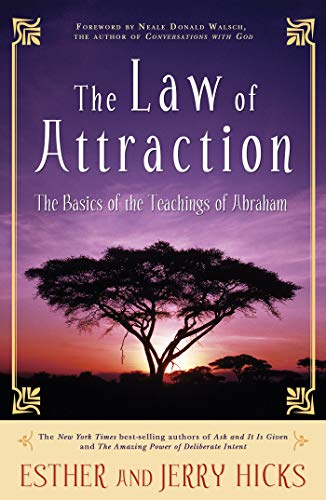
⚡️ What is The Law of Attraction about?
“The Law of Attraction” by Esther and Jerry Hicks is a foundational guide to understanding the universal principle that like attracts like. Presented through the teachings of a group of non-physical entities called Abraham, channeled by Esther, the book explains that our thoughts and feelings create a vibrational frequency that attracts matching experiences. It moves beyond simple positive thinking, delving into the science of deliberate creation and the art of allowing. The core message is that we are powerful creators who, by consciously directing our focus and aligning our emotions, can manifest the life we truly desire. This book provides the theoretical framework and practical tools to become a deliberate creator of your own reality.
🚀 The Book in 3 Sentences
- You are a powerful creator, and your life experience is a direct result of the vibrations you send out through your thoughts and feelings, a principle known as The Law of Attraction.
- By consciously focusing on what you want and using specific manifestation strategies to improve your emotional state, you can deliberately attract your desires.
- The ultimate key to receiving what you want is the Art of Allowing, which means releasing resistance and being in a state of joyful expectation.
🎨 Impressions
My initial impression of “The Law of Attraction” was one of profound empowerment and clarity. While the concept of channeling Abraham might be unusual for some, I found the teachings to be incredibly logical and resonant. The book doesn’t just present a lofty idea; it breaks it down into a practical, understandable system. It reframed my understanding of personal responsibility, showing me that I wasn’t a victim of circumstance but an active participant in my own creation. The emphasis on feeling good as the primary goal, rather than just a means to an end, felt both revolutionary and deeply compassionate. It’s a book that offers not just hope, but a tangible toolkit for change.
📖 Who Should Read The Law of Attraction?
This book is essential for anyone who feels stuck, frustrated, or that life is happening *to* them. It’s perfect for individuals on a personal development journey who are ready to take radical ownership of their thoughts and emotions. If you’ve been introduced to The Law of Attraction through other media like “The Secret” and want a deeper, more comprehensive understanding of its mechanics, this is the definitive guide. Anyone seeking to implement practical manifestation strategies and move from wishful thinking to deliberate creating will find immense value in its pages.
☘️ How the Book Changed Me
Reading this book fundamentally shifted my relationship with my own mind and emotions. I moved from passively reacting to life to actively participating in its creation. My daily focus changed from fixing problems to seeking joy, which had a cascading positive effect on every area of my life. I learned that my feelings are my guidance system, and I began to trust them implicitly, making decisions that were more aligned with my authentic self.
- I became a vigilant observer of my emotional state, using it as a compass to guide my thoughts and actions.
- I stopped complaining and started practicing the Book of Positive Aspects, which dramatically improved my relationships and overall outlook.
- I began to see myself as an intentional creator, which gave me a powerful sense of agency over my future.
✍️ My Top 3 Quotes
- “That which is like unto itself is drawn.”
- “You are a creator; you create with your every thought.”
- “The basis of your life is Freedom; the purpose of your life is Joy.”
📒 Summary + Notes
The true power of “The Law of Attraction” lies in its practical processes. The book is structured to first explain the three universal laws—The Law of Attraction, The Science of Deliberate Creation, and The Art of Allowing—and then provides a comprehensive toolkit of manifestation strategies to help you apply them. Each chapter introduces a specific technique designed to help you shift your vibration, focus your mind, and allow your desires to manifest. Below is a detailed breakdown of each chapter, highlighting the core concepts and actionable insights.
Chapter 1: The Law of Attraction, The Most Powerful Law in the Universe
This chapter introduces the foundational principle: that which is like unto itself is drawn. It explains that everything, from thought to physical object, has a vibrational frequency. You are constantly emitting a vibration based on how you feel, and The Law of Attraction responds by matching you with experiences, people, and circumstances of a similar vibration. Your point of power is in the present moment, as your current thoughts and feelings are creating your future.
- Your point of attraction is always in the now.
- You cannot focus on the lack of something and attract it at the same time.
- The Universe doesn’t hear your words; it responds to your vibrational offering.
- Understanding this law is the first step to becoming a deliberate creator.
- Whatever you are giving your attention to, you are requesting more of.
Chapter 2: The Process of Pivoting
Pivoting is a simple yet powerful technique for changing your vibrational point of attraction. When you notice you are focused on something unwanted (which creates negative emotion), you make a conscious choice to “pivot” your attention. You acknowledge the unwanted thought but then deliberately turn your focus to its opposite—the thing you do want. This process interrupts the negative momentum and shifts you to a more positive vibrational frequency.
- Negative emotion is a clear indicator that you are focused on something unwanted.
- The goal is not to resist the negative thought, but to consciously choose a better-feeling thought.
- Pivoting is a tool for reclaiming your creative power in any moment.
- Example: Instead of “I hate being in debt,” pivot to “I love the feeling of financial freedom.”
- Consistent pivoting changes your dominant point of attraction over time.
Chapter 3: The Process of The Emotional Guidance Scale
This chapter introduces the Emotional Guidance Scale, a hierarchy of emotions ranging from joy and empowerment at the top to fear and despair at the bottom. The key insight is that you can’t jump from despair to joy instantly. Instead, the goal is to gradually move yourself up the scale by reaching for a thought that feels slightly better than your current state. This process makes emotional management more accessible and realistic.
- Your emotions are your guidance system, telling you how close or far you are from your Inner Being’s perspective.
- The scale includes emotions like Joy, Empowerment, Passion, Optimism, Hopefulness, Contentment, Boredom, Pessimism, Worry, Fear, and Despair.
- The goal is always to find relief by moving up the scale, even if it’s just one small step.
- Trying to feel joyful when you’re in fear is counterproductive; aim for worry or anger first.
- This process is about gentle, gradual improvement of your emotional state.
Chapter 4: The Process of The Book of Positive Aspects
This is a practical tool for shifting your focus from what’s wrong to what’s right. You take a subject, person, or experience that is causing you negative emotion and deliberately list its positive aspects. This process trains your mind to look for the good, which changes your vibrational offering about that subject. It’s especially effective for improving relationships and your perspective on challenging situations.
- Get a notebook and title it “Book of Positive Aspects.”
- When you feel negative about someone or something, write down everything you can appreciate about it.
- This process is not about denying problems but about changing your vibrational relationship with them.
- By focusing on positive aspects, you deactivate the negative vibration and attract more positive experiences.
- It’s a powerful tool for cultivating an attitude of gratitude.
Chapter 5: The Process of The Scripting Process
Scripting involves writing a story about your life as if your desires have already manifested. By describing your ideal day, relationship, or situation in past or present tense, you create a strong vibrational match to that reality. This process helps you get into the feeling place of your desire, which is the key to attracting it. It’s a form of focused daydreaming that puts you in the creative driver’s seat.
- Write about what you want as if it is already happening, using “I am” or “It was so wonderful when…”
- Focus on the feeling you would have in that desired reality.
- Don’t worry about how it will happen; just focus on the what and the why.
- This process is particularly effective for creating specific scenarios or outcomes.
- It helps you clarify what you truly want and align your energy with it.
Chapter 6: The Process of The Virtual Reality Process
The Virtual Reality process is a fun, 30-second mental exercise where you create a short, perfect scene in your mind. You can be anywhere, with anyone, doing anything you desire. The rules are that it must feel good, have no “current reality” conditions attached, and only last 30 seconds. This process is a quick and effective way to pure your vibration and shift your point of attraction to something highly positive.
- Set a timer for 30 seconds and create a mental scene of pure pleasure.
- Choose a subject that is purely positive and not tied to any current problems.
- This process helps you practice the vibration of joy and appreciation without resistance.
- It’s an excellent tool to use throughout the day to maintain a high vibration.
- It trains you to focus, which is a key skill for deliberate creation.
Chapter 7: The Process of The Creation Box
The Creation Box is a physical box where you place pictures, notes, or objects that represent your desires. The act of placing an item in the box signifies to the Universe (and yourself) that your desire is complete in your vibrational reality. You then release it and trust that it will manifest in the physical. This process helps you let go of attachment and neediness, which can block manifestation.
- Find a beautiful box and decorate it if you wish.
- Write down or find pictures of things you want and place them inside.
- Once an item is in the box, your work is done; you release it to the Universe.
- This process reinforces the idea that your desires are already created vibrationally.
- It helps you practice the Art of Allowing by detaching from the outcome.
Chapter 8: The Process of Allowing
This chapter dives deeper into the Art of Allowing, which is the practice of being in a state of non-resistance. Allowing means being in vibrational harmony with your own desires and with the Source within you. Resistance is caused by negative thoughts, doubt, and fear, which push away what you want. Allowing is about relaxing, trusting, and finding joy in the now, which creates the space for your desires to flow into your experience.
- The absence of resistance is what allows your desires to manifest.
- You can’t attract something you desire while simultaneously pushing against it.
- Allowing is about trusting the Universe and the timing of your manifestations.
- Meditation is a powerful tool for quieting the mind and practicing allowing.
- When you feel good, you are in a state of allowing.
Chapter 9: The Process of Inviting
Inviting is the active, creative counterpart to allowing. While allowing is about removing resistance, inviting is about deliberately focusing on what you want to bring into your life. It’s about consciously directing your thoughts and attention toward your desires, thereby inviting them into your experience. This chapter reinforces that you are the one who calls forth your reality through your focus.
- Your attention is your invitation. What you focus on, you are inviting more of.
- This process is about being a deliberate thinker, not a passive observer.
- Every thought is a point of creation, so choose your invitations wisely.
- Inviting is not about pleading or begging; it’s about knowing and expecting.
- Combine inviting (focus) with allowing (non-resistance) for powerful manifestation.
Chapter 10: The Process of The Wallet Process
This is a specific process designed to improve your vibration around money. You take a dollar bill and place it in your wallet. Throughout the day, you take it out and appreciate it, acknowledging that it is the beginning of your financial abundance. You think about all the wonderful things you can do with this dollar and the many more that are coming. This process shifts your feeling of lack to a feeling of financial appreciation.
- Find a dollar bill and make it your “magic money.”
- Each time you see it, feel genuine appreciation for it and what it represents.
- This process helps you change your money story from one of lack to one of abundance.
- It teaches you that the feeling of abundance precedes the physical manifestation of it.
- It’s a simple, portable tool for improving your financial vibration.
Chapter 11: The Process of Appreciation
Appreciation is one of the highest vibrational emotions you can experience. This process involves deliberately looking for things to appreciate in your immediate environment and in your life. Unlike gratitude, which can sometimes feel like a reaction to something good that has happened, appreciation is a proactive choice to find the good. It puts you in a powerful state of alignment with Source.
- Appreciation is the absence of resistance and a key to allowing.
- You can appreciate anything: the air you breathe, the chair you’re sitting on, a beautiful flower.
- This process is a fast track to shifting your vibration to a high level.
- When you appreciate, you are in vibrational harmony with your desires.
- Make appreciation a daily practice to transform your life experience.
Chapter 12: The Process of The Focus Wheel Process
The Focus Wheel is a powerful tool for improving your feeling about a specific subject. You draw a small circle in the center of a page and write a statement you want to believe. Then, you draw a larger circle around it and write statements around it that you already believe and that feel good. Each statement should bring you closer to the center statement, gradually raising your vibration and reducing resistance to your core desire.
- Start with a core belief you want to achieve in the center of the wheel.
- Write progressively better-feeling thoughts around the wheel, each one a stepping stone to the center.
- This process helps you find relief and alignment on a specific topic.
- It’s a structured way to move up the Emotional Guidance Scale on a particular subject.
- It’s very effective for softening resistant beliefs.
Chapter 13: The Process of Finding the Feeling-Place
This chapter emphasizes that the key to manifestation is not just thinking about your desire, but feeling it. The “feeling-place” is the emotional state you would be in if your desire were already a reality. The process involves identifying that emotion and then finding ways to feel it right now, regardless of your current circumstances. This bridges the gap between where you are and where you want to be.
- Ask yourself: “How will I feel when I have this?”
- Find ways to generate that feeling today through memories, imagination, or appreciation.
- The Universe responds to your feeling, not just your thoughts.
- This process is about emotional manifestation before the physical manifestation.
- When you live in the feeling-place, you become a magnet for your desire.
Chapter 14: The Process of The Segmented Intending
Segmented Intending is the practice of breaking your day into small segments and setting a clear intention for each one. Before entering a new segment (like a meeting, a drive, or a conversation), you take a moment to state what you want to happen and how you want to feel. This process helps you become a more deliberate creator throughout your day, rather than letting life happen to you by default.
- Your day is a series of segments; be intentional about each one.
- Before a segment, declare: “In this segment, my intention is to…”
- This process pre-paves your experiences and aligns your energy.
- It helps you maintain focus and prevent negative momentum from building.
- It’s a powerful way to ensure that more of your day goes your way.
Chapter 15: The Process of The “Wouldn’t It Be Nice If…” Process
This is a gentle, playful process for softening resistance and introducing new desires. Throughout the day, you complete the phrase “Wouldn’t it be nice if…” with positive, unstressful outcomes. This process doesn’t require you to believe the statement fully; it’s simply a way to open the door to positive possibilities and shift your focus away from what-is to what could be.
- Use this phrase to gently introduce desires without attachment.
- Example: “Wouldn’t it be nice if I found a perfect parking spot right up front?”
- This process raises your vibration in a low-pressure way.
- It’s excellent for training your mind to look for positive outcomes.
- It helps you practice the vibration of expectation and possibility.
Chapter 16: The Process of The “Which Feels Better?” Process
This process is a simple decision-making tool that connects you with your Inner Being’s guidance. When faced with a choice, you ask yourself, “Which of these thoughts feels better?” The answer that brings a sense of relief, lightness, or joy is the one that is in alignment with your true self. This process helps you make choices based on emotional guidance rather than logic or external pressure.
- Your emotions are your ultimate guide to what is right for you.
- This process helps you tune into your intuition and inner knowing.
- It’s not about which choice is more logical, but which one feels more aligned.
- Consistently choosing the better-feeling thought will guide you to your best life.
- It’s a simple yet profound tool for living in alignment.
Chapter 17: The Process of Clearing Clutter for Clarity
This chapter draws a parallel between physical clutter and mental and emotional clutter. A cluttered environment can represent and contribute to resistance and stagnant energy. By clearing out physical items you no longer need, you create space for new things to come into your life and also create a sense of clarity and order in your mind. It’s an action-oriented step that supports your vibrational work.
- Your physical environment is a reflection of your vibration.
- Clearing clutter can release old, stuck energy and make you feel lighter.
- The process is about creating space for the new to flow in.
- It’s a tangible way to practice the Art of Allowing by letting go of the old.
- A clean, organized space can contribute to a clearer, more focused mind.
Chapter 18: The Law of Attraction, Parting Thoughts
The final chapter serves as a powerful recap and reinforcement of the book’s core message. It reminds you that you cannot get it wrong and that you are an eternal being with an unending journey of creation. The ultimate goal is not just to manifest things, but to experience joy and growth along the way. It leaves you with a sense of empowerment and the knowledge that you hold the pen to write your own life story.
- You are always creating; the question is whether you are doing it deliberately or by default.
- The journey of creation is meant to be joyful.
- There is no state of completion; you will always have new desires to launch.
- Your power is in your now, in your ability to choose your focus.
- The Universe adores you and is always conspiring to help you achieve your desires.
Key Takeaways
The most profound lesson from “The Law of Attraction” is that your feelings are your ultimate guidance system. It’s not about forcing positive thoughts but about gently guiding yourself to better-feeling emotions. The book provides a toolkit of practical processes, teaching that vibrational alignment is the key to manifestation. Another crucial takeaway is the concept of the Art of Allowing; you can’t attract what you want while pushing against it with doubt and resistance. Finally, the book empowers you by stating that you can’t get it wrong and that your primary purpose is to experience joy. Mastering The Law of Attraction is a practice of joyous, deliberate focus.
- Your feelings are the most accurate indicator of your point of attraction. \li>The Art of Allowing—releasing resistance—is just as important as focusing on your desires.
- You don’t need to jump from despair to joy; gradually reaching for a better-feeling thought is effective.
- Consistent use of the provided processes is what creates real, tangible change in your vibration and reality.
Conclusion
In conclusion, “The Law of Attraction” is more than just a book; it’s a comprehensive manual for living a life of deliberate creation and joy. Esther and Jerry Hicks have distilled complex universal laws into simple, actionable principles that anyone can apply. It teaches you to reclaim your power, trust your emotional guidance, and understand that the Universe is on your side. While the concepts are profound, the book’s strength lies in its practicality, offering numerous tools to help you shift your vibration and align with your desires. If you are ready to move beyond being a passive recipient of life’s circumstances and become an active, joyful creator, this book is an essential read. Embrace these teachings, and you will unlock the true power of The Law of Attraction in your life.
More From Esther Hicks and Jerry Hicks →
Discover more from AI Book Summary
Subscribe to get the latest posts sent to your email.