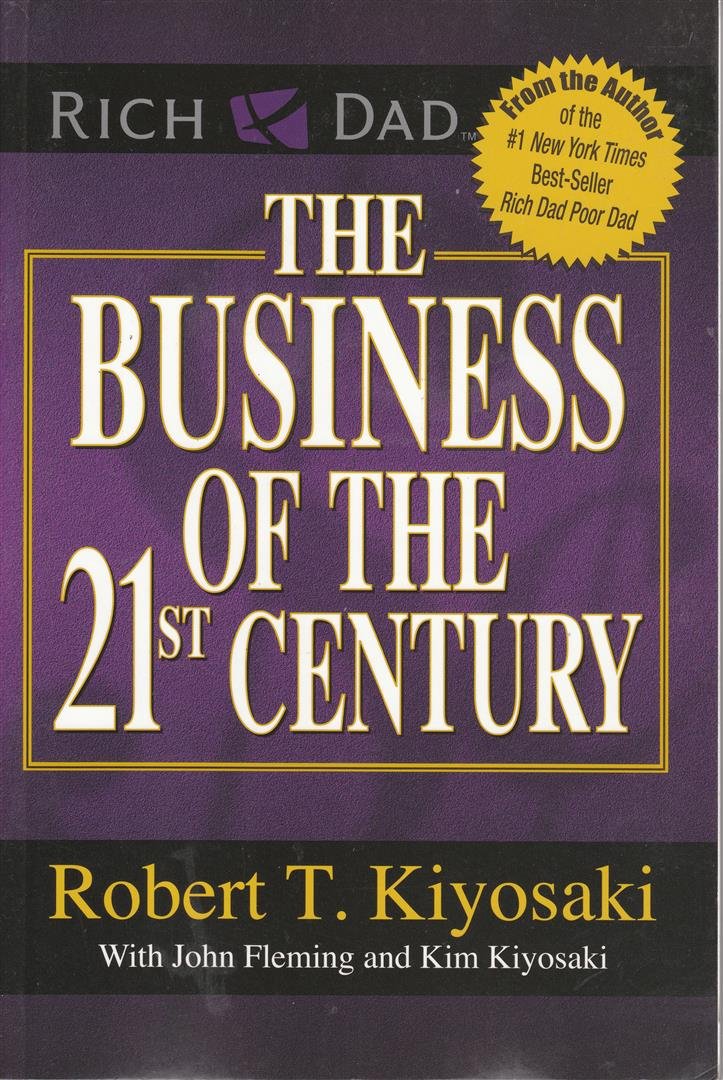
⚡️ What is The Business of the 21st Century About?
Ever felt like you’re running a race where the finish line keeps moving further away? That’s the core frustration Robert Kiyosaki addresses in this framework. He argues that the traditional ‘job’ is a 20th-century relic that’s finally crumbling under its own weight. Instead of climbing a corporate ladder that’s leaning against the wrong wall, the authors suggest building your own. More summaries by Robert Kiyosaki; John Fleming; Kim Kiyosaki reveal a consistent theme: control is the only real security.
The central thesis here is that we’ve entered an era where being an employee is the riskiest move you can make. The book focuses heavily on network marketing as the ultimate ‘business of the 21st century’ because it allows ordinary people to move from the left side of the money map to the right. It’s a pitch for financial sovereignty through a very specific model. You can find more finance book summaries here, but few are as unapologetically pro-entrepreneur as this one.
🚀 The Book in 3 Sentences
- The Industrial Age is over, and the ‘safety’ of a steady paycheck has been replaced by the volatility of a world that no longer rewards obedience.
- Real wealth comes from owning income-generating assets, not just earning a high salary, which is why you must move from the Employee/Self-Employed quadrants to the Business/Investor quadrants.
- Network marketing is the most accessible vehicle for the average person to build a scalable business because it focuses on leadership, personal development, and the power of a human network rather than just selling products.
🎨 Impressions
Reading this felt like a bucket of cold water to the face, especially the parts about how our school systems were designed by the Prussians to create obedient workers. I’ve always felt that ‘busy-ness’ was a trap, but Kiyosaki puts a name to it. It’s frustrating to realize how much of our lives we spend trading hours for dollars without ever building something that lives on its own. It’s a wake-up call that doesn’t pull any punches about the reality of the modern economy.
I’ll be honest, though: parts of the book feel like a very long sales pitch for the MLM industry. While the logic behind the Cashflow Quadrant is rock solid, the transition into ‘why network marketing is the only answer’ felt a bit forced at times. I found myself dog-earring the chapters on leadership and mindset more than the specific business mechanics. It’s a book about freedom, even if the vehicle it suggests isn’t for everyone.
📖 Who Should Read The Business of the 21st Century?
If you’re currently an employee who feels like you’re working harder for less reward every year, you need this. It’s for the person who wants to start a business but has zero capital and even less experience. However, if you’re already a successful tech founder or a seasoned real estate investor, you’ll probably find the advice a bit elementary. This is for the dreamer who needs a practical, low-risk entry point into the world of assets.
☘️ How This Book Changed My Thinking
Before reading this, I viewed my income as a scoreboard; after reading it, I view my income as fuel for asset acquisition. The mindset shift was visceral.
- I stopped asking ‘How much can I earn?’ and started asking ‘What asset am I building today?’
- I realized that my social network isn’t just for ‘hanging out’—it’s actually the most valuable economic asset I own if I treat it with respect.
- I became much more critical of the ‘safety’ of my 9-to-5, seeing it as a temporary tool rather than a long-term destination.
✍️ 3 Quotes That Stuck With Me
- “The corporate myth is over.” — This captures the brutal reality that no one is coming to save your retirement.
- “Wealth is the product of man’s capacity to think.” — It’s a reminder that your bank account is a reflection of your financial intelligence, not just your hours worked.
- “It’s not about income; it’s about assets that generate income.” — The most important distinction in the entire book.
📒 Summary + Notes
The book starts by deconstructing the lie of job security. Kiyosaki explains that most of us are trapped in the ‘E’ (Employee) or ‘S’ (Self-Employed) quadrants, where we trade time for money. If you stop working, the money stops. The author’s case is that true freedom only exists on the right side of the quadrant: ‘B’ (Big Business Owner) and ‘I’ (Investor). Here, you own a system that works for you. The narrative arc moves from the ‘why’ of our current economic crisis to the ‘how’ of building a bridge to the other side.
What the authors really want you to believe by the end is that network marketing isn’t about selling soap or vitamins; it’s about building a network. They argue that the network itself is the asset. By focusing on leadership development and helping others achieve their goals, you create a duplicable system that generates passive income. It’s a democratic form of capitalism where the barrier to entry is low, but the potential for scale is massive if you’re willing to grow your character.
🧠 Core Ideas Explained Simply
Some of these concepts sound like finance jargon, but they’re actually quite simple when you break them down.
The Cashflow Quadrant
Imagine a cross. On the left are Employees and the Self-Employed—people who work for money. On the right are Business Owners and Investors—people whose systems and money work for them. The goal isn’t to get a better job on the left; it’s to jump the fence to the right. One real-world implication is that you can never be truly free if you have to show up to get paid.
Active vs. Passive Income
Why would you keep filling a bucket with a hole in it? Active income is like carrying water in buckets; you only have water as long as you’re walking. Passive income is building a pipeline. Once the pipeline is built, the water flows even while you sleep. The book argues that network marketing is a way to build that pipeline without needing millions of dollars in start-up capital.
The Power of Networks (Metcalfe’s Law)
The value of a network increases exponentially with the number of users. Think about a single telephone; it’s useless. Two telephones are better. Millions of telephones create a world-changing system. Network marketing applies this by letting you own a piece of a growing human network rather than just being a cog in someone else’s machine.
1: The Rules Have Changed
Did you notice that the old advice to ‘go to school and get a job’ stopped working about twenty years ago? Kiyosaki opens by pointing out that the 2008 financial crisis wasn’t a fluke; it was a symptom of a deeper shift. The security our parents felt is gone because the global economy has moved past the industrial age. We’re living in a time where companies have no loyalty to you, so you can’t afford to have blind loyalty to them.
2: The Silver Lining
A bad economy is actually the best time to start a business. When things are tough, people are more open to new ideas and more willing to look for alternative income streams. Fear can either paralyze you or push you to take control. This chapter argues that the ‘silver lining’ of economic chaos is the necessity it creates for innovation and self-reliance.
3: Where Do You Live?
Which corner of the Cashflow Quadrant do you spend your days in? This is where we get the breakdown of E, S, B, and I. Most people think being a doctor or a lawyer (the ‘S’ quadrant) is the pinnacle of success, but Kiyosaki points out that these people are often more trapped than employees because they are the ‘engine’ of their business. If they take a vacation, the business dies. True wealth is only found in the ‘B’ and ‘I’ quadrants.
4: Your Core Financial Values
“I’m not interested in money,” is often a lie we tell ourselves to mask our fear of the unknown. People in different quadrants have different values. Employees value security. The self-employed value independence. Business owners value building a team and a system. To move quadrants, you don’t just change what you do; you have to change what you value at your core.
5: The Mindset of an Entrepreneur
What separates someone who builds a kingdom from someone who just works in one? It’s the ability to handle rejection and the willingness to keep going when there’s no guaranteed paycheck at the end of the week. This chapter is a gut check. Being an entrepreneur isn’t about having a great idea; it’s about having the grit to see that idea through the ‘valley of death’ where most people quit.
6: It’s Time to Take Control!
You can’t keep waiting for the government or your boss to fix your life. Taking control means admitting that your current financial situation is your own responsibility. It’s a call to action to stop being a passive observer of your own career and start being the architect of your financial future.
7: My Years in the Business
Kiyosaki shares his own journey—not in network marketing, but in building businesses in general. He explains why he eventually came to support the network marketing model despite not needing it himself. He saw that it provided the same ‘real world’ business school education he had to learn the hard way, but with a much lower cost of entry.
8: It’s Not About Income—It’s About Assets
Would you rather have $10,000 once or $1,000 every month for the rest of your life? This chapter hammers home the difference between a high-paying job (income) and a business (asset). An asset is something that puts money in your pocket whether you work or not. Network marketing is presented as a way to build an asset that grows over time.
9: Asset #1: A Real-World Business Education
Schools teach you how to be a good employee, but where do you learn how to lead? The authors argue that the training provided by good network marketing companies is more valuable than an MBA. You learn sales, communication, time management, and how to deal with ‘no.’ These are the skills that actually make you rich.
10: Asset #2: A Profitable Path of Personal Development
Inside every person is a ‘winner’ and a ‘loser.’ The business world usually rewards the ‘loser’—the part of you that wants to play it safe and stay small. Network marketing, because it relies on your personal growth to succeed, forces you to confront your fears and grow your ‘winner’ side. It’s basically a self-help program with a compensation plan.
11: Asset #3: A Circle of Friends Who Share Your Dreams and Values
You are the average of the five people you spend the most time with. If your friends are all ‘E’ quadrant employees complaining about their bosses, you’ll stay an ‘E’ quadrant employee. Joining a network marketing community surrounds you with people who are also trying to move to the ‘B’ quadrant, providing the social support necessary for that transition.
12: Asset #4: The Power of Your Own Network
Business is not about products; it’s about networks. Bill Gates didn’t just build software; he built a network of users. This chapter explains Metcalfe’s Law again and applies it to personal business. By building your own network of people, you are building an economic engine that has much more value than any single product you could ever sell.
13: Asset #5: A Duplicable, Fully Scalable Business
How do you grow a business without working 24 hours a day? You need a system that other people can follow. Network marketing is built on ‘duplication.’ If you can show one person how to do what you do, and they can show another, your business can grow infinitely without you having to be involved in every transaction.
14: Asset #6: Incomparable Leadership Skills
Leadership isn’t about telling people what to do; it’s about inspiring them to do it for themselves. In the corporate world, you lead by the power of the paycheck. In network marketing, everyone is a volunteer, so you have to lead by the power of your character and vision. This is the highest level of leadership training available.
15: Asset #7: A Mechanism for Genuine Wealth Creation
Wealth is not the same as money. Wealth is the ability to survive a certain number of days forward without working. This chapter explains how to use the income from your network marketing business to invest in other assets, like real estate, to create a multi-layered fortress of financial security.
16: Asset #8: Big Dreams and the Capacity to Live Them
Most people stop dreaming because their dreams are too expensive for their paychecks. When you build a business, you’re not just earning money; you’re expanding your capacity to live a bigger life. The authors encourage readers to dream big again, knowing they have a vehicle that can actually fund those dreams.
17: The Business of the 21st Century
Why this specific model? Because it fits the information age. It’s lean, it’s global, and it relies on human connection—the one thing AI and automation can’t easily replace. It is the ‘perfect’ business for the current era because it democratizes the ability to become a business owner.
18: Choosing Wisely
Not all companies are created equal. Kiyosaki gives a checklist for choosing a network marketing company: Look at the leadership, the training program, and the product—in that order. The training is actually more important than the product because the training is what builds the entrepreneur.
19: What It Takes
It takes time. This isn’t a get-rich-quick scheme. Kiyosaki suggests a five-year plan. It takes time to unlearn ’employee’ habits and build ‘entrepreneur’ muscles. If you’re looking for a lottery ticket, this isn’t it.
20: Living the Life
The final chapter is about what happens when you finally reach the other side. It’s about the freedom to choose how you spend your time and the satisfaction of knowing you’ve helped others do the same. It’s a vision of a life where work is a choice, not a necessity.
⚖️ A Critical Perspective
While the Cashflow Quadrant is a brilliant mental model, the book drastically oversimplifies the success rate of network marketing. Statistics show that the vast majority of people who join MLMs never make a profit, yet the book presents it as a nearly foolproof bridge to the ‘B’ quadrant. Furthermore, it glosses over the predatory reputation of the industry and how social media has turned many ‘networks’ into spam engines. In 2025, the challenge isn’t just building a network, but maintaining trust in an era of digital fatigue—something the book doesn’t quite address.
🔄 How It Compares
Compared to Kiyosaki’s original Rich Dad Poor Dad, this book is much more focused on a singular path—network marketing—whereas the original was a broader philosophy of financial literacy. If you want the ‘why’ of money, read Rich Dad Poor Dad; if you want a specific ‘how’ (and you’re open to the MLM model), this is the sequel. It lacks the storytelling charm of the first book but offers a more direct, if controversial, call to action.
🔑 Key Takeaways
Here are the fundamental shifts you need to make to survive the modern economy:
- Stop working for income and start working for assets; your house is not an asset, but a business that pays you is.
- The skills you gain while building a business—leadership, sales, and resilience—are more valuable than the actual money you make in the beginning.
- Your network is your net worth; the ability to build and lead a community of like-minded people is the most scalable skill in the 21st century.
- You need a five-year plan to transition from the left side of the quadrant to the right; there are no shortcuts to changing your core financial values.
💬 Frequently Asked Questions
What is the main argument of The Business of the 21st Century?
The book argues that traditional employment is dead and network marketing is the most viable way for average people to build wealth. It focuses on moving from the ‘Employee’ to the ‘Business Owner’ quadrant by building a scalable network rather than just selling products or trading time for money.
Is network marketing the same as a pyramid scheme?
Kiyosaki distinguishes legitimate network marketing from pyramid schemes by focusing on the ‘8 assets.’ A real business provides education, leadership training, and a viable product or service. Pyramid schemes rely solely on recruitment fees without an underlying business system or value-added training for the participants.
Why does Kiyosaki recommend network marketing?
He recommends it because of the low barrier to entry and the built-in ‘business school’ education. It allows people to learn entrepreneurship and leadership skills with very little financial risk compared to traditional franchises or startups, while offering the potential for scalable, passive income through a human network.
What are the 8 assets mentioned in the book?
The assets include: Real-world business education, personal development, a supportive circle of friends, the power of your own network, a scalable business model, leadership skills, a mechanism for wealth creation, and the capacity to live big dreams. These are the non-monetary benefits that lead to long-term financial success.
Who should read The Business of the 21st Century?
Anyone stuck in a 9-to-5 who wants more control over their financial future should read it. It is especially useful for people who want to start a business but lack the capital, specialized skills, or risk tolerance required for traditional business ventures or high-stakes investing.
Conclusion
By the time you finish this book, you’ll likely feel a mix of excitement and anxiety. The anxiety comes from realizing that the safety net you thought you had—your job, your pension, your boss’s promises—is largely an illusion. But the excitement comes from realizing that you don’t need a million dollars to start building your own safety net. You just need a shift in mindset and a willingness to learn the skills of the ‘B’ quadrant.
The one thing you should carry with you is the idea that your financial life is a system, and you are either building your own or being a part of someone else’s. If you don’t own the system, you’ll always be at the mercy of those who do. The Business of the 21st Century isn’t just about making money; it’s about claiming your life back from a system that was never designed for your freedom. Check out our other finance book summaries to keep building that financial intelligence.
More From Robert Kiyosaki; John Fleming; Kim Kiyosaki →
Discover more from AI Book Summary
Subscribe to get the latest posts sent to your email.