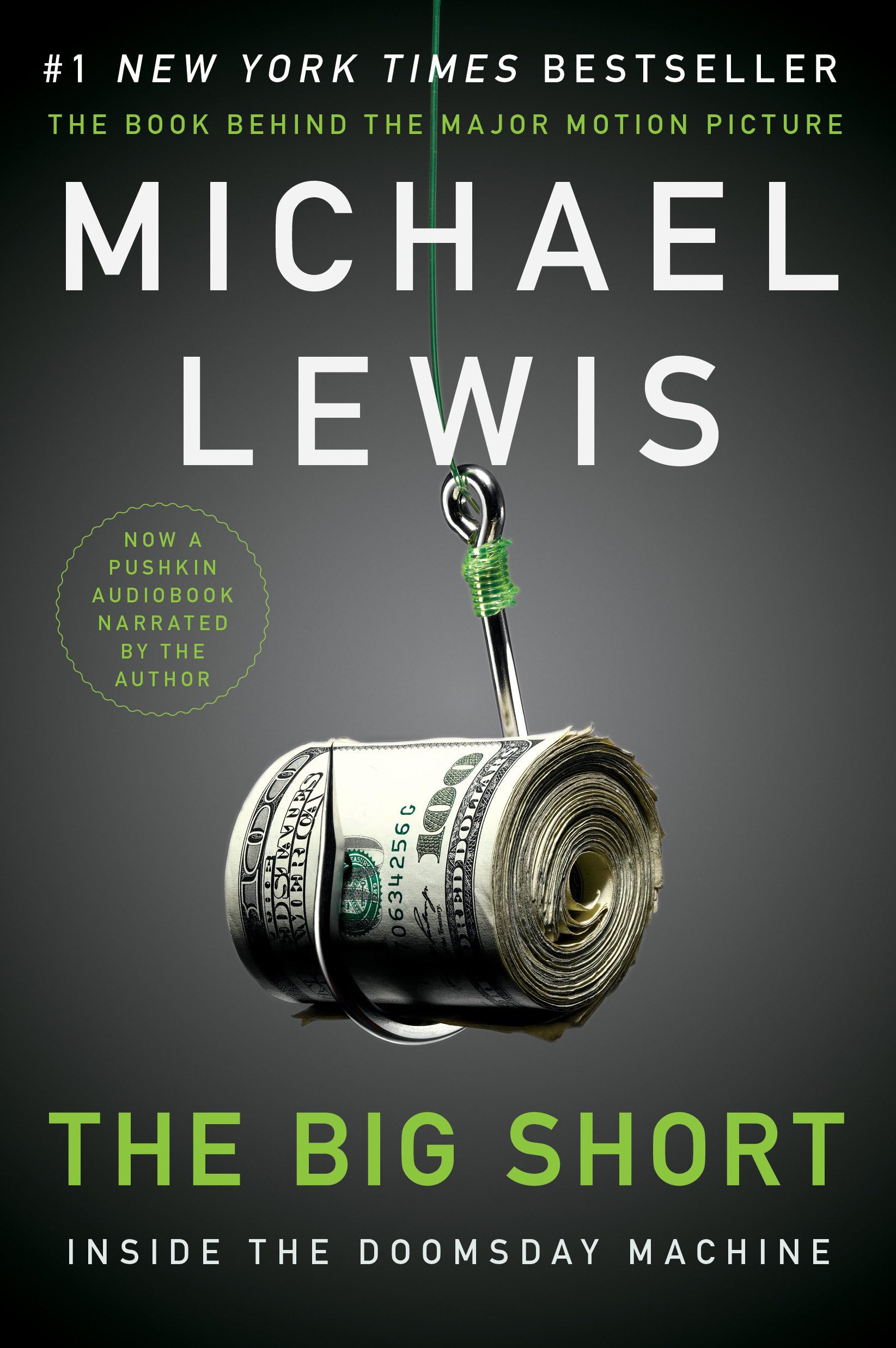
⚡️ What is The Big Short About?
Have you ever looked at a massive, global system and thought, “This is clearly insane, why is nobody else seeing this?” That’s the question driving the narrative of Michael Lewis in his classic exploration of the 2008 financial crisis. While most post-mortems of the Great Recession focus on the failure of big banks, Lewis turns his lens toward the misfits and outsiders who saw the cracks in the foundation years before the ceiling fell in. It’s a masterclass in independent thinking and the dangers of institutional groupthink.
The central argument of the book is that the financial world became so blinded by complexity and short-term profit that it lost sight of the underlying reality: people were being sold houses they couldn’t afford with money the banks didn’t actually have. By the time I finished this, I wasn’t just angry at the bankers; I was fascinated by the psychological stamina required to bet against the entire world when everyone else says you’re wrong. If you enjoy this, you should check out our other finance book summaries to see how these patterns repeat throughout history.
🚀 The Book in 3 Sentences
- The 2008 financial crisis was caused by a subprime mortgage bubble fueled by complex derivatives that even the people selling them didn’t understand.
- A small group of eccentric investors identified this systemic rot early and used credit default swaps to bet against the housing market.
- The collapse was inevitable because the incentives of Wall Street were divorced from the reality of the American homeowner, creating a “doomsday machine” that rewarded catastrophic risk.
🎨 Impressions
Reading this felt like watching a slow-motion car crash where the drivers are all high on their own supply. Lewis has this incredible knack for making bond math sound like a thriller plot. I found myself dog-earing the pages where he describes the sheer arrogance of the ratings agencies—how could people paid to be “objective” be so remarkably oblivious? It’s a frustrating read, but only because the reality it describes is so absurd. Why did it take a guy with one eye and Asperger’s to see what the Federal Reserve missed?
What’s most striking isn’t the greed, but the stupidity. We’re often told that Wall Street is filled with the brightest minds, but the book paints a picture of a culture where no one asks “Why?” as long as the checks are clearing. I’ve read a lot of finance books, but this one sticks because it’s fundamentally about human character. It’s about the cost of being right when the world wants you to be wrong. It made me realize that expertise is often just a very fancy mask for overconfidence.
📖 Who Should Read The Big Short?
If you’re an investor who wants to understand how systemic risk actually works—not the textbook version, but the messy, human version—this is mandatory. It’s also for anyone who feels like an outsider in their industry. However, if you’re looking for a technical manual on how to trade derivatives or a dry academic history of the Fed, you’ll probably find Lewis’s focus on character quirks a bit distracting. This is a story about people, not just spreadsheets.
☘️ How This Book Changed My Thinking
Before reading this, I assumed market crashes were “black swan” events that no one could see coming. Afterward, I realized they are often “grey swans”—obvious disasters that everyone chooses to ignore because the status quo is too profitable to question.
- I stopped trusting “expert” consensus blindly and started looking at the underlying data myself.
- I realized that complexity is often used as a tool to hide a lack of substance; if someone can’t explain an investment simply, they probably don’t understand it.
- I developed a much higher tolerance for being the “weirdo” in the room if the math supports my position.
✍️ 3 Quotes That Stuck With Me
- “The world’s most powerful people were actually just high-functioning idiots.” — This serves as a brutal reminder that title and intelligence aren’t always correlated.
- “Success on Wall Street was all about being the person who could most convincingly lie to themselves.” — It highlights how groupthink becomes a survival mechanism in corporate environments.
- “What are the odds that you’re right and everyone else is wrong?” — A question the characters had to answer every day while their portfolios were bleeding.
📒 Summary + Notes
The book follows several disparate groups of investors who all independently stumbled upon the same horrific truth: the U.S. housing market was a giant Ponzi scheme. Lewis starts with Michael Burry, a former neurologist who spent his nights analyzing thousands of individual subprime mortgages. Burry discovered that the loans were increasingly being given to people with no income and no assets, yet the bonds containing these loans were being rated as “AAA” (the safest possible rating). How does a pile of garbage get rated as gold? Through the magic of diversification—or so the banks claimed.
We then meet Steve Eisman, a misanthropic hedge fund manager, and the guys from Cornwall Capital, a “garage band” hedge fund. They all realized that the banks were creating “Collateralized Debt Obligations” (CDOs), which were essentially boxes of bad loans repackaged to look good. The traders bought Credit Default Swaps (CDS), which acted as insurance policies against these bonds. If the bonds failed, they would make a fortune. The catch? They had to pay monthly premiums to keep the bet alive while the housing market continued to boom, making them look like lunatics to their investors and peers.
🧠 Core Ideas Explained Simply
Finance is often intentionally opaque, but the “Doomsday Machine” relied on a few basic, albeit flawed, concepts that Lewis makes accessible.
Subprime Mortgages & Tranches
Imagine a giant tower of Lego bricks. The bottom bricks are “subprime” (risky loans), and the top bricks are “prime” (safe loans). Wall Street argued that even if the bottom bricks were shaky, the tower wouldn’t fall because not everyone would stop paying their mortgage at the same time. They sliced these towers into “tranches,” selling the “safe” top slices to pension funds and the “risky” bottom slices to speculators. The problem? When the housing market slowed down, the entire tower turned out to be made of sand, not Legos.
The Credit Default Swap (CDS)
Is it possible to buy fire insurance on your neighbor’s house? In the real world, no. On Wall Street, yes. A Credit Default Swap is essentially an insurance policy on a bond. The characters in the book didn’t own the crappy mortgages; they just paid a small fee to the banks for the right to get paid if those mortgages defaulted. It turned out to be the greatest asymmetric bet in history: small downside (the premiums) for massive upside (billions of dollars).
The Synthetic CDO
This is where things get truly weird. A synthetic CDO doesn’t even contain actual mortgages. It’s just a bet on other bets. It allowed the bubble to grow much larger than the actual amount of debt in the housing market. It was a hall of mirrors where the same bad loans were being used to prop up billions of dollars in gambling, creating a house of cards that was destined to blow over at the first sign of a breeze.
Prologue: A Secret Origin Story
Lewis begins by looking back at his own time at Salomon Brothers in the 1980s, the era he chronicled in Liar’s Poker. He thought that by writing about the absurdity of Wall Street, he would help end it. Instead, he realized that the “big swingers” of the 80s were amateurs compared to what was coming. The seeds of the 2008 crash were planted when investment banks stopped being private partnerships and became public companies, shifting the risk from the partners’ own pockets to the shareholders’ pockets. Does that change how you’d manage money? Absolutely.
1: A Secret Mind
Why would a medical doctor with a glass eye and a passion for heavy metal music become the first person to short the housing market? Michael Burry is the central figure here. He didn’t care about what the “smart guys” at Goldman Sachs said; he cared about the data. He spent years reading the fine print of mortgage prospectuses that nobody else even opened. He discovered that the “silent crash” had already started in 2005 when homeowners began defaulting on loans that were only a few months old. He realized that the system was broken, but he was the only one looking at the engine.
2: In the Land of the Blind
Steve Eisman is the kind of guy who goes to a dinner party and tells the host their house is built on a swamp. He was a research analyst who became obsessed with the predatory nature of the “subprime” industry. He saw how companies like Household Finance were essentially tricking poor people into loans they could never repay. Eisman’s “edge” wasn’t just math; it was his deep-seated cynicism about human nature. He assumed everyone was lying until proven otherwise. This chapter highlights how being a jerk can actually be a competitive advantage in a world built on fake politeness and corporate spin.
3: How to Short a Bond
And then there was Greg Lippmann, the Deutsche Bank trader who looked like a character from a movie about 80s excess. Lippmann wasn’t a visionary; he was a salesman. He realized that if he could get people to buy insurance against subprime bonds, he could make a killing on the fees. He went around Wall Street trying to find “idiots” to buy his swaps. Most people turned him down, but Eisman and his team listened. The tension in this chapter comes from the fact that Lippmann was betting against his own industry while working for one of its biggest players. It’s a messy, morally ambiguous situation that defines the era.
4: How to Harvest a Migraine
Two guys in a garage in Berkeley with $110k—it sounds like a tech startup, not a hedge fund. Charlie Ledley and Jamie Mai of Cornwall Capital weren’t “insiders.” They were guys who looked for “mispriced volatility.” They looked for events that the market thought were impossible but they thought were merely unlikely. They stumbled into the subprime short because it was the ultimate “cheap bet.” They didn’t need to be right 100% of the time; they just needed to be right once where the payoff was 50-to-1. Their perspective shows that you don’t need a Bloomberg terminal and a bespoke suit to see a bubble.
5: Accidental Capitalists
How do you hide a mountain of bad debt? You call it a CDO. This chapter explains the mechanics of how the banks took the “BBB” rated tranches of mortgage bonds—the stuff nobody wanted—and put them into a new box. They then convinced the ratings agencies that this box was somehow safer than its contents. It was financial alchemy. Lewis introduces us to the “quants” who built the models. They believed the models were reality, forgetting that reality is made of people, and people are unpredictable. It’s a chilling look at how math can be used to justify madness.
6: Spider-Man at the Venetian
The ratings agencies were either complicit or incredibly stupid—there really is no third option. Eisman goes to a subprime conference in Las Vegas and realizes that the people running the show are essentially “douchebags in cheap suits.” He meets a CDO manager who admits he doesn’t even know what’s in the bonds he’s managing. It was the moment the “short” traders realized the crash wasn’t just a possibility; it was a mathematical certainty. The arrogance on display in Vegas is breathtaking. It’s a scene that perfectly captures the “top” of a bubble.
7: The Great Treasure Hunt
What happens when you’re right, but the market refuses to acknowledge it? In early 2007, subprime defaults were skyrocketing, but the prices of the bonds weren’t moving. The banks were essentially refusing to mark the positions down because doing so would mean they were broke. This chapter is about the psychological toll of the “waiting game.” Burry’s investors were threatening to sue him. Eisman was losing his mind. They were right, but they were losing money every day. It’s a brutal lesson: being early is often indistinguishable from being wrong.
8: The Long Quiet
The waiting is the hardest part, especially when your investors are screaming at you. Burry eventually “locked” his investors’ money, preventing them from withdrawing. It was a move that saved his fund but destroyed his reputation. This chapter dives into the isolation of the contrarian. Everyone else in the world is celebrating a housing boom, and you’re sitting in a dark office watching the world burn in slow motion. It’s a test of conviction that few people could pass. Are you prepared to be hated for being right?
9: A Death of Interest
When does the music finally stop? For the subprime market, it was the summer of 2007. The cracks became too big to hide. Bear Stearns’ hedge funds collapsed. Suddenly, the “worthless” insurance policies the characters held were worth billions. But there was a new fear: would the banks even be able to pay? If the whole system collapses, does a contract even matter? The traders went from wanting to be right to wanting to be liquid. It’s a frantic, chaotic chapter that shows how quickly “confidence” can evaporate.
10: Two Men in a Boat
The aftermath was a mixture of vindication and horror. The characters made hundreds of millions, some billions, of dollars. But they watched the global economy nearly disintegrate. Lewis describes the hollow feeling of winning a bet against your own country. Eisman, in particular, struggled with the fact that the people who caused the mess were the ones being bailed out by the government. The “Big Short” was over, but the structural problems that caused it remained. It’s a bittersweet ending that avoids the “happy” tropes of a typical success story.
Epilogue: Everything is Connected
Lewis ends by meeting his old boss, John Gutfreund, the former head of Salomon Brothers. Gutfreund was the man who turned the bond market into a casino, yet he too was baffled by what had happened. It’s a quiet, reflective moment that brings the book full circle. The “doomsday machine” wasn’t a specific piece of software; it was a shift in the soul of Wall Street. As long as people are playing with other people’s money, the machine will keep running. Don’t you think it’s only a matter of time before it happens again?
⚖️ A Critical Perspective
While the book is a masterpiece of storytelling, Lewis occasionally leans too hard into the “heroic outsider” trope. He paints Burry and Eisman as almost saint-like in their conviction, glossing over the fact that they were still aggressive capitalists seeking to profit from others’ misery. Additionally, the book focuses heavily on the “demand” side of the crash (the banks and traders) but doesn’t spend much time on the “supply” side—the millions of homeowners who also played a role in the frenzy. It’s a great narrative, but it’s a specific slice of a much larger, uglier pie.
🔄 How It Compares
Compared to Too Big to Fail by Andrew Ross Sorkin, which offers a “view from the boardroom” and focuses on the frantic government bailouts, The Big Short is far more cynical and character-driven. Sorkin gives you the perspective of the firefighters trying to save the building; Lewis gives you the perspective of the guys who saw the arsonist in the basement three years earlier. If you want a dry history, read Sorkin; if you want to understand the human madness of it all, stay with Lewis.
🔑 Key Takeaways
The lessons of the “Doomsday Machine” are as relevant now as they were in 2008.
- Complexity is a Warning Sign: When a financial product is too complicated to explain in a few sentences, it’s usually designed to hide risk or fees.
- Incentives Rule Everything: Most people on Wall Street weren’t “evil”; they were simply doing exactly what they were paid to do. If you reward short-term volume over long-term stability, you get a crash.
- The Crowd is Often Wrong: Just because “everyone” is doing it doesn’t mean it’s right. Independent research and the courage to look stupid are the only ways to beat the market.
- The Rating Agencies are a Weak Link: Trusting a third-party “expert” to assess risk is dangerous, especially when that expert is being paid by the people they are supposed to be judging.
💬 Frequently Asked Questions
What is the main argument of The Big Short?
The book argues that the 2008 financial crisis was caused by a combination of extreme greed, systemic stupidity, and a complete lack of oversight in the housing market. It highlights how a few outsiders used independent analysis to identify and profit from a bubble that the “experts” missed.
Who is the main person in The Big Short?
While the book follows several groups, Michael Burry is arguably the central figure. A former neurologist with a glass eye and Asperger’s, Burry was the first to recognize the subprime mortgage rot by reading through thousands of individual loan prospectuses that no one else bothered to check.
Is The Big Short a true story?
Yes, it is a non-fiction account of the 2007–2008 financial crisis. Michael Lewis interviewed the real traders, bankers, and analysts involved. While the prose is as engaging as a novel, the events, the billions made, and the catastrophic collapse of the housing market are all based on reality.
What is a “synthetic CDO” as explained in the book?
A synthetic CDO is a financial instrument that doesn’t hold actual mortgages but instead uses credit default swaps to bet on the performance of other mortgage-backed bonds. It allowed investors to bet billions on the housing market without needing more actual houses to be sold, exponentially increasing the crash’s impact.
Is The Big Short worth reading for beginners?
Yes, because Michael Lewis is a master of explaining dense financial concepts through storytelling. You don’t need an MBA to follow the plot, though you will learn a lot of “finance speak” along the way. It’s the most entertaining way to learn about how the global economy works.
Conclusion
The Big Short is more than just a book about a market crash; it’s a study of the human condition in the face of overwhelming pressure to conform. Michael Lewis shows us that the most dangerous thing in the world isn’t a bad mortgage—it’s a room full of people who are all incentivized to believe the same lie. It reminds us that “common sense” is often anything but common, and that the biggest risks are usually the ones hiding in plain sight, protected by layers of jargon and overconfidence.
As you put the book down, you’re left with a lingering question: what is the next doomsday machine currently being built? Is it in crypto, AI, or government debt? The players change, and the instruments get fancier, but the underlying psychology of greed and denial remains exactly the same. Keep that in mind next time you’re browsing our finance book summaries—history doesn’t repeat, but it certainly rhymes.
More From Michael Lewis →
Discover more from AI Book Summary
Subscribe to get the latest posts sent to your email.