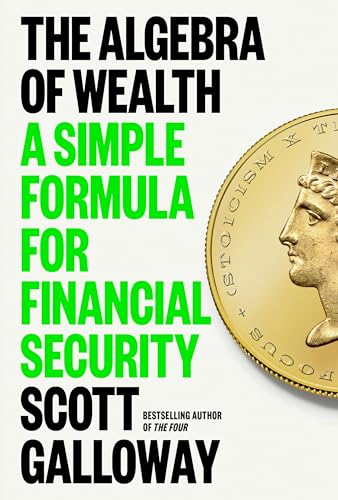
⚡️ What is The Algebra of Wealth about?
The Algebra of Wealth is Scott Galloway’s no-nonsense guide to building financial security through a blend of stoic philosophy, career focus, and smart investing. Rather than promising get-rich-quick schemes, Galloway presents a timeless formula: Wealth = Focus + (Stoicism × Time × Diversification). This book strips away the noise of modern finance and delivers raw, practical advice on aligning your daily habits with long-term prosperity.
🚀 The Book in 3 Sentences
- The Algebra of Wealth teaches that financial security comes from stoic discipline, not stock-picking genius.
- Galloway argues you must focus on what you’re good at, not your passion, to maximize earning potential.
- The book warns that social media is the greatest wealth destroyer of our generation, stealing compound time from young people.
🎨 Impressions
Reading The Algebra of Wealth felt like getting brutally honest advice from that successful uncle who actually wants you to win. Galloway’s writing punches you in the gut with uncomfortable truths about consumer culture while simultaneously handing you the tools to escape it. The book’s strength lies in its ability to blend ancient stoic wisdom with modern financial reality, making complex concepts feel like common sense you should have known all along.
📖 Who Should Read The Algebra of Wealth?
If you’re a young professional drowning in student loans while scrolling through Instagram, The Algebra of Wealth is your wake-up call. This book speaks directly to millennials and Gen Z who need someone to call out their financial BS while showing them the path to real wealth. It’s perfect for anyone who suspects that following their passion might actually be terrible career advice.
☘️ How the Book Changed Me
How my life / behaviour / thoughts / ideas have changed as a result of reading the book.
- I deleted three social media apps after realizing they were stealing 2+ hours daily from my wealth-building years
- I stopped feeling guilty about not following my passion and instead doubled down on my high-income skills
- I began viewing every financial decision through the lens of stoic temperance, asking “Is this a need or a want?”
✍️ My Top 3 Quotes
- “Capitalism’s genius is inventing new things for us to spend money on that feel like needs, not wants.”
- “Social media is likely one of the great wealth destroyers in history. It robs young people of years of time when they need it most.”
- “Following your passion is a mistake. Follow what you’re good at instead – you’ll become passionate about success.”
📒 Summary + Notes
The Algebra of Wealth by Scott Galloway presents a revolutionary approach to building financial security that goes beyond traditional money advice. The book’s core formula – Wealth = Focus + (Stoicism × Time × Diversification) – serves as a blueprint for anyone serious about escaping the paycheck-to-paycheck cycle. Galloway doesn’t sugarcoat the harsh realities of modern capitalism but instead provides battle-tested strategies for thriving within it.
Chapter 1: The Wealth Equation
Galloway introduces his central formula, explaining why traditional financial advice fails most people. The equation isn’t mathematical but philosophical – it requires developing stoic discipline, laser career focus, and patient investing over decades. He argues that wealth-building is 80% behavior and 20% knowledge, setting the stage for the book’s behavioral finance approach.
- Wealth is defined as freedom from financial anxiety, not private jets
- The formula works because it addresses both income generation and spending control
- Most people fail because they optimize for the wrong variables
Chapter 2: Stoicism – The Foundation
The book dives deep into stoic philosophy, explaining how the four virtues – courage, wisdom, justice, and temperance – directly impact financial decisions. Galloway emphasizes temperance as the ultimate wealth-building virtue in our consumption-driven economy. He provides practical exercises for developing stoic habits that naturally lead to better money choices.
- Practice voluntary discomfort to build wealth-building muscles
- Delay gratification by waiting 30 days before major purchases
- View money as a tool for freedom, not status signaling
Discover more from AI Book Summary
Subscribe to get the latest posts sent to your email.