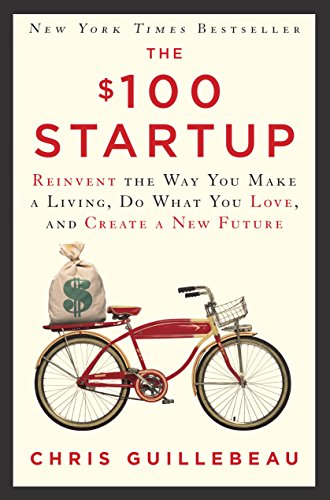
⚡️ What is The $100 Startup About?
I remember sitting in a cubicle years ago, convinced that starting a business required a tailored suit, a 50-page pitch deck, and at least six figures in the bank. Then I read this book. Chris Guillebeau makes the audacious claim that most of us already possess the ingredients to fire our bosses: a specific skill, a group of people who need help, and a hundred bucks. It’s a manifesto for the “micro-business,” focusing on individuals who have designed their work around their lives rather than the other way around. You won’t find advice here on how to scale the next Uber; instead, you’ll learn how to build a “freedom business” that pays for your mountain bike trips or your kids’ college tuition.
More summaries by Chris Guillebeau show his consistent obsession with non-conformity, but this specific framework is his most practical. He studied 1,500 entrepreneurs who started with almost nothing and identifies the common threads that allowed them to succeed without external investment. It fits perfectly into our collection of Business book summaries because it prioritizes action over endless planning. Why wait for permission to be successful when you can just start today?
🚀 The Book in 3 Sentences
- The path to freedom isn’t through complex corporate structures, but through the “point of convergence” where your personal skills meet what other people are actually willing to pay for.
- Successful micro-businesses prioritize “value over vanity,” focusing on providing immediate emotional or practical benefits to customers rather than focusing on traditional demographics or bloated business plans.
- Action beats planning every single time; the goal is to get your first sale as quickly as possible to validate the idea and build momentum.
🎨 Impressions
Honestly, I went into this thinking it might be another “rah-rah” motivational speech, but the sheer volume of case studies won me over. It’s incredibly grounding to read about a guy who makes $100k a year selling maps for hikers or a woman who built a business around bespoke yarn. It didn’t feel like a tech-bro manual. I’ve read enough books that treat entrepreneurship like a lottery; this one treats it like a craft you can learn with a little discipline and a lot of empathy for your customers. Doesn’t that sound more sustainable?
There’s a moment early on where the author suggests that “value” is simply helping people, and it made me pause. We often overcomplicate business with jargon because it makes us feel important, but Guillebeau strips all that away. I did find some of the financial advice a bit basic—if you’re looking for deep tax strategies or legal structures, you’re in the wrong place—but as a kick in the pants to stop talking and start selling, it’s brilliant. Have you ever felt paralyzed by the fear of not having a “proper” business plan? This book tells you to write it on a single sheet of paper and get back to work.
📖 Who Should Read The $100 Startup?
If you’re a freelancer feeling stuck, a corporate employee dreaming of a side hustle, or a creative who wants to monetize a hobby without selling your soul, you’ll love this. It’s perfect for someone who values autonomy over prestige. However, if you’re trying to build a capital-intensive manufacturing plant or a high-growth Silicon Valley startup, skip this one. This is for the person who wants to be a “company of one” or lead a tiny, agile team that prioritizes lifestyle.
☘️ How This Book Changed My Thinking
Before reading this, I thought “marketing” was about convincing people to buy things they didn’t need. Now, I see it as an invitation to a solution they’ve been looking for.
- I stopped worrying about “getting funding” and started focusing on “getting customers.”
- I realized that my “passion” is useless unless it solves a specific problem for someone else; convergence is the secret sauce.
- I switched from a 30-page strategy document to a one-page plan that I actually look at every morning.
✍️ 3 Quotes That Stuck With Me
- “Value means helping people. If you’re not helping people, you don’t have a business.” — This is the ultimate North Star for any venture.
- “Advertising is like sex: Only losers pay for it.” — A punchy reminder that organic connection and word-of-mouth are the gold standard for micro-businesses.
- “The business is structured around my life, not the other way around.” — This captured exactly why I wanted to work for myself in the first place.
📒 Summary + Notes
The core argument of the book is that the “new reality” of work allows anyone with a laptop and a bit of ingenuity to bypass the gatekeepers of traditional industry. Guillebeau builds a case that the most successful startups aren’t founded on innovative technology, but on the simple act of taking a skill you already have and applying it to a market need. He walks us through the lifecycle of a micro-business, from the initial “renaissance” of the idea to the “hustle” of self-promotion and the eventual decision of whether to scale up or stay small.
What I found most compelling was the shift away from traditional demographics. Instead of targeting “males aged 25-34,” the author suggests targeting people who share a specific belief or need. It’s about finding your tribe. By the end of the book, he wants you to believe that the risk of staying in a soul-crushing job is actually higher than the risk of spending $100 to see if your idea has legs. It’s an empowering narrative that replaces the fear of failure with the excitement of experimentation.
1: Renaissance
Did you know that a significant number of successful businesses today were started by people who were fired or simply fed up? The “Renaissance” refers to this new era where the cost of starting a business has plummeted while the tools for global reach have exploded. Guillebeau introduces the concept of the micro-business—an entity often run by a single person that generates significant income without the traditional overhead.
The key here isn’t just about being your own boss; it’s about the marriage of freedom and value. He shares stories of people who turned accidental hobbies into six-figure incomes, emphasizing that you don’t need an MBA to understand the basics of trade. If you can provide something that makes someone’s life easier or better, you have the foundation of a business. It’s a low-risk, high-reward transition that prioritizes personal autonomy.
2: Give Them the Fish
Why do we always hear the advice to “teach a man to fish” when most people are actually just hungry and want the fish right now? This chapter challenges the idea that you should only sell education or long-term solutions. Sometimes, the most valuable thing you can do is just solve the problem for the customer immediately. Value is created when you provide a shortcut, a convenience, or an emotional rescue.
Guillebeau breaks down value into three categories:
- Efficiency (saving time)
- Price (saving money)
- Emotional Connection (making them feel better)
3: Follow Your Passion… Maybe
…but only if someone is willing to pay for it. This was the chapter that hit me the hardest because it debunks the toxic “just follow your heart” advice that leads to so many failed bakeries. Passion is a prerequisite, sure, but it’s not a business model. You need the “Point of Convergence”—the overlap between what you love, what you are good at, and what others want.
I loved his example of the guy who loved eating pizza but realized that “eating pizza” wasn’t a marketable skill. However, “reviewing pizza for travelers” or “teaching people how to make artisanal dough” might be. You have to find the piece of your passion that serves someone else. If you’re a great organizer, don’t just organize your own closet; find the stressed-out executive who will pay you $100 an hour to organize theirs. It’s about externalizing your internal joy.
4: The Rise of the Roaming Entrepreneur
Imagine being able to run your entire operation from a hammock in Thailand or a coffee shop in Prague. While the “digital nomad” trope is a bit cliché now, Guillebeau was one of the first to map out how it actually works for normal people. Location independence isn’t about being a beach bum; it’s about decoupling your income from your physical presence.
The chapter highlights that you don’t need a physical office to be “real.” Most micro-businesses use a “hub and spoke” model where they use various digital tools (Paypal, Dropbox, etc.) to manage everything. This lowers your “burn rate” (monthly expenses) to almost nothing, which in turn lowers the pressure on how much you need to earn to survive. It’s a beautiful cycle of low cost leading to high freedom.
5: The New Demographics
Is it still useful to know that your customer is a 40-year-old woman in Ohio, or is it more useful to know that she’s a marathon runner who struggles with chronic knee pain? The book argues that traditional demographics are dead. In the internet age, we are defined by our interests, our pains, and our aspirations.
This shift allows you to be “narrow but deep.” You don’t need to appeal to everyone in your town; you just need to find the 1,000 people globally who are obsessed with the same niche thing you are. The author suggests creating “customer avatars” based on psychographics (what they think) rather than demographics (who they are). When you speak the specific language of a subculture, your marketing feels like a warm conversation instead of a cold intrusion.
6: The One-Page Business Plan
What if you could plan your entire business on the back of a napkin? Guillebeau provides a template that strips away the fluff. It asks simple questions: What are you selling? Who is it for? How will you get paid? How will you find customers? If you can’t answer these on one page, your idea is likely too complex or you haven’t thought it through.
The danger of a long business plan is that it creates the illusion of progress. You feel like you’re “working,” but you haven’t actually talked to a single customer. The one-page plan is designed to be a living document that changes as you get real-world feedback. It’s about being agile. Remember, your plan won’t survive first contact with the market anyway, so why spend three months writing it? Get it done in an hour and move on to the next step.
7: An Offer You Can’t Refuse
You’re walking down the street and someone offers you a plain apple for $5. You say no. Then, someone offers you a pre-sliced apple with a side of caramel, a wet wipe, and a 100% money-back guarantee if it’s not the best snack you’ve had all day—also for $5. That’s the difference between a product and an offer. This chapter is a masterclass in stacking value.
An offer is the complete package of what the customer receives, including the price, the bonuses, and the risk reversal. Guillebeau emphasizes that you should make it almost painful for the customer to say no because the value is so obvious. This involves:
- A clear, compelling promise
- A nudge to act now (urgency)
- A way to eliminate their fear of a bad purchase
8: Launch!
There is a massive difference between “opening for business” and “launching.” A launch is an event; it’s a narrative that builds tension and excitement over a period of time. The author provides a 39-step checklist for a product launch, but the gist is that you should tell your story in parts.
You start by hinting at what’s coming, then you show the “behind the scenes,” and then you open the doors for a limited time. This creates social proof and a sense of shared experience among your early adopters. I loved the advice to “launch before you’re ready.” If you wait until everything is perfect, you’ve waited too long. The feedback you get during a messy launch is a thousand times more valuable than the silence of a delayed one.
9: Hustling: The Gentle Art of Self-Promotion
Are you terrified of being that “sleazy salesperson”? Most of us are. Guillebeau redefines hustling as being persistent and proactive without being annoying. It’s about finding the balance between “work” (building the product) and “talk” (telling people about it). He suggests a 50/50 split. If you spend all day building but no one knows you exist, you have a hobby, not a business.
Hustling in the $100 startup world means guest posting on blogs, reaching out to influencers with genuine compliments, and being helpful in online communities. It’s about being “everywhere” for your specific tribe. The author notes that you don’t need a big budget if you have a big output. Your time is your capital. Use it to build relationships, not just to buy ads.
10: Money Matters
…but it shouldn’t be the only thing that matters. This section covers the unsexy parts of running a business: cash flow, pricing, and profit margins. The most important lesson? Spend as little as possible and make as much as you can. It sounds simple, but many people do the opposite—they buy fancy software and office chairs before they’ve made their first dollar.
Guillebeau advocates for “bootstrapping” (self-funding) and staying lean. He also makes a great point about pricing: don’t price based on what it costs you to produce, price based on the value to the customer. If your advice saves someone $10,000, charging them $1,000 is a bargain, even if it only took you an hour of work. Focus on the transformation you provide.
11: Moving Up: How to Grow
You’ve got a business that’s working—now what? Most business books assume you want to grow into a global empire, but Guillebeau asks a different question: Do you actually *want* to be a manager of people? Growing a business often means moving away from the work you love and into the work of administration.
He outlines three ways to grow:
- Horizontal (adding new products for the same customers)
- Vertical (adding more expensive versions of the same product)
- Operational (improving your systems to do more with less)
12: How to Franchise Yourself
The term “franchise” usually brings to mind McDonald’s, but in this context, it’s about cloning your success. How can you take what you do and make it repeatable without you being there for every step? This might mean creating a course that teaches your method, or writing a book, or building a software tool that automates your service.
The goal is to turn your “active income” (trading time for money) into “passive income” (money that comes in while you sleep). It’s the ultimate way to scale a micro-business. By documenting your process and turning it into a product, you free yourself from the “hourly rate” trap. It’s how you go from being a freelancer to being a true business owner.
13: Going Long: The Big Picture
What happens after three years? Or five? This chapter deals with the long-term sustainability of your micro-business. The author suggests doing a regular “check-up” on your metrics, but more importantly, on your happiness. If the business is starting to feel like a cage, it’s time to pivot.
He also discusses the “build to sell” vs. “build to keep” models. While most $100 startups are designed to be kept for the lifestyle, some people eventually sell them for a significant payday. The big picture is always about freedom. If your business provides you with enough money to live comfortably and the time to enjoy it, you’ve already won the game.
14: But What If I Fail?
Let’s say you spend the $100, you launch, and… nothing. No sales. No traffic. The world didn’t end, did it? This final chapter is the safety net. Guillebeau reminds us that in a micro-business, the cost of failure is extremely low. You haven’t lost your house or your reputation; you’ve just paid $100 for a very valuable lesson in marketing.
Most of the entrepreneurs in his study failed at least once before hitting their stride. The trick is to “fail fast” and “fail cheap.” Because the barriers to entry are so low, you can afford to try three or four different ideas until one sticks. Resilience is the only thing that separates the people who work for themselves from the people who just talk about it. So, what are you waiting for?
⚖️ A Critical Perspective
While the book is incredibly inspiring, it tends to glaze over the legal and regulatory hurdles of running a business. If you’re in a highly regulated industry like healthcare or finance, “just starting for $100” could land you in serious legal trouble. Additionally, the focus is heavily skewed toward digital and service-based businesses; if you want to build a physical hardware product, the $100 starting point is a fantasy. It also downplays the “survivorship bias”—we hear from the 50 successes, but we don’t hear much about the thousands who followed the same advice and still failed because their niche was too small or their skill wasn’t actually marketable.
🔄 How It Compares
Compare this to The Lean Startup by Eric Ries. While Ries focuses on the methodology of “Build-Measure-Learn” for high-growth tech companies, Guillebeau focuses on the personal freedom and lifestyle of the solo founder. Ries wants you to build the next big thing; Guillebeau wants you to build a thing that lets you go hiking on a Tuesday morning. The $100 Startup is much more accessible for the average person who doesn’t care about venture capital or “pivoting” for a board of directors.
🔑 Key Takeaways
These are the core lessons that will actually move the needle for your new venture:
- Action is the antidote to anxiety: Don’t wait for a perfect plan; launch a “good enough” version and iterate based on real customer feedback.
- Focus on the Transformation: People don’t buy your service; they buy the version of themselves they become after using your service.
- Low Overhead = High Freedom: Every dollar you don’t spend on fancy equipment or office space is a dollar that buys you more time to experiment.
- The First Sale is Everything: Nothing cures self-doubt like a notification that a stranger has actually given you money for your idea.
💬 Frequently Asked Questions
What is the main argument of The $100 Startup?
The book argues that anyone can start a successful micro-business with minimal capital by leveraging their existing skills to solve specific problems for others. It prioritizes personal freedom and simplicity over traditional corporate growth metrics, showing that value creation is the ultimate key to a sustainable income.
Can you really start a business for exactly $100?
Yes, though the “$100” is more of a symbol for low-cost entry. Many digital businesses require only a domain name, basic hosting, and a payment processor to begin. The book uses case studies of entrepreneurs who started with anywhere from $0 to $1,000, emphasizing that sweat equity is more important than cash.
What is the “Point of Convergence”?
It is the intersection of your skills/passions and what other people are willing to pay for. Guillebeau warns that passion alone is just a hobby; to make it a business, you must find where your joy overlaps with a market need or a solution to someone’s pain point.
Is the advice in The $100 Startup still relevant in 2025?
Absolutely, and perhaps more than ever. While some specific tools mentioned are dated, the rise of the gig economy, AI-assisted productivity, and social media niches has made it even easier to reach a global audience for a very low cost. The fundamental principles of human value and empathy remain unchanged.
Who should skip this book?
You should skip this book if you are looking for high-level corporate strategy, complex financial modeling, or advice on raising venture capital. It is also not suitable for those in heavy manufacturing or highly regulated sectors where initial capital requirements and legal compliance far exceed the $100-to-start philosophy.
Conclusion
At its heart, this book is about reclaiming your time. We’ve been sold a lie that work has to be a place we go to from 9 to 5 in exchange for a paycheck that barely covers our cost of living. Chris Guillebeau proves, through hundreds of examples, that there is another way. It’s not necessarily easier—running your own show is hard work—but it is infinitely more rewarding because the gains are yours to keep. The $100 Startup doesn’t just give you a blueprint for a business; it gives you a blueprint for a life where you are the primary stakeholder.
If you take away just one thing from this, let it be the “Point of Convergence.” Stop looking at your skills as things you do for a boss and start looking at them as solutions you can offer to the world. Whether you want to travel the globe or just have the freedom to pick your kids up from school, the path starts with that first $100 and a decision to help someone. It’s a brave new world out there—why not own a piece of it?
More From Chris Guillebeau →
Discover more from AI Book Summary
Subscribe to get the latest posts sent to your email.