Chapter 8: An Offer You Can’t Refuse
Once you have your plan, you need to make an offer to your potential customers. This chapter is all about crafting an irresistible proposition. Guillebeau explains that your offer should be a clear, compelling package of value that solves a problem or fulfills a desire. He emphasizes the importance of having a core offer (your main product or service) and then adding valuable bonuses to increase its perceived value. For example, if you’re selling an ebook, you could add a video tutorial or a checklist as a bonus. This chapter teaches you the psychology of pricing and packaging, showing you how to create an offer so good that people feel they would be foolish to pass it up. It’s about shifting the focus from features to benefits.
- Your offer is a clear value proposition that tells customers exactly what they will get.
- Enhance your core offer with valuable bonuses to increase its appeal and perceived worth.
- Focus on the transformation and benefits your customer will receive, not just the features of your product.
- A great offer removes risk and makes the decision to buy an easy one for the customer.
Chapter 9: Launch!
This is the go-for-it chapter. Guillebeau’s message is simple: launch before you feel ready. He argues that many aspiring entrepreneurs get stuck in an endless loop of planning and perfecting, never actually putting their offer out into the world. The goal is to get your product or service to a point where it’s “good enough” and then release it to a small group of early adopters. The real feedback and learning begin after you launch. He shares practical techniques for a successful launch, like building an email list before you have anything to sell and creating a sense of urgency or scarcity. This chapter is a powerful antidote to procrastination, urging you to embrace imperfection and prioritize action over endless preparation.
- Perfection is the enemy of progress; launch your product or service as soon as it’s viable.
- Real-world feedback from customers is far more valuable than your own assumptions.
- Build an audience or email list before you launch to ensure you have customers on day one.
- A launch is not the end; it’s the beginning of a cycle of listening, learning, and improving.
Chapter 10: Hustle… and Flow
“Hustle” is a popular term in entrepreneurship, and this chapter explores what it really means. Guillebeau defines hustle not as frantic, busywork, but as a focused effort to get things done and move your business forward. It’s about being resourceful, creative, and persistent in finding customers and generating revenue. However, he also introduces the concept of “flow,” which is about finding a sustainable rhythm and avoiding burnout. The key is to hustle hard on the right things—like sales and marketing—while also building systems that allow your business to run more smoothly over time. This chapter is about finding the balance between the intense effort required to get started and the smart systems needed for long-term success.
- Hustle is about focused, deliberate action to grow your business, not just being busy.
- In the early days, your primary job is to generate sales and talk to customers.
- Avoid burnout by finding a sustainable pace and building systems to automate tasks.
- The goal is to move from active hustling to a state of “flow” where the business runs more efficiently.
Chapter 11: Don’t Do It Yourself
As your business grows, you’ll quickly realize you can’t do everything yourself. This chapter is about the importance of delegation and outsourcing. Guillebeau explains that your time is your most valuable asset, and you should focus it on the high-impact activities that only you can do. He encourages entrepreneurs to identify tasks they are not good at or don’t enjoy and find someone else to do them, whether it’s a virtual assistant, a freelancer, or an automated software tool. This can be a daunting step for a solo entrepreneur, but it’s essential for scaling. This chapter provides practical advice on what to outsource and how to do it affordably, allowing you to focus on your core genius and grow the business.
- Your time is best spent on activities that directly contribute to growth and revenue.
- Outsource or automate tasks that are repetitive, outside your skill set, or that you dislike.
- Hiring help is an investment in your business, not just an expense.
- Start small by outsourcing one or two tasks and gradually delegate more as your revenue increases.
Chapter 12: Build Your Own Army
This chapter is about building a community or a “tribe” around your business. Guillebeau argues that your most valuable asset is not your product but your list of customers and followers. An engaged audience is a powerful marketing force that will help you spread the word and provide ongoing feedback. He shares strategies for building this army, such as creating valuable free content, engaging with people on social media, and treating your customers like partners. The goal is to turn customers into fans who will not only buy from you repeatedly but also advocate for your brand. This chapter teaches you to think of your business not just as a transactional entity but as a community hub.
- An email list is a more reliable and direct communication channel than social media.
- Build your community by consistently providing value for free before you ever ask for a sale.
- Engage with your audience authentically and make them feel like part of your mission.
- A loyal community will provide your best marketing and most insightful feedback.
Chapter 13: The Power of a Small List
Building on the previous chapter, Guillebeau emphasizes that you don’t need a massive following to have a successful business. In fact, a small, highly engaged email list of 1,000 true fans can be more profitable than a list of 100,000 passive subscribers. This chapter is about the power of intimacy and connection. He shares stories of entrepreneurs who built six-figure businesses with small but dedicated lists. The key is to nurture your subscribers, understand their needs deeply, and create offers that are perfectly tailored to them. This chapter is a relief for anyone who feels overwhelmed by the pressure to amass a huge social media following. It reinforces the idea that quality is more important than quantity.
- Focus on building a small, engaged list of people who genuinely care about what you do.
- A small list allows for deeper connection and more personalized communication.
- It’s easier to create a profitable offer when you have a deep understanding of a small group.
- Treat your email subscribers like an inner circle; give them exclusive access and your best content.
Chapter 14: Make Money in Your Sleep
This chapter is about the holy grail for many entrepreneurs: creating passive income. Guillebeau discusses how to build a business that generates revenue even when you’re not actively working. This is often achieved through creating digital products like ebooks, online courses, or software that can be sold automatically. He also talks about affiliate marketing and other forms of scalable income. The goal is to decouple your time from your income, giving you true freedom. This chapter provides a roadmap for moving from trading hours for dollars (like freelancing) to building a scalable asset. It’s about creating systems that work for you, allowing you to earn money 24/7.
- Passive income is not about doing nothing; it’s about doing the work upfront once and getting paid for it repeatedly.
- Digital products are one of the best ways to create scalable, passive income streams.
- Automating your sales and delivery process is key to making money in your sleep.
- The path to passive income often starts with an active income business that funds the creation of passive products.
Chapter 15: Going the Distance
In the final chapter, Guillebeau addresses the long-term perspective of entrepreneurship. Building a successful business is a marathon, not a sprint. He talks about the importance of staying motivated, dealing with setbacks, and avoiding burnout over the long haul. He also revisits the idea of defining success on your own terms. It’s not just about revenue; it’s about the freedom, impact, and lifestyle your business provides. He encourages readers to periodically reassess their goals and make sure their business is still serving the life they want to live. This chapter is a thoughtful conclusion that brings the focus back to the “why” behind your entrepreneurial journey, ensuring you build a business that is not only profitable but also sustainable and meaningful.
- Entrepreneurship is a long-term journey; focus on sustainability and avoid burnout.
- Regularly revisit your definition of success to ensure your business aligns with your life goals.
- Be prepared for challenges and setbacks; resilience is a key entrepreneurial trait.
- The ultimate goal of The $100 Startup is to build a business that gives you freedom, not just a job.
Key Takeaways
The journey through The $100 Startup reveals that building a successful microbusiness is an achievable and liberating goal. The book distills entrepreneurship into a series of simple, actionable principles that anyone can follow. The overarching message is one of empowerment: you have the skills and passion within you to create value and build a life of freedom. The most critical lessons are about finding the intersection of what you love and what people need, launching before you’re ready, and building a community of true fans. These strategies and techniques form a powerful toolkit for the modern entrepreneur.
- Value is everything: Your business must solve a real problem or provide a clear benefit to a specific audience. Focus on the transformation you deliver.
- Find your convergence: The sweet spot for a business idea is where your passion, your skills, and market demand meet.
- Launch quickly and iterate: Don’t wait for perfection. Get your offer out there, gather feedback, and improve as you go.
- Build an audience, not just a customer list: A small, engaged community of true fans is your most valuable business asset.
- Define your own success: Build a business that supports the life you want to live, focusing on freedom and fulfillment, not just revenue.
Conclusion
The $100 Startup is more than just a business guide; it’s a manifesto for a new way of living and working. Chris Guillebeau masterfully demystifies entrepreneurship, proving that you don’t need a fortune or an MBA to create a meaningful and profitable business. By focusing on providing real value, starting small, and building a community, you can achieve a remarkable level of freedom and autonomy. The book is an inspiring and practical call to action for anyone who has ever dreamed of being their own boss. If you’re ready to challenge the status quo and design a life on your own terms, this book provides the roadmap. Read it, absorb its lessons, and then go start something.
More From Chris Guillebeau →
⚡️ What is The $100 Startup about?
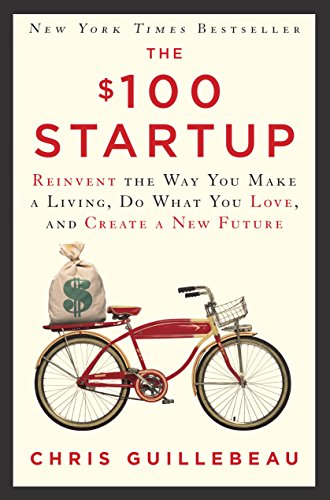
The $100 Startup is Chris Guillebeau’s blueprint for revolutionizing the way you think about work and business. It’s a guide for anyone who dreams of escaping the 9-to-5 grind by building a microbusiness around something they love. Guillebeau argues that you don’t need a business degree, venture capital, or a complex 50-page plan. Instead, you need a simple convergence of your passion, a skill you’re good at, and something people are willing to pay for. The book is packed with real-world case studies of ordinary people who successfully launched profitable ventures with minimal startup costs—often less than $100. It’s a manifesto for the new generation of entrepreneurs who value freedom, purpose, and impact over a traditional career path.
🚀 The Book in 3 Sentences
- The $100 Startup teaches that the key to a successful business lies at the intersection of what you love to do, what you’re good at, and what customers will pay for.
- You don’t need a lot of money or a business degree; you need to provide value to a specific group of people and launch quickly to test your idea.
- True entrepreneurial freedom comes from building a small, purpose-driven business that supports the life you want to live, not from chasing massive, unsustainable growth.
🎨 Impressions
Reading The $100 Startup felt like a breath of fresh air compared to dense, theoretical business books. Guillebeau’s approach is incredibly practical and action-oriented, stripping away the jargon and focusing on what truly matters: creating value and making your first sale. What impressed me most was the sheer volume of inspiring case studies. These weren’t stories of Silicon Valley unicorns but of regular people—artists, travelers, teachers—who found a way to monetize their passions. The book is less about a single magic formula and more about a collection of proven strategies and techniques that anyone can adapt. It demystifies entrepreneurship and makes it feel accessible, even for someone with zero business experience and very little capital.
📖 Who Should Read The $100 Startup?
\p>This book is essential reading for anyone feeling stuck in a traditional job and dreaming of more autonomy and fulfillment. It’s perfect for aspiring entrepreneurs who are overwhelmed by where to start, as well as creatives, freelancers, and side-hustlers looking to turn their passion into a reliable income stream. If you have a skill or hobby you love but aren’t sure how to make money from it, The $100 Startup provides a clear, step-by-step framework. It’s also an excellent read for those who believe they need a huge investment to start a business; this book will systematically dismantle that belief and empower you to start small and build from there.☘️ How the Book Changed Me
Before reading this book, I always thought entrepreneurship was a high-stakes game reserved for people with big ideas and even bigger bank accounts. I was trapped in a cycle of “analysis paralysis,” convinced I needed a perfect business plan before I could even begin. The $100 Startup completely shifted my mindset. It taught me that the most important step is the first one, and it doesn’t have to be perfect. I now view my skills and hobbies through a lens of opportunity, constantly asking how I can provide value to others. The book’s emphasis on starting small and iterating has given me the confidence to launch a side project without fear of failure.
- I stopped waiting for the “perfect idea” and started looking for the convergence of my skills and market needs.
- I realized that providing immense value to a small, dedicated audience is more important than trying to appeal to everyone.
- I embraced the “launch and learn” philosophy, understanding that feedback is more valuable than a flawless initial plan.
- I now see business building as a series of small, manageable experiments rather than one giant, terrifying leap.
✍️ My Top 3 Quotes
- “The secret to a $100 startup is to find the convergence between what you’re good at (your skill or expertise) and what people are willing to pay for (the value you create).”
- “Value is created when a person comes to you with a problem and you provide a solution. The better the solution, the more they’ll be willing to pay.”
- “You don’t need an MBA, a trust fund, or a team of advisors to start a business. You need an idea, a willingness to learn, and the courage to begin.”
📒 Summary + Notes
The $100 Startup is structured to guide you from the initial spark of an idea to building a sustainable, freedom-focused business. The core philosophy is that success is not about a revolutionary invention but about recombining passion and skill to serve a specific need. Guillebeau breaks down the journey into actionable steps, using compelling stories to illustrate each point. He emphasizes simplicity over complexity, urging readers to create a one-page business plan, launch quickly, and focus relentlessly on customer value. The following chapter-by-chapter summary distills the essential lessons from this guide to modern micro-entrepreneurship.
Chapter 1: Renaissance
This chapter sets the stage for a new era of work, a renaissance where individuals are rewriting the rules of employment. Guillebeau introduces the core idea that you don’t need permission to start a business or live a life of adventure. He profiles several “unexpected entrepreneurs” who built successful businesses around non-traditional paths, like a man who turned his love for travel into a career helping others plan their own adventures. The key takeaway is that the traditional model of work is evolving, and there’s never been a better time to create your own opportunities. This chapter is a call to action, inspiring you to question the status quo and consider what’s possible if you design your own career.
- We are living through a fundamental shift in how people work and live, with more freedom than ever before.
- You don’t need a formal business plan or outside validation to begin your entrepreneurial journey.
- The book is filled with stories of real people who have successfully created their own version of freedom.
- The “dream job” you want may not exist; you might have to create it yourself.
Chapter 2: Give Them the Fish
The central theme of this chapter is the importance of providing value. Guillebeau uses the analogy, “Give a man a fish, and you feed him for a day. Teach a man to fish, and you feed him for a lifetime.” He argues that successful businesses are built on teaching people how to do something better or providing a solution that makes their lives easier. The value isn’t in the information itself, but in the transformation it provides. For example, one entrepreneur created a business by simplifying the complex Paleo diet into an easy-to-follow meal plan, saving people time and confusion. This chapter teaches you to focus on the outcome your customer desires, not just the features of your product or service.
- Your business must provide a clear benefit or solve a specific problem for a specific group of people.
- Value is about the transformation or result you deliver, not just the process or information you provide.
- People are willing to pay for things that save them time, reduce stress, or help them achieve a goal.
- Ask yourself: “What problem am I solving?” and “How is my customer’s life better as a result?”
Chapter 3: Unexpected Entrepreneurs
This chapter dives deeper into the profiles of successful micro-entrepreneurs, debunking the myth that you need a specific background or personality to succeed in business. Guillebeau shares stories of a former barista who started a coffee-roasting business, a software engineer who created a travel-hacking service, and a musician who built a business teaching guitar online. The common thread is not a shared trait but a shared process: they found a need, developed a skill to meet it, and built a business around it. This chapter is incredibly empowering, showing that The $100 Startup model is not limited to a certain type of person. It’s a set of principles that anyone, regardless of their background, can apply to create a meaningful livelihood.
- Entrepreneurs come from all walks of life; there is no single “entrepreneurial type.”
- Many successful businesses are born from the founder’s personal experience solving their own problem.
- The journey often involves a significant amount of self-teaching and learning new skills on the fly.
- Success stories are often about perseverance and a willingness to adapt, not innate genius.
Chapter 4: The Rise of the Roaming Entrepreneur
Guillebeau explores the growing trend of location-independent businesses in this chapter. With the rise of the internet, it’s increasingly possible to run a profitable business from anywhere in the world. He shares stories of entrepreneurs who have designed their businesses to support a life of travel and adventure. This isn’t just about digital nomads; it’s about designing a business that gives you the freedom to live where you want and work on your own terms. The key strategies discussed involve creating products or services that can be delivered digitally (like ebooks, courses, or consulting) and building an automated sales system. This chapter is for anyone who dreams of escaping a single location and integrating their work with their ideal lifestyle.
- Technology has made it possible to decouple your income from your physical location.
- Creating digital products or offering location-independent services are key to a roaming lifestyle.
- Focus on building a business that runs itself as much as possible, freeing you up to travel.
- This lifestyle is a choice; you don’t have to travel the world, but you can design your business to give you that option.
Chapter 5: Follow Your Passion… Maybe
This chapter offers a nuanced take on the common advice to “follow your passion.” Guillebeau argues that passion alone is not enough; it must be combined with skill and market demand. He introduces the concept of “convergence,” the sweet spot where what you love to do, what you’re good at, and what people will pay for overlap. He cautions against blindly turning a hobby into a business, as the pressures of monetization can sometimes kill the joy of the activity. Instead, he advises looking at your passions as a starting point to identify skills and problems you can solve. This chapter is a crucial reality check, guiding you to build a business that is both profitable and personally fulfilling, avoiding the trap of an unprofitable passion project.
- Passion is a good starting point, but it must be tempered with usefulness and skill.
- The “convergence” of passion, skill, and market demand is the formula for a successful business idea.
- Be careful when turning your favorite hobby into a business; it might not be fun anymore under pressure.
- Sometimes it’s better to build a business that funds your passion rather than trying to monetize the passion itself.
Chapter 6: The New Demographic
In this chapter, Guillebeau challenges the idea that you need to target a massive market to be successful. He argues that the real opportunity lies in serving a new demographic or a niche community. The internet has made it easier than ever to find and connect with specific groups of people who share unique interests and needs. He shares examples of businesses that thrive by serving very specific niches, like a business that sells high-quality unicycles or a service that helps people organize their frequent flyer miles. The key lesson is to be a big fish in a small pond. By focusing on a niche, you can become the go-to expert and build a loyal customer base without competing with giant corporations.
- Don’t try to sell to everyone; focus on a specific, underserved niche.
- The internet allows you to reach niche markets that were previously inaccessible.
- Serving a niche allows you to build a strong community and become a recognized expert.
- Your marketing message can be much more powerful when it speaks directly to the needs of a specific group.
Chapter 7: The One-Page Business Plan
This chapter provides a practical tool to get your idea out of your head and onto paper: the one-page business plan. Guillebeau argues that traditional business plans are often a waste of time for new entrepreneurs. Instead, you need a simple document that outlines your business model, your product/service, your target customers, and your plan for reaching them. He breaks down this one-page plan into a few key components: your value proposition, how you’ll make money, and how you’ll connect with customers. This exercise forces you to think through the essentials of your business without getting bogged down in unnecessary details. It’s a tool for clarity and action, designed to help you launch faster.
- Ditch the lengthy, traditional business plan in favor of a simple, one-page document.
- Focus on the core components: what you sell, who you sell it to, and how you’ll reach them.
- The goal is clarity and a roadmap to action, not a perfect academic document.
- This plan should be a living document that you can easily update as you learn and grow.
Chapter 8: An Offer You Can’t Refuse
Once you have your plan, you need to make an offer to your potential customers. This chapter is all about crafting an irresistible proposition. Guillebeau explains that your offer should be a clear, compelling package of value that solves a problem or fulfills a desire. He emphasizes the importance of having a core offer (your main product or service) and then adding valuable bonuses to increase its perceived value. For example, if you’re selling an ebook, you could add a video tutorial or a checklist as a bonus. This chapter teaches you the psychology of pricing and packaging, showing you how to create an offer so good that people feel they would be foolish to pass it up. It’s about shifting the focus from features to benefits.
- Your offer is a clear value proposition that tells customers exactly what they will get.
- Enhance your core offer with valuable bonuses to increase its appeal and perceived worth.
- Focus on the transformation and benefits your customer will receive, not just the features of your product.
- A great offer removes risk and makes the decision to buy an easy one for the customer.
Chapter 9: Launch!
This is the go-for-it chapter. Guillebeau’s message is simple: launch before you feel ready. He argues that many aspiring entrepreneurs get stuck in an endless loop of planning and perfecting, never actually putting their offer out into the world. The goal is to get your product or service to a point where it’s “good enough” and then release it to a small group of early adopters. The real feedback and learning begin after you launch. He shares practical techniques for a successful launch, like building an email list before you have anything to sell and creating a sense of urgency or scarcity. This chapter is a powerful antidote to procrastination, urging you to embrace imperfection and prioritize action over endless preparation.
- Perfection is the enemy of progress; launch your product or service as soon as it’s viable.
- Real-world feedback from customers is far more valuable than your own assumptions.
- Build an audience or email list before you launch to ensure you have customers on day one.
- A launch is not the end; it’s the beginning of a cycle of listening, learning, and improving.
Chapter 10: Hustle… and Flow
“Hustle” is a popular term in entrepreneurship, and this chapter explores what it really means. Guillebeau defines hustle not as frantic, busywork, but as a focused effort to get things done and move your business forward. It’s about being resourceful, creative, and persistent in finding customers and generating revenue. However, he also introduces the concept of “flow,” which is about finding a sustainable rhythm and avoiding burnout. The key is to hustle hard on the right things—like sales and marketing—while also building systems that allow your business to run more smoothly over time. This chapter is about finding the balance between the intense effort required to get started and the smart systems needed for long-term success.
- Hustle is about focused, deliberate action to grow your business, not just being busy.
- In the early days, your primary job is to generate sales and talk to customers.
- Avoid burnout by finding a sustainable pace and building systems to automate tasks.
- The goal is to move from active hustling to a state of “flow” where the business runs more efficiently.
Chapter 11: Don’t Do It Yourself
As your business grows, you’ll quickly realize you can’t do everything yourself. This chapter is about the importance of delegation and outsourcing. Guillebeau explains that your time is your most valuable asset, and you should focus it on the high-impact activities that only you can do. He encourages entrepreneurs to identify tasks they are not good at or don’t enjoy and find someone else to do them, whether it’s a virtual assistant, a freelancer, or an automated software tool. This can be a daunting step for a solo entrepreneur, but it’s essential for scaling. This chapter provides practical advice on what to outsource and how to do it affordably, allowing you to focus on your core genius and grow the business.
- Your time is best spent on activities that directly contribute to growth and revenue.
- Outsource or automate tasks that are repetitive, outside your skill set, or that you dislike.
- Hiring help is an investment in your business, not just an expense.
- Start small by outsourcing one or two tasks and gradually delegate more as your revenue increases.
Chapter 12: Build Your Own Army
This chapter is about building a community or a “tribe” around your business. Guillebeau argues that your most valuable asset is not your product but your list of customers and followers. An engaged audience is a powerful marketing force that will help you spread the word and provide ongoing feedback. He shares strategies for building this army, such as creating valuable free content, engaging with people on social media, and treating your customers like partners. The goal is to turn customers into fans who will not only buy from you repeatedly but also advocate for your brand. This chapter teaches you to think of your business not just as a transactional entity but as a community hub.
- An email list is a more reliable and direct communication channel than social media.
- Build your community by consistently providing value for free before you ever ask for a sale.
- Engage with your audience authentically and make them feel like part of your mission.
- A loyal community will provide your best marketing and most insightful feedback.
Chapter 13: The Power of a Small List
Building on the previous chapter, Guillebeau emphasizes that you don’t need a massive following to have a successful business. In fact, a small, highly engaged email list of 1,000 true fans can be more profitable than a list of 100,000 passive subscribers. This chapter is about the power of intimacy and connection. He shares stories of entrepreneurs who built six-figure businesses with small but dedicated lists. The key is to nurture your subscribers, understand their needs deeply, and create offers that are perfectly tailored to them. This chapter is a relief for anyone who feels overwhelmed by the pressure to amass a huge social media following. It reinforces the idea that quality is more important than quantity.
- Focus on building a small, engaged list of people who genuinely care about what you do.
- A small list allows for deeper connection and more personalized communication.
- It’s easier to create a profitable offer when you have a deep understanding of a small group.
- Treat your email subscribers like an inner circle; give them exclusive access and your best content.
Chapter 14: Make Money in Your Sleep
This chapter is about the holy grail for many entrepreneurs: creating passive income. Guillebeau discusses how to build a business that generates revenue even when you’re not actively working. This is often achieved through creating digital products like ebooks, online courses, or software that can be sold automatically. He also talks about affiliate marketing and other forms of scalable income. The goal is to decouple your time from your income, giving you true freedom. This chapter provides a roadmap for moving from trading hours for dollars (like freelancing) to building a scalable asset. It’s about creating systems that work for you, allowing you to earn money 24/7.
- Passive income is not about doing nothing; it’s about doing the work upfront once and getting paid for it repeatedly.
- Digital products are one of the best ways to create scalable, passive income streams.
- Automating your sales and delivery process is key to making money in your sleep.
- The path to passive income often starts with an active income business that funds the creation of passive products.
Chapter 15: Going the Distance
In the final chapter, Guillebeau addresses the long-term perspective of entrepreneurship. Building a successful business is a marathon, not a sprint. He talks about the importance of staying motivated, dealing with setbacks, and avoiding burnout over the long haul. He also revisits the idea of defining success on your own terms. It’s not just about revenue; it’s about the freedom, impact, and lifestyle your business provides. He encourages readers to periodically reassess their goals and make sure their business is still serving the life they want to live. This chapter is a thoughtful conclusion that brings the focus back to the “why” behind your entrepreneurial journey, ensuring you build a business that is not only profitable but also sustainable and meaningful.
- Entrepreneurship is a long-term journey; focus on sustainability and avoid burnout.
- Regularly revisit your definition of success to ensure your business aligns with your life goals.
- Be prepared for challenges and setbacks; resilience is a key entrepreneurial trait.
- The ultimate goal of The $100 Startup is to build a business that gives you freedom, not just a job.
Key Takeaways
The journey through The $100 Startup reveals that building a successful microbusiness is an achievable and liberating goal. The book distills entrepreneurship into a series of simple, actionable principles that anyone can follow. The overarching message is one of empowerment: you have the skills and passion within you to create value and build a life of freedom. The most critical lessons are about finding the intersection of what you love and what people need, launching before you’re ready, and building a community of true fans. These strategies and techniques form a powerful toolkit for the modern entrepreneur.
- Value is everything: Your business must solve a real problem or provide a clear benefit to a specific audience. Focus on the transformation you deliver.
- Find your convergence: The sweet spot for a business idea is where your passion, your skills, and market demand meet.
- Launch quickly and iterate: Don’t wait for perfection. Get your offer out there, gather feedback, and improve as you go.
- Build an audience, not just a customer list: A small, engaged community of true fans is your most valuable business asset.
- Define your own success: Build a business that supports the life you want to live, focusing on freedom and fulfillment, not just revenue.
Conclusion
The $100 Startup is more than just a business guide; it’s a manifesto for a new way of living and working. Chris Guillebeau masterfully demystifies entrepreneurship, proving that you don’t need a fortune or an MBA to create a meaningful and profitable business. By focusing on providing real value, starting small, and building a community, you can achieve a remarkable level of freedom and autonomy. The book is an inspiring and practical call to action for anyone who has ever dreamed of being their own boss. If you’re ready to challenge the status quo and design a life on your own terms, this book provides the roadmap. Read it, absorb its lessons, and then go start something.
More From Chris Guillebeau →
Discover more from AI Book Summary
Subscribe to get the latest posts sent to your email.