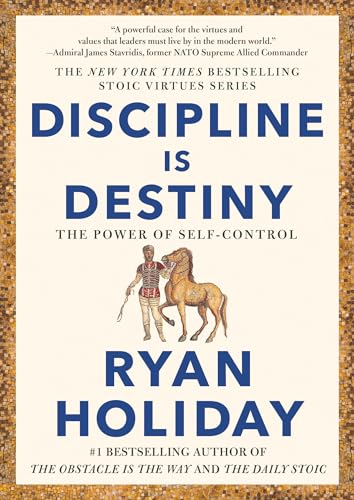
⚡️ What is Stoicism and Self-Control about?
Stoicism and Self-Control by Keith Seddon is a comprehensive exploration of how ancient Stoic philosophy can be practically applied to develop emotional mastery and personal discipline in the modern world. The book breaks down the fundamental principles of Stoicism and demonstrates how these timeless teachings can help readers gain better control over their thoughts, emotions, and reactions to life’s inevitable challenges.
🚀 The Book in 3 Sentences
- Stoicism and Self-Control teaches that true freedom comes from mastering our internal responses rather than trying to control external circumstances.
- The book demonstrates how Stoic principles like accepting what we cannot change and focusing on our own actions can lead to greater peace of mind.
- Through practical exercises and real-world examples, Seddon shows how anyone can develop the self-control necessary for Stoic living.
🎨 Impressions
Stoicism and Self-Control presents ancient wisdom in a remarkably accessible and practical way, making complex philosophical concepts understandable for modern readers. Keith Seddon’s approach to Stoicism and Self-Control successfully bridges the gap between theoretical philosophy and everyday application, providing readers with concrete tools for developing emotional resilience and personal mastery.
📖 Who Should Read Stoicism and Self-Control?
This book is ideal for anyone seeking to develop greater emotional intelligence and self-mastery through Stoicism and Self-Control practices. Whether you’re new to Stoic philosophy or looking to deepen your understanding of how Stoicism and Self-Control can transform your daily life, Seddon’s work offers valuable insights for personal growth.
☘️ How the Book Changed Me
How my life / behaviour / thoughts / ideas have changed as a result of reading the book.
- I developed better Stoicism and Self-Control strategies for managing stressful situations at work
- My approach to handling setbacks became more resilient and less reactive
- I learned to focus on what I can control rather than worrying about external circumstances
✍️ My Top 3 Quotes
- “Very little is needed to make a happy life; it is all within yourself, in your way of thinking.” – Marcus Aurelius
- “We suffer more often in imagination than in reality.” – Seneca
- “It’s not what happens to you, but how you react to it that matters.” – Epictetus
📒 Summary + Notes
Stoicism and Self-Control offers practical guidance on how ancient philosophical wisdom can transform our approach to emotional regulation and personal discipline. The book demonstrates that true self-control comes from understanding what is within our power to change and accepting what is not.
Chapter 1: Stoicism and Modern Living
This foundational chapter introduces how Stoic philosophy can be practically applied to contemporary challenges. Seddon explains that Stoicism is not about suppressing emotions but about understanding and properly managing them through rational thought and self-awareness.
- The relevance of ancient Stoic wisdom to modern life’s complexities
- How Stoicism promotes emotional resilience without emotional suppression
- The importance of distinguishing between controllable and uncontrollable elements in our lives
Chapter 2: Foundations of Stoic Thought
This chapter explores the core principles that underpin Stoic philosophy, including the cardinal virtues of wisdom, justice, courage, and temperance. Seddon emphasizes that these virtues work together to form the foundation of Stoic character development and ethical living.
- The four cardinal virtues and their interconnected role in Stoic practice
- How natural law and rational thinking guide Stoic decision-making
- The concept of living in accordance with nature as a path to fulfillment
Chapter 3: Understanding the Dichotomy of Control
This crucial chapter delves into one of Stoicism’s most fundamental concepts: the distinction between what we can control and what we cannot. Seddon illustrates how this principle can dramatically reduce anxiety and increase personal effectiveness when properly understood and applied.
- Stoicism and Self-Control techniques for identifying the boundaries of personal influence
- How accepting external circumstances reduces unnecessary suffering
- Practical exercises for focusing energy on controllable actions and responses
Chapter 4: The Path to Emotional Mastery
Chapter four focuses on developing emotional intelligence through Stoic principles. Seddon explains that emotional mastery doesn’t mean becoming emotionless, but rather learning to experience emotions without being overwhelmed or controlled by them.
- Strategies for recognizing and managing destructive emotional patterns
- The role of cognitive reframing in transforming negative emotional responses
- How anticipation and preparation can prevent emotional reactions from hijacking rational thinking
Chapter 5: Practical Exercises for Self-Control
This chapter provides actionable exercises designed to strengthen self-control and build Stoic character. Seddon offers specific techniques that readers can implement immediately to begin developing greater mastery over their thoughts and reactions.
- Daily reflection practices for enhancing self-awareness
- Voluntary discomfort exercises to build resilience
- Mindfulness techniques adapted from Stoic principles
Chapter 6: Facing Adversity with Stoic Resilience
Seddon explores how Stoic philosophy provides frameworks for facing life’s inevitable challenges and setbacks. The chapter emphasizes that adversity can be an opportunity for growth and character development when approached with the right mindset.
- How to reframe obstacles as opportunities for virtue practice
- Stoic techniques for maintaining composure during difficult times
- The concept of amor fati – learning to love one’s fate
Chapter 7: Integrating Stoicism into Daily Life
The final chapter addresses how to make Stoic principles a permanent part of daily living. Seddon provides guidance on creating sustainable practices and maintaining progress in the development of Stoic character and self-control.
- Creating morning and evening Stoic routines for consistent practice
- How to handle setbacks and maintain motivation on the Stoic path
- Building a supportive community for continued growth and accountability
Key Takeaways
The most essential lessons from this exploration of Stoicism and Self-Control can be distilled into several key principles that transform how we approach life’s challenges and opportunities.
- Mastering Stoicism and Self-Control requires consistent practice and commitment to daily exercises
- The dichotomy of control is fundamental to reducing unnecessary suffering and increasing personal effectiveness
- Emotional mastery comes from understanding rather than suppression of our natural responses
- Adversity is an opportunity to practice and strengthen Stoic virtues
- Consistent daily practices are essential for integrating Stoic principles into real life
Conclusion
Keith Seddon’s Stoicism and Self-Control provides a practical roadmap for anyone seeking to develop greater emotional resilience and personal discipline. The book successfully makes ancient Stoic wisdom accessible to modern readers while offering concrete tools for implementation. Whether you’re new to Stoic philosophy or looking to deepen your practice, this guide to Stoicism and Self-Control offers valuable insights that can transform how you navigate life’s inevitable challenges. The true power lies not just in understanding these principles, but in consistently applying them through the techniques and exercises Seddon provides.
More From Keith Seddon →
Discover more from AI Book Summary
Subscribe to get the latest posts sent to your email.