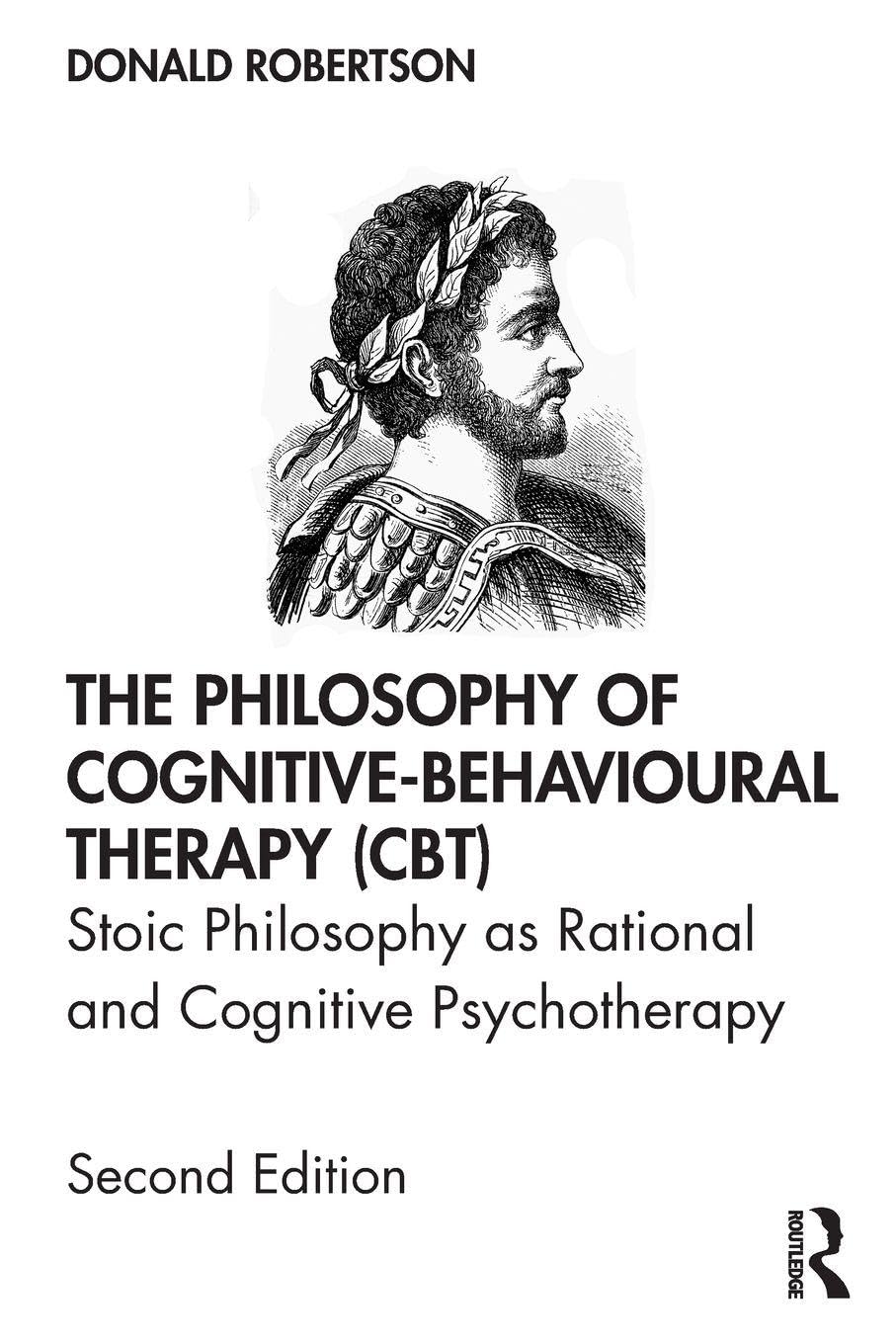
⚡️ What is Stoicism and Psychotherapy About?
Did you know that the “grandfather” of modern therapy was actually a Roman Emperor? I used to think of Stoicism as just a collection of cool quotes for Instagram, but Donald Robertson completely flipped that script for me. He makes a compelling case that Stoicism and Psychotherapy aren’t just related—they are two sides of the same coin. He argues that modern Cognitive Behavioural Therapy (CBT) is essentially a clinical version of the exercises Marcus Aurelius and Epictetus were doing 2,000 years ago.
Robertson, a therapist himself, writes this as someone who has used these tools in the trenches of clinical practice. He doesn’t just want you to admire the philosophy; he wants you to use it to stop your brain from lying to you. If you’ve ever felt like your emotions were a runaway train, this book is the manual for the brakes. More summaries by Donald Robertson. It fits perfectly into our Psychology book summaries collection because it bridges the gap between abstract thought and actual mental health.
🚀 The Book in 3 Sentences
- The central thesis is the Cognitive Mediational Model: it’s not external events that upset us, but our internal judgments and beliefs about those events.
- Stoicism provides a massive toolkit of practical psychological exercises—like objective representation and premeditation of evils—that predate and often surpass modern clinical techniques.
- Mental health isn’t just the absence of illness; it’s the cultivation of a specific kind of logical character that Robertson calls “Stoic Virtue.”
🎨 Impressions
I’ll be honest, I expected a dry academic text, but I ended up dog-earing almost every other page. Robertson has this way of making 2nd-century philosophy feel like something you’d hear in a modern therapist’s office in London. What struck me most was the realization that we haven’t actually “invented” much in modern psychology; we’ve mostly just rediscovered what the ancients already knew about the human mind.
It’s not all easy reading, though. Some of the sections on Socratic logic can get a bit dense, and I found myself re-reading paragraphs to really grasp the nuances. But that effort pays off because once you see the link between your logic and your anxiety, you can’t unsee it. It makes you realize that your “feelings” aren’t these mystical forces of nature—they’re the result of specific, often flawed, sentences you’re telling yourself.
📖 Who Should Read Stoicism and Psychotherapy?
If you’re a therapist or a student of psychology, this is basically mandatory reading to understand where your field actually comes from. But even if you’re just someone who struggles with overthinking or anxiety, this provides a much more robust framework than your average “self-help” book. However, if you want a light, breezy read with 5-minute hacks, skip this—it requires actual study and reflection.
☘️ How This Book Changed My Thinking
Before reading this, I thought my emotions were reactions to the world. Now, I see them as reactions to my own definitions of the world. It sounds like a small shift, but it changes everything when you’re stuck in traffic or dealing with a rude email.
- I stopped using “emotive language” in my internal monologue and started using “objective representation” (just the facts, no drama).
- I began practicing the “Reserve Clause”—adding “if fate wills it” to my goals—which drastically lowered my stress around outcomes I can’t control.
- I realized that my anger was almost always based on a logical error, usually the belief that “this shouldn’t be happening.”
✍️ 3 Quotes That Stuck With Me
- “It is not things themselves that disturb men, but their judgements about these things.” — This is the absolute cornerstone of the whole book; it puts the power back in your hands.
- “The Stoic does not try to abolish emotion, but to transform it into rational affection.” — This hit me because it dispels the myth that Stoics are just cold robots.
- “Virtue is its own reward, and the only true good.” — A radical reminder that my character matters more than my bank account or my social status.
📒 Summary + Notes
The book’s narrative arc follows a clear path: it starts with the Socratic roots of questioning, moves through the Stoic theory of how the mind works, and ends with a full-blown manual for living. Robertson wants you to see that your mind is essentially an internal courtroom. You are constantly making “judgments” (sentences in your head) about what is good, bad, or indifferent. Most of our misery comes from calling things “bad” that are actually out of our control.
By the end, Robertson isn’t just trying to cure your anxiety; he’s trying to help you build a “citadel” in your mind. The ultimate goal is to reach a state of Eudaimonia—a deep, unshakeable flourishing that doesn’t depend on whether you win the lottery or get fired tomorrow. It’s about aligning your reason with the reality of the world as it is, not as you wish it were.
🧠 Core Ideas Explained Simply
Some of these concepts sound fancy because they’re in Greek, but the logic behind them is actually very straightforward once you break it down.
The Cognitive Mediational Model
Imagine you see a dog. One person thinks “Scary!” and feels fear. Another thinks “Cute!” and feels joy. The dog is the same, but the emotion is different. This proves the emotion doesn’t come from the dog; it comes from the *thought* about the dog. In your life, the “dog” is your job, your spouse, or your bills. You have the power to change the thought.
Propatheiai (Pre-emotions)
Have you ever jumped when you heard a loud noise? The Stoics knew you can’t stop that initial flinch or the “stinging” of an emotion. They called these propatheiai. The therapy starts *after* that first second. You aren’t a failure for feeling a spark of anger; you only fail if you choose to fan that spark into a wildfire by agreeing with the thought that triggered it.
The Reserve Clause (hupexhairesis)
This is the ultimate stress-reducer. It’s the habit of saying, “I will do X, *God willing*” or “*If nothing prevents me.*” It acknowledges that you control your effort, but you never fully control the outcome. It allows you to be ambitious without being fragile when life inevitably throws a wrench in your plans.
1: The Socratic Method and the Origins of Therapy
What if the most therapeutic thing you could do was simply ask yourself better questions? Robertson starts by showing how Socrates used dialogue to expose contradictions in people’s thinking. This isn’t just about winning an argument; it’s about realizing that many of the beliefs causing you pain are actually logically incoherent. When a therapist asks, “What is the evidence for that thought?
More From Donald Robertson →
Discover more from AI Book Summary
Subscribe to get the latest posts sent to your email.