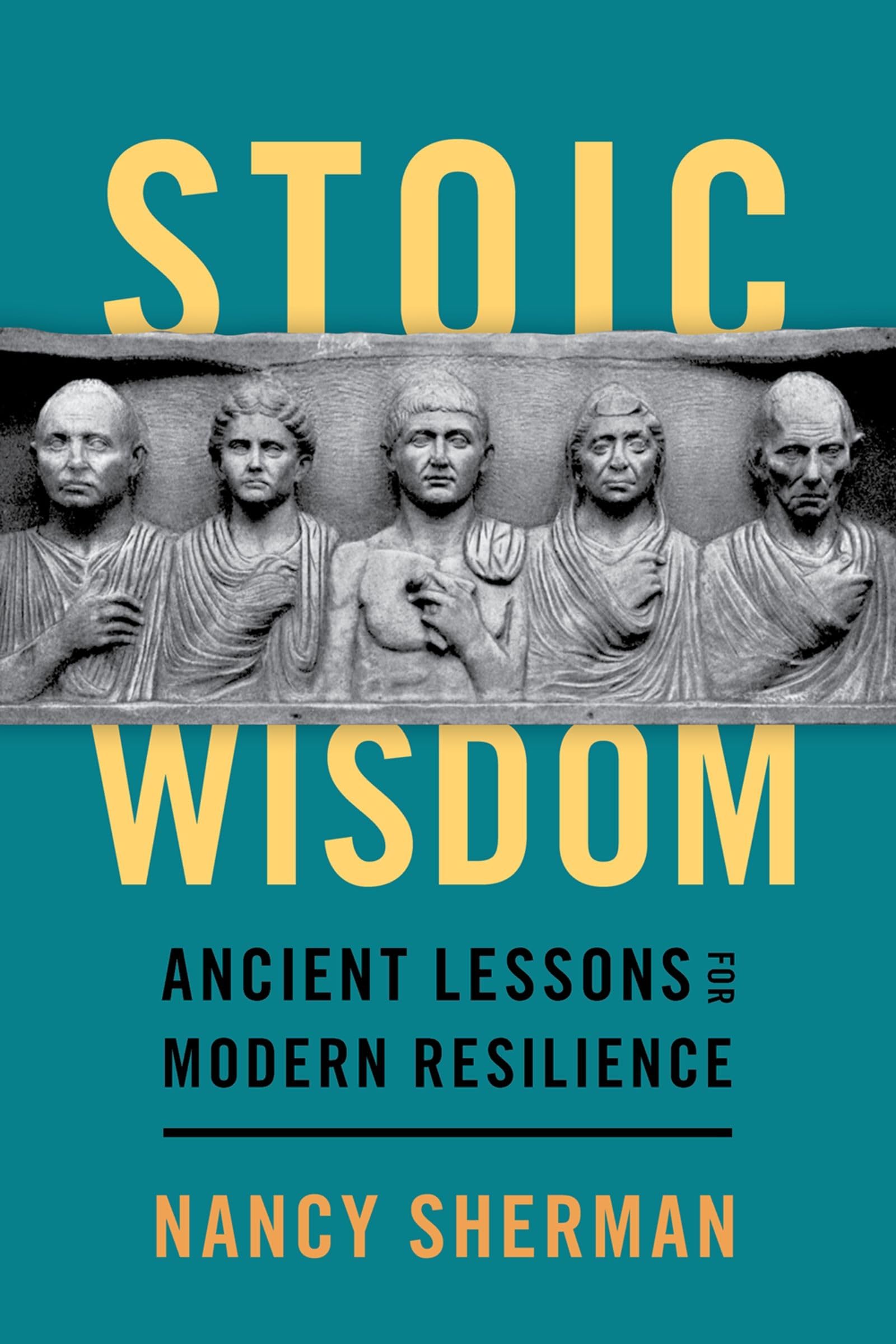
⚡️ What is Stoic Wisdom about?s
Stoic Wisdom by Nancy Sherman explores how ancient Stoic philosophy can be applied to modern life challenges. The book delves into timeless principles that help build resilience, emotional regulation, and ethical living. Sherman expertly bridges the gap between classical Stoicism and contemporary psychological understanding, showing how these ancient strategies can address current mental health and personal development needs.
🚀 The Book in 3 Sentences
- Stoic Wisdom teaches us that emotional resilience comes from focusing on what we control and accepting what we cannot.
- The book demonstrates how Stoic strategies can be practical tools for managing stress, relationships, and personal growth in modern times.
- Sherman shows that applying Stoic principles requires active practice and self-reflection, not just intellectual understanding.
🎨 Impressions
Reading Stoic Wisdom felt like having a conversation with a thoughtful mentor who understands both ancient philosophy and modern struggles. Nancy Sherman’s approachable writing style makes complex Stoic concepts accessible without diluting their depth. The book successfully demonstrates how Stoic Wisdom remains remarkably relevant for navigating today’s emotional and ethical challenges.
📖 Who Should Read Stoic Wisdom?
This book is ideal for readers seeking practical Stoic Wisdom to handle life’s difficulties with greater resilience and clarity. It’s particularly valuable for those interested in personal development, emotional regulation, or philosophy applied to daily living. Whether you’re new to Stoicism or familiar with its basics, Sherman’s insights into Stoic Wisdom offer fresh perspectives that can deepen your understanding.
☘️ How the Book Changed Me
How my life / behaviour / thoughts / ideas have changed as a result of reading the book.
- I now apply Stoic strategies to separate controllable actions from uncontrollable outcomes in daily decision-making
- My approach to emotional challenges has shifted toward acceptance and rational response rather than reactive behavior
- I’ve developed a more consistent practice of self-reflection using Stoic principles to evaluate my responses
- I’ve become more intentional about focusing on virtue and character rather than external validation
✍️ My Top 3 Quotes
- “The Stoic path is not about suppressing emotions but about transforming them through reason and virtue.”
- “We become what we repeatedly do; excellence, then, is not an act but a habit.”
- “True freedom comes not from getting what you want, but from wanting what you get.”
📒 Summary + Notes
Stoic Wisdom presents a comprehensive exploration of how ancient Stoic philosophy can address modern psychological and ethical challenges. Nancy Sherman skillfully translates classical Stoic principles into practical strategies for building resilience, managing emotions, and living with greater purpose. The book emphasizes that Stoicism is not merely an intellectual exercise but a lived practice that requires consistent application.
Chapter 1: The Stoic Art of Healing
This opening chapter introduces how Stoic philosophy approaches emotional healing and psychological resilience. Sherman explains that Stoicism doesn’t advocate for emotional suppression but rather for understanding and transforming emotions through reason and virtue. The chapter establishes the foundational principle that our responses to events, rather than the events themselves, determine our wellbeing.
- Stoic healing involves understanding that emotions are judgments about what is good or bad for us
- Sherman uses examples from therapy and counseling to illustrate how Stoic techniques can address trauma and anxiety
- The chapter emphasizes that true healing comes from internal transformation rather than external circumstances
Chapter 2: Anger and Its Cure
Sherman examines the Stoic perspective on anger, presenting it as a particularly destructive emotion that requires specific strategies for management. The chapter draws heavily on Seneca’s writings about anger, showing how Stoic techniques can help individuals recognize the early signs of anger and redirect their responses toward more constructive actions.
- Anger is described as a temporary madness that blinds us to reason and virtue
- Stoic strategies include cognitive reframing, delayed response, and focusing on what we can control
- The chapter provides practical exercises for recognizing and managing anger in daily situations
Chapter 3: The Courage to Be Grateful
This chapter explores how Stoicism views gratitude as an active virtue rather than passive appreciation. Sherman discusses how gratefulness can be cultivated as a deliberate practice that enhances resilience and improves relationships. The Stoic approach to gratitude involves recognizing both privileges and challenges as opportunities for growth.
- Stoic gratitude includes appreciation for difficulties as they build character and wisdom
- The chapter connects gratitude practices to Marcus Aurelius’s meditations on accepting life’s circumstances
- Sherman provides exercises for developing a more robust and consistent gratitude practice
Chapter 4: Grief and Other Lapses
Sherman addresses how Stoicism approaches grief and other intense emotional responses that might seem contrary to Stoic principles. The chapter emphasizes that Stoicism doesn’t require emotional numbness but rather appropriate emotional responses guided by reason and virtue. She shows how even great Stoic philosophers experienced deep grief while maintaining their philosophical commitments.
- Grief is acknowledged as a natural response while emphasizing the importance of not being overwhelmed by it
- The chapter explores how Stoic techniques can help process loss without abandoning reason or virtue
- Sherman discusses the balance between emotional acceptance and philosophical detachment
Chapter 5: Aporia and Moral Uncertainty
This chapter examines how Stoicism addresses moral uncertainty and ethical dilemmas where clear answers aren’t apparent. Sherman discusses the Stoic concept of aporia (philosophical puzzlement) and how embracing uncertainty can lead to wiser decision-making. The chapter shows that Stoicism doesn’t provide easy answers but rather a framework for thinking through difficult moral questions.
- Stoicism teaches that uncertainty itself can be an opportunity for deeper reflection and growth
- The chapter emphasizes focusing on intentions and character rather than guaranteed outcomes
- Sherman provides examples of how Stoic wisdom can guide decisions in complex modern ethical situations
Chapter 6: The Moral Psychology of Love
Sherman explores how Stoicism views love and relationships, challenging the misconception that Stoics advocate emotional detachment. The chapter shows how Stoic principles can enhance rather than diminish loving relationships by promoting virtue, understanding, and mutual respect. Stoic love involves caring for others while maintaining personal integrity and emotional balance.
- Stoic love is based on virtue and character rather than passion or dependency
- The chapter discusses how Stoic strategies can help maintain healthy boundaries in relationships
- Sherman shows how Stoic principles can improve communication and conflict resolution in partnerships
Chapter 7: The Colors of Character
This chapter examines the Stoic understanding of character development and moral psychology. Sherman discusses how virtues like wisdom, justice, courage, and temperance work together to form a coherent moral framework. The chapter emphasizes that character development is a lifelong process requiring consistent attention to thoughts, actions, and habits.
- Character is developed through consistent practice of virtuous actions and thoughts
- Sherman explains how Stoic ethics emphasize internal rather than external goods
- The chapter provides practical guidance for identifying and cultivating personal virtues
Chapter 8: The School of Hard Knocks
The final chapter focuses on how Stoicism views suffering and adversity as opportunities for growth and wisdom. Sherman explains that Stoics don’t seek suffering but see it as inevitable and potentially valuable for character development. The chapter provides practical strategies for reframing difficulties as chances to practice virtue and build resilience.
- Adversity is viewed as training for virtue rather than mere punishment or bad luck
- The chapter discusses how contemporary therapy and coaching can benefit from Stoic approaches to hardship
- Sherman provides specific techniques for finding meaning and growth in challenging circumstances
Key Takeaways
These essential insights from Stoic Wisdom provide a foundation for applying ancient philosophy to modern challenges. The principles outlined here represent the core of Nancy Sherman’s approach to making Stoic strategies relevant for contemporary readers.
- Stoic Wisdom teaches that emotional resilience comes from focusing on controllable responses rather than uncontrollable events
- Anger management through Stoic strategies involves cognitive reframing and delayed response techniques
- Character development requires consistent practice of virtues through daily thoughts and actions
- Grief and other intense emotions can be processed while maintaining philosophical commitments to reason and virtue
- True freedom comes from wanting what we can control rather than trying to control what we want
Conclusion
Nancy Sherman’s Stoic Wisdom masterfully bridges ancient philosophy and modern psychology, offering practical strategies for building resilience and living with purpose. The book demonstrates that Stoic Wisdom isn’t just historical curiosity but a living philosophy with immediate applications for personal growth and emotional wellbeing. Whether you’re facing daily stressors or major life challenges, these timeless principles provide a framework for navigating difficulties while maintaining integrity and peace of mind. I encourage anyone seeking to deepen their understanding of themselves and their responses to explore the full depth of Sherman’s insights into Stoic Wisdom.
More From Nancy Sherman →
Discover more from AI Book Summary
Subscribe to get the latest posts sent to your email.