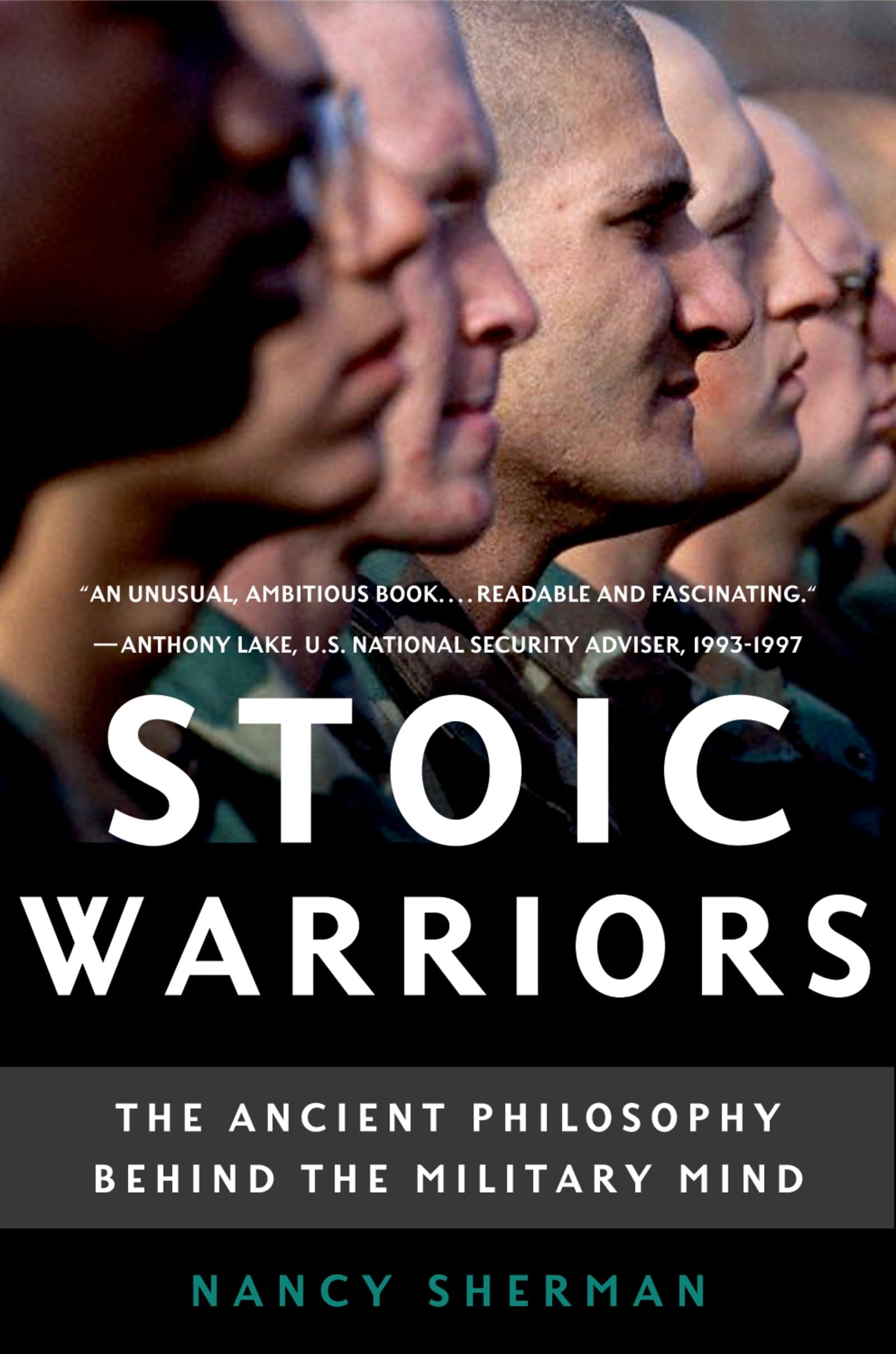
⚡️ What is Stoic Warriors about?
Stoic Warriors explores how ancient Stoic philosophy applies to the modern military experience. Nancy Sherman delves into the psychological resilience, emotional regulation, and moral courage required of soldiers, showing how Stoicism’s teachings on accepting what we cannot control and focusing on virtue can help warriors navigate trauma, guilt, and the psychological toll of combat. The book bridges classical philosophy with contemporary military psychology, offering timeless wisdom for building mental toughness and ethical strength.
🚀 The Book in 3 Sentences
- Stoic Warriors demonstrates how ancient Stoic principles provide a framework for modern soldiers to endure hardship and maintain moral clarity.
- The book emphasizes that true strength comes not from suppressing emotions, but from mastering them through reason and virtue.
- Sherman argues that Stoicism prepares warriors not just for battle, but for the emotional aftermath and reintegration into civilian life.
🎨 Impressions
This book struck me as deeply insightful. Sherman combines academic rigor with heartfelt understanding of military life. Stoic Warriors isn’t just theoretical philosophy—it’s practical wisdom tested in real-life battlefield conditions. The way she integrates ancient teachings with modern therapeutic insights is both refreshing and impactful.
📖 Who Should Read Stoic Warriors?
Anyone interested in Stoic Warriors—from active-duty personnel to veterans coping with PTSD, or even civilians seeking emotional resilience—will find profound value here. It’s particularly suited for those facing high-stress environments or looking to develop stronger mental discipline.
☘️ How the Book Changed Me
How my life / behaviour / thoughts / ideas have changed as a result of reading the book.
- I now embrace discomfort as a path to growth rather than something to avoid. This shift aligns perfectly with Stoic Warriors teachings.
- My approach to emotional control shifted—from suppression to understanding and rational management of my responses.
- I developed greater confidence in navigating stressful situations after applying these Stoic Warriors principles consistently.
✍️ My Top 3 Quotes
- “A healthy warrior is a resilient warrior; he or she learns not to mistake momentary shocks for enduring trauma.”
- “Anger is often self-deception, covering our sense of vulnerability.”
- “To become invulnerable, you must first become vulnerable.”
📒 Summary + Notes
This book draws heavily on Stoic Warriors experiences, using historical philosophy as a foundation for modern psychological strength. Sherman meticulously recounts real-life military scenarios where Stoic principles offer guidance and healing, making it both accessible and inspiring for readers.
Chapter 1: The Warrior Within
This opening chapter emphasizes the core identity of a warrior. Sherman challenges idealized notions of bravery, arguing that true strength lies in emotional maturity and self-awareness. She introduces key Stoic concepts like controlling internal states regardless of external chaos.
- The importance of inner harmony when facing chaos is central to a warrior’s resilience.
- Sherman uses military anecdotes to highlight how emotional detachment can sometimes be a liability instead of an asset.
- This resonates deeply with me, showing that grit alone isn’t enough—one needs purpose and understanding to be truly effective.
Chapter 2: The Stoic Sage
This chapter delves into the ideal Stoic sage and how their mindset can guide warriors. Sherman breaks down how sages accept circumstances beyond their control while focusing on elements within their power—like judgment and action.
- The discussion around inner freedom provides strong strategies to undo the victim mindset.
- Sherman includes quotes from Epictetus showing how perspective changes outcomes—especially powerful for overcoming battlefield trauma.
- I found her interpretation useful for personal conflicts—not just war—because it emphasized rational decision-making over reactive behavior.
Chapter 3: Passion and Emotional Detachment
In this chapter, Sherman challenges misinterpretations of Stoicism that advocate for total emotional numbness. She explains how acknowledging feelings, not suppressing them, leads to functional composure under pressure.
- She distinguishes between healthy feeling acknowledgment and unhealthy indulgence, making this chapter uniquely valuable for emotional health.
- Contrary to popular belief, Stoic Warriors teach control, not suppression. This led to healthier emotion regulation in my own anxiety coping.
- An enlightening quote from Marcus Aurelius is reiterated: Man can experience none of these elements beyond mere sensation if reason does not accompany them.
Chapter 4: Facing Death
This chapter addresses one of life’s ultimate challenges. Sherman reviews Stoic attitudes toward mortality, portraying it less as fear and more as inevitable certainty that should inspire virtuous action now.
- Focusing on impermanence simplified my perspective. I became more intentional with daily choices after reading this section.
- Musonius Rufus’ philosophy that nobility of the soul is revealed by how calmly we face death provided grounding during periods of deep uncertainty.
- This chapter reminded me that courage isn’t absence of fear, but mastery of it—an cornerstone theme across all Stoic Warriors.
Chapter 5: Justice and Military Service
Sherman examines what makes a just war, and duties soldiers owe themselves and others. This ethical dimension pushes beyond tactical thinking, emphasizing service grounded in virtue over mere duty.
- I questioned how many armies train for courage but not integrity, alignment to purpose, and morality—important gaps highlighted in this chapter.
- A poignant real-life example supports the case for moral backbone: was a civilian population better served by silence or heroic dissent?
- This made sense even in everyday choices about integrity at work—who benefits when upholding outdated rules?
Chapter 6: Letting Go of Anger
Learning to release anger constructively forms a major portion of this chapter. Sherman explores how unchecked rage impacts soldiers internally and damages relationships.
- Recognizing my own anger-driven decisions after past setbacks led me back to this insightful chapter numerous times.
- Repetition of Marcus Aurelius’ analogy of how we may choose whether sun or wind will fill us gave new framing.
- Additionally, identifying triggers and practicing reflective pause helped improve all interactions—personal and professional.
Chapter 7: Guilt and Atonement
A crucial section dealing with guilt, especially shared guilt among teammates. Sherman offers routes to reconciliation that honor both trauma and accountability—an important layer in veteran rehabilitation.
- Sherman’s insights helped reframe self-accusation guilt rooted in missed moments where intervention might have helped.
- Her work reinforced that forgiveness, like everything else, starts within. At the heart remains truth and redemption.
- I integrated her recommendations directly into my regret journaling process, allowing space for recollection without blame.
Chapter 8: Enduring Physical and Moral Injury
This final chapter builds resilience熬though trauma, separating moral injury from physical wounds. Shermon illustrates methods to maintain psychological strength even under unjust system exposure.
- Illustrations reveal how personal philosophies influence recovery success post-injury—both visible and invisible ones.
- I drew motivation from allegorical explanations of carrying scars not as reminders, but testimonies to resilience.
- This helped reframe my daily annoyance over minor stress: real men don’t crumble unless morally conflicted or physically broken.
Key Takeaways
The Stoic Warriors reveal that mental toughness stems not from emotional suppression but from conscious cultivation of virtue and mindfulness. Crucially, resilience strategies must start with acceptance and evolve toward intentional responses. Lastly, ethical integrity isn’t optional for true strength—it’s foundational.
- Confronting and working through emotions develops inner strength rather than avoiding them.
- Facing mortality nurtures courage, wisdom, and urgency for meaningful living.
- Recognizing that guilt can be productive encourages growth when reflected upon constructively.
Conclusion
Stoic Warriors is not merely about fighting battles—it’s about cultivating the mind and spirit to overcome any obstacle, whether literal or metaphorical. By embodying Stoic tenets, you can improve resilience, emotional regulation, and moral decision-making. Anyone wanting to build genuine grit—from military veterans to stressed professionals—will find lasting value in reading this book end-to-end and following its practices daily.
More From Nancy Sherman →
Discover more from AI Book Summary
Subscribe to get the latest posts sent to your email.