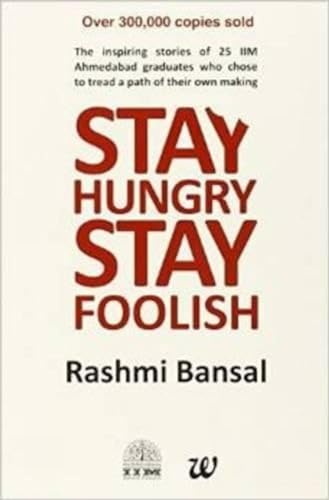
⚡️ What is Stay Hungry Stay Foolish about?
Stay Hungry Stay Foolish by Rashmi Bansal is a compelling collection of 25 real-life stories of MBAs from IIM Ahmedabad who defied conventional wisdom. Instead of climbing the corporate ladder, they chose the tumultuous and uncertain path of entrepreneurship. The book’s title, borrowed from Steve Jobs’ famous Stanford commencement speech, perfectly encapsulates its core message: maintain an insatiable appetite for new challenges and a willingness to try unconventional ideas, even if they seem foolish to others. Bansal categorizes these inspiring journeys into four distinct sections: The Believers, The Alternate Vision, The Opportunists, and The Outsiders. Each story is a testament to the power of passion, perseverance, and the courage to follow one’s own vision, offering a raw and unfiltered look into the struggles, failures, and ultimate triumphs of building a business from scratch in India.
🚀 The Book in 3 Sentences
- Stay Hungry Stay Foolish is an anthology of 25 IIM-A graduates who chose entrepreneurship over high-paying jobs, proving that passion can outweigh a secure paycheck.
- The book demystifies the startup journey by showcasing a diverse range of paths, from social enterprises to tech unicorns, highlighting that there is no single formula for success.
- Ultimately, it’s a powerful call to action for aspiring entrepreneurs to embrace risk, learn from failure, and relentlessly pursue their unique vision.
🎨 Impressions
Reading Stay Hungry Stay Foolish felt less like a business book and more like a series of intimate conversations with brave individuals. What struck me most was the raw honesty of the stories; there was no glorification of the startup life, only a candid portrayal of the grit and resilience it demands. The book’s strength lies in its diversity, showing that entrepreneurship isn’t confined to the tech world. I appreciated how Bansal’s simple, narrative-driven style makes the complex world of building a business accessible and deeply human. It’s an inspiring read that doesn’t offer a magic formula but instead provides the motivation to find your own.
📖 Who Should Read Stay Hungry Stay Foolish?
This book is a must-read for any aspiring entrepreneur or MBA student contemplating a leap of faith. It’s equally valuable for professionals feeling stuck in the corporate rat race, offering a powerful dose of inspiration and a new perspective on career fulfillment. If you are a mentor, educator, or simply someone fascinated by stories of human ambition and innovation, the journeys within Stay Hungry Stay Foolish will resonate deeply and provide invaluable insights into the Indian startup ecosystem.
☘️ How the Book Changed Me
\p>Reading this book fundamentally shifted my perspective on risk and career satisfaction. It made me question the default path of seeking security and instead consider the value of pursuing work that truly ignites passion. The stories of initial struggles and repeated failures normalized the fear of uncertainty, making it feel less like a barrier and more like a part of the process. I now view setbacks not as endpoints but as critical data points for iteration and growth, a mindset directly inspired by the entrepreneurs featured in Stay Hungry Stay Foolish.- I’ve become more willing to explore side projects and ideas outside my comfort zone, no longer viewing them as frivolous but as potential seeds for the future.
- The book instilled in me a greater appreciation for the long-term vision, teaching me to prioritize sustainable growth over short-term gains in my own professional decisions.
- I now actively seek out stories of failure, understanding that they often hold more practical lessons than tales of effortless success.
✍️ My Top 3 Quotes
- “Stay Hungry. Stay Foolish.” – Steve Jobs
- “The problem with the Indian system is that it rewards mediocrity. It does not encourage risk-taking.” – Sanjeev Bikhchandani, Naukri.com
- “If you have an idea, you have to believe in it. You have to have the passion to see it through.” – Deep Kalra, MakeMyTrip
📒 Summary + Notes
Stay Hungry Stay Foolish is structured into four thematic parts, each profiling a different archetype of an entrepreneur. The book doesn’t preach a single method but instead offers a mosaic of experiences, showing that the entrepreneurial spirit can manifest in many ways. From those who knew their calling from day one to those who stumbled upon it by chance, each story provides unique insights into the challenges and rewards of building something from nothing. The following summaries break down the core lessons from each section.
Part 1: The Believers
This section features entrepreneurs who, from a very young age, knew they wanted to build their own enterprise. They weren’t seeking jobs; they were creating them. The story of Sanjeev Bikhchandani, the founder of Naukri.com, is a prime example. He noticed a gap in the market for organized job information while working for a multinational corporation. He started small, with a simple database, and faced years of struggle before the internet boom made his vision a reality. Another key story is of R. Subramanian, who built Subhiksha, a retail chain, by focusing on affordability and accessibility in rural and urban India. These entrepreneurs were driven by an unwavering conviction in their idea.
- The Power of Observation: Many ideas, like Naukri.com, were born from simply observing an everyday inefficiency and envisioning a solution.
- Patience is Paramount: Success rarely happens overnight. These believers endured years of hardship and low income before their ventures took off.
- Start Small, Dream Big: They didn’t wait for massive funding; they started with minimal resources and scaled up as they gained traction.
- Conviction Over Convention: They held onto their vision even when others, including family and peers, doubted them.
- The Idea is the King: For this group, a powerful and unique idea was the primary driver of their journey.
Part 2: The Alternate Vision
\p>The entrepreneurs in this section were motivated by more than just profit; they had a larger, often social, purpose. They sought to create businesses that made a positive impact on society. A standout story is that of Sunil Handa, who founded Eklavya, an educational initiative aimed at providing affordable and high-quality training to students from all backgrounds. His vision was to bridge the educational gap in India. Another example is the story of M. M. Joshi, who ventured into creating assistive technology for the disabled with his company, Cerebra. These individuals demonstrate that business can be a powerful vehicle for social change, and that a mission-driven approach can be incredibly fulfilling and sustainable.- Profit with a Purpose: Their business models were intrinsically linked to a social cause, proving that doing good and doing well can go hand-in-hand.
- Empathy as a Strategy: They built their businesses by deeply understanding the needs of underserved or marginalized communities.
- Challenges are Unique: Social entrepreneurs often face different hurdles, such as changing mindsets and creating awareness, besides typical business challenges.
- Measuring Success Differently: For them, success was not just in revenue, but in the number of lives impacted or the social change effected.
- The Long-Term Commitment: Their vision required a deep, long-term commitment to a cause, far beyond typical business cycles.
- Building Trust is Key: Gaining the trust of the community they served was the most critical asset they had to build.
Part 3: The Opportunists
\p>Not all entrepreneurs set out with a grand plan. The ‘Opportunists’ were individuals who stumbled upon an idea or pivoted from their original path when they saw a unique opportunity. The story of Deep Kalra, the founder of MakeMyTrip, is a classic example. He recognized the burgeoning potential of the internet and the growing need for online travel booking in India. He seized the moment and built a market leader. Similarly, R. Sriram, the founder of the Crossword bookstore chain, saw an opportunity to create a premium retail experience for book lovers at a time when bookstores were largely functional and uninspired. These entrepreneurs are masters of timing, market analysis, and adaptation.- Timing is Everything: They had an uncanny ability to identify the right moment to enter a market or launch a new product.
- Seeing the Unseen: Their skill lay in spotting gaps and trends that others had missed, often by connecting disparate dots.
- Flexibility and Agility: They were not wedded to a single idea and were willing to pivot their business model based on market feedback.
- First-Mover Advantage: Many of them, like Deep Kalra, benefited immensely from being among the first to capitalize on a new trend or technology.
- Calculated Risk-Taking: Their moves weren’t blind gambles; they were based on sharp observation and a deep understanding of consumer behavior.
Part 4: The Outsiders
\p>This final group comprises individuals who ventured into territories completely alien to their background or training. They broke the mold and built successful businesses in industries they had to learn from scratch. This section includes stories like that of V. S. Mahesh, who left a cushy job to start an environmental consulting firm, EcoTech, at a time when sustainability was not a business buzzword. Another is the story of K. R. Shyam Sundar, who entered the highly competitive and unorganized steel industry. These ‘Outsiders’ prove that passion and a willingness to learn can overcome a lack of domain expertise, and that a fresh perspective can sometimes be the greatest asset.- The Power of a Fresh Perspective: Coming from the outside allowed them to question established industry norms and innovate.
- Relentless Learning: They had to immerse themselves completely in a new field, demonstrating that learning is a lifelong entrepreneurial trait.
- Building Credibility from Zero: Their biggest challenge was establishing themselves in a market where they had no prior experience or network.
- Passion Trumps Pedigree: Their success was driven by their sheer passion for the new venture, not their IIM degree or previous job title.
- Creating a Niche: They often succeeded by identifying and serving a niche segment that established players were ignoring.
Key Takeaways
The collective wisdom from the 25 stories in Stay Hungry Stay Foolish offers several profound lessons for anyone looking to forge their own path. The book is a masterclass in the mindset required to succeed against the odds. These takeaways are not just about business strategy but about life philosophy. They emphasize that the journey of entrepreneurship is as much about personal growth as it is about professional success. The most enduring lesson is that the desire to create and contribute is a powerful motivator that can help overcome any obstacle.
- Passion is the Ultimate Fuel: The most successful entrepreneurs were driven by a deep passion for their idea, which sustained them through tough times.
- Embrace Failure as a Teacher: Every single story features moments of failure and setbacks, which were treated as learning opportunities, not dead ends.
- The Importance of a Co-founder: Many entrepreneurs highlighted the critical role of a trusted partner who shared their vision and complemented their skills.
- Start with a Problem, Not a Solution: The most viable businesses were born from a genuine desire to solve a real-world problem for a specific set of customers.
- Perseverance Beats Genius: While a good idea is crucial, relentless execution and the tenacity to keep going are what ultimately separate successful ventures from failed ones.
Conclusion
In conclusion, Stay Hungry Stay Foolish is more than just a book; it’s a movement. It’s a powerful reminder that the safest path is not always the most fulfilling one and that the greatest rewards often lie on the other side of fear. Rashmi Bansal has masterfully curated stories that not only inspire but also provide a realistic picture of the entrepreneurial rollercoaster. Whether you are an aspiring entrepreneur, a student, or a professional seeking a change, this book will challenge your assumptions and encourage you to ask yourself what you are truly hungry for. It’s an essential read that will leave you feeling empowered to take that first foolish step towards your dreams.
More From Rashmi Bansal →
Discover more from AI Book Summary
Subscribe to get the latest posts sent to your email.