Chapter 14: The New Competition
Sinek redefines competition as striving to be better than yourself rather than beating others. When organizations compete against themselves, focusing on improving their own why alignment rather than outdoing competitors, they attract support and collaboration. The chapter contrasts this with the traditional competitive mindset that creates resistance and isolation. All organizations start with why, but only great ones maintain that clarity year after year. Those who forget why they were founded show up merely to outdo others rather than to fulfill their original purpose. The ultimate message: you are your best competition.
- True competition is striving to outdo yourself, not others
- Organizations that maintain their why attract collaboration
- Success comes from improving, not from winning
Key Takeaways
The Start with Why framework offers powerful insights for leadership and organizational success. By understanding and implementing these key principles, individuals and organizations can create more authentic connections and lasting impact.
- Communicate from the inside out—start with why, then how, then what
- People are inspired by purpose, not products—they buy why you do what you do
- Trust emerges when actions align with stated purpose beyond self-interest
- Hire people who believe what you believe, then focus on skills
- Filter all decisions through your why using the Celery Test
Conclusion
Start with Why provides a transformative framework for understanding how inspirational leaders and organizations achieve extraordinary results. By beginning with purpose rather than products, we create authentic connections that inspire loyalty and innovation. The Golden Circle concept offers a practical tool for evaluating and improving our communication and decision-making. Whether you’re leading a global organization or seeking personal fulfillment, the principles in this book can help you find greater clarity and impact. I encourage you to explore the complete book to deepen your understanding of how starting with why can transform your leadership and life.
More From Simon Sinek →
⚡️ What is Start with Why about?
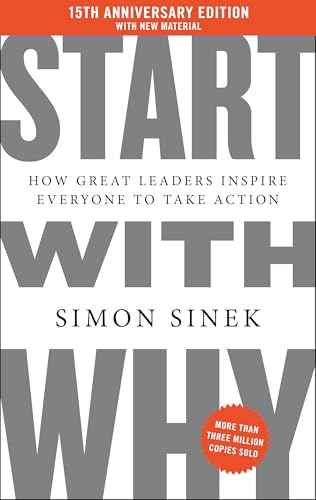
Start with Why explores how great leaders inspire action by beginning with their purpose rather than their products. Simon Sinek presents a powerful framework called the Golden Circle, which consists of three concentric circles: Why, How, and What. Most organizations operate from the outside in, focusing on what they do and how they do it. However, truly inspirational leaders and companies reverse this approach, starting with why they exist—their core purpose and beliefs. This fundamental shift in thinking creates loyalty, inspires innovation, and drives long-term success. Sinek demonstrates through numerous examples how clarifying your why can transform your leadership and influence.
🚀 The Book in 3 Sentences
- People don’t buy what you do; they buy why you do it, and Start with Why reveals how to leverage this principle for greater influence.
- Inspiring leaders communicate from the inside out of the Golden Circle, beginning with their purpose before explaining how they fulfill it and what they offer.
- When organizations lose sight of their original why, they struggle to maintain differentiation, loyalty, and long-term success.
🎨 Impressions
Reading Start with Why fundamentally changed how I view leadership and organizational success. Sinek’s straightforward yet profound insights challenge conventional business wisdom that prioritizes what over why. The Golden Circle framework provides a practical lens through which to evaluate any organization’s messaging and strategy. What impressed me most was how Sinek connects the concept to human biology, showing how our brains are wired to respond to purpose-driven communication. This book isn’t just theory; it’s a practical guide that immediately influenced how I approach my own decision-making and leadership.
📖 Who Should Read Start with Why?
Start with Why is essential reading for entrepreneurs, business leaders, managers, and anyone seeking to inspire others. It’s particularly valuable for those struggling to differentiate their products or services in crowded markets. Marketing professionals will find the framework invaluable for crafting more compelling messaging. The book also speaks to individuals feeling disconnected from their work or searching for greater purpose in their careers. If you’ve ever wondered why some organizations achieve loyalty while others struggle with constant customer acquisition, this book provides the answers.
☘️ How the Book Changed Me
The Start with Why framework transformed my approach to leadership and decision-making in profound ways.
- I now begin every major project by clarifying the why before determining what we’ll produce and how we’ll execute it.
- I’ve become more discerning about the organizations I support as a consumer, looking for those whose why aligns with my values.
- In my leadership role, I focus more on inspiring my team with purpose rather than just directing them on tasks.
- I regularly evaluate decisions through the lens of the Celery Test, ensuring they align with our core purpose.
✍️ My Top 3 Quotes
- “People don’t buy what you do; they buy why you do it. And what you do simply proves what you believe.”
- “Working hard for something we don’t care about is called stress; working hard for something we love is called passion.”
- “Great companies don’t hire skilled people and motivate them, they hire already motivated people and inspire them.”
📒 Summary + Notes
In Start with Why, Simon Sinek presents a compelling framework for understanding how inspirational leaders and organizations achieve extraordinary results. The book challenges conventional business thinking and provides a biological basis for why purpose-driven communication resonates so deeply with people. Through the Golden Circle concept, Sinek demonstrates how starting with your purpose creates authentic connections that drive loyalty and innovation. The following chapter-by-chapter summary explores the key concepts and practical applications of this transformative approach to leadership and influence.
Chapter 1: Assume You Know
Sinek begins by challenging our assumptions about success and leadership. He uses the example of American versus Japanese car manufacturers to illustrate how different approaches yield different results. American workers used rubber mallets to fix ill-fitting doors, while Japanese engineers designed doors to fit perfectly from the start. This metaphor extends to leadership—some manipulate to achieve results, while others design systems that naturally produce excellence. The chapter emphasizes that our assumptions about how things work often limit our ability to see better alternatives.
- Manipulation versus design: short-term fixes versus systemic solutions
- Looking beyond conventional wisdom to find better approaches
- How assumptions shape our actions and outcomes in business and life
Chapter 2: Carrots and Sticks
This chapter explores manipulation versus inspiration as methods of influence. Sinek identifies various manipulation tactics used in business: price drops, promotions, fear, peer pressure, and novelty. While these tactics can generate short-term results, they don’t create loyalty or lasting success. Companies relying on manipulation find themselves in a cycle of repeated tactics with diminishing returns. Sinek argues that inspiration, rooted in a clear why, creates more sustainable customer relationships and business outcomes.
- Manipulation tactics create short-term transactions but not long-term relationships
- The diminishing returns of repeated manipulation strategies
- How inspiration differs fundamentally from manipulation in business
Chapter 3: The Golden Circle
Here Sinek introduces his core framework: the Golden Circle, consisting of three concentric circles labeled Why, How, and What. Most organizations communicate from the outside in—starting with what they do, then how they do it. However, inspirational leaders and companies reverse this, beginning with why they exist. Sinek uses Apple as an example: Apple’s why is to challenge the status quo, which drives everything they do and make. This chapter establishes the foundation for the rest of the book, explaining how communicating from the inside out creates more authentic connections with customers.
- Why: Purpose, cause, or belief—the reason an organization exists
- How: Processes or differentiating value propositions
- What: Products or services an organization offers
Chapter 4: This Is Not Opinion, This Is Biology
Sinek connects the Golden Circle to human brain biology, providing a scientific basis for his framework. The neocortex corresponds to the What level—responsible for rational and analytical thought. The limbic brain corresponds to the Why level—driving feelings, trust, loyalty, and decision-making. This biological distinction explains why we struggle to put our feelings into words. When companies communicate their why, they speak directly to the decision-making part of our brain, creating gut feelings that rational analysis alone cannot achieve.
- Neocortex handles rational thought and language (What)
- Limbic brain drives emotions and decision-making (Why)
- Why companies struggle when focusing only on rational benefits
Chapter 5: Clarity, Discipline, and Consistency
This chapter explores the three degrees of certainty that come from different levels of Golden Circle clarity. When we can only point to tangible elements, our confidence is limited to “I think this is right.” Gut decisions give us more confidence, but only when we can articulate our why do we achieve the highest level: “I know it’s right.” Sinek emphasizes that the goal isn’t to do business with anyone who wants what you have, but to connect with those who believe what you believe. This requires clarity of why, discipline in how you bring it to life, and consistency in what you do.
- Clarity of why provides the highest level of confidence in decisions
- Discipline ensures actions align with your stated purpose
- Consistency builds trust and reinforces your authentic message
Chapter 6: The Emergency of Trust
Trust emerges when we perceive that people and organizations are driven by reasons beyond self-serving interests. Sinek explains how aligning Why, How, and What builds trust. Companies focused solely on What face constant differentiation challenges and must manipulate customers. Those grounded in Why have greater flexibility in the market—like Apple successfully expanding beyond computers while Dell struggled. The chapter also explores how hiring people who share your why creates self-motivated teams. Great companies don’t hire skilled people and motivate them; they hire motivated people and inspire them.
- Trust comes from perceived alignment beyond self-interest
- Why-driven companies have greater market flexibility
- Hiring for belief alignment creates self-motivated teams
Chapter 7: How a Tipping Point Tips
Sinek applies the Law of Diffusion of Innovations to explain how movements gain momentum. The bell curve shows market adoption from innovators (2.5%) through early adopters (13.5%), early majority (34%), late majority (34%), to laggards (16%). The key is reaching a tipping point between 15-18% market penetration. When enough early adopters embrace your why, they influence the majority. The chapter emphasizes focusing on those who share your beliefs rather than trying to convert everyone, particularly those resistant to change who will never exhibit loyalty regardless of your efforts.
- The tipping point occurs at 15-18% market penetration
- Focus on those who share your beliefs, not on everyone
- Early adopters influence the majority to cross the chasm
Chapter 8: Start with Why, but Know How
This chapter distinguishes between Why types and How types. Why types are visionary leaders with clarity of purpose. How types are practical implementers who build systems to bring visions to life. Sinek uses Bill Gates (Why type) and Steve Ballmer (How type) as examples. While energetic, Ballmer lacked Gates’ charisma—commanding loyalty rather than just generating temporary enthusiasm. The chapter explains that Why types need How types to succeed, as vision without implementation remains unrealized. This partnership dynamic is essential for building organizations that change the world.
- Why types provide vision and inspiration
- How types build systems and implement visions
- Successful organizations need both types working in partnership
Chapter 9: Know Why. Know How. Then What?
As organizations grow, the founder’s role evolves from being the loudest voice to being the source of the message. Sinek explains that leaders represent the emotional limbic brain (Why), while the organization’s actions represent the rational neocortex (What). This biological parallel helps explain why communicating why is challenging—it requires translating feelings into tangible symbols and actions. Marketing, when done properly, becomes the bridge between intangible purpose and tangible products, allowing organizations to express their why to the outside world.
- Leaders evolve from voice to source as organizations grow
- Organizations must find ways to express intangible why tangibly
- Effective marketing bridges purpose and products
Chapter 10: Communication Is About Listening
Symbols gain meaning when we give them meaning. This chapter explores how logos and brands become symbols that represent our values and beliefs. Harley Davidson exemplifies this phenomenon—their logo represents freedom and rebellion, embodying customers’ values rather than just the company. Sinek introduces the Celery Test as a filter for decision-making: when facing various opportunities or demands, filter them through your why to determine what aligns with your purpose. This approach prevents scattered efforts and maintains focus on what truly matters to your organization.
- Symbols represent values and beliefs we associate with them
- Great brands represent customer values, not just products
- The Celery Test filters opportunities through your why
Chapter 11: When Why Goes Fuzzy
Organizations often lose sight of their original why as they grow. Sinek uses Volkswagen and Walmart as examples. VW, meaning “car of the people,” betrayed their why with the $70,000 Phaeton that sold poorly. Walmart shifted from Sam Walton’s vision of helping communities to focusing solely on low prices, damaging relationships with suppliers, employees, and communities. This chapter emphasizes that finding clarity of why isn’t the hardest part; maintaining it through growth and change requires discipline and trust in your founding principles.
- Growth often leads organizations away from their original why
- Decisions inconsistent with your why lead to failure
- Maintaining why clarity requires discipline through growth
Chapter 12: Split Happens
This chapter explores how passion needs structure to thrive. Most companies fail because they don’t balance the visionary Why types with the practical How types. When this balance is lost, organizations split—their actions no longer align with their original purpose. Sinek explains that both Why and How types need each other: passion without structure leads to chaos, while structure without passion leads to lifeless operations. The chapter emphasizes that maintaining this balance is essential for long-term success and organizational health.
- Passion requires structure to thrive and survive
- Organizations split when why and how become misaligned
- Balance between visionaries and implementers is essential
Chapter 13: The Origin of a Why
Contrary to conventional business wisdom, why doesn’t come from market research or customer interviews. Sinek argues that why is discovered, not invented, by looking inward rather than outward. Your why is already within you—it’s your personal story of purpose and passion. This chapter challenges the notion that successful businesses start by identifying market gaps. Instead, they begin with the founder’s why and find ways to bring it to life that resonate with others who share similar beliefs. Discovering your why requires introspection, not external validation.
- Your why is discovered through introspection, not market research
- Why comes from looking in the opposite direction of conventional advice
Authentic purpose emerges from personal stories and passions
Chapter 14: The New Competition
Sinek redefines competition as striving to be better than yourself rather than beating others. When organizations compete against themselves, focusing on improving their own why alignment rather than outdoing competitors, they attract support and collaboration. The chapter contrasts this with the traditional competitive mindset that creates resistance and isolation. All organizations start with why, but only great ones maintain that clarity year after year. Those who forget why they were founded show up merely to outdo others rather than to fulfill their original purpose. The ultimate message: you are your best competition.
- True competition is striving to outdo yourself, not others
- Organizations that maintain their why attract collaboration
- Success comes from improving, not from winning
Key Takeaways
The Start with Why framework offers powerful insights for leadership and organizational success. By understanding and implementing these key principles, individuals and organizations can create more authentic connections and lasting impact.
- Communicate from the inside out—start with why, then how, then what
- People are inspired by purpose, not products—they buy why you do what you do
- Trust emerges when actions align with stated purpose beyond self-interest
- Hire people who believe what you believe, then focus on skills
- Filter all decisions through your why using the Celery Test
Conclusion
Start with Why provides a transformative framework for understanding how inspirational leaders and organizations achieve extraordinary results. By beginning with purpose rather than products, we create authentic connections that inspire loyalty and innovation. The Golden Circle concept offers a practical tool for evaluating and improving our communication and decision-making. Whether you’re leading a global organization or seeking personal fulfillment, the principles in this book can help you find greater clarity and impact. I encourage you to explore the complete book to deepen your understanding of how starting with why can transform your leadership and life.
More From Simon Sinek →
Discover more from AI Book Summary
Subscribe to get the latest posts sent to your email.