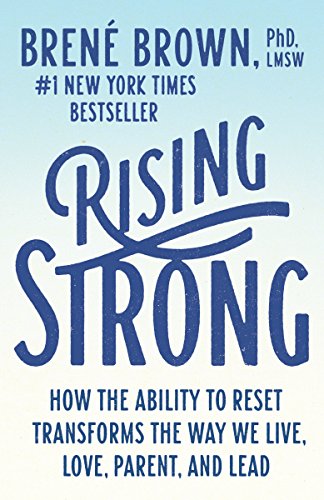
⚡️ What is Rising Strong about?
Rising Strong is Brené Brown’s groundbreaking exploration of how we can reclaim our lives from failure, disappointment, and heartbreak. Through extensive research, Brown reveals that our ability to rise strong after falling depends entirely on how we engage with our emotions and story. The book presents a powerful three-part process—The Reckoning, The Rumble, and The Revolution—that helps transform difficult experiences into profound wisdom and courage. Brown teaches us that vulnerability isn’t weakness but our greatest measure of courage, and that by embracing our struggles, we can live more wholehearted lives.
🚀 The Book in 3 Sentences
- Rising Strong teaches us that the process of getting back up after failure requires reckoning with emotions, rumbling with our stories, and revolutionizing how we live.
- Brown reveals that vulnerability is not weakness but the birthplace of innovation, creativity, and authentic connection.
- The book provides a research-backed roadmap for transforming difficult emotions into wisdom and wholehearted living.
🎨 Impressions
Rising Strong struck me as both profoundly insightful and immediately practical. Brown’s signature blend of research and storytelling makes complex psychological concepts accessible and applicable. Her vulnerability in sharing personal struggles creates a powerful connection that makes the Rising Strong process feel achievable rather than theoretical.
📖 Who Should Read Rising Strong?
This book is essential for anyone who has ever failed, felt disappointed, or struggled to get back up after a fall. If you’re interested in developing emotional resilience and learning how to transform difficult experiences into wisdom, Rising Strong offers invaluable guidance for both personal and professional growth.
☘️ How the Book Changed Me
How my life / behaviour / thoughts / ideas have changed as a result of reading the book.
- I now recognize emotional reckoning as the crucial first step rather than trying to suppress difficult feelings.
- The Rising Strong process has transformed how I approach conflicts in relationships, leading to deeper connections.
- I’ve learned to view failure not as an endpoint but as essential data for growth and revolution.
✍️ My Top 3 Quotes
- “Vulnerability is not winning or losing; it’s having the courage to show up and be seen when we have no control over the outcome.”
- “The irony is that we attempt to disown our difficult stories to appear more whole or more acceptable, but our wholeness—even our wholeheartedness—actually depends on the integration of all our experiences, including the falls.”
- “Choosing to be curious about our discomfort is the first step in transforming difficult emotions into wisdom.”
📒 Summary + Notes
The Rising Strong process begins with understanding that our stories have power over us until we claim power over them. Brown teaches that emotional resilience isn’t about avoiding falls but about how we rise after them. Through extensive research, she discovered that those who rise strong engage in a specific three-step process that transforms struggle into strength.
Introduction: Rumbling
Brown introduces the concept of “rumbling” with our stories—the process of getting honest about the narratives we create when faced with struggle. She explains that these stories often become our truth unless we challenge them. The introduction sets up the three-phase process for rising strong and emphasizes that this work is brave, necessary, and transformative.
- Rumbling is the practice of owning our stories rather than letting them own us.
- Brown shares how her own research journey required her to rumble with vulnerability and shame.
- The process begins with recognition that our emotions hold important information about our values and boundaries.
Chapter 1: The Physics of Vulnerability
Brown explores the paradox that vulnerability is both our greatest risk and our greatest strength. She introduces the concept that if we are brave enough often enough, we will fall, and that this inevitability requires us to develop resilience. The chapter examines how our relationship with vulnerability determines how we handle failure and disappointment.
- Vulnerability is the birthplace of innovation, creativity, and change.
- Our attempts to armor ourselves against vulnerability actually diminish our resilience.
- The physics of vulnerability: courage requires risk, and risk sometimes leads to falling.
- Embracing vulnerability as essential to Rising Strong rather than something to avoid.
- Brown shares research showing that vulnerability is correlated with greater well-being.
Chapter 2: Civilization Stops at the Waterline
This chapter examines how we compartmentalize our emotions and the consequences of this fragmentation. Brown introduces the concept of “emotional segregation” and explains how it prevents us from processing experiences fully. She argues that true wholeness requires integrating all parts of ourselves, including the uncomfortable ones.
- We often keep our emotions contained in specific areas of our lives, creating emotional segregation.
- This compartmentalization prevents us from learning the full lessons of our experiences.
- Brown shares a personal story about how this played out in her family dynamics.
- True Rising Strong requires integrating all parts of our story, not just the comfortable ones.
- The chapter challenges readers to examine where they might be practicing emotional segregation.
Chapter 3: Owning Our Stories
Brown explains that we either own our stories or they own us. This chapter explores the power of narrative and how the stories we tell ourselves shape our reality. She introduces the concept of “offloading hurt”—how we often discharge pain onto others rather than processing it ourselves.
- The stories we make up in our heads become our reality unless we challenge them. li>Offloading hurt includes behaviors like blame, rage, and shutting down.
- Owning our story requires courage and self-compassion.
- Brown shares research on how narrative work transforms lives.
- The chapter provides practical tools for beginning to own your story.
Chapter 4: The Reckoning
The first phase of the Rising Strong process, The Reckoning, involves recognizing emotion and getting curious about our feelings and how they connect to our thoughts and behaviors. Brown emphasizes that we cannot rise strong without first acknowledging what we’re feeling.
- The Reckoning begins with acknowledging our emotional experience.
- Curiosity about our emotions is key rather than judgment.
- Brown introduces the concept of “chandeliering”—when we suppress emotions until we explode.
- The chapter provides tools for emotional recognition and curiosity.
- Personal stories illustrate how reckoning with emotions transforms relationships.
Chapter 5: The Rumble
The Rumble is the heart of the Rising Strong process where we get honest about the stories we’re making up. Brown teaches how to challenge our assumptions and look for the truth in our narratives. This chapter provides specific rumbling topics and questions to guide this critical work.
- The Rumble involves owning our story and rumbling with the truth.
- Key rumbling topics include boundaries, integrity, shame, and heartbreak.
- Brown provides specific questions to guide the rumbling process.
- The chapter emphasizes that most conflicts are about the stories we tell, not the facts.
- Personal examples demonstrate how rumbling transforms difficult situations.
Chapter 6: Sewer Rats and Scofflaws
This chapter explores how we dehumanize others to justify our actions and protect ourselves. Brown examines the concept of “comparative suffering” and how it diminishes our capacity for empathy. She also addresses the importance of accountability in the rumbling process.
- We often dehumanize others to protect our own stories and avoid accountability.
- Comparative suffering—ranking our pain against others—undermines empathy.
- Brown shares research on dehumanization and its consequences.
- The chapter emphasizes that everyone is doing the best they can with the tools they have.
- Personal stories illustrate how moving toward compassion transforms conflict.
Chapter 7: The Brave and Brokenhearted
Brown explores the relationship between courage and heartbreak, arguing that we cannot be brave without risking heartbreak. This chapter examines how we protect ourselves from disappointment and how that protection prevents us from living fully. She introduces the concept of “foreboding joy.”
- Bravery requires vulnerability to heartbreak and disappointment.
- Foreboding joy is the paradox of being afraid to feel joy in anticipation of loss.
- Brown shares research on how joy requires vulnerability.
- The chapter provides practices for leaning into joy despite its risks.
- Personal stories illustrate how embracing heartbreak leads to greater courage.
Chapter 8: Easy Mark
This chapter examines how we often become the “easy mark” in our own stories—how we take on more than our share of blame or responsibility. Brown explores the relationship between shame and self-worth, and how rumbling with these stories transforms our relationship with ourselves.
- We often take on disproportionate blame in our stories, becoming the “easy mark.”
- This pattern is frequently rooted in shame and unworthiness.
- Brown shares research on shame resilience and self-compassion.
- The chapter provides tools for rumbling with shame and self-worth.
- Personal examples demonstrate how reclaiming our worth transforms our stories.
Chapter 9: Composting Failure
Brown introduces the powerful metaphor of composting failure—how we can transform our mistakes and setbacks into fertile ground for growth. This chapter provides a framework for processing failure and extracting wisdom from our falls.
- Failure can be “composted” into valuable learning and growth.
- The chapter provides specific steps for processing failure constructively.
- Brown shares research on growth mindset and resilience.
- Personal stories illustrate how composting failure leads to innovation.
- The chapter emphasizes that failing is an event, not an identity.
Chapter 10: You Got to Dance with Them That Brung You
This chapter explores the importance of staying true to our values and the people who matter most, especially during difficult times. Brown examines how we can maintain our integrity and relationships even when rising strong requires significant change.
- Staying connected to our values and supporters is crucial during transformation.
- The chapter emphasizes the importance of integrity in the Rising Strong process.
- Brown shares research on how values guide behavior during change.
- Personal stories illustrate how maintaining connections supports growth.
- The chapter provides practices for clarifying and living by your values.
Chapter 11: The Revolution
The final phase of the Rising Strong process, The Revolution, is about integrating what we’ve learned into how we live, love, lead, parent, and participate. Brown explains that this integration transforms not just our own lives but also our families, organizations, and communities.
- The Revolution is where we integrate our learnings into daily life. li>This phase transforms how we show up in all areas of life.
- Brown shares research on how personal change impacts communities.
- The chapter provides practices for living the Rising Strong process.
- Personal examples illustrate revolutionary transformations in relationships and work.
Key Takeaways
The Rising Strong process offers profound insights into transforming struggle into strength. The most valuable lessons include the power of vulnerability, the importance of emotional reckoning, and the revolutionary impact of owning our stories.
- Vulnerability is not weakness but the path to courage and connection.
- The Reckoning—recognizing and getting curious about emotions—is essential to resilience.
- Rumbling with our stories transforms how we live, love, and lead.
- Composting failure turns setbacks into growth opportunities.
- The Revolution integrates these learnings into lasting personal and cultural change.
Conclusion
Rising Strong provides more than just inspiration—it offers a research-backed roadmap for transforming struggle into strength. By embracing the three-phase process of Reckoning, Rumbling, and Revolution, we can develop the resilience needed to live wholeheartedly. This book isn’t just about getting back up; it’s about rising stronger than before, integrating our experiences into wisdom that transforms every aspect of our lives. Whether you’re facing personal challenges or professional setbacks, the Rising Strong process offers invaluable tools for transformation.
More From Brené Brown →
Discover more from AI Book Summary
Subscribe to get the latest posts sent to your email.