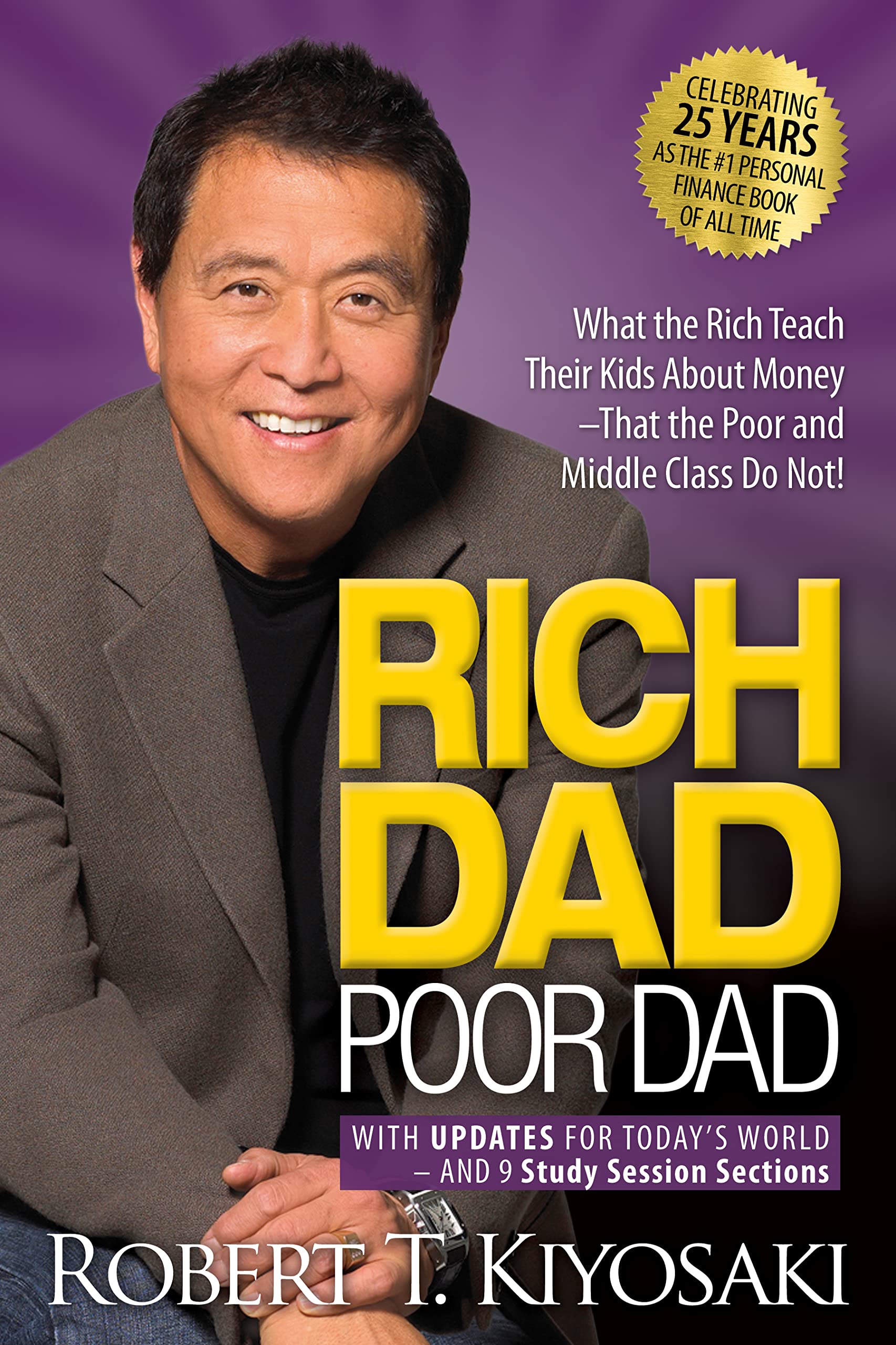
⚡️ What is Rich Dad Poor Dad About?
Why does a guy with a PhD end up struggling to pay the mortgage while an eighth-grade dropout builds a financial empire? That’s the question that hit me hard when I first picked up this book. More summaries by Robert Kiyosaki; Sharon Lechter show a consistent theme: our education system is designed to create employees, not owners. The central argument is that the rich don’t work for money; they have their money work for them through assets like real estate and businesses.
It’s essentially a tale of two philosophies. Robert’s “Poor Dad” (his biological father) was highly educated but always broke, viewing a job as security. His “Rich Dad” (his friend’s father) viewed a job as a temporary tool to learn skills. If you’ve ever felt like you’re running in circles despite getting a raise, you’re likely caught in what the authors call the “Rat Race.” It’s one of the most polarizing Finance book summaries you’ll ever read because it challenges everything your parents told you about buying a home and saving for retirement.
🚀 The Book in 3 Sentences
- Wealth isn’t about how much you earn, but how much you keep and how hard that money works for you in your asset column.
- The single most important distinction in finance is knowing that an asset puts money in your pocket, while a liability takes money out.
- Financial freedom requires a high “Financial IQ,” which consists of accounting, investing, understanding markets, and mastering the law.
🎨 Impressions
I’ll be honest: parts of this book made me want to throw it across the room, while others made me want to go out and buy a duplex immediately. It’s written in a very simple, almost repetitive style, but that’s exactly why it sticks. Robert doesn’t use complex jargon; he uses diagrams that a nine-year-old could understand. I’ve read a lot of finance books, but the way he defines a house as a liability is the moment I really stopped and re-evaluated my entire financial plan. It’s a punch to the gut for anyone who thinks their primary residence is an investment.
The tone is definitely “tough love.” There isn’t much room for nuance here. He’s very dismissive of the traditional path, which can feel a bit arrogant if you’re proud of your degrees. However, his enthusiasm is infectious. I found myself dog-earing the pages on “The Power of Corporations” because it’s something they never even breathed a word about in my college economics classes. It’s a book that forces you to choose: do you want to be safe, or do you want to be rich?
📖 Who Should Read Rich Dad Poor Dad?
If you’re tired of the 9-to-5 grind and feel like your paycheck disappears before you can enjoy it, this is for you. It’s perfect for young people who haven’t yet committed to massive debt. If you’re looking for a technical manual on stock picking or complex tax codes, you’ll be disappointed. This is a mindset book. Skip it if you’re deeply risk-averse or if you find the idea of entrepreneurship stressful rather than exciting.
☘️ How This Book Changed My Thinking
Before reading this, I thought “wealthy” meant having a high salary. Now, I see a high salary as a trap if it isn’t being converted into income-producing assets.
- I stopped viewing my car and gadgets as “things I own” and started seeing them as drains on my future cash flow.
- I shifted my focus from “how do I get a raise?” to “what asset can I buy that pays for my lifestyle?”
- I realized that being a “specialist” in one field is actually a weakness; I started trying to learn the basics of sales, marketing, and accounting.
✍️ 3 Quotes That Stuck With Me
- “The poor and the middle class work for money. The rich have money work for them.” — This is the foundational shift that separates the two worlds.
- “An asset puts money in my pocket. A liability takes money out of my pocket.” — It’s so simple it’s almost insulting, yet most people get it wrong.
- “In the real world, the smartest people are people who make mistakes and learn. In school, the smartest people don’t make mistakes.” — This really hit home regarding why many A-students work for C-students.
📒 Summary + Notes
The book’s narrative follows Robert’s childhood lessons in Hawaii. The core of the book is the idea that the “Poor Dad” followed the rules of the 20th century—get a degree, get a job, and the company or government will take care of you. The “Rich Dad” realized those rules were dead. He taught Robert that financial ignorance is the root of most struggle. Most people spend their lives in a loop of fear (not having money) and greed (wanting the things money can buy), which leads them to work harder and harder for a paycheck that gets taxed before they even see it.
Robert argues that the rich stay ahead because they understand how to use legal structures, specifically corporations, to protect their wealth. While employees earn, get taxed, and live on what’s left, corporations earn, spend everything they can to grow the business, and are only taxed on what remains. It’s a completely different game. By the end of the book, the author wants you to stop being an employee and start being an investor and business owner who understands the four pillars of Financial IQ: Accounting, Investing, Understanding Markets, and The Law.
1: The Rich Don’t Work For Money
Have you ever noticed that getting a raise rarely solves your money problems? Robert tells a story about working for his Rich Dad for 10 cents an hour and getting angry about the low pay. The lesson was that if he worked for a paycheck, his brain would shut off. But if he worked for free, he would be forced to find ways to “make” money. This is where he and his friend Mike started a comic book library. They took old comics that were being thrown away and charged kids a fee to read them. They weren’t “working” at the library; they hired Mike’s sister to do that. They created a system that made money while they played.
2: Why Teach Financial Literacy?
It’s a shocking claim, but Robert insists your house is not an asset. Why? Because it takes money out of your pocket every month in the form of taxes, insurance, and maintenance. He defines assets and liabilities based on cash flow, not net worth.
- Assets: Stocks, bonds, notes (IOUs), intellectual property, and income-generating real estate.
- Liabilities: Mortgages, car loans, credit card debt, and school loans.
The middle class buys liabilities that they think are assets. They buy a bigger house because they think it’s an investment, but that house just forces them to work harder to pay the higher bills. The rich focus on building the asset column first, and then use the income from those assets to buy their luxuries.
3: Mind Your Own Business
Think about the difference between your profession and your business for a second. If you’re a banker, that’s your profession. But what is your business? Your business should be the asset column you’re building on the side. Ray Kroc, the founder of McDonald’s, famously told a group of MBA students that he wasn’t in the hamburger business; he was in the real estate business. He knew the burgers paid for the land. Robert suggests you keep your day job, but start “minding your own business” by acquiring assets that don’t require your physical presence to operate.
4: The History Of Taxes And The Power of Corporations
I was never taught that income tax was originally intended only for the rich. Over time, it trickled down to the middle class. But the rich found a loophole: the corporation. A corporation isn’t necessarily a big building with a logo; it’s just a legal folder that limits your liability and offers tax advantages.
- Business owners with corporations: Earn -> Spend -> Pay Taxes.
- Employees: Earn -> Pay Taxes -> Spend.
The difference in those two sequences is the difference between wealth and struggle. If you’re an employee, the government takes their cut before you even see the money. If you’re a business owner, you can deduct expenses (like your car, travel, or meals) before the government touches a dime.
5: The Rich Invent Money
Imagine being in a room where everyone is complaining about the economy, but you see an opportunity to flip a property or start a digital service because you’ve trained your brain to see what others miss. Robert argues that money isn’t real—it’s just an agreement. The people who make the most money are the ones who “invent” it by putting together deals. This requires bold action. I’ve seen so many people with great ideas who never act because they’re afraid of making a mistake. In the world of finance, your “financial genius” is the ability to solve problems and find the “gold” that everyone else is stepping over.
6: Work To Learn, Don’t Work For Money
Would you take a pay cut to learn a skill that could make you millions later? That’s what Robert did when he joined the Marines to learn leadership and then Xerox to learn how to sell. He was terrified of sales, but he knew that without that skill, he’d never be a successful entrepreneur. He advises young people to look at a job for what they will *learn* rather than what they will *earn*. You want to be a “polymath” in business—knowing a little about a lot—rather than a highly specialized expert who is dependent on one industry.
Overcoming Obstacles
Even if you have the knowledge, five things can still hold you back: fear, cynicism, laziness, bad habits, and arrogance. The most interesting one to me was laziness. Robert says that busy people are often the laziest because they stay busy to avoid the things they *should* be doing—like managing their money. He also attacks “cynicism,” which he defines as the little voice in your head (and your friends’ heads) saying “What if the economy crashes?” or “That’s a scam.” Winners focus, while losers find excuses to play it safe.
Getting Started
“There is gold everywhere, most people are not trained to see it.” To start seeing it, you need a reason bigger than yourself. Robert lists ten steps, but the standout for me was “Pay Yourself First.” Most people pay their bills, and if there’s anything left, they save it. Robert does the opposite. He invests his money first, even if he’s short on bills. The pressure of the bill collectors then forces his brain to find creative ways to generate more income. It’s a high-stress tactic, but it forces growth.
⚖️ A Critical Perspective
While the mindset shift in this book is undeniable, some of the specific advice is dated and potentially dangerous. Kiyosaki advocates for high leverage in real estate, which caused many people to lose everything in the 2008 crash. Furthermore, his “Rich Dad” might be a composite character rather than a real person, which makes some of the anecdotes feel like convenient parables rather than actual history. He also breezes over the fact that starting a business or buying property requires at least *some* initial capital or a high level of credit, which he doesn’t fully explain how to get if you’re starting at zero.
🔄 How It Compares
Compare this to The Total Money Makeover by Dave Ramsey. While Ramsey focuses on getting out of debt and playing it extremely safe, Kiyosaki views debt as a tool (if it’s “good debt” used for assets). Ramsey is for the person who wants to sleep soundly with no risk; Kiyosaki is for the person who wants to build significant wealth through calculated risks.
🔑 Key Takeaways
The lessons in this book are about moving from a reactive mindset to a proactive one.
- Your primary residence is a liability because it costs you money every month; an asset must pay you.
- The middle class works for the government for 4-5 months of the year through income tax; corporations allow you to pay expenses before taxes.
- The most valuable asset is your mind; investing in your own education and “Financial IQ” provides the highest return.
- Learn to sell. It is the number one skill for any entrepreneur, regardless of the industry.
💬 Frequently Asked Questions
What is the main argument of Rich Dad Poor Dad?
The main argument is that financial independence comes from owning assets that generate cash flow rather than relying on a salary from a job. Kiyosaki argues that the poor work for money, while the rich make money work for them by acquiring businesses, real estate, and paper assets.
Is Rich Dad Poor Dad actually a true story?
While written as an autobiography, many critics and researchers believe “Rich Dad” is a fictionalized composite character used to deliver lessons. Kiyosaki has been vague about the identity of the person, but the principles of the book remain popular regardless of the story’s literal accuracy.
Why does Kiyosaki say a house is not an asset?
Kiyosaki defines an asset as something that puts money in your pocket. Since a primary residence requires monthly payments for mortgage, taxes, and maintenance—without providing income—it functions as a liability. It only becomes an asset if it generates rent or is sold for a profit.
What are the four pillars of financial intelligence?
According to the book, Financial IQ consists of Accounting (reading numbers), Investing (the science of money making money), Understanding Markets (supply and demand), and The Law (using corporations for tax advantages and protection). Mastering these allows you to grow wealth much faster than the average person.
Is Rich Dad Poor Dad still relevant in 2025?
Yes, but with caveats. The fundamental shift from earned income to passive income is more relevant than ever in the gig economy. However, the specific real estate and tax advice should be verified with modern professionals, as laws and market conditions have changed significantly since 1997.
Conclusion
Rich Dad Poor Dad isn’t just a book about money; it’s a book about perspective. It asks you to look at the world and decide if you want to be the person who works for the system or the person who owns the system. I didn’t agree with every single word Robert wrote, but I can’t deny that he changed the way I look at a paycheck forever. The distinction between assets and liabilities is a lesson I’ll carry with me for life.
At the end of the day, your greatest asset is your mind. If you train it to see opportunities where others see obstacles, you’re already ahead of the game. Take the lessons on cash flow, ignore the more reckless real estate advice, and start building your asset column today. This is a must-read for anyone serious about their future in Finance.
More From Robert Kiyosaki; Sharon Lechter →
Discover more from AI Book Summary
Subscribe to get the latest posts sent to your email.