⚡️ What is Radical Candor About?
Management usually feels like a choice between being a heartless robot or a spineless pushover. I’ve spent years in offices where feedback was either a blunt instrument used to bruise egos or a sugary coating of lies that helped no one. Radical Candor by Kim Scott argues that there’s a better way, a middle ground where you care intensely about the person in front of you while having the guts to tell them exactly where they are screwing up. It’s about finding the sweet spot between being a monster and being a martyr.
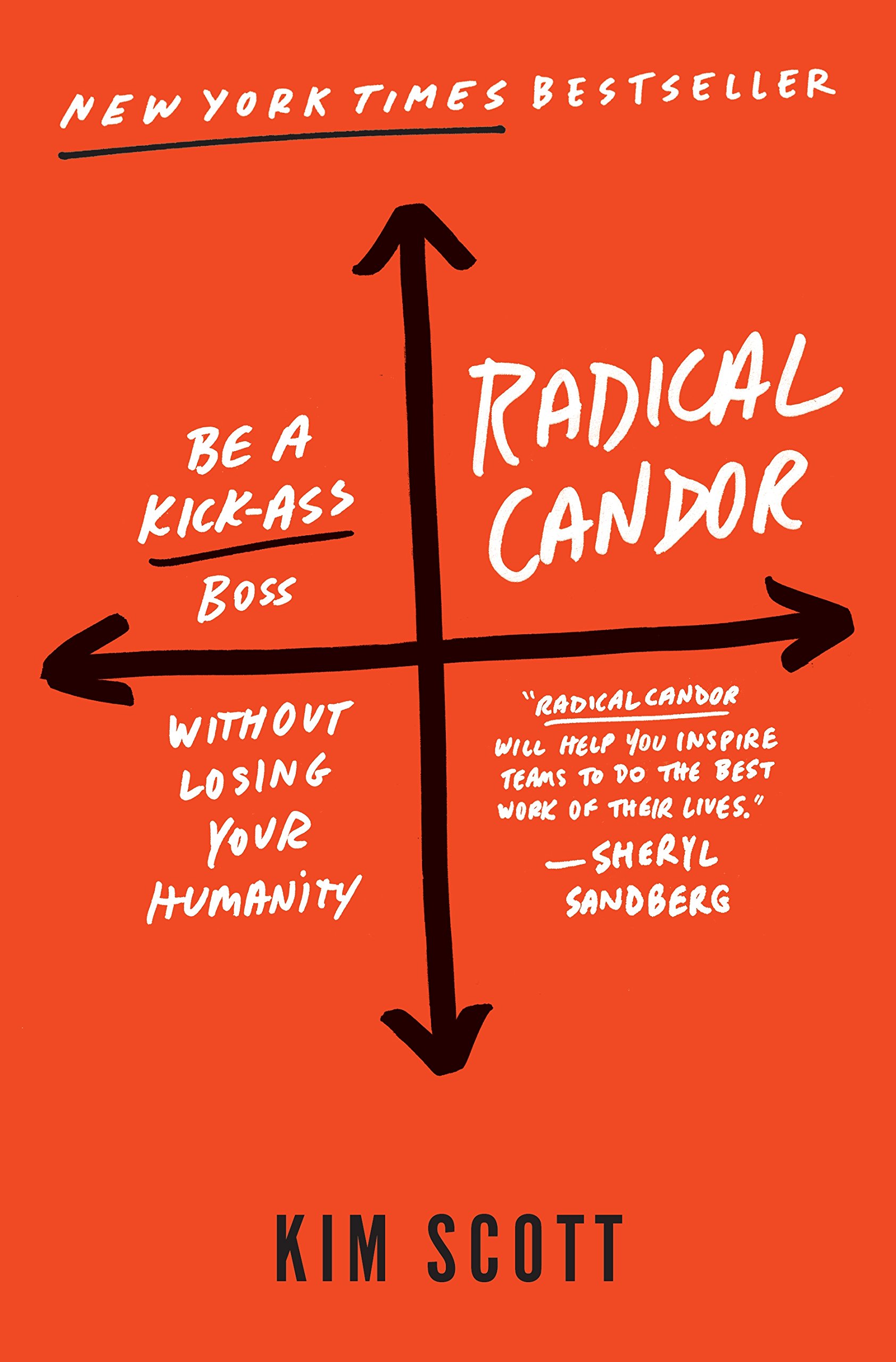
Scott, who cut her teeth at Google and Apple, builds her argument around a simple 2×2 grid. On one axis, you have “Care Personally.” On the other, “Challenge Directly.” If you aren’t doing both, you’re failing as a leader. You’ll find more management book summaries on our site, but few hit the emotional reality of leadership as hard as this one. More summaries by Kim Scott are also available for those looking to build better workplace cultures.
🚀 The Book in 3 Sentences
- Effective leadership requires the ability to provide clear, direct criticism while simultaneously showing deep, personal care for the individual’s growth.
- The biggest mistake managers make is “Ruinous Empathy,” where they avoid saying the hard truth because they don’t want to hurt feelings, ultimately hurting the person’s career.
- Radical Candor isn’t an invitation to be a jerk; it’s a moral obligation to help your team succeed by being relentlessly clear about their performance.
🎨 Impressions
I’ll be honest: I went into this thinking it was another “Silicon Valley” manual for being an efficient machine. I was wrong. It’s actually quite moving in parts. There’s a moment early on where Scott describes a direct report named Bob. He was liked by everyone but did terrible work. Because she didn’t want to hurt his feelings, she never criticized him. Eventually, she had to fire him. That realization—that her kindness was actually a form of cruelty—hit me like a ton of bricks. It made me realize how many times I’ve stayed silent just to be “nice.”
The writing is punchy and lacks the usual corporate fluff. It’s clear Scott has lived through these scenarios. She isn’t theorizing from an ivory tower; she’s describing what happens when a meeting goes south or when a star employee suddenly quits. I did find the sections on big-company meeting structures a bit tedious if you’re a solo founder or in a tiny startup, but the core philosophy remains rock solid regardless of team size. It makes you realize that most “office politics” are just the result of people being afraid to tell the truth to each other’s faces.
📖 Who Should Read Radical Candor?
If you’re a new manager who is terrified of being disliked, you need this book yesterday. It’ll give you the permission you need to be honest. It’s also great for executives who feel like they’re living in an echo chamber where nobody tells them the truth. However, if you’re someone who already prides themselves on being “brutally honest,” you should read this specifically to learn the “Care Personally” part—because you’re likely just being an Obnoxious Aggressor.
☘️ How This Book Changed My Thinking
Before reading this, I thought being a good boss meant keeping the peace and making sure everyone was happy. Now, I see that as a recipe for mediocrity.
- I stopped viewing criticism as an attack and started seeing it as a gift. If I don’t tell you there’s spinach in your teeth, I’m not being nice; I’m being selfish.
- I realized that “Manipulative Insincerity”—staying silent to protect my own reputation—is the most cowardly way to lead.
- I’ve started asking for feedback before I give it. It builds the “feedback muscle” and shows I’m not above the rules.
✍️ 3 Quotes That Stuck With Me
- “Caring personally is about doing the work, and the work is showing up for your team as a human being.” — It reminds us that management isn’t a series of tasks, but a relationship.
- “If you can’t offer a radical candor, the second-best thing you can do is be a jerk.” — This is counter-intuitive, but being an obnoxious aggressor is at least clear, whereas being ruinously empathetic leaves people confused and failing.
- “Praise is a public service. Criticism is a private service.” — A simple, tactical rule that prevents unnecessary embarrassment while maximizing the motivational impact of good work.
📒 Summary + Notes
The central thesis of the book is that your ability to lead depends entirely on the quality of your relationships. Scott argues that these relationships aren’t built on happy hours or small talk, but on the ability to give and receive feedback that actually helps people grow. The book moves from the internal mindset of a leader to the tactical reality of running a team. It’s a journey from understanding your own fears of conflict to building a system where everyone on the team feels safe enough to tell the truth.
By the end, Scott wants you to believe that “niceness” is often a barrier to excellence. She builds a case for a culture where praise is specific and sincere, and criticism is kind but clear. She doesn’t just want you to be a better boss; she wants you to create a environment where the best ideas win because everyone is empowered to challenge the status quo without fear of retribution. It’s a high bar, but she provides the literal scripts and meeting agendas to make it happen.
1: Care Personally: The Foundation of Feedback
Why do we treat our colleagues like they are replaceable cogs rather than actual humans with lives outside the office? Scott starts here because without a foundation of trust, any criticism you give will feel like a personal attack. Caring personally isn’t about professional intimacy or knowing everyone’s birthday; it’s about acknowledging that we are all bringing our whole selves to work. Are you checking in on your team’s well-being, or just their output?
She emphasizes that this doesn’t mean you have to be everyone’s best friend. In fact, professional distance is often healthy. But you must care enough to know what motivates them. Is it money? Growth? Stability? If you don’t know the answer, you can’t lead them effectively. Have you ever wondered why some people just don’t seem to respond to your coaching? It’s likely because you haven’t bothered to learn what they actually value.
2: Challenge Directly: The Sheryl Sandberg Story
There’s a famous moment early in the book where Sheryl Sandberg tells Kim Scott that her habit of saying “um” every three words makes her sound stupid. Most of us would be offended. Scott was grateful. Why? Because Sandberg had already proven she cared. This is the essence of challenging directly. It’s the willingness to say the thing that is awkward, uncomfortable, and true because the alternative—letting someone fail—is worse.
The key here is clarity. Scott notes that people would rather hear the hard truth than a confusing, “softened” version of it. When you soften the blow, you often obscure the message. The person leaves the room thinking they are doing fine, while you leave the room frustrated that they aren’t changing. Are you being clear, or are you just being “nice” to protect your own feelings?
3: The Four Quadrants: Navigating the Grid
What happens when you care but don’t challenge? You fall into Ruinous Empathy. This is the most common mistake for “nice” bosses. You see a problem, you don’t mention it, and the employee continues to underperform until it’s too late. It’s the “Bob” story mentioned earlier. It feels kind in the moment, but it’s career-ending for the employee in the long run.
The other quadrants are just as dangerous:
- Obnoxious Aggression: You challenge but don’t care. You’re the “jerk” boss. People might do what you say, but they’ll quit as soon as they can.
- Manipulative Insincerity: You don’t care and you don’t challenge. This is the world of backstabbing, passive-aggression, and political maneuvering. It’s the most toxic quadrant.
- Radical Candor: The goal. You care enough to tell the truth.
4: Guidance: How to Give and Get Praise & Criticism
Does your praise feel like a generic “good job”? If so, it’s useless. Scott argues that praise should be as specific and timely as criticism. Instead of saying “Great presentation,” say “I loved how you handled that difficult question about the budget; it showed you really knew your numbers.” This reinforces the exact behavior you want to see again. Praise is a way to tell people what to do more of.
When it comes to receiving feedback, Scott suggests a “Go-to Question.” Something like, “What could I do or stop doing that would make it easier to work with me?” The trick is to embrace the discomfort. When they give you an answer, don’t defend yourself. Just listen, clarify, and then—this is the most important part—actually change something. Nothing kills a culture of candor faster than a boss who asks for feedback and then ignores it.
5: Team: Rockstars vs. Superstars
Is everyone on your team expected to be on a steep growth trajectory? That might be a mistake. Scott introduces the distinction between “Rockstars” and “Superstars.” Superstars are your high-growth folks who want to change the world. Rockstars are the people who are great at their jobs and want to stay in them. They are the bedrock of your team. If you try to force a Rockstar to become a manager, you’ll lose a great individual contributor and gain a mediocre leader.
Managing these different archetypes requires different styles of candor. You need to know who wants to climb the ladder and who wants to master their craft. A healthy team needs both. Are you accidentally punishing your most stable performers by not giving them the recognition they deserve just because they don’t want a promotion?
6: Results: Driving Things Forward Collaboratively
How do you get things done without becoming a micromanager? Scott outlines a Get Stuff Done (GSD) wheel: Listen, Clarify, Debate, Decide, Persuade, Execute, and Learn. The biggest bottleneck is often the “Decide” phase. Managers often think they need to be the decider, but the best leaders are actually the ones who make sure the right *process* for deciding is in place. They push the decision-making down to the people closest to the facts.
She also emphasizes the importance of “Debate.” If everyone is agreeing in a meeting, you probably aren’t having a real conversation. You need to create an obligation to dissent. Have you ever sat through a meeting where everyone nodded along to a bad idea, only to complain about it in the hallway afterward? That’s a failure of the GSD wheel.
7: Relationships: Work-Life Integration
Forget work-life balance; it’s an impossible myth. Scott argues for work-life integration. This means bringing your whole human self to work, including your emotions. If you’re having a bad day, tell your team. Not so they can fix it, but so they don’t think your bad mood is about their performance. It’s about being vulnerable enough to build real connections.
She also stresses physical health as a management tool. If you’re exhausted, you’re more likely to snap at people (Obnoxious Aggression) or give up (Manipulative Insincerity). Taking care of yourself isn’t a luxury; it’s a prerequisite for being a decent boss. Do you prioritize your sleep and health, or are you trying to lead while running on empty?
8: Getting Started: The First Steps to Candor
How do you actually start changing a culture that has been silent for years? You don’t start by giving criticism; you start by asking for it. Scott suggests spending a few weeks just soliciting feedback from your team. Prove you can take it before you start dishing it out. Once you’ve shown you won’t blow up when someone tells you the truth, you can slowly start introducing more candor into your own guidance.
The final step is encouraging your team to be candid with each other. This is the hardest part. It requires you to stop being the “referee” in every conflict. Instead of letting people complain to you about each other, force them to talk to each other directly. It’s uncomfortable, but it’s the only way to scale a healthy culture. Are you ready to stop being the middleman in your team’s drama?
⚖️ A Critical Perspective
My biggest concern with this book is how easily it can be used as a shield for people who are just naturally mean. Scott warns against “Front-Stabbing,” but in a high-pressure corporate environment, the nuance between “Challenging Directly” and “Obnoxious Aggression” is incredibly thin. If the culture doesn’t already have high psychological safety, Radical Candor can quickly devolve into a permission slip for bullying. Furthermore, the book assumes a level of emotional intelligence that many managers simply haven’t developed, making the “Care Personally” part feel forced or performative for some.
🔄 How It Compares
Compared to Ray Dalio’s Principles, which advocates for “Radical Transparency,” Scott’s approach is much more human-centric. Dalio treats the organization like a machine where everyone is a data point; Scott treats it like a community where everyone is a person. While Dalio’s methods can feel cold and algorithmic, Scott focuses on the emotional labor required to actually make feedback stick.
🔑 Key Takeaways
Leadership isn’t about power; it’s about the following three habits.
- Ask for criticism first: You must prove you can handle the truth before you can expect others to hear it from you.
- Focus on the “Why” of praise: Generic praise is just noise. Be specific so people know exactly what excellence looks like.
- Don’t let problems fester: Ruinous Empathy is the silent killer of teams. Say the hard thing now so you don’t have to fire someone later.
- Eliminate backchanneling: Never let a team member complain about someone else to you without them having spoken to that person first.
💬 Frequently Asked Questions
What is the core idea of Radical Candor?
The core idea is that to be a successful leader, you must “Care Personally” and “Challenge Directly” at the same time. This balance allows for honest, productive feedback that helps individuals grow without damaging the relationship. It avoids the pitfalls of being overly harsh or dangerously nice.
How is Radical Candor different from being a jerk?
Being a jerk is “Obnoxious Aggression”—challenging someone without caring about them personally. Radical Candor requires you to show you care about the person’s success and well-being first. If they don’t feel you care, your direct challenge will be perceived as an attack rather than helpful guidance.
What is Ruinous Empathy in management?
Ruinous Empathy is when a manager avoids giving necessary, direct feedback because they don’t want to hurt the employee’s feelings. This is “nice” in the short term but damaging in the long term, as the employee never learns how to improve and may eventually lose their job.
Can Radical Candor work in a remote work environment?
Yes, but it is harder because you lose non-verbal cues. In remote settings, you must be even more intentional about “Caring Personally” through video calls and regular check-ins to ensure that direct feedback over text or email isn’t misinterpreted as being mean or aggressive.
How do you give Radical Candor to your boss?
Start by asking permission to give feedback and frame it as a way to help the team succeed. Be as specific as possible and focus on the impact their behavior has on your work. It’s about helping them be a better leader, which shows you care personally about them.
Conclusion
The most important thing to remember from this book is that being a “nice” boss is not the same as being a good boss. In fact, if your niceness prevents you from telling people the truth, you are actively hindering their growth. Real kindness in leadership is the courage to be clear. It’s about building a relationship where the truth can be spoken and heard without fear.
By applying the principles of Radical Candor, you aren’t just improving your team’s performance; you’re improving the quality of their professional lives. People want to know where they stand. They want to be challenged. And most of all, they want to know that the person they are working for actually cares about them as a human being. It’s not an easy path, but it’s the only one that leads to a truly “kick-ass” team.
More From Kim Scott →
Discover more from AI Book Summary
Subscribe to get the latest posts sent to your email.