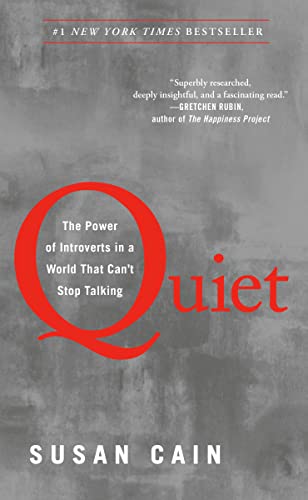
⚡️ What is Quiet About?
Have you ever felt like you’re failing at life simply because you’d rather spend Saturday night with a book than at a crowded bar? I’ve spent years thinking my preference for deep one-on-one conversations over small talk was a personality flaw. Susan Cain basically walked into my brain with this book and flipped the lights on. She argues that we live in a society designed for “The Extrovert Ideal”—where being alpha, gregarious, and loud is the only way to be successful. But what if we’re losing out on the world’s best ideas because we won’t let the quiet people speak? This is a landmark entry in our collection of psychology book summaries, and it’s fundamentally about reclaiming the power of the inner world.
Cain isn’t just giving introverts a pat on the back; she’s building a rigorous case using neuroscience and history. She tracks how we shifted from a “Culture of Character” (where we valued what you did in private) to a “Culture of Personality” (where we value the impression you make in public). It’s a fascinatng look at why our offices, schools, and even our churches are built for people who thrive on stimulation, and why that’s a massive strategic error for everyone involved. Do we really believe the loudest person in the room is always the smartest? I think we know the answer, yet we keep acting like they are.
🚀 The Book in 3 Sentences
- The “Extrovert Ideal” is a cultural construct that pressures introverts to act against their biological nature, leading to burnout and a loss of collective creativity.
- Introversion and extroversion are rooted in neurobiology—specifically how our brains respond to stimulation—meaning a “quiet” temperament is an unchangeable trait that offers unique advantages like deep focus and risk-aversion.
- True success comes from creating “restorative niches” where introverts can be themselves, allowing them to lead and innovate through observation rather than performance.
🎨 Impressions
Honestly, I didn’t expect to feel so validated by a book. It’s rare to read something that makes you say, “Oh, so that’s why I’m like this.” Cain’s writing is gentle but incredibly firm; she isn’t attacking extroverts, but she is definitely putting them on notice. I’ve read plenty of self-help that tells you to “fake it ’til you make it,” but this felt like the first book that told me I didn’t have to fake a damn thing. The section on “High-Reactive” infants was the moment I dog-eared the page so hard I nearly ripped it. It explains so much about why some of us feel “jangled” by loud music or bright lights while others seem to thrive on it.
One thing that frustrated me slightly was the occasional tendency to paint introverts as almost saintly in their thoughtfulness. We can be just as grumpy and narrow-minded as anyone else! But I’ll forgive the bias because the cultural pendulum has been swung so far in the other direction for a century. It’s refreshing to see a writer treat silence not as a void to be filled, but as a tool to be used. If you’ve ever felt “wrong” for wanting to go home early, this book is your permission slip to leave the party without an excuse.
📖 Who Should Read Quiet?
If you identify as an introvert who feels exhausted by the “always-on” expectations of corporate culture, this is mandatory reading. It’s also for the managers who wonder why their best employees don’t speak up in brainstorming sessions—you’re probably the one holding them back. However, if you’re looking for a quick “10 tips to be more social” guide, skip this. This is a deep dive into identity, not a social hack sheet. Extroverts should actually read it too, specifically to understand why their “quiet” partner or colleague isn’t being “antisocial”—they’re just processing at a different frequency.
☘️ How This Book Changed My Thinking
Before reading this, I thought of my introversion as a wall I had to climb over every day. Now, I see it as the room I work in. It’s a subtle shift, but it changed everything about how I schedule my time and value my contributions.
- I stopped trying to “win” meetings by being the first to speak and started being the one who summarizes the complex mess at the end.
- I’ve built “restorative niches” into my workday—I’ll take a 15-minute walk alone after a big presentation rather than forcing myself to do a “debrief” lunch.
- I no longer feel guilty about saying “no” to networking events that I know will leave me socially hungover for two days.
✍️ 3 Quotes That Stuck With Me
- “There’s zero correlation between being the best talker and having the best ideas.” — This is the ultimate shield against the “loudest voice wins” mentality in any office.
- “Solitude is a catalyst for innovation.” — It reminds me that most of history’s great breakthroughs happened in a quiet room, not a committee.
- “The trick is not to amass all the different kinds of available power, but to use the kind you actually have.” — A perfect summary of why introverts shouldn’t try to be extroverted leaders.
📒 Summary + Notes
The central arc of the book is a journey from the biological roots of our personality to the cultural structures that attempt to overwrite them. Cain starts by showing how the industrial revolution forced us to move from small towns where people knew your “character” to big cities where you had to sell your “personality” to strangers. This created the Extrovert Ideal, which has since infected everything from the way Harvard Business School teaches leadership to how we design our open-plan offices. She systematically deconstructs the idea that extroversion equals competence, proving that many of our most successful leaders—think Warren Buffett or Eleanor Roosevelt—succeeded because of their quietude, not in spite of it.
The second half of the book moves into the “how-to” of living in a world that can’t stop talking. Cain introduces the “Free Trait Theory,” which suggests we can act out of character for “core personal projects” (like a shy parent speaking up at a school board meeting), but we must return to our true selves to recharge. She ends with a powerful call to action for parents and teachers to stop trying to “fix” quiet children. The goal isn’t to turn every introvert into an extrovert; it’s to create a society that balances the “Action Oriented” with the “Contemplative.” By the end, you’re convinced that the world’s most pressing problems—from financial crashes to climate change—actually require more quiet contemplation and less impulsive action.
🧠 Core Ideas Explained Simply
Some of the psychological concepts Cain uses are pretty dense, so let’s break down the big ones that actually matter for your daily life.
The Extrovert Ideal
This is the omnipresent belief that the ideal self is gregarious, alpha, and comfortable in the spotlight. Think of it like a cultural “operating system” that’s been running since the early 20th century. Because we value the “man of action” over the “man of contemplation,” we’ve redesigned our entire world to favor those who speak first and think later. The implication is that introverts often feel like they are “broken” extroverts rather than a distinct, valuable type of person.
High-Reactivity vs. Low-Reactivity
Why do some babies cry at a new rattle while others just stare? Jerome Kagan’s research shows that “high-reactive” infants (who become introverts) have a more sensitive amygdala. Their brains are literally more sensitive to novelty and stimulation. It’s like having a more sensitive volume knob on your nervous system—it’s not “shyness,” it’s just a lower threshold for sensory input. This is why an introvert can feel “full” after an hour at a party while an extrovert is just getting started.
Free Trait Theory
Can you be a “pseudo-extrovert”? Brian Little’s theory says yes, but it comes at a price. We can act against our nature if it serves a “core personal project”—something we truly care about. However, if you don’t find a “restorative niche” (a place to be your true quiet self) afterward, you will burn out. It’s the difference between faking it to fit in and strategically using extroversion to achieve a goal that matters to you.
1: The Rise of the “Mighty Likeable Fellow”
How did we go from admiring Abraham Lincoln’s humble character to worshipping Dale Carnegie’s magnetic personality? Cain argues that the shift happened when we moved from farms to factories. Suddenly, we weren’t working with neighbors who knew our integrity; we were selling ourselves to strangers. We went from a “Culture of Character,” which focused on morals and what you did when no one was looking, to a “Culture of Personality,” where the focus is on what you project. It’s the birth of the “First Impression” as the ultimate metric of human worth. Why do we still believe a firm handshake tells us anything about a person’s soul?
2: The Myth of Charismatic Leadership
The Harvard Business School (HBS) is essentially the Vatican of the Extrovert Ideal. Cain spends time there and discovers a culture where “speaking up” is graded more heavily than “being right.” This chapter exposes the dangerous assumption that the most talkative people are the most capable. In reality, research shows that introverted leaders often deliver better results, especially when managing proactive employees. Why? Because they actually listen to suggestions instead of trying to put their own stamp on everything. They lead by support rather than by dominance.
3: When Collaboration Kills Creativity
The open-office plan is a productivity nightmare masquerading as a “collaboration tool.” Cain dives into “The New Groupthink,” the idea that creativity and achievement come from a gregarious place. She cites the “Coding War Games” study which found that top performers were those who had privacy and control over their physical space. Group brainstorming, she argues, is actually less effective than people working alone and then coming together. If we want real innovation, we have to stop forcing people to work in fishbowls. Solitude isn’t just a preference; for many, it’s a prerequisite for excellence.
4: Is Temperament Destiny?
Imagine a four-month-old baby flailing its arms wildly at the sight of a colorful mobile—you’d think that baby is a future extrovert, right? Wrong. That baby is “high-reactive,” and that intensity is a sign of a sensitive nervous system that will likely grow into an introverted adult. Cain uses the work of Jerome Kagan to show that our temperament is largely biological. It’s the “nature” part of the equation. We are born with a certain “set point” for how much stimulation we can handle before our brains say “enough.”
5: Beyond Temperament
To ask whether it’s nature or nurture is like asking whether a blizzard is caused by temperature or humidity—you need both. This chapter explores the “Orchid Hypothesis.” While “Dandelion” children can thrive in almost any environment, “Orchid” children (the sensitive, high-reactive ones) wither in bad environments but can bloom more spectacularly than anyone else in the right ones. It suggests that our sensitivity isn’t just a vulnerability; it’s a high-ceiling potential. We aren’t just “born this way”; we are born with a range of possibilities that our environment then shapes.
6: “Franklin Was a Politician, but Eleanor Spoke Out of Conscience”
There is a fundamental difference between “Cool” and “Warm” brains when it comes to social conscience. Cain uses the partnership of FDR and Eleanor Roosevelt to show how extroverts and introverts complement each other. Eleanor’s introverted sensitivity made her the “moral compass” of the administration, while FDR’s extroversion allowed him to navigate the messy reality of politics. It’s a beautiful look at why we need “highly sensitive” people to act as the conscience of a society that is often too busy moving to notice who it’s stepping on.
7: Why Did Wall Street Crash and Warren Buffett Prosper?
Could the 2008 financial crisis have been avoided if more introverts were in charge? Cain argues that extroverts are more “reward-sensitive”—their brains get a bigger hit of dopamine from the prospect of a win, which can lead to reckless risk-taking. Introverts, on the other hand, are better at “threat-sensitivity.” They are more likely to notice the warning signs that a bubble is about to burst. Warren Buffett’s success isn’t just about being smart; it’s about his temperament—his ability to sit still and say “no” when everyone else is screaming “yes.”
8: Soft Power
In the West, we say “the squeaky wheel gets the grease,” but in many Asian cultures, they say “the loud bird gets shot.” This chapter is a fascinating look at how the Extrovert Ideal is a Western phenomenon. In many Eastern cultures, silence is a sign of strength and studiousness. Cain explores the tension faced by Asian-Americans who are often stereotyped as “passive” when they are actually practicing “relationship-honoring” behavior. It forces us to ask: is our definition of leadership just a cultural bias?
9: When Should You Act More Extroverted Than You Really Are?
You don’t have to be a hermit to be a “real” introvert. Cain introduces Professor Brian Little and his “Free Trait Theory,” which explains how we can “act” extroverted for the sake of work or people we love. The key is “Self-Monitoring”—the ability to read social cues and adjust your behavior. But—and this is the big one—you must have “Restorative Niches.” If you’re an introverted professor who just gave a high-energy lecture, you need to hide in a bathroom stall for ten minutes afterward to reset your nervous system. It’s not “faking it”; it’s strategic energy management.
10: The Communication Gap
Why do introverts and extroverts often find themselves in a “clash of the titans” when they’re actually trying to show love? Cain looks at a couple, Greg and Emily, to show how their different needs for stimulation create conflict. The extrovert thinks the introvert is “withdrawing,” while the introvert thinks the extrovert is “attacking.” This chapter is a masterclass in social psychology, offering a bridge for how to talk across the temperament divide. It’s about understanding that your partner isn’t being difficult; they’re just trying to regulate their internal thermostat.
11: On Cobblers and Kings
If you have an introverted child, the worst thing you can do is try to “cure” them. Cain offers heart-wrenching stories of parents who thought their quiet kids were “failing” social life and tried to push them into the spotlight. Instead, she argues for “gentle exposure.” We should help quiet kids find their interests and navigate social situations at their own pace. Schools, with their obsession with group work, are often hostile environments for these kids. We need to stop treating the “quiet child” as a problem to be solved and start seeing them as a future leader with a different kind of power.
⚖️ A Critical Perspective
While I love Cain’s message, I’ve got to be honest: she occasionally borders on biological determinism. The idea that your amygdala at four months old dictates your CEO potential is a bit of a stretch in a world where neuroplasticity is a proven reality. Also, the book sometimes uses “introversion” as a catch-all for being thoughtful, kind, and deep, which leaves “extroversion” looking a bit like a caricature of a loud, shallow salesperson. In 2025, with our current “loneliness epidemic,” we also have to be careful that “honoring our quiet nature” doesn’t become a convenient excuse for avoiding the necessary, often friction-filled work of building community.
🔄 How It Compares
Compare this to Susan Cain’s follow-up, Quiet Power. While the original book is a sweeping cultural and scientific manifesto for adults, the sequel is a much more tactical, “on-the-ground” guide specifically for teenagers and educators. If you want the “why,” read Quiet; if you want a workbook for a middle-schooler, go for the sequel. It also stands in stark contrast to the “hustle culture” books like The 10X Rule, which essentially argue that you should never be quiet and always be “on”—Quiet is the necessary antidote to that exhaustion.
🔑 Key Takeaways
These are the lessons you can start using before you even finish the next chapter of your day.
- Stop Brainstorming in Groups: If you want the best ideas, let people work alone first, then share. The “Groupthink” is real and it kills innovation.
- Schedule Your Restorative Niches: If you have a social or high-stimulus event, book a “quiet block” immediately after. It’s not a luxury; it’s maintenance.
- Introverted Leadership is Real: If you’re a leader, stop trying to be the “cheerleader” and start being the “listener.” You’ll likely get more out of your team.
- Reframe Your “Shyness”: Shyness is a fear of social judgment; introversion is a preference for lower stimulation. Know the difference so you can stop judging yourself for your biology.
💬 Frequently Asked Questions
What is the main argument of Quiet?
The book argues that Western society is biased toward the “Extrovert Ideal,” which values outgoing, alpha personalities over quiet, contemplative ones. This bias leads to a waste of talent and creativity because it forces introverts to act against their biological nature rather than utilizing their unique strengths.
Is introversion the same as being shy?
No, and Cain is very clear on this. Shyness is the fear of social disapproval or humiliation, while introversion is a preference for environments that are not over-stimulating. You can be a “shy extrovert” (someone who wants to be with people but is afraid) or a “non-shy introvert.”
How can introverts be successful in an extroverted world?
By using “Free Trait Theory.” This means strategically acting more extroverted to achieve “core personal projects” while ensuring they have “restorative niches”—quiet times or places to recharge. Success comes from playing to introverted strengths like deep focus, listening, and persistence rather than faking charisma.
What does Cain say about open-plan offices?
Cain argues they are detrimental to productivity and creativity, especially for introverts. Constant interruptions and lack of privacy lead to “evaluation apprehension,” which stops people from taking creative risks. She advocates for “flexible” workspaces that allow for both collaboration and deep, solitary focus.
Can you change from an introvert to an extrovert?
Biologically, no. Cain cites research showing that temperament is largely inborn. However, you can change your behavior. We have a “stretch” range within our temperament, meaning we can learn to handle more stimulation or social interaction, but our baseline “set point” remains the same throughout our lives.
Conclusion
At the end of the day, Quiet isn’t a call for introverts to overthrow the extroverts. It’s a call for balance. We need the people who run toward the fire, but we also need the people who sit down to figure out why the fire started in the first place. Susan Cain has done something rare here: she’s taken a personality trait that was once seen as a weakness and turned it into a competitive advantage. I walked away from this book feeling like I finally had the “owner’s manual” for my own brain.
If you remember only one thing from Quiet, let it be this: don’t mistake a loud voice for a deep thought. Whether you’re a parent, a manager, or just someone trying to figure out why you’re so tired after a Zoom call, this is one of the most important psychology book summaries you’ll ever internalize. It’s time we all stopped talking for a second and started listening to what the quiet ones have to say.
More From Susan Cain →
Discover more from AI Book Summary
Subscribe to get the latest posts sent to your email.