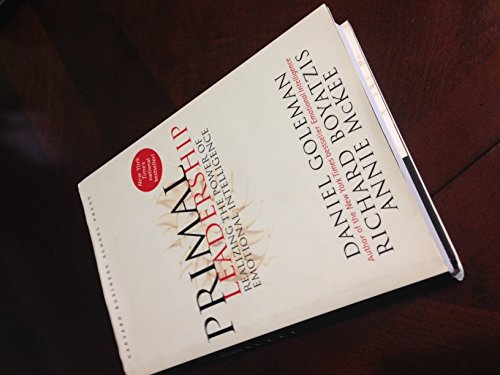
⚡️ What is Primal Leadership about?
Primal Leadership explores how emotional intelligence drives effective leadership. The book reveals that leaders’ emotions directly impact team performance and organizational climate. Through scientific research and real-world examples, authors Daniel Goleman, Richard Boyatzis, and Annie McKee demonstrate that resonant leaders create positive emotional environments that激发团队最佳表现. They provide practical frameworks for developing emotional intelligence competencies and mastering different leadership styles.
🚀 The Book in 3 Sentences
- Emotional intelligence is the foundation of effective primal leadership, determining how leaders influence their teams’ performance.
- Leaders must master six distinct leadership styles, adapting their approach based on situational needs and team dynamics.
- Developing emotional intelligence requires deliberate practice through self-directed learning and consistent behavioral change.
🎨 Impressions
Primal Leadership offers groundbreaking insights into how emotions drive organizational success. The authors convincingly argue that leaders who understand and manage their emotional intelligence create resonant environments that激发团队潜力. This approach to primal leadership transforms abstract emotional concepts into practical leadership tools.
📖 Who Should Read Primal Leadership?
Primal Leadership is essential reading for current and aspiring leaders seeking to enhance their emotional intelligence. Managers at all levels will benefit from understanding how primal leadership principles impact team performance and organizational culture. The book’s practical frameworks make it valuable for anyone committed to developing resonant leadership capabilities through emotional intelligence strategies.
☘️ How the Book Changed Me
How my life / behaviour / thoughts / ideas have changed as a result of reading the book.
- Recognized the profound impact of my emotional states on team dynamics and performance outcomes
- Developed awareness of different leadership styles and when to apply each for maximum effectiveness
- Implemented deliberate practice routines to strengthen emotional intelligence competencies daily
✍️ My Top 3 Quotes
- The fundamental task of leaders is to prime good feelings in those they lead.
- Great leadership works through emotions, not despite them.
- Resonant leaders know when to be collaborative and when to be visionary, when to listen and when to command.
📒 Summary + Notes
Primal Leadership revolutionizes our understanding of effective management by placing emotional intelligence at the core of leadership success. The authors demonstrate that leaders’ emotions create contagious organizational climates that directly impact performance. Through extensive research and case studies, they reveal how resonant leaders use emotional intelligence strategies to激发团队最佳表现 and build adaptive organizations.
Chapter 1: Primal Leadership: Mobilizing the Brain for Leadership
This foundational chapter establishes the neurological basis for emotional leadership. The authors explain how the brain’s emotional centers, particularly the limbic system, drive human behavior and decision-making. They introduce the concept that effective primal leadership requires mastering the dialogue between emotional and intellectual brain circuits to make better decisions and influence others positively.
- The limbic system operates as an open-loop system requiring external emotional inputs for stability and regulation
- Leaders’ emotional states create contagious organizational climates that directly impact team performance and morale
- Mastering emotional intelligence involves developing awareness of brain mechanisms and consciously managing emotional responses
Chapter 2: The Emotional Reality of Leadership
This chapter explores how emotions fundamentally shape leadership effectiveness. The authors demonstrate that leadership is inherently emotional work, requiring leaders to understand and manage their own feelings while influencing others’ emotional states. They explain how emotional contagion spreads through organizations and why leaders must be skilled at creating positive emotional climates to drive performance and engagement.
- Leadership effectiveness depends on the emotional responses they elicit from their teams and stakeholders
- Emotional contagion spreads rapidly through organizations, amplifying leaders’ emotional states throughout the workforce
- Resonant leaders deliberately create positive emotional environments that激发团队最佳表现 and innovation
Chapter 3: Resonant and Dissonant Leadership
The authors contrast resonant leadership with dissonant approaches, showing how positive emotions drive superior performance. They explain that resonant leaders create emotional harmony through empathy, vision, and connection, while dissonant leaders generate negative feelings that undermine team effectiveness. The chapter provides frameworks for identifying and cultivating resonant leadership behaviors.
- Resonant leaders激发积极情绪 like enthusiasm, hope, and cooperation that enhance team performance and creativity
- Dissonant leadership creates negative emotional climates through criticism, micromanagement, and inconsistent messaging
- Organizations with resonant leadership consistently outperform those with dissonant leadership approaches
Chapter 4: The Leadership Repertoire
This chapter introduces the six leadership styles that constitute a leader’s repertoire. The authors explain how effective leaders master multiple styles and adapt their approach based on situational needs. They detail the emotional intelligence competencies underlying each style and provide guidance on when to deploy each approach for maximum impact.
- Visionary leaders inspire with long-term goals while coaching leaders focus on individual development and growth
- Affiliative leaders prioritize harmony and emotional connection, while democratic leaders emphasize participation and consensus
- Pacesetting leaders demand excellence through high standards, while commanding leaders take control during crises
Chapter 5: Leadership Styles in Action
Through detailed case studies and examples, this chapter demonstrates how different leadership styles produce varying results in real-world situations. The authors show how successful leaders blend styles seamlessly, adapting their approach to team needs, organizational challenges, and changing circumstances. They provide practical guidance for recognizing when to apply each style.
- Case studies reveal how visionary leadership transforms organizations during periods of change and uncertainty
- Coaching leadership styles significantly improve employee engagement and long-term performance outcomes
- Commanding leadership proves effective only during genuine emergencies when immediate action is required
Chapter 6: Developing Resonant Leaders
This chapter focuses on how leaders can develop their emotional intelligence and resonant leadership capabilities. The authors explain that traditional leadership training often fails because it doesn’t address limbic system learning. They introduce the five discoveries model for self-directed learning and provide practical strategies for sustained behavioral change and skill development.
- Effective leadership development requires deliberate practice and consistent reinforcement over extended periods
- The five discoveries model guides leaders through awareness, ideal self, learning plan, practice, and ongoing support phases
- Leaders must create supportive environments that encourage experimentation and learning from failures
Chapter 7: The Self-Directed Learning Cycle
The authors detail the self-directed learning cycle that enables lasting leadership development. They explain how leaders can create personalized learning journeys that address specific emotional intelligence gaps. The chapter emphasizes the importance of feedback, mentoring, and continuous practice in developing resonant leadership capabilities.
- Self-directed learning begins with honest self-assessment and recognition of development needs
- Creating an ideal self-image provides motivation and direction for sustained change efforts
- Developing specific learning plans with measurable goals ensures progress toward resonant leadership capabilities
Chapter 8: Building Emotionally Intelligent Organizations
This final chapter extends emotional intelligence principles to organizational-level transformation. The authors explain how companies can create cultures that support resonant leadership and emotional intelligence development. They provide frameworks for assessing organizational emotional intelligence and implementing systematic change initiatives.
- Organizations must align systems, processes, and culture to support emotional intelligence development at all levels
- Leadership selection and development programs should prioritize emotional intelligence competencies over technical skills alone
- Creating emotionally intelligent organizations requires sustained commitment and systematic implementation of EI principles
Key Takeaways
Primal Leadership transforms abstract emotional concepts into practical leadership frameworks. The authors demonstrate that emotional intelligence is not just theoretical but directly impacts organizational performance and team effectiveness. By mastering these principles, leaders can create resonant environments that激发团队最佳表现 and drive sustainable success.
- Emotional intelligence is the foundation of effective leadership, determining how leaders influence team performance and organizational climate
- Mastering six distinct leadership styles enables leaders to adapt their approach based on situational needs and team dynamics
- Developing emotional intelligence requires deliberate practice through self-directed learning and consistent behavioral change
- Creating resonant organizational cultures amplifies individual leadership effectiveness and drives collective performance
Conclusion
Primal Leadership provides revolutionary insights into how emotional intelligence drives leadership effectiveness. By understanding and applying these principles, leaders can transform their approach to management and create resonant organizational environments. The book’s practical frameworks make emotional intelligence accessible and actionable for leaders at all levels. For anyone committed to developing resonant leadership capabilities, this book offers invaluable guidance for sustained success.