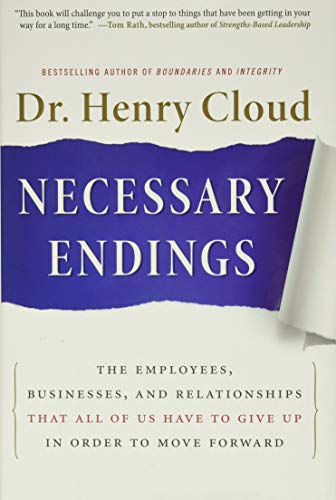
⚡️ What is Necessary Endings about?
Necessary Endings by Dr. Henry Cloud explores why cutting ties with people, projects, and habits that no longer serve us is crucial for growth and success. The book provides strategies for making difficult decisions, managing emotional reactions, and implementing necessary endings with wisdom and clarity.
🚀 The Book in 3 Sentences
- Necessary endings involve letting go of the good that isn’t best in order to make room for better outcomes.
- The book outlines a framework for recognizing when it’s time to end something based on reality rather than wishful thinking.
- Cloud provides practical strategies for implementing endings with compassion, clarity, and conviction, ensuring emotional health and progress.
🎨 Impressions
Dr. Henry Cloud delivers a compelling yet compassionate guide to making tough choices. His insights into necessary endings are eye-opening, offering readers practical frameworks to evaluate what to keep and what to let go. The blend of real-life examples and psychological wisdom makes this book both relatable and transformative.
📖 Who Should Read Necessary Endings?
This book is ideal for anyone feeling stuck in their personal or professional life due to indecision, fear, or emotional attachment. Whether you’re navigating toxic relationships, struggling with underperforming employees, or dealing with outdated business practices, necessary endings strategies will empower you to take decisive action.
☘️ How the Book Changed Me
How my life / behaviour / thoughts / ideas have changed as a result of reading the book.
- Learning when to implement necessary endings has helped me avoid repeating patterns of failure.
- I now evaluate people, projects, and habits based on objective criteria rather than emotion alone.
- My decision-making process has become more structured and outcome-focused after understanding the pruning moment.
✍️ My Top 3 Quotes
- “Good cannot begin until bad ends.”
- “Often, in necessary endings, you have to give something up or be willing to lose something in order to gain it.”
- “Nothing mobilizes us like a firm dose of reality.”
📒 Summary + Notes
Necessary Endings teaches that growth, success, and health depend on one’s ability to end things that aren’t serving them anymore—whether it’s projects, habits, relationships, or roles. Dr. Henry Cloud breaks down complex psychological concepts into practical steps and real-world applications that help readers navigate these challenging transitions effectively.
Chapter 1: Endings – The Good Cannot Begin Until the Bad Ends
This foundational chapter sets the stage by explaining why endings are essential for new beginnings. Dr. Cloud uses metaphors from nature and human development to drive home the point that nothing grows without removing obstacles first.
- Introduces the idea that all growth requires pruning away what no longer serves.
- Anecdote about a company restructuring to illustrate the pain but necessity of major changes.
- Key takeaway: Recognize that avoiding endings keeps you stuck at the expense of future growth.
Chapter 2: Pruning – Growth Depends on Getting Rid of the Unwanted or the Superfluous
Chapter two delves into the concept of pruning—what to remove to make space for what truly matters. Cloud uses gardening metaphors to simplify the idea and applies it directly to personal and business life.
- Identify the three categories: good but not the best, sick and unrecoverable, already dead.
- Business example where a company removed non-essential products to focus on its best-performing ones.
- Insight: Pruning is proactive; waiting too long makes things harder emotionally and logistically.
Chapter 3: Normalizing Necessary Endings – Welcome the Seasons of Life into Your Worldview
Cloud encourages readers to accept that life moves in natural cycles and that endings are normal parts of that cycle, not anomalies or failures.
- Discusses the emotional resistance to necessary endings rooted in denial of life’s impermanence.
- Real-life example involving a career shift shows how embracing cycles enables growth.
- Key takeaway: Normalize endings to reduce anxiety and increase clarity in transitions.
Chapter 4: When Stuck Is the New Normal – The Difference Between Pain with a Purpose and Pain for No Good Reason
This chapter explores how to distinguish between meaningful discomfort and pointless suffering. Cloud argues that remaining stuck is often more painful than taking necessary action.
- Introduces the idea that pain can have a purpose, such as growth, whereas unnecessary suffering does not.
- Case example of someone enduring a failing relationship to highlight the difference in types of pain.
- Important lesson: Don’t confuse tolerance with strength—sometimes endurance becomes harmful stagnation.
Chapter 5: Getting to the Pruning Moment – Realistic, Hopeless, and Motivated
This pivotal chapter teaches how to arrive at the moment when it’s clear that ending something is not only possible but necessary.
- Explains the importance of realism over wishful thinking in recognizing when change must happen.
- Uses a business case study where management realized they needed to cut a product line despite previous investment.
- Crucial insight: Being realistic helps motivate rather than paralyze you during transitions.
Chapter 6: Hoping Versus Wishing – The Difference Between What’s Worth Fixing and What Should End
Hope is contrasted with wishful thinking to show how to determine if something deserves more effort or needs to be ended.
- Defines hope as grounded in reality and achievable progress, unlike wishful thinking which ignores facts.
- Provides diagnostic questions to apply in evaluating whether to invest more in something or cut ties.
- Takeaway: Invest hope wisely; don’t waste it on unrecoverable situations.
Chapter 7: The Wise, the Foolish, and the Evil – Identifying Which Kinds of People Deserve Your Trust
Distinguishing people based on character and capacity for change is key in knowing whether to end or maintain a relationship.
- Breaks down three personality types: those who listen and grow, those who resist feedback, and those who exploit or harm.
- Shares examples of clients whose lives improved once they distanced or ended toxic connections.
- Lesson: Not all relationships are salvageable; knowing the difference saves energy and pain.
Chapter 8: Creating Urgency – Stay Motivated and Energized for Change
Inspiring action requires building internal urgency. Cloud offers methods for maintaining drive even when facing uncertainty.
- Emphasizes that motivation wanes unless consciously nurtured during long processes like major change.
- Describes rituals or routines that keep focus on the end goal, especially useful in teams or partnerships.
- Strategy: Link your current action with a vivid imagined future to sustain momentum.
Chapter 9: Resistance – How to Tackle Internal and External Barriers
Anticipate and overcome both internal and external resistance that naturally arises when attempting necessary endings.
- Outlines common sources of resistance: emotional attachment, fear of conflict, guilt, and social pressure.
- Offers techniques like reframing perspectives and enlisting support from others to counteract inertia.
- Tip: Prepare mentally and emotionally before initiating a significant ending conversation.
Chapter 10: No More Mr. Bad Guy – The Magic of Self-Selection
Self-selection is a powerful technique to guide people toward leaving voluntarily without confrontation or hurt feelings.
- Teaches how to structure environments so mismatched individuals opt out on their own through natural consequences.
- Gives an example of hiring criteria that attract better fits and discourage unsuitable applicants.
- Benefit: Reduces the pain associated with forced endings while preserving integrity and peace.
Chapter 11: Having the Conversation – Strategies for Ending Things Well
Cloud provides practical tools for conducting necessary ending conversations with empathy, clarity, and firmness.
- Includes a framework for preparing, initiating, and closing difficult conversations respectfully.
- Highlights the importance of timing and setting in delivering messages that resonate without causing harm.
- Golden rule: Focus on facts, outcomes, and next steps instead of blame or accusations.
Chapter 12: Embrace the Grief – The Importance of Metabolizing Necessary Endings
Grieving is a necessary step for full closure and emotional healing after making a difficult decision to end something.
- Discusses healthy grieving versus denial or avoidance and the risks of skipping this step.
- Presents rituals and practices that help individuals process grief and regain clarity.
- Advice: Allow yourself time to mourn what is lost—this clears the way for what is next.
Chapter 13: Sustainability – Taking Inventory of What Is Depleting Your Resources
This final practical chapter helps readers audit their lives for resource leaks and eliminate things that drain their potential.
- Suggests conducting regular inventory exercises to identify time, energy, or financial drainers.
- Encourages setting firm boundaries around non-negotiables like family time, health, or personal goals.
- Final insight: Continuous sustainability requires consistent pruning, not just one-time clean-ups.
Chapter 14: Conclusion – It’s All About the Future
Closing thoughts reiterate that life is forward-focused: making space for growth means letting go of outdated or harmful elements. Cloud leaves readers with encouragement and a sense of hope for what lies ahead.
- Reinforces the central message that avoiding necessary endings prevents access to better futures.
- Encourages a growth mindset and readiness to face change with resilience and wisdom.
- Closing message: True freedom comes from the courage to end what no longer aligns with your vision.
Key Takeaways
Here are the core lessons extracted from necessary endings principles throughout the book:
- Necessary endings are essential for any kind of meaningful growth, whether in personal life or business.
- Distinguishing hope (realistic) from wishing (unhelpful) allows you to know when to hold on or let go.
- Pruning involves three steps: identifying what is good but not best, what is sick and unrecoverable, and what is already dead.
- Self-selection is a strategic tool to avoid direct confrontation by guiding people to exit gracefully when they don’t fit.
- Moving forward requires fully embracing the emotions tied to loss and giving them proper attention and processing.
Conclusion
Making room for real progress in life means sometimes having the courage to initiate necessary endings. Dr. Henry Cloud’s guide is not just about saying goodbye—it’s about creating space for genuine opportunity and personal evolution. If you’re looking to escape stagnation and build a better future, this book is essential reading. Remember, the only way to reach your full potential is by knowing when it’s time to end what no longer serves you.
More From Henry Cloud →
Discover more from AI Book Summary
Subscribe to get the latest posts sent to your email.