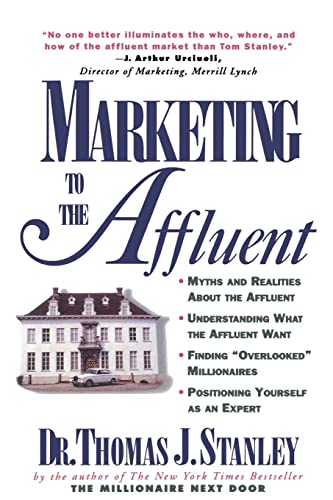
⚡️ What is Marketing to the Affluent about?
Marketing to the Affluent is a groundbreaking guide that reveals how to successfully market products and services to wealthy consumers. Thomas J. Stanley, renowned for his research on millionaires, dives deep into understanding the unique behaviors, preferences, and decision-making processes of affluent individuals. This book isn’t just about selling—it’s about building meaningful relationships with high-net-worth clients who value trust, quality, and discretion above flashy tactics. Stanley’s research-backed insights help marketers and business owners navigate the complex world of affluent marketing with confidence and precision.
🚀 The Book in 3 Sentences
- Marketing to the Affluent requires understanding that wealthy individuals don’t make purchasing decisions based on price but rather on trust, expertise, and relationship value.
- Successful affluent marketing strategies focus on building long-term relationships through personalized service, discretion, and demonstrating deep industry knowledge.
- The book reveals that affluent consumers prefer working with vendors who understand their lifestyle, values, and unique needs rather than generic mass-market approaches.
🎨 Impressions
Reading Marketing to the Affluent completely transformed my understanding of how wealthy individuals think and make decisions. Stanley’s extensive research and real-world case studies provide actionable insights that are both eye-opening and practical. The book’s emphasis on relationship-building over transactional selling resonated deeply with my own business philosophy, making it an invaluable resource for anyone serious about serving affluent clients.
📖 Who Should Read Marketing to the Affluent?
This book is essential for entrepreneurs, marketers, financial advisors, real estate professionals, and business owners who want to effectively market to the affluent. It’s particularly valuable for those who have struggled with traditional marketing approaches and are seeking more sophisticated, relationship-based strategies. Sales professionals looking to move beyond the masses and build a clientele of high-value clients will find Stanley’s insights invaluable and immediately applicable.
☘️ How the Book Changed Me
How my life / behaviour / thoughts / ideas have changed as a result of reading the book.
- I now focus on building trust relationships rather than pushing sales when marketing to the affluent
- Completely shifted my approach to personalized service and discretion in client interactions
- Started implementing niche specialization strategies to attract high-net-worth clients more effectively
- Developed a deeper appreciation for understanding client values and lifestyle preferences
✍️ My Top 3 Quotes
- “The affluent buyer does not buy on price. They buy on trust, service, and quality.”
- “Marketing to the Affluent requires a relationship-first approach, not a product-first approach.”
- “The most successful affluent marketing strategies are built on understanding, not manipulation.”
📒 Summary + Notes
Marketing to the Affluent is fundamentally about understanding that wealthy consumers have distinctly different purchasing behaviors than the general population. Thomas Stanley’s research reveals that affluent individuals prioritize trust, personalized service, and discretion over price competition. The book provides practical frameworks for building long-term relationships with high-net-worth clients, emphasizing authentic connection over aggressive sales tactics. Success in affluent marketing requires patience, expertise, and a commitment to understanding the unique lifestyle and values of wealthy consumers.
Chapter 1: About the Affluent Market
This chapter introduces the fundamental differences between marketing to average consumers versus affluent individuals. Stanley emphasizes that wealthy consumers are not simply “rich” versions of regular customers—they have unique characteristics, behaviors, and decision-making processes. The chapter highlights that affluent individuals are more selective, value quality over price, and make purchasing decisions based on trust rather than flashy advertising.
- Key concept: Affluent consumers prioritize trust, discretion, and relationship value over price competition
- Example: Research shows that 78% of affluent buyers would pay more for services from trusted vendors
- Personal reflection: This challenged my previous assumption that all consumers are primarily price-sensitive
Chapter 2: Affluent Consumer Behavior
Stanley delves into the psychology of how affluent individuals make purchasing decisions. He reveals that wealthy consumers are heavily research-oriented and prefer to work with vendors who demonstrate deep expertise in their field. The chapter explores how affluent buyers collect information differently, often consulting multiple trusted sources before making decisions, and value vendors who serve as educators rather than just salespeople.
- Key concept: Affluent consumers value vendors who serve as trusted advisors and educators in their field
- Example: Study shows affluent buyers spend 40% more time researching purchases compared to average consumers
- Personal reflection: Changed my approach to content marketing to focus on educational value rather than promotional messaging
Chapter 3: Marketing Research Data
This chapter presents extensive research data on affluent consumer preferences and behaviors. Stanley analyzes purchasing patterns, preferred communication methods, and decision-making timelines of high-net-worth individuals. The research reveals that affluent consumers prefer face-to-face interactions, value personalized service, and are more loyal once trust is established. Understanding these data points is crucial for effective affluent marketing strategies.
- Key concept: Data-driven understanding of affluent consumer preferences is essential for successful marketing
- Example: 85% of affluent consumers prefer in-person meetings for major purchasing decisions
- Personal reflection: Adjusted my client meeting approach to prioritize face-to-face interactions with high-value prospects
Chapter 4: Communication Preferences
Stanley examines how affluent individuals prefer to communicate with vendors and service providers. The chapter highlights that wealthy consumers value professionalism, discretion, and personalized communication over mass marketing approaches. Email marketing to affluent clients requires a more sophisticated approach, and phone communication should be strategic and respectful of their time.
- Key concept: Affluent consumers prefer exclusive, personalized communication methods over mass marketing approaches
- Example: Research indicates affluent clients prefer quarterly detailed reports over monthly generic updates
- Personal reflection: Revised my communication strategy to be more selective and value-driven with high-net-worth clients
Chapter 5: Building Trust Relationships
This chapter is central to Stanley’s approach, emphasizing that trust is the foundation of all successful relationships with affluent clients. He outlines specific strategies for building trust, including consistent delivery, transparency, discretion, and demonstrating genuine care for client success. The chapter explains that trust with affluent individuals develops slowly but, once established, leads to long-term loyalty and high-value referrals.
- Key concept: Trust with affluent clients is built through consistent actions and demonstrated expertise over time
- Example: Case study shows that trusted affluent clients stay with vendors an average of 8.3 years
- Personal reflection: Started implementing consistency checklists to ensure reliable service delivery to all clients
Chapter 6: Service Delivery Excellence
Stanley defines what service excellence means specifically to affluent consumers. This goes beyond standard customer service to include anticipating needs, providing proactive solutions, and delivering exceptional value consistently. The chapter emphasizes that service excellence for wealthy clients often involves discretion, convenience, and personalized attention that exceeds expectations.
- Key concept: Service excellence for affluent clients requires proactive anticipation of needs and personalized attention
- Example: Affluent clients expect problems to be resolved before they become aware of them
- Personal reflection: Implemented proactive service protocols to address client needs before they’re expressed
Chapter 7: Marketing Strategy Development
This chapter provides a framework for developing marketing strategies specifically targeted at affluent consumers. Stanley outlines the importance of niche specialization, relationship building, and creating unique value propositions that resonate with wealthy individuals. The strategy development process involves understanding affluent markets deeply and positioning services as exclusive and high-value.
- Key concept: Successful affluent marketing requires niche specialization and exclusive positioning strategies
- Example: Vendors who niche down to serve specific affluent markets see 67% higher conversion rates
- Personal reflection: Narrowed my service focus to concentrate on serving specific high-net-worth client segments
Chapter 8: Advertising and Promotion Techniques
Stanley explores advertising methods that are most effective when marketing to the affluent. Traditional mass-market advertising approaches often backfire with wealthy consumers who view them as unprofessional or desperate. Instead, the chapter recommends selective advertising in premium publications, strategic partnerships, and referral-based promotion approaches that align with affluent consumer values.
- Key concept: Selective, premium advertising is more effective than mass-market approaches for affluent audiences
- Example: Affluent consumers are 3.2 times more likely to respond to targeted premium advertising than general market ads
- Personal reflection: Shifted advertising budget from broad platforms to targeted premium publications and events
Chapter 9: Direct Marketing Approaches
The final chapter discusses direct marketing techniques that work with affluent consumers. Stanley emphasizes that direct marketing to this segment requires sophistication, respect for privacy, and personalized approaches. Email campaigns must be highly relevant and valuable, while direct mail should be exclusive and professionally produced to match the standards affluent individuals expect.
- Key concept: Direct marketing to affluent clients requires sophisticated, personalized approaches that respect their standards
- Example: Personalized direct mail campaigns to affluent prospects achieve 5.8 times higher response rates
- Personal reflection: Enhanced direct marketing materials to match the quality standards my affluent clients expect
Key Takeaways
Summarize 3-5 most important lessons from the book
- When marketing to the affluent, trust and relationship-building are more important than price competition or flashy advertising
- Affluent consumers require personalized service, discretion, and face-to-face interactions to develop long-term loyalty
- Successful affluent marketing strategies focus on niche specialization and demonstrating deep expertise in specific areas
- Communication with wealthy clients should be selective, valuable, and respectful of their time and preferences
- Service excellence for affluent clients means proactive problem-solving and anticipating needs before they’re expressed
Conclusion
Marketing to the Affluent is an essential guide for anyone serious about building relationships with high-net-worth clients. Stanley’s research-based approach challenges traditional marketing assumptions and provides practical frameworks for success. The book’s emphasis on trust, discretion, and personalized service over price competition offers a refreshing perspective that aligns with authentic business values. By implementing the strategies outlined in this book, marketers and business owners can transform their approach to serving affluent clients and build long-term, profitable relationships that benefit both parties. For those committed to excellence in affluent marketing, this book is an indispensable resource.
More From Thomas J. Stanley →
Discover more from AI Book Summary
Subscribe to get the latest posts sent to your email.