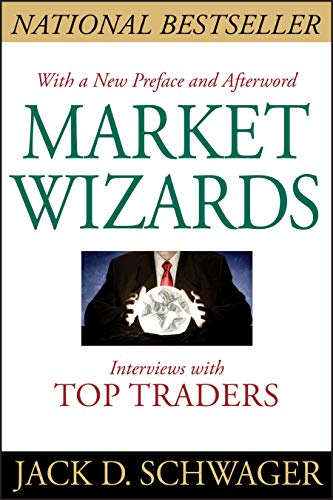
⚡️ What is Market Wizards about?
Market Wizards is a compelling collection of interviews with some of the most successful traders in the world. Written by Jack D. Schwager, the book delves into the minds and strategies of legendary market players, revealing their unique approaches, philosophies, and risk management techniques. Through detailed conversations, readers gain insights into how these traders navigated financial markets, built massive wealth, and maintained long-term success. The book is an invaluable resource for anyone looking to understand the psychology, strategies, and techniques that separate Market Wizards from average traders.
🚀 The Book in 3 Sentences
- Market Wizards reveals how top traders build consistent profits through disciplined strategies and emotional control.
- The book emphasizes that successful trading isn’t about being right all the time, but about managing risk and cutting losses.
- Each interview provides real-world insights into how to apply technical analysis, market psychology, and trend-following techniques.
🎨 Impressions
Reading Market Wizards felt like gaining direct access to the minds of trading legends. The depth of their insights, combined with Schwager’s expert questioning, made the book both inspiring and educational. I was particularly impressed by how consistently the traders emphasized discipline, risk management, and psychological resilience over mere speculation or gut instinct.
📖 Who Should Read Market Wizards?
Market Wizards is a must-read for traders, investors, and financial enthusiasts who are serious about understanding what makes top traders succeed. Whether you’re a beginner looking to learn from the best or an experienced trader refining your approach, this book offers actionable insights. The principles discussed are also highly relevant for anyone interested in market psychology, risk management, and consistent profit strategies.
☘️ How the Book Changed Me
How my life / behaviour / thoughts / ideas have changed as a result of reading the book.
- I now prioritize risk management and cutting losses quickly rather than hoping for profits.
- I started incorporating technical analysis into my trading approach, focusing on trends and momentum.
- I’ve adopted a more disciplined mindset, emphasizing process over outcomes in every trade.
✍️ My Top 3 Quotes
- “The most important rule in trading is: Play great defense, not great offense.” – Paul Tudor Jones
- “Good trading is a peculiar balance between the conviction to follow your ideas and the flexibility to recognize when you have made a mistake.” – Michael Steinhardt
- “Traders often confuse the concepts of winning and losing trades with good and bad trades.” – Jack Schwager
📒 Summary + Notes
Understanding Market Wizards begins with recognizing that trading is not just about making money—it’s about building a repeatable, disciplined process. The interviews in this book cover traders from a variety of backgrounds, including trend followers, technical analysts, and risk managers. Each trader offers unique insights, but the common threads are discipline, patience, and a deep understanding of risk.
Chapter 1: Introduction
The introduction sets the stage for the book, summarizing Schwager’s motivation and the types of traders included in the interviews.
- Schwager wanted to uncover what makes top traders tick.
- The traders profiled include commodity traders, hedge fund managers, and technical analysts.
- The focus is on strategy, psychology, and risk management rather than personality details.
Chapter 2: Richard Dennis and the Turtle Trading Experiment
In this chapter, Schwager interviews Richard Dennis, a legendary commodities trader who believed that trading skills can be taught.
- Dennis trained a group of inexperienced traders using structured mechanical strategies—the “Turtles.”
- The success of the Turtles proved that proper training in entry and exit rules could be taught.
- The key insights include the importance of following rules and avoiding emotional decision-making.
Chapter 3: Bruce Kovner
Bruce Kovner discusses how his analytical skills and adaptability made him one of the most successful global macro traders.
- Kovner focused on high-probability setups, especially those involving macroeconomic trends.
- He relied on technical analysis to confirm timing and momentum in his trades.
- His emphasis on capital preservation and flexibility helped him avoid large drawdowns.
Chapter 4: Paul Tudor Jones II
Paul Tudor Jones II shares his approach to market psychology and risk management, emphasizing the importance of understanding emotional responses to winning and losing trades.
- He uses charts to identify trends and momentum, not to predict price movements.
- Jones believes that a trader’s emotional discipline is more critical than technical skill alone.
- He avoids overconfidence and maintains strict controls on position sizing and loss limits.
Chapter 5: Michael Marcus
Michael Marcus discusses his journey from a financial journalist to a highly successful trader, emphasizing the interplay between fundamentals and technicals.
- Marcus relies on three pillars: fundamentals, technicals, and market tone.
- He avoids being too attached to a position, ensuring he can remain objective and flexible.
- Marcus also highlights how market sentiment indicators influenced his timing decisions.
Chapter 6: Marty Schwartz
Marty Schwartz reflects on how emotional intelligence and the ability to admit mistakes were key to his trading success.
- Schwartz initially struggled with large losses and pride.
- He learned to cut losses early and let profits run.
- Swartz emphasizes that success in trading is more about psychology than market knowledge.
Chapter 7: Tom Baldwin
Tom Baldwin discusses how market tone and price behavior helped him time his entries and exits more effectively.
- Baldwin focuses heavily on price action and the emotional state of the market.
- He believes in understanding market sentiment before placing a trade.
- The chapter offers practical advice on how to monitor market behavior for signs of reversal.
Chapter 8: Ed Seykota
Ed Seykota’s trading philosophy combines technical analysis with meditation, believing that mindfulness improves trading performance.
- Seykota emphasizes that losses are part of the game and must be accepted emotionally.
- He developed early mechanical trading systems and focused on consistency.
- Seykota avoids overtrading by staying in tune with both markets and his inner psyche.
Chapter 9: Michael Steinhardt
Michael Steinhardt discusses how discipline, research, and flexibility built a long and profitable career in trading.
- Steinhardt focused on market fundamentals and identifying mispriced assets.
- He emphasizes the importance of cutting losses quickly and staying flexible.
- Steinhardt also highlights the value of team dynamics and collaboration in trading decisions.
Chapter 10: Jim Rogers
Jim Rogers’ long-term, global macro approach to trading is highlighted in this chapter, focusing on patience and research.
- Rogers advocates for deep research and global awareness in trading decisions.
- He believes in waiting for the perfect trade setup rather than overtrading.
- His investment approach is more akin to long-term investing than day trading.
Chapter 11: Larry Hite
Larry Hite’s systematic and rule-based approach to trading is explored, with a focus on risk management.
- Hite was one of the early pioneers of computerized mechanical trading systems.
- He places emphasis on avoiding catastrophic losses through diversification and limits.
- His strategy involves trading across multiple markets with statistical models to minimize risk.
Chapter 12: Jack Schwager’s Reflections
In the final chapter, Schwager draws overall conclusions from the interviews, summarizing key patterns in trader behavior, strategy, and mindset.
- Schwager emphasizes that success is rooted in consistency, risk management, and emotional discipline.
- He reiterates the importance of process over outcome in defining good and bad trades.
- Trader ego and overconfidence are frequent downfalls, while humility and adaptability are virtues.
Key Takeaways
Market Wizards offers timeless wisdom for trading success. The key takeaways include the importance of cutting losses, managing risk, and staying emotionally balanced under pressure. These principles are universally applicable whether in stocks, commodities, or forex markets.
- Market Wizards thrive on discipline, not luck.
- Successful traders always protect their capital, even if it means missing opportunities.
- Emotional control and flexibility in adapting to changing markets are essential.
Conclusion
Market Wizards remains a foundational text for any serious trader. The lessons from Schwager’s conversations with top traders underscore a clear path to success: master your emotions, implement disciplined strategies, and always prioritize risk management. This book is not just about trading—it’s about cultivating the mindset that separates champions from novices. Whether you’re a seasoned trader or just starting your journey, Market Wizards is an essential guide to long-term market success.
More From Jack D. Schwager →
Discover more from AI Book Summary
Subscribe to get the latest posts sent to your email.