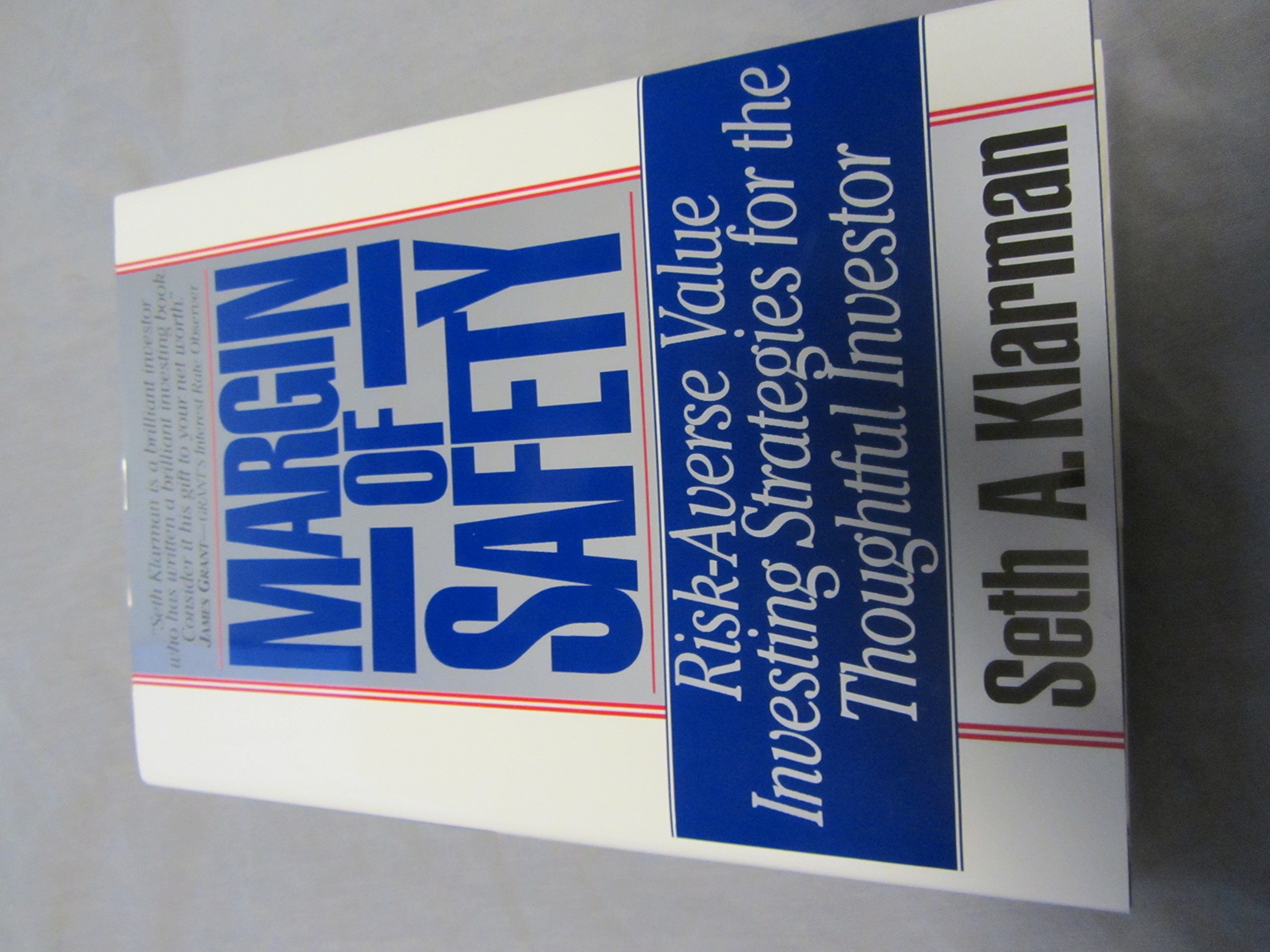
⚡️ What is Margin of Safety About?
Have you ever tried to buy a book only to find it costs $1,500 for a beat-up paperback? That’s the reality for anyone hunting for a physical copy of this investment classic. Seth Klarman, the billionaire founder of the Baupost Group, wrote this book in 1991 as a warning against the speculative fever of the time, and it has since become the “Holy Grail” of value investing. You can find more investing book summaries on our site, but this one is the foundation of the “don’t lose money” school of thought.
The central argument of Margin of Safety is that most people aren’t actually investing; they’re gambling. More summaries by Seth A. Klarman often highlight his risk-averse nature, but here he lays it out plainly: successful investing is not about how much you can make, but how much you can avoid losing. By buying assets at a significant discount to their underlying value, you create a buffer—a margin of safety—that protects you from the inevitable mistakes, bad luck, and market volatility that ruin everyone else.
🚀 The Book in 3 Sentences
- Investing is the process of buying assets that produce cash flow at a price below their intrinsic value, while speculation is merely betting on price movements.
- The primary goal of any portfolio should be the avoidance of loss, because the math of compounding makes it nearly impossible to recover from a single catastrophic hit to your capital.
- Because valuation is an imprecise art and the future is unpredictable, you must always demand a significant “margin of safety”—a gap between the price you pay and the value you get—to account for human error and bad luck.
🎨 Impressions
I finally got my hands on a digital copy of this after years of hearing value investors speak about it in hushed tones. Honestly? It reads like a survival manual for a zombie apocalypse, only the zombies are Wall Street brokers and the apocalypse is a market crash. Klarman’s tone is incredibly disciplined, almost clinical. He isn’t here to give you a “get rich quick” scheme; he’s here to tell you why your current strategy is probably going to blow up in your face eventually.
What surprised me most was how much he focuses on psychology. He doesn’t just talk about spreadsheets; he talks about the “comfort of consensus” and how hard it is to be a contrarian. There’s a moment early on where he compares stocks to collectibles like Mickey Mantle rookie cards. It made me realize that if an asset doesn’t throw off cash, you’re just hoping someone else is dumber than you are. It’s a sobering read that made me want to go back through my own portfolio and ruthlessly cut anything that didn’t have a clear floor on its value.
📖 Who Should Read Margin of Safety?
If you’re a “buy and hold” investor who has been feeling nervous about market valuations, this is your Bible. It’s perfect for the person who wants to understand the deep mechanics of risk. However, if you’re looking for a guide on how to pick the next 100x tech stock or you want to day-trade crypto, skip this. Klarman would likely consider those activities closer to playing roulette than actual business analysis.
☘️ How This Book Changed My Thinking
Before reading this, I thought of risk as something you take to get a higher return. Klarman flipped that on its head for me.
- I stopped looking for “high-growth” opportunities and started looking for “low-risk” entry points; the return is often a byproduct of the low price, not just the company’s growth.
- I realized that holding cash is actually an active investment decision—it’s an option on future bargains. I no longer feel “guilty” when my cash balance sits idle for months.
- I moved away from relative performance (beating the S&P 500) and toward absolute performance (not losing money, period). Who cares if you beat the market by 5% if you’re still down 30% for the year?
✍️ 3 Quotes That Stuck With Me
- “The avoidance of loss is the surest way to ensure a profitable outcome.” — This is the ultimate reminder that the math of compounding works best when you don’t reset to zero.
- “There is comfort in consensus; those in the majority gain confidence from their very number.” — A chilling explanation for why most investors follow the herd right off a cliff.
- “A margin of safety is achieved when securities are purchased at prices sufficiently below underlying value to allow for human error, bad luck, or extreme volatility.” — This defines the entire philosophy in a single, punchy sentence.
📒 Margin of Safety Summary + Notes
Klarman builds a case that the financial world is divided into two groups: those who see pieces of paper that move in price, and those who see fractional ownership in businesses. The book begins by deconstructing the pitfalls of the modern financial industry, specifically how Wall Street is incentivized to encourage trading and speculation rather than long-term value creation. He argues that most institutional investors are trapped in a “performance game” where they care more about their quarterly rankings than the safety of their clients’ capital.
The core of the book moves into the “Value-Investment Philosophy,” which isn’t about complex formulas. It’s about a mindset. Klarman wants you to believe that the market is frequently wrong and that your job is to wait for the rare moments when the market’s fear or boredom allows you to buy assets for 50 cents on the dollar. By the end, the author builds a bridge from theory to practice, covering everything from how to value a business to how to manage a portfolio when no bargains are available.
🧠 Core Ideas Explained Simply
To understand Klarman, you have to realize he views the market as a moody person who occasionally offers you deals that are too good to pass up.
Investing vs. Speculation
Imagine you buy a building because the rent covers the mortgage and leaves you with profit every month. That’s an investment. Now imagine you buy a building just because you think the neighborhood is “getting hot” and someone will pay you more for it next year, even though it’s currently empty and costing you money. That’s speculation. Klarman argues that if your return depends entirely on someone else’s future opinion, you aren’t investing; you’re gambling on the “Greater Fool Theory.”
The Imprecision of Valuation
Why can’t we just use a computer to find cheap stocks? Because valuation isn’t a hard science like physics; it’s more like weather forecasting. Small changes in interest rates or growth assumptions can lead to massive swings in what a business is worth. Since your “intrinsic value” calculation is almost certainly a little bit wrong, you need a massive discount (the margin of safety) to act as a shock absorber. If you think a stock is worth $100, don’t buy it at $95. Buy it at $60.
Absolute vs. Relative Performance
Most mutual fund managers are happy if they lose 20% while the market loses 25%. They “beat the market.” Klarman thinks this is insane. He argues that the only thing that matters is the absolute return on your dollars. If there are no good deals, the value investor sits on cash and waits, even if it means underperforming a roaring bull market for a year or two. How many people do you know who have the discipline to watch their friends get rich in a bubble while they sit in cash?
Chapter 1: Speculators and Unsuccessful Investors
Wall Street is essentially a giant machine designed to separate you from your money through fees and activity. Klarman opens by pointing out that most retail investors get crushed because they follow fads and try to time the market. They act like speculators, focusing on price movements rather than business fundamentals. Why do people treat the stock market like a casino when they would never buy a local laundromat without looking at the books?
Chapter 2: The Nature of Speculation and Investment
What is the difference between a gambler and an investor? An investor evaluates an asset based on the cash it will throw off over its lifetime. A speculator evaluates an asset based on what they think the next person will pay for it. Klarman uses the example of collectibles—art, stamps, coins—to show that these have no intrinsic value because they don’t produce income. If you buy a stock purely because it’s “going up,” you’ve crossed the line into speculation.
Chapter 3: The Institutional Performance Game
Most large funds are actually incentivized to be wrong with the crowd rather than right by themselves. If a manager loses money in a popular stock, they keep their job because everyone else lost money too. But if they lose money in an obscure stock that no one else liked, they get fired. This creates a herd mentality that drives prices far away from reality, creating the very inefficiencies that value investors exploit.
Chapter 4: The Discipline of Value Investing
Seth Klarman isn’t trying to be the smartest person in the room; he’s trying to be the most disciplined. Value investing requires you to buy when everyone else is selling and sell when everyone else is buying. It’s a lonely, counter-cultural way of living. He emphasizes that the strategy only works if you have a long-term horizon. If you need the money back in six months, a value strategy is actually quite risky because the market can remain irrational much longer than that.
Chapter 5: At the Root of a Value-Investment Philosophy
The three pillars here are: a bottom-up approach, an absolute performance orientation, and a focus on risk. Instead of trying to predict the economy (top-down), you look at one company at a time. Instead of trying to beat a benchmark, you try to meet your own financial goals. And instead of focusing on “beta” or volatility, you focus on the risk of permanent capital loss.
Chapter 6: The Value-Investment Process: Screening and Researching
Where do you find bargains? Usually in the places that make people feel uncomfortable or bored. Klarman points toward stocks that are being dumped for non-economic reasons—like when a company is removed from an index or when a spin-off happens and large institutions sell their tiny fractional shares because they aren’t “allowed” to hold them. This is where the 80/20 rule of information comes in: you get 80% of the value from the first 20% of your research. Don’t drown in the details; look for the big, obvious mispricing.
Chapter 7: The Art of Business Valuation
How do you actually know what a company is worth? Klarman suggests three methods: Net Present Value (NPV), Liquidation Value, and Stock Market Value. NPV is the most common, but it’s dangerous because it relies on guessing the future. Liquidation value—what’s left if you sell the desks and the patents and pay off the debt—is the safest and most conservative. If a company is trading for less than its cash and buildings are worth, you’ve found a real margin of safety.
Chapter 8: Investment Opportunities in Unpopular Places
Why would a stock ever be cheap? Markets are efficient most of the time, but they break down when human emotion takes over. Klarman loves “distressed debt” and companies going through bankruptcy. These are messy, legal-heavy situations that most investors avoid like the plague. Because they are “ugly,” they are often ignored by the big money, allowing the patient investor to pick up assets at fire-sale prices.
Chapter 9: Thrift Conversions, Spin-offs, and Asset Conversions
Sometimes the market structure itself creates a bargain. When a company spins off a smaller subsidiary, the shareholders of the parent company often sell the new shares immediately without even looking at what the company does. They just want the “clutter” out of their portfolio. This forced selling creates an artificial supply that can drive the price way below the actual value of the business.
Chapter 10: Risk Arbitrage and Bankruptcies
Is it possible to make money while the market is falling? Yes, through risk arbitrage—betting on the completion of announced mergers or liquidations. These trades depend on corporate events, not market sentiment. If Company A is buying Company B for $50 a share, and Company B is trading at $45, that $5 gap is your profit. The risk isn’t the market; it’s the deal falling through. It’s a specialized, high-intensity way to invest that Klarman masters.
Chapter 11: Portfolio Management and Trading
How many stocks should you own? Klarman isn’t a fan of owning 100 different things. He thinks you only need 10 to 15 good ideas to be diversified, provided they aren’t all in the same industry. He also emphasizes “averaging down.” If you liked a stock at $20 and it drops to $15 for no fundamental reason, you should love it even more. Most people panic when prices drop; the value investor sees a sale.
Chapter 12: The Importance of Having an Investment Philosophy
Without a philosophy, you are at the mercy of your emotions. When the market crashes, your brain will scream at you to sell everything. Only a deeply held belief in the margin of safety will give you the courage to hold—or better yet, to buy more. Klarman concludes by reminding us that the goal isn’t to be the richest person in the cemetery; it’s to protect your purchasing power over a lifetime through disciplined, risk-averse behavior.
⚖️ A Critical Perspective
While the logic is airtight, Klarman’s approach can be incredibly difficult to execute in the modern era. His disdain for “growth” and intangible assets (like brand value or software networks) meant that a strict follower of this book would have missed almost every major wealth-creator of the last 20 years, from Amazon to Google. In 2025, “tangible book value” is less relevant when the most valuable companies in the world own very few physical assets. Additionally, the book assumes a level of research depth that is almost impossible for a part-time retail investor to match against high-frequency algorithms and AI-driven analysis.
🔄 How It Compares
If Benjamin Graham’s The Intelligent Investor is the Old Testament of value investing, Margin of Safety is the gritty, modern update. While Graham focuses on formulas and “net-nets,” Klarman focuses more on the institutional mechanics and complex corporate events that create bargains. It is much more cynical than Graham’s work, reflecting Klarman’s experience in the more aggressive markets of the late 20th century.
🔑 Key Takeaways
The lessons here are about developing a “defensive” mindset that treats capital as something to be guarded at all costs.
- The price you pay is the single most important factor in determining your risk; any asset can be a risk if you pay too much, and almost any asset can be safe if the price is low enough.
- Focus on the process, not the outcome; you can make a “good” investment that loses money due to bad luck, and a “bad” speculation that makes money due to a fluke—don’t confuse the two.
- Market volatility is your friend, not your enemy, because it provides the price swings that allow you to buy bargains from the panicked.
- Cash is a strategic asset; it provides the liquidity and flexibility needed to act when the market eventually offers you a great deal.
💬 Frequently Asked Questions
What is the main argument of Margin of Safety?
Klarman argues that investors must prioritize the avoidance of loss over the pursuit of gains. This is achieved by demanding a “margin of safety,” which means buying assets at a significant discount to their intrinsic value to protect against errors, market volatility, and unpredictable future events.
Why is the book Margin of Safety so expensive?
The book was published in 1991 with a small print run and has been out of print for decades. Because Seth Klarman became a legendary figure in the hedge fund world, the book gained a cult following, driving used prices to $1,000 or more for collectors and investors.
What is the difference between investing and speculation according to Klarman?
Investing is based on fundamental analysis of an asset’s ability to generate cash flow. Speculation is betting on price movements. If you buy something just because you think the price will go up, without understanding its underlying value or cash generation, you are speculating rather than investing.
How do you calculate a margin of safety?
It is not a fixed formula but a gap between price and value. First, you conservatively estimate the intrinsic value of a business (using liquidation or NPV). Then, you only buy if the market price is substantially lower—typically 30% to 50% below that estimated value.
Is value investing still relevant in 2025?
Yes, though the metrics have evolved. While buying physical assets at a discount is rarer today, the core psychology of resisting the herd and buying when others are fearful remains the most consistent way to achieve long-term, risk-adjusted returns in any market environment.
Conclusion
At the end of the day, Margin of Safety is a plea for sanity in an insane world. Seth Klarman isn’t asking you to be a genius; he’s asking you to be patient and humble. He wants you to accept that you can’t predict the future, so you might as well prepare for the worst by buying things for less than they are worth today. It’s a philosophy that prioritizes sleeping well at night over bragging about your returns at a cocktail party.
If you take only one thing from this book, let it be the realization that you don’t have to swing at every pitch. You can stand at the plate and wait for the one perfect ball that is so obviously a bargain that you can’t possibly miss. That is the essence of risk-averse value investing. For more deep dives into building wealth the right way, check out our other investing book summaries.
More From Seth A. Klarman →
Discover more from AI Book Summary
Subscribe to get the latest posts sent to your email.