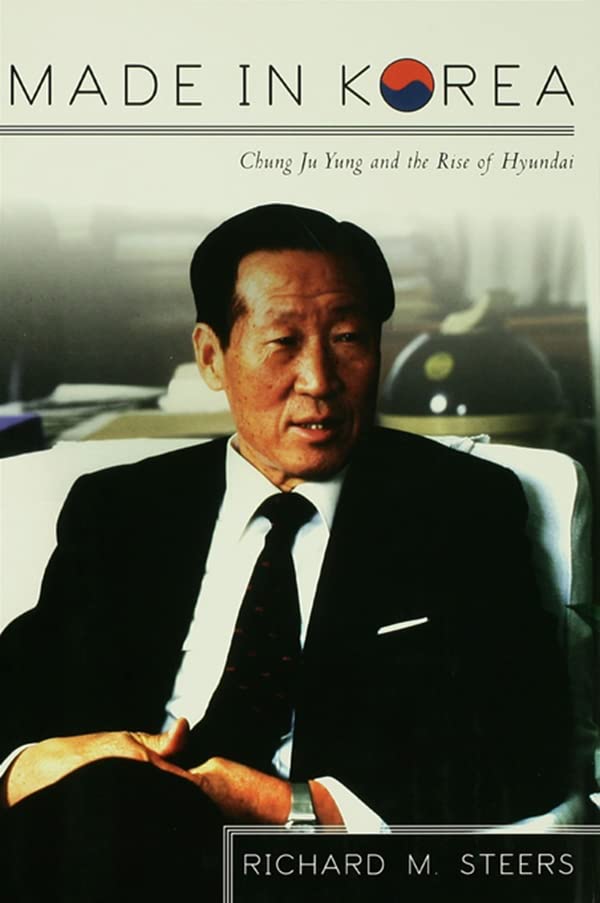
⚡️ What is Made in Korea about?
“Made in Korea” is the powerful and inspiring autobiography of Chung Ju-yung, the founder of the Hyundai Group. The book chronicles his incredible journey from extreme poverty as a farmer’s son to becoming the head of one of the world’s largest conglomerates. It’s a raw, firsthand account of the post-war Korean economic miracle, told through the eyes of a man who was at its very center. Chung Ju-yung details his Made in Korea philosophy, one built on sheer willpower, relentless action, and an unwavering belief that nothing is impossible. This isn’t just a business memoir; it’s a testament to the human spirit’s capacity to overcome immense adversity and build something of lasting value for oneself and one’s country.
🚀 The Book in 3 Sentences
- Made in Korea is the ultimate rags-to-riches story, proving that relentless determination can overcome any obstacle.
- Chung Ju-yung’s core philosophy is to act first and think later, a mindset that fueled Hyundai’s improbable rise.
- The book demonstrates how building a successful business can be intrinsically linked to lifting a nation out of poverty.
🎨 Impressions
>Reading Made in Korea feels less like reading a polished business book and more like listening to a determined, weathered grandfather tell his life story. The narrative is direct, unpretentious, and incredibly motivating. What struck me most was the sheer scale of Chung’s ambition and his absolute refusal to accept “no” for an answer. The famous Korean “palli, palli” (hurry, hurry) culture is palpable in every chapter. It’s a gritty, no-excuses account of what it takes to build something from absolutely nothing, and it left me feeling both humbled and deeply inspired to tackle my own challenges with more grit.📖 Who Should Read Made in Korea?
>This book is essential reading for any entrepreneur or business leader who feels stuck or faces seemingly insurmountable odds. If you’re a student of economic history, especially the rise of East Asia, Made in Korea provides an invaluable primary-source perspective. It’s also perfect for anyone seeking a powerful dose of motivation and a reminder that our circumstances do not have to define our destiny. The lessons on willpower and risk-taking are universal and timeless.☘️ How the Book Changed Me
>Reading this book fundamentally shifted my perspective on risk and failure. I used to over-plan and hesitate, but Chung’s story has instilled in me a bias for action. My thoughts have moved from “What if I fail?” to “What if I don’t even try?” It’s a profound change that has already led to tangible progress in my personal projects.- I now embrace the “just do it” mentality from the Made in Korea philosophy, starting tasks immediately rather than procrastinating.
- I’ve become more resilient in the face of setbacks, viewing them as necessary data points rather than final judgments.
- I am more willing to take calculated risks, understanding that great rewards rarely come from playing it safe.
- The book inspired me to think bigger and connect my personal goals to a larger purpose.
✍️ My Top 3 Quotes
- “A person who tries will succeed. A person who doesn’t has already failed.”
- “I started with nothing but my two hands. An empty-handed person is not afraid of losing anything.”
- “Be the first to pioneer a new field. Even if you fail, you will have gained valuable experience.”
📒 Summary + Notes
This summary of Made in Korea breaks down the incredible journey of Chung Ju-yung, chapter by chapter. His life is a masterclass in entrepreneurship, resilience, and nation-building. We will explore how a young boy with nothing but a fierce will to escape poverty created a global industrial powerhouse, fundamentally shaping the modern identity of South Korea. Each chapter reveals a new layer of his indomitable spirit and the core Made in Korea strategies he employed to turn the impossible into reality.
Chapter 1: A Farmer’s Son
This chapter lays the foundation for Chung’s entire life, detailing his birth into a large, impoverished farming family in rural Korea. He describes the harsh realities of his childhood, the constant hunger, and the back-breaking labor. This environment forged his initial and most fundamental belief: that he had to escape. His determination was not born from business textbooks but from a visceral desire for a better life. This early period instilled in him a relentless work ethic and a deep understanding of the value of a single coin, lessons that would serve him for decades. It’s here we see the first sparks of his defiant nature.
- The profound impact of poverty on shaping ambition.
- His first act of rebellion: running away from home to escape a pre-arranged marriage and seek work in the city.
- The importance of a clear, powerful “why” – his motivation was survival and freedom.
- How physical labor from a young age builds not just muscle, but mental toughness.
- The realization that education and opportunity were his only tickets out.
Chapter 2: Rice and a Dream
After escaping his village, Chung takes on any job he can find, from working at a dock to a construction site. He eventually lands a job at a rice store, where he learns the basics of business: integrity, customer service, and managing finances. This chapter is a masterclass in grassroots business education. He didn’t have an MBA; he had a keen eye for opportunity and an unwavering commitment to honesty. He saved every penny, demonstrating the discipline that would become a hallmark of his career. The “dream” begins to form here—not just of personal wealth, but of building something substantial and respected.
- The value of learning a business from the ground up.
- How trust and reputation are the most valuable assets for a young entrepreneur.
- Chung’s first business venture: a small auto repair shop, which he lost but learned invaluable lessons from.
- The principle of reinvesting profits for growth, even when it means personal sacrifice.
- The importance of serving customers with dedication to build loyalty.
Chapter 3: The War Years
The outbreak of the Korean War brings devastation but also opportunity. Chung’s business acumen shines as he navigates the chaos. He secures contracts from the U.S. military, performing construction and transport services. This period was a crucible, testing his ability to operate under extreme pressure and uncertainty. He learned to be resourceful, finding ways to get things done when formal systems had broken down. The war taught him that action in the face of chaos is what creates value. It was during this time that he laid the groundwork for what would eventually become the Hyundai Construction Company, turning wartime disruption into a launchpad for his future empire.
- How crisis can be a powerful catalyst for entrepreneurship.
- The importance of adaptability and resourcefulness when supply chains and infrastructure are destroyed.
- Building relationships with key partners, even in chaotic environments.
- Learning to manage large-scale logistics and operations under pressure.
- The foundational role of Hyundai Construction in the entire Hyundai Group.
Chapter 4: Starting Hyundai
This chapter details the official founding of the Hyundai Motor Industrial Company in 1947, which later became Hyundai Construction. Chung’s vision was clear: to rebuild Korea. He secured major government contracts, often by undercutting competitors and promising faster completion times. This was where the “palli, palli” (hurry, hurry) culture of Hyundai was born. He pushed his teams to the brink, demanding results that others thought impossible. This section highlights the Made in Korea techniques of sheer will and speed. It wasn’t always elegant, but it was effective. He was building a reputation for delivering on promises, no matter how bold.
- The strategic importance of aligning your business with national reconstruction goals.
- How to win contracts by promising what others can’t: speed and reliability.
- The creation of a corporate culture centered on urgency and execution.
- The challenges of managing rapid growth and securing capital in a post-war economy.
- Chung’s hands-on leadership style, often visiting construction sites himself.
Chapter 5: Building the Nation
Hyundai Construction becomes synonymous with Korea’s development. Chung takes on landmark projects, including the expressway connecting Seoul to Busan. This was more than just a construction project; it was a symbol of a new, connected, and modern Korea. Chung saw his work as a patriotic duty. He believed that by building Hyundai, he was building the nation. This chapter explores the deep connection between his personal ambition and his national pride. He faced immense skepticism and political hurdles, but his unwavering belief in Korea’s potential fueled his persistence. He was not just building roads and dams; he was building the nation’s confidence.
- The power of aligning corporate mission with a national purpose.
- How landmark infrastructure projects can transform a country’s economy and spirit.
- Navigating political landscapes and securing government support.
- The immense logistical challenges of building the Seoul-Busan Expressway.
- Using business success as a form of national service and patriotism.
Chapter 6: The Shipyard
This chapter contains one of the most famous stories in the book: Chung’s decision to build a shipyard despite having zero experience in shipbuilding. To secure a loan from a British bank, he famously brought them a 500-won Korean coin, explaining that it was made of the same high-quality copper they would use. He sold the idea of building two massive oil tankers before the shipyard was even built. It was the ultimate act of calculated audacity. This story perfectly encapsulates his philosophy: commit first, then figure out how to deliver. The successful completion of the ships put Hyundai and Korea on the global industrial map.
- The power of a bold vision to attract investment and talent.
- The art of the “sale” – convincing others of your vision before you have proof.
- The story of the 500-won coin as a symbol of commitment and quality.
- Overcoming the “impossible” label by breaking down a massive project into manageable steps.
- How this single project launched Korea as a major player in the global shipbuilding industry.
Chapter 7: Cars and Heavy Industry
Not content with construction and shipbuilding, Chung sets his sights on the automobile industry. He partners with Ford Motor Company to build the Cortina in Korea, but his ultimate goal is to create Korea’s first entirely domestic car. This leads to the birth of the Pony. The journey was fraught with technical challenges, skepticism from foreign partners, and immense pressure. Chung’s determination was the driving force. He invested heavily in R&D and sent engineers abroad to learn. This chapter showcases his commitment to technology transfer and building domestic capability. He understood that for Korea to truly be independent, it needed its own advanced industries.
- The strategic move from assembly to full-scale manufacturing and design.
- The development of the Hyundai Pony as a symbol of Korean technological independence.
- The challenges of breaking into an industry dominated by established global players.
- The importance of investing in long-term R&D, even when short-term profits are uncertain.
- How Hyundai Motors became a cornerstone of Korea’s industrial identity.
Chapter 8: Going Global
With a strong domestic base, Chung begins to take Hyundai global. This wasn’t just about exporting products; it was about establishing a presence in international markets. He entered the Middle East construction market, winning massive projects and earning a reputation for speed and efficiency. He also began exporting cars, starting with the Pony to markets like Canada and South America. This chapter details the Made in Korea strategies for international expansion. It required understanding different cultures, navigating complex international regulations, and competing with established global giants on their own turf. Chung’s global vision was ambitious, aiming to make Hyundai a household name worldwide.
- The importance of proving your capabilities in demanding foreign markets, like the Middle East.
- The challenges of exporting Korean products, especially cars, and overcoming perceptions of quality.
- Building a global brand through performance and reliability, not just marketing.
- Establishing overseas manufacturing and R&D centers to become a true global player.
- The shift from being a national champion to a multinational corporation.
Chapter 9: A Vision for the Future
In this chapter, Chung reflects on his journey and looks to the future. He discusses his vision for Hyundai and for Korea. His ambitions extended beyond business into areas like diplomacy and even tourism, famously pioneering tourism to North Korea’s Mount Kumgang. He talks about the importance of continuous innovation and not resting on past laurels. This is a more philosophical chapter, where he shares his thoughts on leadership, responsibility, and the next generation. He emphasizes that the “palli, palli” spirit must be coupled with long-term strategic thinking to ensure sustainable growth. His vision was always one step ahead, pushing his company and his country to dream bigger.
- The importance of looking beyond immediate profits to long-term legacy.
- Chung’s foray into diplomacy and his efforts to engage with North Korea.
- The concept of a business leader having a broader social and political responsibility.
- The need to foster the next generation of leaders to continue the vision.
- Embracing change and technology to stay ahead in a competitive global market.
Chapter 10: Giving Back
The final chapter focuses on Chung’s philosophy of philanthropy and social responsibility. Having amassed immense wealth, he believed it was his duty to give back to the society that made his success possible. He established the Asan Foundation, which has funded countless social welfare, medical, and educational projects. He also believed in creating opportunities for others through job creation and economic development. For Chung, giving back wasn’t an afterthought; it was an integral part of his life’s work. This chapter closes the loop, showing how his journey from a poor farmer’s son to a billionaire industrialist was always driven by a desire to contribute to something larger than himself.
- The principle that wealth comes with a profound responsibility to society.
- The establishment of the Asan Foundation as a vehicle for systematic philanthropy.
- Creating a legacy that is measured not just in corporate profits, but in social impact.
- The importance of education and social welfare in building a strong nation.
- How true success is about lifting others up as you climb.
Key Takeaways
The story of Made in Korea offers several profound lessons for anyone striving to achieve something extraordinary. Chung Ju-yung’s life is a blueprint for turning vision into reality through sheer force of will. The most critical lessons revolve around mindset, action, and purpose. These are not just business strategies; they are life philosophies that can be applied to any field or personal challenge.
- The power of unwavering will can overcome a lack of resources, experience, or connections. \li>Adopt an action-first mentality. Don’t wait for the perfect plan; start now and figure it out along the way.
- Embrace calculated risks, especially when others say it’s impossible. This is where the greatest opportunities lie.
- Align your personal ambitions with a greater purpose, whether it’s your community, your country, or a cause you believe in.
- Never stop learning and be willing to venture into completely new fields, trusting in your ability to master them.
Conclusion
“Made in Korea” is more than just the story of a company; it’s the story of a nation’s rebirth, told through the eyes of its most driven son. Chung Ju-yung’s memoir is a raw, inspiring, and essential read for anyone who needs a reminder that human potential is limitless. His life demonstrates that with enough determination, you can move mountains—literally. The lessons on leadership, risk-taking, and resilience are timeless. If you are looking for a book that will challenge your assumptions about what is possible and ignite a fire in you to act, then you must read the full story of Made in Korea. It’s a powerful testament to the idea that one person’s will can indeed change the world.
More From Chung Ju-yung →
Discover more from AI Book Summary
Subscribe to get the latest posts sent to your email.