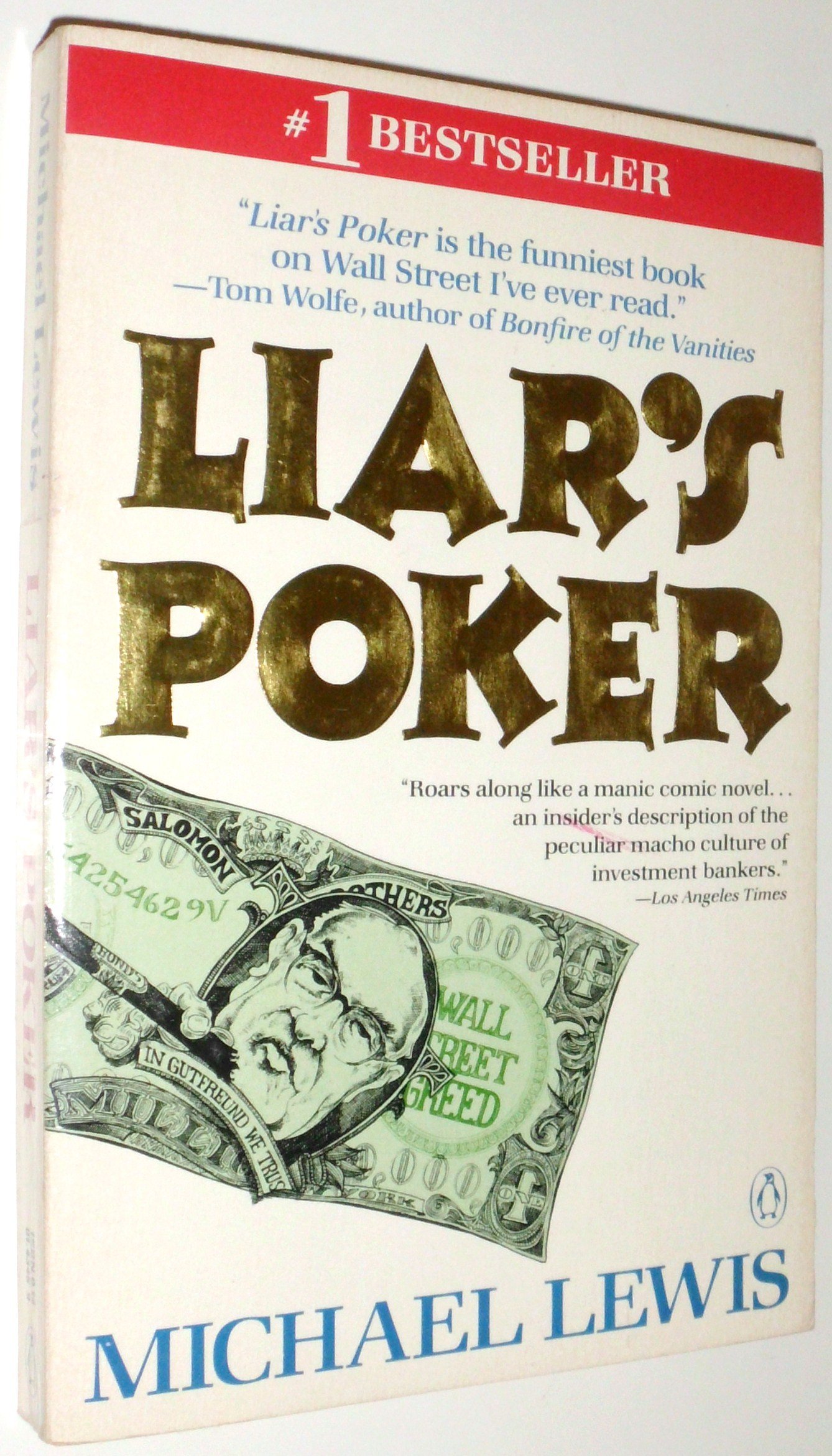
⚡️ What is Liar’s Poker About?
I read this book and immediately felt two things: a deep sense of relief that I wasn’t on a trading floor in 1985, and an odd, lingering suspicion that the world hasn’t actually changed that much. Michael Lewis didn’t just write a memoir; he wrote an autopsy of an era. Fresh out of Princeton with an art history degree and a master’s from the LSE, Lewis somehow bluffed his way into Salomon Brothers, which was then the undisputed king of the bond market. More summaries by Michael Lewis usually hit on these themes of systems being rigged or misunderstood, but this was where it all began.
The central argument here is that Wall Street in the 1980s stopped being a place where people allocated capital and started being a place where people exploited it. It’s a rowdy, profanity-laced look at how the mortgage-backed security was born and how a culture of pure greed eventually ate its own. If you’re looking for other finance book summaries, you’ll find plenty of technical manuals, but this is a character study of the people holding the levers of the economy.
🚀 The Book in 3 Sentences
- Investment banking in the 80s was a psychological bloodsport where intimidation mattered more than economic insight.
- Salomon Brothers revolutionized finance by turning boring home mortgages into high-octane tradable bonds, effectively creating the modern financial world.
- The pursuit of the “Big Swinging Dick” status—a top-tier trader—created an environment where burning customers for a quick profit was celebrated as a victory.
🎨 Impressions
Honestly, I found the blatant infantalism of the traders both hilarious and terrifying. There’s a moment early on where trainees are throwing spitballs and calling phone sex lines during lectures, and it hits you: these are the people moving billions of dollars. Lewis has this incredible ability to make you feel like you’re sitting at the desk next to him, smelling the stale coffee and feeling the sweat on the back of your neck as a senior trader screams in your ear. It doesn’t read like a dry finance text; it reads like a war dispatch from the front lines of capitalism.
What surprised me most was the sheer lack of actual knowledge required to succeed. You’d think a bond salesman would need to be a math wizard, but Lewis shows that it was really about who could stay on the phone the longest and lie with the most conviction. I dog-eared the sections on the mortgage department because it’s the origin story of the 2008 crash, written twenty years before it happened. It’s cynical, fast-paced, and makes you want to keep your money under a mattress.
📖 Who Should Read Liar’s Poker?
If you’ve ever watched the news and wondered how the financial system got so bloated and disconnected from reality, this is your guidebook. It’s perfect for history buffs and anyone entering the finance industry who wants to see the “id” of the beast. However, if you’re looking for a book that will teach you how to actually trade bonds or understand yield curves in a technical way, you should probably skip this. It’s a book about people, not percentages.
☘️ How This Book Changed My Thinking
Before reading this, I assumed that Wall Street was a meritocracy of the smartest people in the room. Now, I see it as a hierarchy built on risk-tolerance and the ability to project certainty in an uncertain world.
- I stopped trusting “expert” financial advice that comes with high-pressure sales tactics.
- I realized that financial innovation (like mortgage bonds) is often just a way to hide risk rather than eliminate it.
- I learned that corporate culture can override individual ethics almost instantly if the incentives are high enough.
✍️ 3 Quotes That Stuck With Me
- “If he could make millions of dollars come out of those phones, he became that most revered of all species: a Big Swinging Dick.” — This perfectly captures the vulgarity and simplicity of the firm’s hierarchy.
- “The bond market is like a jungle. It has its own rules, and the rules are: there are no rules.” — It highlights the lawlessness that Lewis felt as a young salesman.
- “He had a way of looking at you that made you feel like you were a piece of meat he was deciding whether or not to eat.” — My reaction to this was visceral; it describes the predatory nature of the leadership.
📒 Summary + Notes
The book follows Michael Lewis as he survives the Salomon Brothers training program and eventually lands on the London trading desk. But while the autobiography is the hook, the real story is the rise and fall of Salomon itself. The firm went from a partnership where people actually cared about the company’s long-term health to a public corporation where everyone was just trying to grab their bonus and run. It’s a tragedy dressed up as a comedy.
Lewis argues that the creation of the mortgage-backed security changed the world. Before this, a mortgage was a boring contract between a person and a bank. Salomon figured out how to bundle thousands of these together and sell them to investors. This created massive liquidity, but it also created a machine that needed to be fed. When they ran out of good mortgages, they started looking for bad ones. This greed, combined with a total lack of internal oversight, eventually led to the firm losing its dominance to more aggressive players like Michael Milken and his junk bonds.
🧠 Core Ideas Explained Simply
Because the book covers the 1980s bond market, some of the mechanics feel like ancient history, but the principles are still active today.
The Concept of the “Big Swinging Dick”
This isn’t just a crude nickname; it was the actual metric of success. If you made the firm enough money, you were untouchable. You could abuse subordinates, ignore the CEO, and behave like a caveman because your “P&L” (Profit and Loss) justified everything. It’s the ultimate example of how profit can be used to excuse toxic behavior.
Mortgage-Backed Securities (MBS)
Why was this a big deal? Before the 80s, if a bank lent you money for a house, they were stuck with that loan for 30 years. Salomon changed this by buying those loans from banks and turning them into bonds. This allowed banks to lend more money and allowed Salomon to skim a fee off every single transaction. It’s the foundation of the modern housing market and, eventually, the 2008 crisis.
Information Asymmetry
The traders at Salomon knew exactly what the bonds were worth, but their customers (mostly small-town pension fund managers) didn’t. The job of the salesman was to use this gap to “blow up” the customer—selling them overpriced junk to clear the firm’s own books. It proves that in finance, the person with the most data usually wins, even if they aren’t the smartest.
1: Liar’s Poker
Did John Gutfreund, the CEO of the world’s most powerful investment bank, really think he could out-bluff his top trader for a million dollars? The book opens with a legendary scene where Gutfreund challenges John Meriwether to a single hand of Liar’s Poker—a game of bluffing with the serial numbers on dollar bills. The stakes were a million dollars, “no tears.” Meriwether’s response—calling for $10 million instead—forced the CEO to back down.
This isn’t just a fun anecdote; it sets the tone for the entire firm. It showed that on the trading floor, the person with the most nerve was the real boss, not the person with the title. It also highlighted a dangerous culture where gambling with huge sums of money was seen as a prerequisite for respect.
2: Never Shake the Money Tree
It all started with an Art History degree and a lot of nerve. Lewis recounts his journey from a Princeton graduate who knew nothing about money to an accidental banker. He describes the interview process at the time as a bizarre ritual where firms weren’t looking for economists, but for people who were hungry, aggressive, and willing to be molded.
Lewis’s admission that he only wanted the job because of the paycheck is refreshingly honest. He captures the zeitgeist of the early 80s, where the smartest minds of his generation were suddenly being pulled away from academia and into the “money culture” of Wall Street. Ever wonder how we ended up with a world where the best mathematicians are building trading algorithms instead of rockets? This is where that shift began.
3: Learning to Love the Corpse
The training program was less of a school and more of a frat initiation. New recruits were called “Geeks” and were expected to endure hours of boredom and abuse. Lewis describes the lecturers—actual finance experts—being heckled and ignored by the trainees. The goal wasn’t to teach them how the market worked, but to see who had the thickest skin.
There’s a specific moment where Lewis realizes that the people who were “polite” or “thoughtful” were being weeded out. The firm wanted killers. They wanted people who would fight over a seat on the trading floor or a better telephone. It was a Darwinian struggle designed to produce a specific type of personality: one that prioritized winning over everything else.
4: Adult Education
How do you convince a group of Ivy League graduates to scream at each other for ten hours a day? By paying them more money than they could ever spend. Lewis details the transition from the classroom to the floor, where the real “education” happened. You learned by watching senior traders “blow up” customers and laughing about it later.
He introduces the idea that the bond market was the “backwater” of finance until Salomon made it sexy. While the guys in suits at Morgan Stanley were doing mergers and acquisitions, the guys in short sleeves at Salomon were making much more money by moving debt around. It was a dirty, high-volume business that required a specific kind of mental toughness.
5: The Golden Boy
Lewis Ranieri didn’t look like a Wall Street titan; he looked like a guy who should be working in a deli. Yet, he was the visionary who realized that the American dream of homeownership could be commodified. This chapter is a deep dive into the creation of the Mortgage-Backed Securities department. Ranieri took a group of outcasts and turned them into the most profitable desk in the history of the firm.
The story of the “Mortgage Boys” is one of pure hustle. They spent years traveling to tiny banks across the country, buying up mortgages that no one else wanted. They were the pioneers of what would eventually become the largest market in the world. It’s a fascinating look at how a single, simple idea can completely transform the global economy.
6: The Fat Men and Their Magic Money Machine
Imagine turning a boring mortgage into a high-octane gambling chip. That’s exactly what happened once the mortgage market took off. Salomon went from being a scrappy underdog to a “money machine” that didn’t know how to stop. The profits were so large that the firm’s leadership didn’t even understand where they were coming from.
But with that success came massive egos. The mortgage department became a kingdom within the firm, often at odds with the CEO and the rest of the partners. Lewis shows how the very thing that made them rich—the complexity of the bonds—was also the thing that made them dangerous. They were playing with fire, and they were the only ones who knew it.
7: The Jungle
Being a salesman at Salomon was like being a soldier in a war where the only objective was to take someone else’s money. Lewis describes the daily grind of making hundreds of phone calls, trying to convince clients to buy bonds that the firm didn’t want to hold anymore. It was all about “the edge.” If you didn’t have an edge over the person on the other end of the line, you were losing.
He talks about the “Law of the Jungle,” where the weak were eaten and the strong were promoted. There was no room for empathy. If a customer lost money because of a trade you suggested, that was their fault for being stupid. It’s a bleak look at the ethics of sales, and it explains why the public’s trust in banks is so low.
8: The Human Piranha
Profanity was the primary language of the trading floor, and no one spoke it better than the “Human Piranha.” This chapter focuses on a specific trader who embodied the aggressive, take-no-prisoners attitude of the firm. He used foul language not just out of anger, but as a tool for intimidation. It was a way to keep everyone around him off-balance.
Lewis uses this character to show how the firm’s culture rewarded the most extreme personalities. You didn’t get ahead by being a “team player”; you got ahead by being the loudest, meanest, and most profitable person in the room. It’s a hilarious and disturbing portrait of what happens when there are no adult supervisors in the room.
9: The Art of War
Market manipulation wasn’t a crime; it was just a strategy. Lewis describes how the firm would use its massive size to corner markets or squeeze competitors. They weren’t just trading against the market; they were trying to break it. The goal was to create a situation where Salomon was the only source of liquidity, allowing them to charge whatever they wanted.
This chapter also covers the beginning of the end for the firm’s dominance. Other banks were starting to catch up, and Salomon’s internal infighting was becoming a liability. They were so focused on fighting each other that they didn’t notice the world was changing around them. It’s a classic case of corporate hubris.
10: How Can a Guy with Sixty Million Dollars Be So Unhappy?
Ever wonder why people who have everything still seem so miserable? Lewis looks at the senior partners who were making tens of millions of dollars but were consumed by jealousy and fear. They were constantly looking over their shoulders, worried that someone younger and hungrier was going to take their spot. The money didn’t bring them peace; it just raised the stakes of the game.
The burnout rate was astronomical. People would work like dogs for five years, make a fortune, and then disappear. It was a soul-crushing environment where your value was reset to zero every single morning. Lewis started to realize that he didn’t want to end up like them—wealthy but hollow.
11: The End
Why did Michael Lewis walk away from a multi-million dollar career? Because he realized that the “Wreckage on Wall Street” wasn’t something he wanted to be a part of anymore. He saw the firm he joined—a place of raw energy and innovation—turning into a bureaucratic mess of greed and incompetence. The hostile takeover attempt and the departure of key figures like Ranieri were the final signs.
In the end, Lewis chose to write this book rather than become another “Big Swinging Dick.” He left just as the 80s boom was ending, avoiding the fallout of the scandals that would eventually hit Salomon. It’s a fitting conclusion to a story about a man who saw the jungle for what it was and decided he’d rather be a tourist than a predator.
⚖️ A Critical Perspective
I have to be honest: Lewis is a master storyteller, but he definitely leans into the “caricature” aspect of finance for entertainment. He tends to oversimplify the actual economic utility of bond liquidity because the story of a “Human Piranha” is just more fun to read. Also, he paints himself as a somewhat innocent observer, when in reality, he was a very successful participant in the very tactics he decries. He also largely ignores the fact that while Salomon was a mess, they did genuinely modernize the way people buy homes. It’s a great narrative, but don’t mistake it for a balanced economic history.
🔄 How It Compares
If you compare this to Barbarians at the Gate, the biggest difference is the scope. While Barbarians focuses on a single corporate takeover with surgical detail, Liar’s Poker is a much more personal, visceral look at the day-to-day culture of a firm. It’s less about the spreadsheets and more about the screaming. It’s closer in spirit to The Wolf of Wall Street, but with a much higher IQ and more focus on the actual mechanics of the bond market.
🔑 Key Takeaways
Here are the core lessons from the wreckage of the 80s bond market:
- Incentives dictate behavior: If you pay people based on short-term volume, they will sacrifice long-term stability every single time.
- Complexity is a sales tool: Most financial products are made complex specifically so that the salesman has an information advantage over the buyer.
- Corporate culture is contagious: Even “good” people will behave ruthlessly if they are placed in an environment where ruthlessness is the only path to respect.
- Innovation often outpaces regulation: The mortgage market became a monster because no one in the government actually understood what Lewis Ranieri was doing until it was too late.
💬 Frequently Asked Questions
What is the main argument of Liar’s Poker?
The book argues that Wall Street culture in the 1980s became a predatory “jungle” where ego and greed eclipsed financial service. It highlights how Salomon Brothers pioneered mortgage-backed securities, transforming boring debt into a volatile gambling tool, while fostering a toxic environment that prioritized short-term profits over ethics or customer welfare.
Who is Lewis Ranieri in Liar’s Poker?
Lewis Ranieri was the head of the mortgage department at Salomon Brothers and is credited with creating the mortgage-backed security market. Lewis portrays him as a visionary outsider who turned an overlooked corner of finance into the firm’s most profitable engine, essentially birthing the modern housing finance system through sheer persistence.
Is Liar’s Poker a true story?
Yes, it is a semi-autobiographical non-fiction account of Michael Lewis’s time as a bond salesman from 1985 to 1988. While some names and minor details may be stylized for narrative flow, the key figures, the culture of Salomon Brothers, and the financial events described are based on Lewis’s real experiences on Wall Street.
What does “Big Swinging Dick” mean in finance?
In the context of the book, it is a vulgar term used at Salomon Brothers to describe a top-performing trader or salesman. It represented the pinnacle of the firm’s hierarchy, where making massive profits granted a person total immunity from social norms, allowing them to act with extreme aggression and arrogance.
Why is Liar’s Poker considered a classic?
It is considered a classic because it was the first book to truly “pull back the curtain” on the secret, rowdy world of 1980s bond trading. It captured a turning point in financial history and served as both a cautionary tale and, ironically, a primary recruitment tool for future generations of bankers.
Conclusion
Looking back, Liar’s Poker is a reminder that the biggest risks in the world aren’t the ones you find on a chart; they’re the ones hidden in the psychology of the people managing the money. Michael Lewis gave us a front-row seat to the moment Wall Street lost its mind, and in doing so, he created a framework for understanding every financial crisis that has happened since. It’s a book about how we value things, how we trick ourselves into thinking we’re in control, and why the “jungle” always wins in the end.
The one thing you should carry with you is the realization that in any complex system, the person who screams the loudest or uses the most jargon isn’t necessarily the person who knows what they’re doing. They’re often just playing a high-stakes hand of Liar’s Poker. If you enjoyed this look into the mechanics of the market, you might want to explore more finance book summaries to see how these themes have evolved in the digital age. This book isn’t just about the 80s—it’s about the eternal human struggle between greed and sense.
More From Michael Lewis →
Discover more from AI Book Summary
Subscribe to get the latest posts sent to your email.