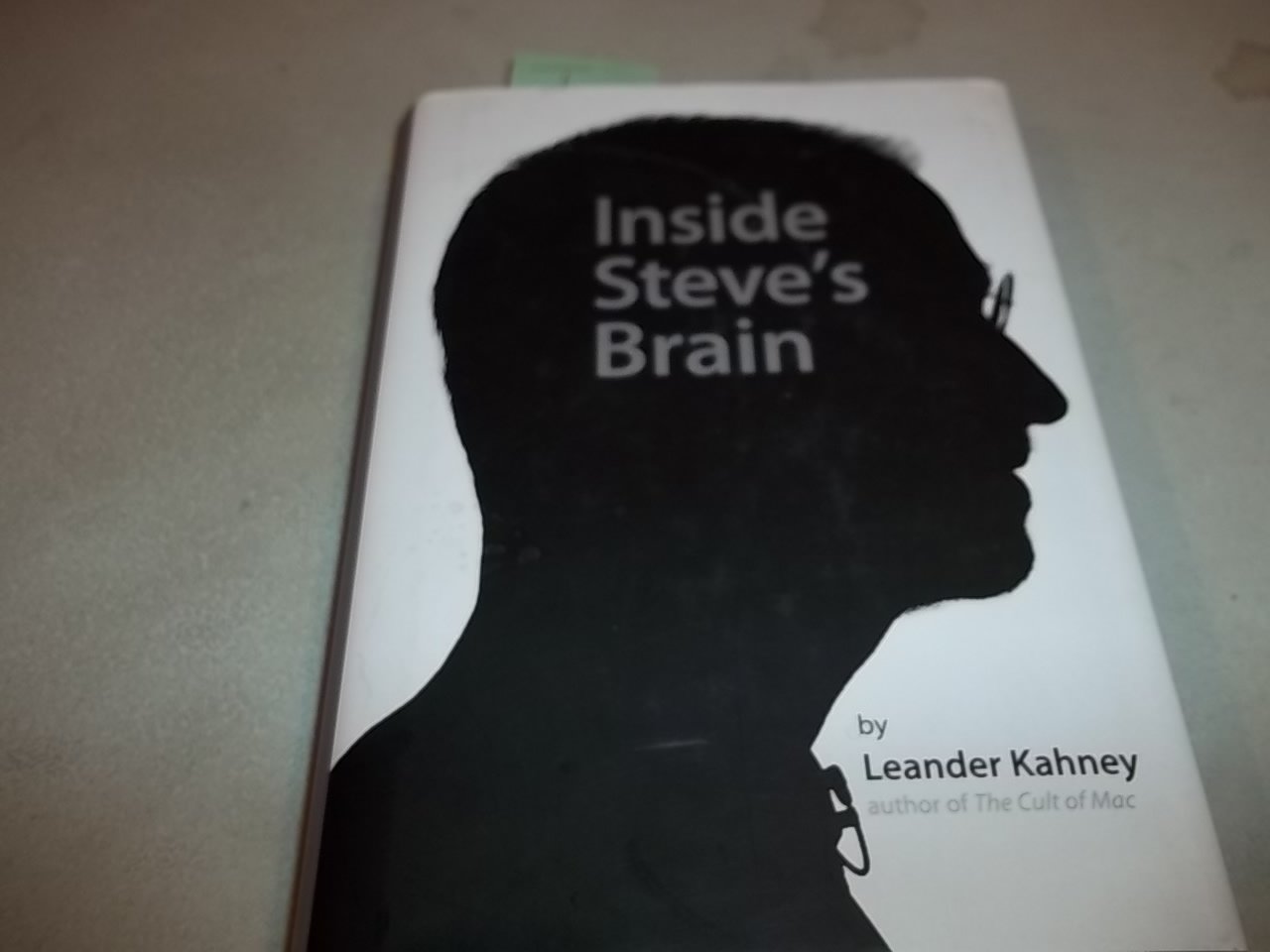
⚡️ What is Inside Steve’s Brain About?
Have you ever noticed the way an iPhone box slides open? There’s a specific amount of air resistance—a tiny “whoosh”—that makes the act of opening a phone feel like a religious ritual. I used to think this was just luck, but after finishing this book, I realized it was the result of a packaging designer spending months in a windowless room doing nothing but opening boxes. This is the central thesis of More summaries by Leander Kahney: that Steve Jobs didn’t just build gadgets; he engineered every single microscopic interaction between a human and a machine.
Kahney argues that Jobs’ greatest gift wasn’t invention—it was refinement. He took existing, clunky technologies like MP3 players and tablet computers and polished them until they felt inevitable. In this business book summaries selection, we look at how a man who was frequently called a ‘despot’ and an ‘asshole’ managed to lead a team of people who were so obsessed with his vision that they worked 90-hour weeks and loved him for it. Is it possible to be both a terror and a visionary? Kahney thinks so, and he lays out the mental frameworks that made it happen.
🚀 The Book in 3 Sentences
- Innovation isn’t about creating something from scratch; it’s about identifying ‘great’ ideas in other industries and ‘stealing’ them to solve complex user problems.
- Real focus requires saying no to a thousand good ideas so you can give all your energy to the one ‘insanely great’ one.
- Design is the fundamental soul of a human-made creation, not just an outer layer or a pretty aesthetic.
🎨 Impressions
I’ve read the massive Walter Isaacson biography of Jobs, but this book felt different. It’s less of a chronological life story and more like a field guide to his brain. It’s punchy. It’s focused. Honestly, I found the section on his management style—the ‘Getting Steved’ part—both terrifying and oddly inspiring. It made me wonder: have I been too soft on my own standards? Kahney doesn’t sugarcoat the fact that Jobs could be a nightmare to work for, but he balances it by showing the ‘messianic zeal’ that kept people from quitting.
The chapter on the ‘Unboxing Experience’ is the one I dog-eared the most. I’ll never look at a cardboard box the same way again. It’s fascinating to see how Apple treats packaging as a product in its own right. Some parts of the book feel a bit dated now—it was written while Jobs was still alive and the iPhone was a toddler—but the core principles of design and focus haven’t aged a day. If anything, they’re more relevant in a world where every app is trying to do too many things at once.
📖 Who Should Read Inside Steve’s Brain?
If you’re a product manager or a designer who feels like your work is becoming ‘diluted’ by committee decisions, you need to read this. It’s also for the entrepreneur who struggles with saying no to new features. However, if you’re looking for a traditional ‘servant leadership’ manual or a guide on how to be a nice boss, you’ll probably find this book frustrating. This is for the people who want to build things that leave a dent in the universe, even if the process is messy.
☘️ How This Book Changed My Thinking
I used to think that being a ‘visionary’ meant coming up with something no one had ever seen before. Now I realize it’s more about having the taste to recognize what’s already out there and the courage to strip away the junk until only the essentials remain.
- I stopped trying to add ‘value’ through new features and started looking for what I could remove to make the core experience better.
- I realized that ‘focus’ isn’t just a buzzword; it’s a painful process of killing your favorite projects to save the best one.
- I’ve become much more attentive to the ‘last 5%’ of a project—the tiny details that most people ignore but everyone subconsciously feels.
✍️ 3 Quotes That Stuck With Me
- “Design is not just what it looks like and feels like. Design is how it works.” — This completely reframes design as an engineering challenge rather than an artistic one.
- “Focus means saying no to the hundred other good ideas.” — It’s a reminder that saying ‘no’ is a survival skill for any great product.
- “Good artists copy, great artists steal.” — This quote, which Jobs famously borrowed from Picasso, is the ultimate justification for Apple’s ‘borrowing’ of the GUI and the mouse.
📒 Summary + Notes
Inside Steve’s Brain is built around the idea that Jobs’ personality—his intensity, his narcissism, and his obsession—was his business philosophy. Kahney argues that Apple’s success wasn’t because Jobs was a nice guy, but because he was a ‘system thinker’ who controlled every aspect of the user experience. By refusing to let other companies touch the software or the hardware, Jobs ensured that the final product was exactly what he envisioned, with no compromises.
The book follows the narrative arc of Jobs’ return to Apple in 1997. At the time, the company was weeks away from bankruptcy. Jobs didn’t save it by launching ten new products; he saved it by killing 70% of the existing ones. This ‘pruning’ allowed the company to put all its best people on just four machines. The takeaway is clear: excellence is impossible if you are spread too thin. By the end of the book, you realize that Jobs’ goal wasn’t to make money—it was to make things that were ‘insanely great,’ and the money was just a byproduct of that obsession.
1: Focus
What happens when a company has too many products and none of them are great? When Jobs returned to Apple, he found a sprawling mess of printers, servers, and dozens of Mac variations. In a legendary move, he drew a simple two-by-two grid on a whiteboard: ‘Consumer’ vs ‘Pro’ and ‘Desktop’ vs ‘Portable’. He told his team to focus on just those four boxes and cancel everything else. It was a bloodbath, but it saved the company.
Focus isn’t just about what you do; it’s about the emotional discipline to kill things you like. Jobs famously said that he was as proud of the things they didn’t do as he was of the things they did. For example, the iPhone didn’t have a physical keyboard because Jobs knew it would clutter the design, even though everyone at the time thought a keyboard was mandatory. Do you have the guts to say no to a feature your customers are screaming for?
2: Despotism
Imagine being in an elevator and having the CEO ask you, “So, what have you done for the company lately?” This was the reality of ‘Getting Steved.’ Jobs had zero patience for ‘bozos’—his term for average employees. He believed that A-players only want to work with other A-players, and that a single B-player could ‘bozo-ify’ an entire department. This created a culture of fear, but also a culture of extreme pride. If you survived a meeting with Steve, you knew you were one of the best in the world.
Was he an asshole? Probably. But Kahney points out that his ‘assholery’ was usually directed at making the product better. He would scream about a screw being visible on the bottom of a laptop or a menu bar being two pixels too wide. He used his ‘Reality Distortion Field’ to convince engineers they could do the impossible, like building the original Macintosh software in a fraction of the time it should have taken. Passion, it seems, is the only thing that makes this kind of leadership sustainable.
3: Perfectionism
Did you know that the inside of the original Macintosh was signed by the engineers, even though no customer would ever see it? Jobs insisted that a great carpenter doesn’t use a piece of bad wood for the back of a cabinet just because it’s against the wall. This perfectionism extended to everything from the shape of the icons to the way the glass was manufactured for the Apple Stores. He wasn’t just building tools; he was building artifacts.
- He obsessed over the ‘unboxing’ experience because it was the first moment of physical contact with the brand.
- He refused to let the iPhone have a removable battery because it would ‘ruin the lines’ of the device.
- He made engineers redesign the circuit boards because he thought they looked ‘ugly,’ even though they worked perfectly.
4: Design
Why does every Apple product feel like it was designed by a single person? The answer is Jony Ive. Jobs and Ive shared a ‘messianic’ view of design. They believed that if you solve a complex problem correctly, the solution will appear ‘inevitable.’ They didn’t use focus groups because they believed customers didn’t know what they wanted until they saw it. This is a radical departure from the way most companies work, where design is often an afterthought handled by the marketing department.
Design, in Jobs’ world, was about simplicity. But simplicity is hard. It takes more work to make a product simple than to make it complex. The iPod’s scroll wheel is the perfect example. It replaced dozens of buttons with a single, intuitive interface. It felt ‘right’ because it was based on the way humans actually move. Are you making things simple, or just hiding the complexity behind a pretty screen?
5: Total Control
Why would anyone want a ‘closed system’ in an open world? For Jobs, it was about the experience. He hated the idea of Apple software running on ‘crappy’ hardware from other companies. By controlling the ‘whole widget’—the hardware, the software, and the retail store—he could guarantee that everything worked together perfectly. This is the ‘Apple Ecosystem’ we know today. It’s a walled garden, but it’s a garden where the flowers never wilt and the Wi-Fi always works.
⚖️ A Critical Perspective
While the book is a fantastic look at Jobs’ methodology, it occasionally teeters on the edge of hagiography. Kahney clearly admires Jobs, and as a result, he sometimes brushes off his more abusive behaviors as ‘necessary’ for greatness. In 2025, we have a much better understanding of the human cost of these high-pressure cultures. Furthermore, the book doesn’t really address the environmental or labor issues in Apple’s supply chain, which are major parts of the company’s story. It’s a great ‘how-to’ for product design, but a bit thin on the ethics of global manufacturing.
🔄 How It Compares
Compared to Walter Isaacson’s Steve Jobs, this book is much more focused on the business mechanics and design principles. Isaacson gives you the man; Kahney gives you the manual. If you want to know about Jobs’ childhood and personal relationships, read Isaacson. If you want to know how to run a design review or why your product feels cluttered, read Kahney.
🔑 Key Takeaways
These are the lessons you can apply to your own projects right now:
- Simplicity is the ultimate sophistication: If a feature isn’t absolutely necessary, kill it.
- Hire only A-players: One mediocre person can degrade the standards of an entire team.
- Control the whole experience: Don’t outsource the parts of your product that define the user’s feelings.
- Steal with style: Look at how other industries solve problems and adapt those solutions to your own field.
💬 Frequently Asked Questions
What is the ‘Reality Distortion Field’ mentioned in the book?
The Reality Distortion Field was Steve Jobs’ ability to convince himself and those around him that even the most impossible tasks could be achieved through sheer willpower. It allowed Apple to hit deadlines that seemed insane, though it often left employees feeling exhausted and burned out by the pressure.
How did Steve Jobs approach innovation differently than other CEOs?
Jobs didn’t believe in focus groups or market research. He believed that ‘innovation is saying no to 1,000 things’ and that a leader’s job is to have the taste to decide what the customer will need before they even know they want it themselves.
Why does the book emphasize the ‘Unboxing Experience’?
For Jobs, the box was as important as the phone. He saw the act of opening a product as the first ‘touchpoint’ with a customer. By perfecting the resistance of the box lid and the placement of accessories, he created a sense of value and anticipation.
What does ‘Getting Steved’ mean?
This refers to Jobs’ habit of confronting employees unexpectedly—often in elevators—and demanding they justify their existence at the company. It describes his intense, often abrasive management style that either motivated employees to do their best work or resulted in them being fired on the spot.
Is the management style in the book still applicable in modern business?
While the focus and design principles are timeless, Jobs’ high-pressure ‘despotism’ is controversial today. Many modern leaders argue that you can achieve ‘insanely great’ results through empathy and psychological safety rather than fear, though Jobs’ results remain a powerful counter-argument for extreme intensity.
Conclusion
Steve Jobs was a bundle of contradictions: a Buddhist who loved money, a ‘people person’ who was often cruel to his staff, and a visionary who admitted to ‘shamelessly stealing’ great ideas. Inside Steve’s Brain strips away the myth and shows us the gears turning. It teaches us that greatness isn’t a flash of lightning; it’s a relentless, daily commitment to not being ‘bozo-ified’ by mediocrity.
If you take only one thing from this book, let it be the power of focus. In an era where we are all distracted by a million tabs and endless ‘good’ ideas, the ability to say ‘no’ to everything except the ‘insanely great’ is the ultimate competitive advantage. Whether you’re building a multi-billion dollar company or just trying to fix your morning routine, Jobs’ brain offers a roadmap for doing it with style and uncompromising quality. Go build something beautiful. And make sure the inside looks as good as the outside.
More From Leander Kahney →
Discover more from AI Book Summary
Subscribe to get the latest posts sent to your email.