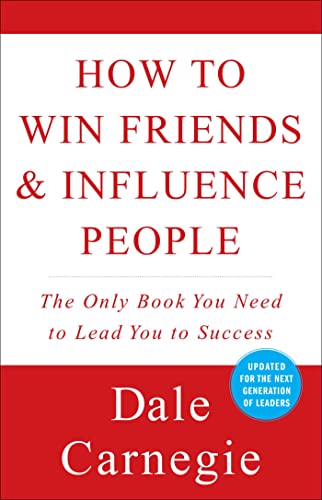
⚡️ What is How to Win Friends and Influence People about?
How to Win Friends and Influence People is a timeless self-help classic that teaches readers essential interpersonal skills for building relationships, communicating effectively, and influencing others positively. Written by Dale Carnegie in 1936, this book provides practical strategies for personal and professional success through improved human connections. The focus keyword “How to Win Friends and Influence People” represents the core philosophy of transforming social interactions through empathy, understanding, and genuine interest in others.
🚀 The Book in 3 Sentences
- How to Win Friends and Influence People teaches that genuine interest in others and sincere appreciation are fundamental to building lasting relationships.
- The book emphasizes that criticism and condemnation destroy relationships, while understanding and empathy create powerful connections.
- Mastering the art of influence requires making others feel important and seeing situations from their perspective rather than imposing your own viewpoint.
🎨 Impressions
How to Win Friends and Influence People remains remarkably relevant despite being written over 80 years ago. The principles feel fresh and applicable to modern social and professional challenges. Carnegie’s insights into human psychology and behavior are profound yet accessible, making How to Win Friends and Influence People a must-read for anyone seeking to improve their interpersonal skills and influence others positively.
📖 Who Should Read How to Win Friends and Influence People?
How to Win Friends and Influence People is essential reading for professionals, leaders, salespeople, and anyone who interacts with others regularly. The book is particularly valuable for individuals struggling with relationships, communication, or influence. Whether you’re a manager seeking to motivate teams or someone wanting to build better personal connections, How to Win Friends and Influence People offers practical strategies that can transform your approach to human interaction.
☘️ How the Book Changed Me
How my life / behaviour / thoughts / ideas have changed as a result of reading the book.
- I became more conscious of avoiding criticism and focusing on positive reinforcement in my daily interactions
- I developed genuine interest in others’ perspectives and started asking more questions to understand their viewpoints
- I learned to appreciate the power of sincere appreciation and actively look for opportunities to acknowledge others
- I became more aware of body language and the importance of smiling and maintaining positive non-verbal communication
- I started approaching conflicts with empathy and understanding rather than defensiveness
✍️ My Top 3 Quotes
- “You can make more friends in two months by becoming interested in other people than you can in two years by trying to get other people interested in you.”
- “Any fool can criticize, condemn and complain – and most fools do. But it takes character and self-control to be understanding and forgiving.”
- “When dealing with people, remember you are not dealing with creatures of logic, but creatures of emotion.”
📒 Summary + Notes
How to Win Friends and Influence People provides a comprehensive framework for improving interpersonal relationships and developing influence through understanding human psychology. The book is divided into four major sections that build upon each other to create a foundation of social success. Each principle in How to Win Friends and Influence People is supported by real-life examples and practical applications that make the concepts immediately actionable.
Part One: Fundamental Techniques in Handling People
This foundational section establishes the basic principles that underlie all successful human interactions. Carnegie emphasizes that criticism and condemnation destroy relationships, while appreciation and understanding build them. The opening chapters of How to Win Friends and Influence People set the tone for the entire book by addressing our most basic human needs and motivations.
- Don’t criticize, condemn or complain – Criticism puts people on the defensive and rarely changes behavior
- Give honest and sincere appreciation – Recognition is one of humanity’s deepest psychological needs
- Arouse in others an eager want – Frame requests in terms of what benefits the other person
Part Two: Ways to Make People Like You
This section focuses on building personal connections and making others feel valued. Carnegie provides practical strategies for creating immediate rapport and establishing genuine relationships. The principles in this part of How to Win Friends and Influence People are essential for both personal friendships and professional networking success.
- Be genuinely interested in others – People are naturally self-centered, so showing interest in them is powerful
- Smile authentically – A genuine smile creates positive feelings in both yourself and others
- Remember and use names correctly – A person’s name is the sweetest sound in any language to them
- Be a good listener – Encourage others to talk about themselves and listen attentively
- Discuss others’ interests – Talk about what matters to them, not what matters to you
- Make others feel important – Find sincere ways to acknowledge positive qualities in others
Part Three: How to Win People to Your Way of Thinking
This critical section addresses persuasion and influence without manipulation. Carnegie teaches how to present ideas effectively and handle disagreements constructively. The strategies in this part of How to Win Friends and Influence People help readers influence others through understanding rather than coercion.
- Avoid arguments completely – You can’t win an argument; even if you’re right, you make the other person feel wrong
- Respect others’ opinions – Never tell someone they’re wrong; instead, acknowledge their perspective
- Admit when you’re wrong – Quick admission of mistakes disarms criticism and builds trust
- Begin conversations positively – Start with agreement and friendliness rather than confrontation
- Get others saying “yes” – Find common ground first to create a positive mindset
- Let others talk extensively – People are more convinced by their own reasoning than yours
- Let others feel ideas are theirs – Guide them to conclusions rather than imposing your views
- See things from their perspective – Understanding their viewpoint helps find mutually beneficial solutions
- Be sympathetic to their ideas – Acknowledge their feelings and motivations genuinely
- Appeal to noble motives – Frame suggestions in terms of higher values and principles
- Dramatize your ideas – Present concepts memorably through stories and vivid examples
- Throw down challenges – People respond well to competitions and opportunities to excel
Part Four: How to Change People Without Giving Offense or Arouse Resentment
The final section focuses on leadership and helping others improve without damaging relationships. Carnegie emphasizes positive reinforcement and constructive feedback techniques. These principles from How to Win Friends and Influence People are invaluable for managers, parents, and anyone in a position to guide others.
- Begin with praise and appreciation – Positive reinforcement creates openness to improvement suggestions
- Criticize indirectly – Point out mistakes subtly rather than directly to avoid defensiveness
- Admit your own mistakes first – This creates common ground and reduces the sting of criticism
- Ask questions instead of giving orders – Questions invite cooperation while commands create resistance
- Let others save face – Provide privacy and dignity when addressing mistakes or shortcomings
- Praise improvement lavishly – Acknowledge even small progress to encourage continued growth
- Give others a reputation to live up to – Publicly acknowledge positive qualities to inspire continued excellence
- Encourage rather than discourage – Make improvements seem achievable rather than overwhelming
- Make people happy to do what you suggest – Help them see benefits and positive outcomes of compliance
Key Takeaways
How to Win Friends and Influence People offers numerous actionable insights for improving relationships and influence. The most critical lessons focus on fundamental human needs and motivations that drive all social interactions.
- Criticism destroys relationships – Focus on positive reinforcement rather than pointing out faults
- Genuine interest in others creates connection – People want to feel heard, understood, and valued
- Seeing from others’ perspectives prevents conflict – Understanding motivations leads to better solutions
- Appreciation motivates more than criticism – Recognition fulfills deep psychological needs
- Indirect influence is more effective – Leading others to their own conclusions works better than direct persuasion
Conclusion
How to Win Friends and Influence People remains one of the most practical and impactful books ever written on human relationships. Carnegie’s principles are simple yet profound, offering immediate applications for anyone seeking to improve their social skills and influence. The strategies outlined in How to Win Friends and Influence People have helped millions of readers transform their personal and professional relationships. If you haven’t read this classic, you’re missing out on proven techniques that can dramatically improve every aspect of your life.
More From Dale Carnegie →
Discover more from AI Book Summary
Subscribe to get the latest posts sent to your email.