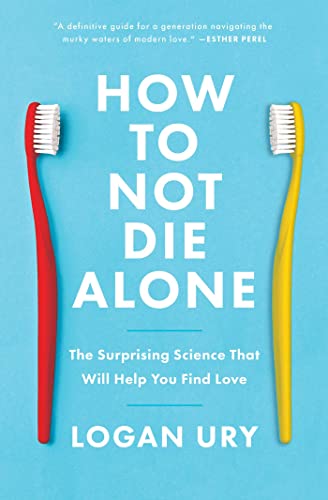
⚡️ What is How Not to Die Alone about?
How Not to Die Alone is a revolutionary guide that applies behavioral science to modern dating. Logan Ury, Harvard-educated behavioral scientist and dating coach, reveals how our decision-making patterns create blindspots that keep us single. The book provides practical strategies to overcome these obstacles, identify what truly matters in relationships, and intentionally build lasting connections rather than leaving love to chance. Through evidence-based techniques and relatable examples, Ury transforms dating from a frustrating puzzle into an intentional journey toward fulfilling relationships.
🚀 The Book in 3 Sentences
- How Not to Die Alone teaches that meaningful relationships result from deliberate choices rather than luck or chemistry.
- By understanding your dating tendencies and overcoming cognitive biases, you can break patterns that keep you stuck.
- Intentional love requires strategic actions at every stage—from meeting people to building commitment and navigating breakups.
🎨 Impressions
Reading How Not to Die Alone felt like having a personal dating coach who understands modern relationship struggles. Ury masterfully blends scientific research with practical advice, making complex behavioral concepts accessible and actionable. The book’s strength lies in its relatable examples and step-by-step frameworks that transform abstract ideas into concrete strategies for anyone tired of dating frustration.
📖 Who Should Read How Not to Die Alone?
How Not to Die Alone is essential for anyone tired of dating dead-ends or feeling stuck in relationship patterns. It’s particularly valuable for those struggling with modern dating apps, commitment fears, or repeated relationship failures. If you’ve ever wondered why love feels so elusive despite your efforts, this book provides the clarity and tools you need to finally break through.
☘️ How the Book Changed Me
How my life / behaviour / thoughts / ideas have changed as a result of reading the book.
- I recognized my own maximizer dating tendency and stopped dismissing potential partners for minor imperfections.
- I shifted from expecting instant chemistry to valuing compatibility and shared values over time.
- I began approaching dating with intentional strategies rather than leaving it to chance or external validation.
✍️ My Top 3 Quotes
- “Love is a natural instinct, but dating isn’t. Intentional love means seeing your love life as something you build, not something you discover.”
- “The goal isn’t to make the perfect decision about who to date; it’s to make a decision that makes you happy.”
- “Instead of asking whether someone is perfect for you, ask whether they’re good enough to explore a relationship with—and whether you can grow together.”
📒 Summary + Notes
How Not to Die Alone provides a comprehensive framework for transforming your approach to relationships through behavioral science. Ury identifies common blindspots that sabotage dating success and offers practical solutions to overcome them. The book is divided into three sections: getting ready by understanding yourself, getting out there to meet people effectively, and getting serious by making intentional relationship decisions. Each chapter builds on scientific insights to create actionable strategies for finding and sustaining meaningful connections.
Chapter 1: Why Dating Is Harder Now than Ever Before
Modern dating presents unprecedented challenges due to the paradox of choice and unrealistic expectations. With endless potential partners online, we become overwhelmed and dissatisfied, struggling to commit. Social media creates false perceptions of perfect relationships, while the absence of strong relationship role models leaves us unequipped for modern love. Ury explains how these factors combine to make dating feel like an unsolvable puzzle.
- The paradox of choice makes us unhappy with good options because we constantly wonder if someone better exists.
- Social media fuels comparison and unrealistic standards that prevent us from appreciating real connections.
- Behavioral science helps us recognize these patterns so we can make intentional choices instead of being controlled by them.
Chapter 2: The Three Dating Tendencies
Ury identifies three primary dating blindspots that keep people single: romanticizers, maximizers, and hesitators. Each tendency involves unrealistic expectations that sabotage relationship success. Through self-assessment questions, readers can identify their dominant tendency and understand how it creates obstacles in their dating life. Recognizing these patterns is the first step toward overcoming them.
- Romanticizers believe in soulmates and effortless love, leading them to abandon relationships at the first obstacle.
- Maximizers exhaustively search for the perfect partner, causing decision paralysis and dissatisfaction.
- Hesitators delay dating until they feel “ready,” missing opportunities for growth and connection.
Chapter 3: Disney Lied to Us
This chapter dismantles romantic myths that set unrealistic expectations for relationships. Ury contrasts the “soulmate mindset” with the “work-it-out mindset,” showing how the former leads to disappointment while the latter builds resilience. She debunks myths about effortless love, perfect compatibility, and instant connection, demonstrating how these cultural narratives harm our ability to form lasting relationships.
- The soulmate mindset makes us believe love should be easy, causing us to give up when challenges arise.
- The work-it-out mindset recognizes that love requires effort and grows through overcoming obstacles together.
- Social media amplifies relationship myths by showcasing only highlight reels, not the real work behind lasting partnerships.
Chapter 4: Don’t Let Perfect Be the Enemy of Great
Ury explores the difference between maximizers and satisficers in dating decisions. Maximizers exhaustively search for the perfect partner, leading to anxiety and dissatisfaction, while satisficers accept “good enough” options and find greater happiness. She introduces the secretary problem as a framework for knowing when to stop searching and commit, helping readers move from paralyzing perfectionism to satisfying relationships.
- Maximizers experience more anxiety and less satisfaction in their decisions, including dating choices.
- The secretary problem suggests evaluating 37% of options before committing to the next best candidate.
- Becoming a satisficer means recognizing that “good enough” can lead to greater happiness than endless searching.
Chapter 5: Don’t Wait, Date
Focusing on hesitators, this chapter addresses the tendency to postpone dating until feeling “ready.” Ury explains the opportunity cost of waiting and provides behavioral strategies to overcome the intention-action gap. She offers concrete steps to start dating now, including setting deadlines, preparing effectively, and starting small to build momentum and confidence.
- The intention-action gap explains why knowing you should date doesn’t translate to actually doing it. >Opportunity cost means every moment spent waiting is a lost chance to learn and grow through dating experiences.
- Practical steps like setting deadlines and telling others create accountability and overcome inertia.
Chapter 6: Learn Your Attachment Style
Attachment theory reveals how early experiences shape our relationship patterns. Ury explains the three main attachment styles—anxious, avoidant, and secure—and how they influence dating behaviors. She provides strategies for developing a more secure attachment style through self-regulation and understanding how attachment dynamics play out in relationships, helping readers break destructive patterns.
- Anxious attachment leads to protest behaviors and fear of abandonment in relationships.
- Avoidant attachment creates deactivating strategies that prevent intimacy and connection.
- Secure attachment involves healthy balance and can be developed through self-awareness and intentional practice.
Chapter 7: Look for a Life Partner, Not a Prom Date
Ury challenges readers to overcome present bias—the tendency to prioritize immediate chemistry over long-term compatibility. She identifies qualities that truly matter in relationships versus superficial traits we overvalue due to the focusing illusion. This chapter provides a framework for evaluating partners based on characteristics that predict lasting happiness rather than short-term excitement.
- The focusing illusion makes us overvalue traits like looks and money while undervaluing emotional stability.
- Key relationship qualities include kindness, loyalty, growth mindset, and conflict resolution skills.
- Shift from seeking a “prom date” (exciting for one night) to a “life partner” (reliable for decades).
Chapter 8: You Think You Know What You Want, But You’re Wrong
This chapter examines dating app design and how it influences our choices in unhelpful ways. Ury identifies problems with app-based dating, including excessive filtering, superficial judgments, and decision fatigue. She provides practical advice for creating effective profiles, selecting appropriate photos, and moving from messaging to real-life dates efficiently.
- Dating apps encourage shallow filtering that eliminates potentially compatible partners based on trivial criteria.
- Effective profiles include specific details that spark conversation rather than generic statements.
- Move from digital to real-life interaction quickly to assess compatibility beyond profile information.
Chapter 9: Meet People IRL (In Real Life)
Ury provides strategies for meeting potential partners outside of dating apps. She introduces the Event Decision Matrix for evaluating social opportunities and offers specific approaches for getting set up by friends, reconnecting with acquaintances, and making new connections in everyday settings. The chapter emphasizes creating opportunities rather than waiting for chance encounters.
- The Event Decision Matrix helps prioritize social opportunities based on potential for meeting compatible people.
- Engage your social network by clearly communicating what you’re looking for and making it easy to set you up.
- Adopt a mindset of opportunity creation rather than passively waiting for meetings to happen.
Chapter 10: This Is a Date, Not a Job Interview
Focusing on date design, Ury contrasts evaluative dating (treating dates like interviews) with experiential dating (approaching dates with curiosity). She offers ten steps for creating better dates, including choosing creative activities, skipping small talk, and using the post-date eight questions to assess compatibility beyond superficial impressions.
- Shift from evaluative to experiential dating to reduce pressure and increase authentic connection.
- Creative date activities reveal personality and compatibility better than traditional dinner conversations.
- The post-date eight questions help assess how you truly felt about the person and the experience.
Chapter 11: F\*\*k the Spark
Ury dismantles the myth of instant chemistry as a reliable indicator of relationship potential. She explains how attraction develops over time through the mere exposure effect and distinguishes between initial mate value assessments and deeper unique value discovered through ongoing interaction. This chapter challenges readers to give connections time to develop rather than dismissing them for lacking immediate fireworks.
- The mere exposure effect shows that attraction grows with familiarity, countering the instant spark myth.
- Initial chemistry often reflects unconscious patterns rather than genuine compatibility.
- True connection develops through shared experiences and vulnerability, not immediate physical attraction.
Chapter 12: Go On the Second Date
This chapter addresses our negativity bias that leads us to focus on minor flaws and dismiss potential partners. Ury explains the fundamental attribution error and offers strategies for overcoming these tendencies. She recommends setting a default to agree to second dates unless there are serious dealbreakers, giving connections time to develop beyond first impressions.
- The negativity bias makes us overweight flaws while underweighting positive qualities in potential partners.
- The fundamental attribution error leads us to judge character based on isolated incidents rather than patterns.
- Setting a default “yes” to second dates counteracts our tendency to prematurely dismiss compatible people.
Chapter 13: Decide, Don’t Slide
Ury explains how relationship transitions often happen through “sliding” (unintentional progression) rather than “deciding” (conscious choice). She emphasizes the importance of intentional decision-making at key relationship milestones, including defining the relationship and moving in together. This chapter provides frameworks for having important conversations and making deliberate choices about relationship progression.
- Sliding into relationship milestones leads to mismatched expectations and later conflicts.
- Deciding involves conscious choice and clear communication at each relationship transition point.
- Having “the talk” about relationship status ensures both partners have the same understanding and expectations.
Chapter 14: Stop Hitching and Stop Ditching
This chapter examines two problematic relationship patterns: hitchers who stay too long in unsatisfying relationships and ditchers who leave too quickly. Ury explains the cognitive biases behind each pattern—sunk-cost fallacy for hitchers and transition rule for ditchers. She provides guidance for finding balance between staying too long and leaving too soon in relationships.
- Hitchers stay in mediocre relationships due to the sunk-cost fallacy, overvaluing past investments.
- Ditchers leave relationships prematurely due to the transition rule, mispredicting future feelings.
- Recognize when fear of loss or discomfort rather than relationship quality is driving your decisions.
Chapter 15: Make a Breakup Plan
For relationships that need to end, Ury provides an eight-step plan for breaking up with clarity and compassion. She emphasizes the importance of preparation, social accountability, and clear boundaries after the breakup. This chapter offers practical guidance for navigating one of life’s most difficult conversations with integrity and respect.
- Preparation and accountability are crucial for following through on a necessary breakup.
- A breakup contract with clear boundaries prevents confusion and backsliding after the relationship ends.
- Immediate post-breakup planning helps manage emotions and prevents impulsive decisions to reconnect.
Chapter 16: Reframe Your Breakup as a Gain, Not a Loss
The final chapter focuses on recovery after a breakup through cognitive reframing. Ury offers four perspectives to view endings as opportunities for growth: focusing on the positives of being single, acknowledging relationship negatives, rediscovering yourself, and treating the experience as a learning opportunity. This approach transforms heartbreak into a catalyst for personal development.
- Cognitive reframing helps shift perspective from loss to opportunity after a breakup.
- Rediscovering personal interests and identity lost in the relationship creates new growth possibilities.
- Treating breakups as learning experiences provides valuable insights for future relationship success.
Key Takeaways
How Not to Die Alone provides transformative insights for anyone seeking meaningful relationships. The book teaches that love results from intentional choices rather than chance, and that understanding our behavioral patterns is essential for success. By overcoming dating blindspots, making deliberate decisions, and reframing challenges as opportunities, we can build the fulfilling relationships we desire.
- Identify and overcome your dating tendency—romanticizer, maximizer, or hesitator—to break patterns that keep you single.
- Shift from seeking instant chemistry to developing connection through shared experiences and vulnerability.
- Make intentional decisions at relationship milestones rather than sliding into commitments unconsciously.
- Use behavioral science strategies to overcome cognitive biases that sabotage dating success.
- View dating and relationships as skills to develop rather than mysteries to solve.
Conclusion
How Not to Die Alone revolutionizes our approach to modern love by applying behavioral science to dating and relationships. Logan Ury provides practical, evidence-based strategies to overcome the obstacles that keep us from forming meaningful connections. By understanding our dating blindspots, making intentional choices, and reframing challenges as opportunities, we can transform our love lives from sources of frustration to journeys of growth and fulfillment. Whether you’re new to dating or have been stuck in unhelpful patterns for years, this book offers the roadmap to finding and sustaining the relationship you truly desire.
More From Logan Ury →
Discover more from AI Book Summary
Subscribe to get the latest posts sent to your email.