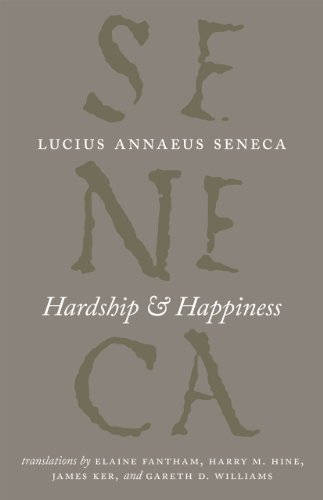
⚡️ What is Hardship and Happiness about?
“Hardship and Happiness” is a collection of essential Stoic writings by Seneca that explores how adversity can lead to personal growth and genuine contentment. Through his philosophical essays on consolation, tranquility, and the wise person’s constancy, Seneca demonstrates that true happiness emerges not from avoiding difficulties but from developing the right mindset to face them. This compilation, expertly translated by scholars including Elaine Fantham, offers timeless wisdom on finding peace amid life’s inevitable challenges.
🚀 The Book in 3 Sentences
- Hardship and Happiness reveals that suffering is inevitable, but our response to it determines our character and ultimate fulfillment.
- Seneca teaches that wisdom lies in accepting what we cannot control while focusing on our own virtuous responses to life’s challenges.
- The path to genuine happiness requires embracing adversity as a teacher, not an enemy, and cultivating inner tranquility regardless of external circumstances.
🎨 Impressions
Reading “Hardship and Happiness” felt like receiving counsel from a wise mentor who understands both human frailty and our capacity for growth. Seneca’s prose strikes a perfect balance between philosophical depth and practical advice, making complex Stoic concepts accessible without diluting their power. The work’s central themes resonate deeply with anyone seeking to navigate life’s inevitable difficulties while maintaining inner peace and purpose.
📖 Who Should Read Hardship and Happiness?
This book is ideal for readers facing personal challenges who seek philosophical guidance on resilience and contentment. Those interested in Hardship and Happiness strategies will find Seneca’s ancient wisdom remarkably relevant to modern struggles. Philosophy enthusiasts, self-help seekers, and anyone curious about Stoicism will benefit from this accessible introduction to Seneca’s practical approach to adversity and fulfillment.
☘️ How the Book Changed Me
How my life / behaviour / thoughts / ideas have changed as a result of reading the book.
- I now view setbacks as opportunities for character development rather than mere obstacles to overcome
- My approach to time management shifted dramatically after understanding Seneca’s perspective on the shortness of life
- I’ve developed greater emotional resilience by applying Seneca’s techniques for maintaining tranquility during stressful situations
✍️ My Top 3 Quotes
- “It is not the man who has too little, but the man who craves more, who is poor.” This quote about Hardship and Happiness particularly struck me.
- “We suffer more often in imagination than in reality.” – This insight about our mental reactions to hardship proved transformative.
- “Every new beginning comes from some other beginning’s end.” – Seneca’s wisdom on life transitions offers profound comfort.
📒 Summary + Notes
“Hardship and Happiness” presents Seneca’s philosophical approach to finding fulfillment through adversity and wisdom. The work compiles his most influential essays on consolation, tranquility, and virtuous living, demonstrating that true contentment comes not from avoiding difficulties but from developing the proper mindset to face them with courage and grace.
Consolation to Marcia
This essay addresses grief and loss, specifically written to console Marcia after the death of her son. Seneca argues that excessive mourning is irrational and that death is a natural part of existence. He emphasizes that true consolation comes from understanding the nature of life and death rather than merely suppressing emotions.
- Grief often stems from selfishness rather than genuine love for the deceased
- Death should be viewed as a return to nature, not a tragedy
- Those who live virtuously need not fear death, as they have fulfilled their purpose
Consolation to Helvia
Written to comfort Seneca’s mother during his exile, this essay explores the universality of suffering and the importance of philosophical resilience. Seneca reminds Helvia that hardship is common to all humans and that wisdom lies in accepting life’s inevitable changes with dignity and understanding.
- Everyone experiences loss and separation; we are not alone in our suffering
- Geographic distance from loved ones is less significant than maintaining emotional bonds
- Virtue and wisdom provide comfort that external circumstances cannot give or take away
Consolation to Polybius
Seneca crafted this consolation for Polybius, a freedman of Emperor Claudius who was grieving the loss of his brother. The essay emphasizes that sorrow serves no practical purpose and that accepting the natural order of life leads to greater peace. Seneca suggests redirecting grief toward more productive activities.
- Endless mourning dishonors the memory of those we’ve lost
- Philosophical understanding transforms grief into wisdom
- Engaging in meaningful work provides better tribute to departed loved ones than perpetual sadness
On the Shortness of Life
Perhaps one of Seneca’s most famous essays, this work argues that people live as if they were immortal, wasting time on trivial pursuits while neglecting what truly matters. He encourages readers to evaluate how they spend their time and focus on activities that improve their character and understanding.
- Life’s length is sufficient for those who use it wisely
- Much of what we call “busy” living is actually waste
- Investing in personal growth pays greater dividends than accumulating material possessions
On the Constancy of the Wise Person
This essay examines how a truly wise person maintains emotional equilibrium regardless of external circumstances. Seneca discusses the ideal of Stoic wisdom, where virtue alone constitutes happiness and external events cannot disturb inner peace. He argues that true strength comes from self-control rather than worldly success.
- Wise individuals evaluate situations objectively, without allowing emotion to cloud judgment
- Virtue is the only good that cannot be taken away
- External successes and failures affect only superficial aspects of life, not one’s essential worth
On Tranquility of Mind
Seneca explores how to maintain mental serenity in the face of life’s many disturbances. He identifies common sources of anxiety and offers practical strategies for preserving calmness of spirit. True tranquility, according to Seneca, comes from within and cannot be disrupted by external events.
- Comparison with others and desire for more cause most mental disturbances
- Engaging in philosophical reflection helps maintain perspective on life’s priorities
- Redirecting attention toward meaningful activities reduces susceptibility to anxiety
On Leisure
This essay argues that retirement and leisure time should be devoted to philosophical study and reflection rather than idleness or pleasure-seeking. Seneca contends that the best use of leisure is self-improvement and preparation for death through the cultivation of virtue and wisdom.
- Leisure without intellectual engagement becomes mere idleness
- Philosophy provides both entertainment and practical guidance for living well
- Preparing for death through reflection makes each day more meaningful
On the Happy Life
Seneca defines happiness as virtue itself rather than the pursuit of pleasure or external goods. He argues that moral excellence is both necessary and sufficient for true joy and that wealth, status, and other externals contribute nothing to genuine fulfillment unless accompanied by virtue.
- Happiness requires no external additions; virtue alone suffices
- Wealth and status can be helpful but never essential for fulfillment
- Living according to nature means acting virtuously in all circumstances
On Providence
The final essay defends divine providence against apparent injustices in the world. Seneca argues that what seems harmful often serves a greater purpose in the cosmic order. He maintains that virtue and wisdom enable us to accept both blessings and trials as part of a benevolent universal plan.
- Apparent misfortunes may ultimately prove beneficial
- Trust in universal wisdom helps maintain peace during difficulties
- Virtue remains valuable regardless of external outcomes or recognition
Key Takeaways
“Hardship and Happiness” offers profound insights for navigating life’s inevitable challenges with wisdom and grace. Through examining Seneca’s core philosophical positions, we discover that adversity can become a catalyst for personal growth and genuine contentment.
- Hardship and Happiness are intertwined; adversity becomes a teacher when we approach it with the right mindset
- True tranquility comes from within and cannot be disturbed by external circumstances
- Time is our most valuable resource, requiring careful stewardship toward meaningful ends
- Virtue alone constitutes genuine happiness, independent of external possessions or status
- Philosophical reflection provides both practical guidance and emotional stability
Conclusion
“Hardship and Happiness” remains profoundly relevant for modern readers seeking wisdom about navigating life’s inevitable challenges. Seneca’s insights demonstrate that genuine fulfillment comes not from avoiding difficulties but from developing the proper mindset to face them with courage and dignity. By embracing his timeless teachings on Hardship and Happiness strategies, we can transform our relationship with adversity and discover that true tranquility lies beyond external circumstances.
More From Seneca; Elaine Fantham →
Discover more from AI Book Summary
Subscribe to get the latest posts sent to your email.