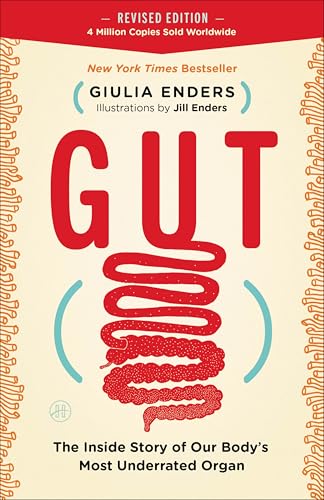
⚡️ What is Gut About?
Ever wonder why your stomach flips when you’re nervous, or why a heavy meal can make you feel genuinely depressed? In her international bestseller, Gut, More summaries by Giulia Enders argues that we’ve been ignoring the most sophisticated organ in our bodies. It’s not just a processing plant for food; it’s a massive, sentient ecosystem that dictates our mood, our immune response, and even our personality traits.
Enders writes with the kind of infectious enthusiasm you’d expect from a friend who just discovered a life-changing secret. She breaks down complex biological processes—from the way our saliva works to the hidden “brain” in our enteric nervous system—without ever sounding like a dry textbook. If you’ve ever felt like your body was a black box, this book finally gives you the manual for the science of what’s happening under the hood. You can find more science book summaries on our site to keep that momentum going.
🚀 The Book in 3 Sentences
- The gut is a highly developed sensory organ that contains a “second brain,” communicating constantly with our head through the vagus nerve.
- Our microbiome—the trillions of bacteria living inside us—influences everything from our weight and allergies to our mental state and stress levels.
- Modern lifestyle habits, from our sitting posture on the toilet to our overuse of antibiotics, are actively sabotaging our digestive health and overall longevity.
🎨 Impressions
Honestly, I didn’t think I’d spend my Tuesday afternoon reading about the intricacies of the anal sphincter, but here we are. Enders has this weirdly charming way of making “gross” things fascinating. She doesn’t talk down to you. Instead, she invites you into this miniature world of bacteria that’s essentially running your life. I was genuinely surprised by how much of my daily mood is actually just a byproduct of my small intestine’s state of mind.
What I loved most were the illustrations by her sister, Jill. They’re quirky and help visualize things like how the squatting position actually opens up the exit ramp for our waste. It’s rare to find a book that’s both scientifically rigorous and actually funny. It changed how I think about every bite of food I take—not in a restrictive way, but in a “how will my microbial friends handle this?” kind of way.
📖 Who Should Read Gut?
If you’re someone who deals with mystery bloating, low energy, or just wants to understand why you get “hangry,” this is mandatory reading. It’s perfect for the curious layperson who wants to understand biology without the jargon. However, if you’re looking for a strict diet plan or a 30-day detox guide, you won’t find it here; this is about understanding the system, not following a recipe.
☘️ How This Book Changed My Thinking
Before reading this, I treated my stomach like a trash can that just magically emptied itself. Now, I see it as a high-stakes negotiations room.
- I bought a small footstool for the bathroom to simulate the squatting position Enders recommends. It sounds ridiculous, but it’s physically much more efficient.
- I’ve become much more cautious about using hand sanitizers and antibiotics, realizing that I’m often killing the “good guys” in my internal army.
- I stopped viewing my anxiety as purely “mental” and started checking in with my digestion when I feel stressed.
✍️ 3 Quotes That Stuck With Me
- “The gut is the body’s most underrated organ.” — It sets the stage for the entire book’s mission to give our innards some respect.
- “Our gut is a sensory organ that can perceive our inner world and has a direct line to the brain.” — This totally flipped my understanding of where my feelings come from.
- “We are not just a collection of human cells, but a complex ecosystem of microbes.” — A humbling reminder that we’re mostly just a walking apartment complex for bacteria.
📒 Summary + Notes
Enders builds a case for the gut as the body’s primary command center. She starts with the physical mechanics—how we chew, how we swallow, and the surprisingly complex dance of our sphincters—before moving into the invisible world of the microbiome. The narrative arc moves from the “what” (the organs) to the “who” (the bacteria) and finally to the “how” (the brain-gut connection).
The central argument is that we are a symbiotic entity. We provide a home for bacteria, and in exchange, they regulate our immune system, produce vitamins, and influence our brain chemistry. Enders wants you to realize that your health isn’t just about “calories in, calories out”—it’s about managing the invisible trillions that live inside you. By the end of the book, you’ll see the gut not as a disgusting pipe, but as a miraculous, sensitive organ that deserves better treatment than we currently give it.
🧠 Core Ideas Explained Simply
Some of these concepts sound like science fiction, so let’s strip them down to the basics.
The Brain-Gut Axis
Think of the vagus nerve as a high-speed fiber optic cable connecting your gut to your brain. Interestingly, about 90% of the information travels up from the gut to the brain, not the other way around. This means your gut is essentially sending “status reports” that can color your perception of the world. If your gut is inflamed, your brain might interpret that as general gloom or anxiety.
The Microbiome Balance
Is it possible that your cravings for sugar are actually just your bacteria demanding a snack? Our gut is home to both “good” and “bad” microbes. When the balance shifts (dysbiosis), we see links to obesity and depression. High-fiber foods act as “prebiotics”—essentially high-quality fuel for the good bacteria—while processed sugars tend to feed the troublemakers.
The Enteric Nervous System
The gut has so many neurons that it’s often called the “second brain.” It can operate entirely on its own if the connection to the head is severed. This system manages the complex muscular contractions required for digestion, but it also produces a massive amount of neurotransmitters like serotonin. In fact, more serotonin is found in your gut than in your head.
1: Gut Feeling
What if I told you that the way you sit on the toilet is a historical mistake? Enders opens the book by explaining that humans are designed to squat, not sit. Sitting creates a kink in the rectum (the puborectalis muscle), making the process much harder than it needs to be.
- The internal and external sphincters work in a “duet” where the internal one gives us a “test sample” of what’s coming so we can decide if it’s a safe time to find a bathroom.
- Saliva is more than just spit; it’s a filtered version of our blood that contains painkillers and digestive enzymes.
- The esophagus isn’t just a slide; it’s a muscular tube that performs a “clean sweep” after every meal.
2: The Nervous System of the Gut
Ever wonder why you get butterflies when you’re nervous? This chapter maps the massive network of nerves that wrap around our digestive organs. Enders explains that because the gut has such a huge surface area—it’s the biggest interface we have with the outside world—it needs a massive “security team” of nerves and immune cells to monitor everything we swallow.
She digs into the vagus nerve, which acts as the primary communication line. It’s the reason why digestive distress can lead to a sense of impending doom or depression. The gut doesn’t just digest food; it feels the world. When things go wrong down there, the “second brain” sends a distress signal that the main brain often interprets as a psychological mood shift rather than a physical one.
3: The World of Microbes
You are more bacteria than human, and that’s not a metaphor. This section is the meat of the book, focusing on the trillions of tiny tenants in our large intestine. Enders describes the gut as a nightclub where the “good” bacteria (like Lactobacilli and Bifidobacteria) try to keep the peace while “bad” bacteria and parasites try to cause a riot.
- Prebiotics: These are the “care packages” we send to our good bacteria. Think chicory, garlic, and onions.
- Probiotics: These are the “reinforcements”—living bacteria we swallow to help maintain order.
- Hygiene: Being too clean can actually hurt us. Our immune system is like a guard dog; if it doesn’t have “enemies” (dirt, common bacteria) to train on, it might start attacking the house (allergies and autoimmune issues).
⚖️ A Critical Perspective
While Enders is a brilliant communicator, the microbiome is a field that moves incredibly fast. Since the book was published, some of the specific correlations between certain bacteria and complex diseases like Alzheimer’s have been shown to be much more nuanced than initially suggested. She also tends to lean into a few “maybe” theories—like the exact impact of toxoplasmosis on human behavior—which are fascinating but still highly speculative. It’s an amazing entry point into science, but it’s a snapshot of 2014-era research that shouldn’t be taken as the final word in 2025.
🔄 How It Compares
Compared to The Mind-Gut Connection by Emeran Mayer, Gut is much more accessible and humorous. Mayer’s work is deeper on the clinical neurology side, whereas Enders focuses on the holistic, everyday experience of being a human with a digestive tract. If you want a laugh while you learn, read Enders; if you want a dense medical deep-dive, read Mayer.
🔑 Key Takeaways
These are the lessons you can start implementing before you even finish your next meal.
- Squat, don’t sit: Use a footstool to straighten your digestive tract and reduce strain.
- Feed your friends: Eat diverse, fiber-rich foods to keep your microbiome diverse. A bored gut is an unhealthy gut.
- Trust your gut: If you feel “off” psychologically, look at your diet and digestion. Your brain might just be reacting to a stomach in distress.
- Antibiotics are a nuke: Use them only when necessary. They don’t just kill the infection; they clear-cut the entire internal forest.
💬 Frequently Asked Questions
What is the main argument of Gut?
Giulia Enders argues that the gut is our most misunderstood organ, acting as a “second brain” that significantly influences our immune system, mood, and mental health. It’s not just a digestive tube but a complex ecosystem of bacteria that communicates directly with the brain via the vagus nerve.
What does the book say about sitting vs. squatting?
The book explains that the modern toilet design forces a sitting position that kinks the rectum, making defecation difficult. Enders suggests that humans are biologically designed to squat, which straightens the path and makes the process more efficient and less stressful on the body’s internal muscles.
Is the science in Gut still accurate in 2025?
The core anatomy and the concept of the brain-gut axis remain foundational. However, specific research on gut metabolites like TMAO and SCFA-producing bacteria has expanded greatly since publication. While it’s an excellent primer, some microbiome claims are now known to be more complex than described in 2014.
How does the gut affect mental health according to Enders?
Enders highlights that 90% of the vagus nerve’s fibers carry information from the gut to the brain, not vice versa. This means a stressed or inflamed gut can send signals that the brain interprets as anxiety or depression, effectively coloring our psychological state based on our internal digestive health.
Who should read this book?
Anyone curious about how their body works, especially those dealing with digestive issues, allergies, or mood fluctuations. It’s written for the layperson, making it a perfect “entry-level” science book that balances humor with medical facts without requiring a biology degree to understand the core message.
Conclusion
Ultimately, Gut is a plea for self-awareness. We spend so much time obsessing over our appearance or our cognitive performance, yet we ignore the massive, vibrating world of bacteria that literally keeps us alive. Enders doesn’t want you to be afraid of germs; she wants you to be a better landlord to them.
If you take away just one thing from this summary, let it be this: your “gut feeling” isn’t just a metaphor. It’s your body’s most honest way of telling you how it’s actually doing. By treating your digestive system with a bit more respect—and maybe buying a bathroom stool—you’re not just improving your digestion; you’re upgrading your entire quality of life. Don’t forget to check out our other science book summaries to continue your journey into how your body really works.
More From Giulia Enders →
Discover more from AI Book Summary
Subscribe to get the latest posts sent to your email.