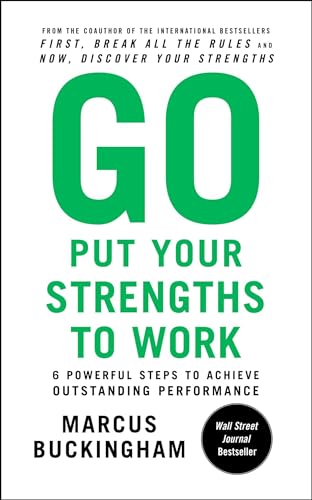
⚡️ What is Go Put Your Strengths to Work about?
“Go Put Your Strengths to Work” by Marcus Buckingham is a practical guide that challenges traditional self-improvement approaches. Instead of focusing on fixing weaknesses, Buckingham emphasizes identifying and maximizing your natural strengths. The book provides a six-step framework for recognizing your unique talents, skills, and knowledge combinations, then strategically applying them to achieve outstanding performance in your career and life.
🚀 The Book in 3 Sentences
- Go Put Your Strengths to Work teaches that true excellence comes from leveraging your natural talents rather than trying to fix weaknesses.
- The book presents a six-step process for identifying your unique strengths through the four SIGNs: Success, Instinct, Growth, and Needs.
- Buckingham emphasizes that focusing on strengths leads to higher engagement, creativity, and resilience in both personal and professional contexts.
🎨 Impressions
Go Put Your Strengths to Work fundamentally shifted my perspective on personal development. Rather than the traditional approach of identifying and fixing weaknesses, Buckingham’s insights about leveraging strengths felt refreshing and practical. The book’s emphasis on the four SIGNs as indicators of strength helped me recognize patterns in my own performance and satisfaction that I had previously overlooked.
📖 Who Should Read Go Put Your Strengths to Work?
Go Put Your Strengths to Work is ideal for professionals feeling stuck or disengaged in their current roles. It’s particularly valuable for managers looking to develop their teams more effectively, career changers seeking direction, and anyone interested in maximizing their potential through strengths-based approaches. The book appeals to readers who prefer practical frameworks over abstract theories about Go Put Your Strengths to Work strategies.
☘️ How the Book Changed Me
How my life / behaviour / thoughts / ideas have changed as a result of reading the book.
- I stopped trying to fix my weaknesses and instead focused on amplifying my natural strengths in daily work activities
- I developed a systematic approach to identifying my top three strengths using the four SIGNs framework from Go Put Your Strengths to Work
- I learned to have more honest conversations with my manager about matching my strengths to role responsibilities
✍️ My Top 3 Quotes
- “Holding out for that perfect ‘job we love’ is a fool’s game. Instead, we simply need to learn how to take our existing job and each week, reshape it around our strengths.”
- “You will learn the most, grow the most, and develop the most in your areas of greatest strength. Your strengths are your multiplier. Your strengths magnify you.”
- “As you grow, your goal should not be to transform yourself to somehow conjure new forces from within you. Instead your goal should be to free up and focus the forces already there.”
📒 Summary + Notes
Go Put Your Strengths to Work revolutionizes the traditional approach to personal development by focusing on leveraging existing strengths rather than fixing weaknesses. Marcus Buckingham builds on extensive research showing that only 17% of people spend most of their work time playing to their strengths, despite this being the key to peak performance and engagement.
Chapter 1: BUST THE MYTHS (Get the right mindset)
This chapter debunks three common misconceptions that prevent people from effectively leveraging their strengths. Buckingham argues that these myths create barriers to true strength-based development and must be overcome for meaningful progress.
- Myth #1: Personality changes dramatically as we grow – the reality is we become more authentic versions of ourselves
- Myth #2: Growth happens fastest in our weakest areas – truth is maximum growth occurs where we already excel
- Myth #3: Good team members do whatever is asked – actually, valuable team members contribute their unique strengths
Chapter 2: GET CLEAR (Know your strengths in vivid detail)
This chapter introduces the core methodology for identifying your actual strengths through the four SIGNs approach. Buckingham explains that strengths are not abstract qualities but specific activities performed consistently well.
- SIGNs framework: Success, Instinct, Growth, and Needs as indicators of true strength areas
- Strengths composition: Combination of talents, skills, and know-how applied to specific activities
- Three-step process: Capture your strengths, clarify them specifically, then confirm through validation
Chapter 3: FREE Your Strengths
This chapter focuses on actively deploying your identified strengths in your current role. Buckingham provides practical strategies for reshaping your job to incorporate more strength-based activities and create greater engagement.
- Strategic alignment: Connecting your personal strengths to organizational needs and customer demands
- Routine establishment: Creating sustainable patterns that consistently leverage your top strengths
- Strong Week Plan: Developing weekly actions to ensure regular strength deployment
Chapter 4: STOP Your Weaknesses
While focusing on strengths, this chapter addresses the importance of managing weaknesses effectively. Buckingham emphasizes systematic approaches to minimize the impact of weaknesses without trying to transform them into strengths.
- Weakness identification: Recognizing activities that drain energy and diminish performance
- Strategic avoidance: Developing routines and boundaries to minimize weakness exposure
- Compensatory measures: Using tools, partnerships, or delegations to offset weakness impacts
Chapter 5: SPEAK UP (Be a strong team-player)
This chapter teaches effective communication strategies for discussing strengths and weaknesses with managers and team members. Buckingham provides frameworks for presenting your strengths in ways that benefit others and advance organizational goals.
- Four conversation framework: Strengths chat, “How can I help you?”, weakness chat, and “How can you help me?”
- Strengths-based communication: Expressing capabilities without appearing arrogant or boastful
- Manager relationships: Collaborating effectively while making your manager’s job easier
Chapter 6: BUILD STRONG HABITS (Make this sustainable)
The final chapter focuses on creating lasting behavioral changes that sustain strength-based approaches over time. Buckingham provides specific habit frameworks for daily, weekly, quarterly, and annual maintenance of strength-based practices.
- Habit sustainability: Daily, weekly, quarterly, 6-monthly, and annual routines for strength maintenance
- Disruption management: Strategies for returning to strength-based practices after interruptions
- Continuous improvement: Regular assessment and refinement of strength deployment approaches
Chapter 7: Handling Common Situations
This chapter addresses specific challenges that can impede strength-based development. Buckingham provides targeted strategies for common workplace scenarios that might derail progress toward putting your strengths to work effectively.
- New role challenges: Strategies for applying the strength framework when starting fresh positions
- Manager misalignment: Approaches for working with bosses who don’t understand strength-based development
- Career transitions: Adaptation techniques when job changes require strength reassessment
Key Takeaways
These fundamental principles emerge as the most crucial elements for successfully implementing Go Put Your Strengths to Work strategies in your professional and personal life.
- Strengths over weaknesses: Focus on leveraging natural talents rather than fixing deficiencies for maximum performance
- Four SIGNs identification: Use Success, Instinct, Growth, and Needs as reliable indicators of authentic strengths
- Habit formation: Build sustainable routines that consistently deploy your strengths while managing weaknesses
- Strategic communication: Develop clear approaches for discussing strengths and weaknesses with colleagues and managers
Conclusion
Go Put Your Strengths to Work provides a revolutionary approach to personal and professional development that shifts focus from remediation to amplification. By following Buckingham’s six-step framework, readers can transform their relationship with work and achieve sustainable high performance. The book’s emphasis on the four SIGNs of strength, combined with practical habit formation techniques, makes it an invaluable resource for anyone seeking to maximize their potential through strategic strength deployment.
More From Marcus Buckingham →
Discover more from AI Book Summary
Subscribe to get the latest posts sent to your email.