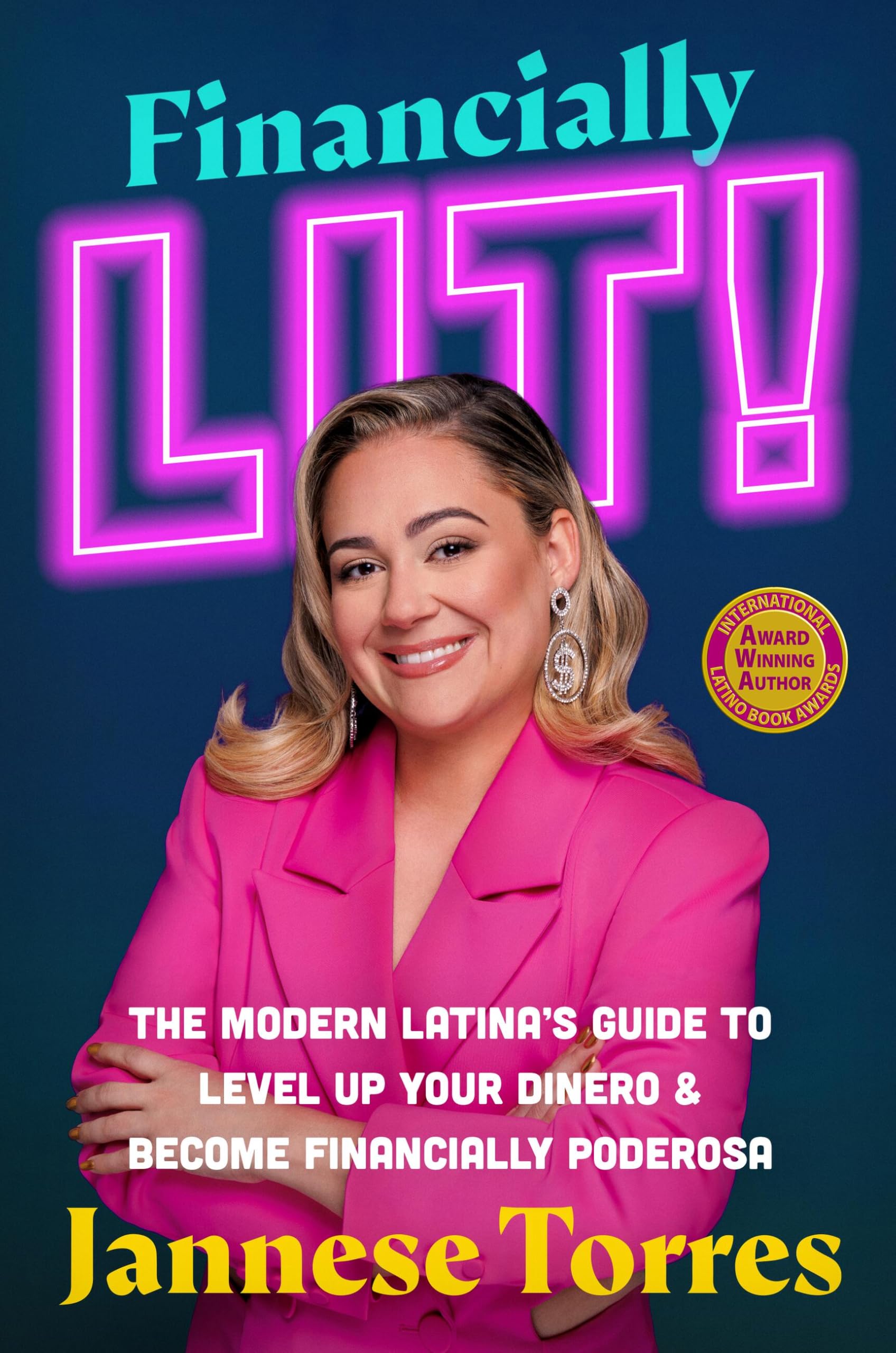
⚡️ What is Financially Lit! About?
Why do so many of us feel like we’re trespassing when we walk into a bank or open a brokerage account? Jannese Torres argues in Financially Lit! that for the modern Latina, money isn’t just about math—it’s a battlefield of cultural expectations, generational trauma, and systemic barriers. She isn’t just teaching you how to balance a checkbook; she’s handing you the keys to psychological and financial autonomy in a world that wasn’t built for your success. More summaries by Jannese Torres
Torres builds a case that financial freedom is the ultimate form of resistance. As someone who went from being a “good employee” to a multi-six-figure entrepreneur after a soul-crushing firing, she speaks from the trenches. This book is a manifesto for the poderosa who is tired of playing small and ready to treat her bank account as a tool for liberation rather than a source of shame. If you’ve been looking for finance book summaries that actually acknowledge your heritage, you’ve found the right one.
🚀 The Book in 3 Sentences
- True wealth begins with identifying and healing the financial trauma inherited from our caregivers and cultural upbringing.
- Relying on a single W-2 job is a risky strategy; building multiple streams of income and investing in the stock market are the only paths to actual independence.
- Financial decisions must be rooted in personal values rather than societal pressures like the “status symbol” home or the traditional wedding.
🎨 Impressions
Honestly, I wasn’t expecting to feel so seen by a book that ostensibly covers index funds and side hustles. There’s a moment early on where Torres talks about her parents’ fights over money, and it hit me like a ton of bricks. It’s rare to find a finance expert who admits that a house purchase actually landed them in therapy. She doesn’t hide behind a polished “guru” persona; she’s messy, honest, and incredibly sharp.
What I loved most was the lack of filler. I’ve read enough books that stretch a blog post’s worth of info into 300 pages, but this isn’t one of them. The tone is punchy and direct—exactly like that one friend who tells you to stop crying over your ex and start checking your credit score. It’s a refreshing break from the dry, male-dominated finance space that often ignores the unique pressures of the first-gen experience.
📖 Who Should Read Financially Lit!?
This is a must-read for first-generation Latinas or anyone who feels caught between the desire for wealth and the guilt of “leaving people behind.” If you’re struggling with the “immigrant daughter” complex—feeling like you have to be the family’s financial safety net—you’ll find the boundaries you need here. However, if you’re looking for advanced tax-loss harvesting strategies or complex derivative trading, you’ll probably find this a bit too foundational. This is for the woman building her first million, not managing her tenth.
☘️ How This Book Changed My Thinking
Before reading this, I viewed my fear of the stock market as a personal failing of logic. Afterward, I realized it was a survival mechanism I’d absorbed from a family that only trusted cash and lottery tickets.
- I stopped seeing my side hustle as a “hobby” and started treating it as my primary insurance policy against corporate whims.
- I finally had the conversation with my family about financial boundaries, realizing that “helping” everyone was actually keeping all of us poor.
- I shifted my investing strategy from “saving for a rainy day” to “buying back my future time.”
✍️ 3 Quotes That Stuck With Me
- “Why didn’t anyone prepare us to become financially powerful mujeres?” — This highlights the educational gap that is cultural, not just academic.
- “Our fear of losing it all holds many of us back from participating in one of the most powerful wealth-building tools that exists.” — A stinging reminder that being ‘safe’ with cash is actually a slow way to lose money to inflation.
- “Just fucking do it and get out of your head!” — This perfectly captures Torres’s no-nonsense approach to entrepreneurship.
📒 Summary + Notes
The central thesis of the book is that Latinas are systematically underserved and culturally conditioned to stay small, and that breaking this cycle requires a radical shift in both mindset and mechanics. Torres argues that we can’t build wealth until we acknowledge the financial trauma we’ve inherited. She weaves together her personal journey—from a New Jersey upbringing to achieving financial independence at 35—to show that these obstacles are surmountable through education and intentionality.
Throughout the narrative, the author insists that financial wholeness is a community effort. It’s not just about one person getting rich; it’s about bringing the whole comunidad along. By the time you hit the final page, the goal isn’t just a high net worth, but a sense of “poderosa”—a woman who is in total control of her life, her time, and her dinero.
Chapter 1: The Money Stories We Carry
Imagine your grandmother hiding cash under a mattress because she didn’t trust the government. That’s not just a quirk; it’s a foundation for how you view risk today. Torres opens the book by forcing us to look at the “dinero scripts” we learned as children. Did you grow up hearing that money is the root of all evil? Or that talking about it is mala educación? These stories dictate our financial ceiling until we consciously rewrite them.
Chapter 2: Healing Our Financial Trauma
Is your anxiety about your bank balance actually a PTSD response to seeing your parents struggle? Torres makes a compelling case that financial trauma is real and pervasive in our community. She describes how the stress of poverty or financial instability changes our brain chemistry, making us either hyper-frugal or prone to impulsive spending. Healing involves acknowledging these wounds and choosing to stop the cycle of scarcity for the sake of our own mental health.
Chapter 3: The Dinero Basics
How can we expect to win a game when we don’t even know the rules? This section gets into the nitty-gritty of budgeting and tracking. But unlike most boring finance books, Torres doesn’t advocate for the “latte factor” or skipping the small joys. Instead, she focuses on high-impact moves:
- Automating your savings so you don’t have to rely on willpower.
- Tracking your net worth monthly to see the big picture.
- Building an emergency fund that actually covers 6 months of expenses, not just a token amount.
Chapter 4: Value-Based Living
Buying a house just because your mami says it’s a “good investment” is a great way to end up miserable. Torres gets incredibly vulnerable here, sharing how her own dream home became a source of depression. She argues that we need to define what a “rich life” looks like for us, not for our neighbors. If you’d rather spend $5k on a trip to Puerto Rico than on a new kitchen counter, that’s not a mistake—it’s a choice based on your values.
Chapter 5: Why You Need a Side Hustle
What if your employer decided tomorrow that you were no longer necessary? Torres recounts the day she was fired and how it catalyzed her shift into serial entrepreneurship. She argues that in today’s economy, a W-2 is the riskiest form of income because you have zero control over it. She encourages readers to identify their unique skills and turn them into multiple streams of income, emphasizing that for Latinas, entrepreneurship is a path to the kind of wealth a corporate ladder rarely offers.
Chapter 6: Investing for Poderosas
Why are we so confident playing the numbers at the bodega but terrified of the stock market? Torres tackles the cultural barrier to investing head-on. She points out that while many in our community view the market as “gambling,” it’s actually the most proven way to build generational wealth. She covers the basics—brokerage accounts, index funds, and 401ks—but the real value is the mindset shift from being a “saver” to being an “investor.” Investing is simply putting your money to work so you don’t have to work forever.
Chapter 7: Conquering the Debt Monster
Debt isn’t just a number; it’s a shackle that keeps you tethered to a life you might want to leave. This chapter focuses on the psychology of debt and the math of paying it off. Torres doesn’t shame the reader for having debt—she acknowledges that for many of us, it was the only way to get an education or survive an emergency. She advocates for a structured approach (snowball or avalanche) but emphasizes that the real win is the freedom you gain once that weight is gone.
Chapter 8: The Path to FIRE
Imagine never having to work another day in your life. Torres introduces the concept of Financial Independence, Retire Early (FIRE) and adapts it for the Latina experience. It’s not about living on rice and beans; it’s about calculating your “freedom number”—the amount of money you need invested to cover your lifestyle indefinitely. For first-gen women, this isn’t just about early retirement; it’s about having the “FU money” to leave toxic situations or pursue passions without fear.
Chapter 9: Love, Marriage, and Dinero
Can a relationship survive if you never talk about your credit scores? Torres breaks the taboo of discussing money with partners. She shares her personal experience with financial abuse and the lessons learned from a difficult divorce. The bottom line is simple: protect yourself. She argues for maintaining personal accounts even in a marriage and having the hard conversations before you say “I do.” Love is great, but financial transparency is what actually keeps the lights on.
Chapter 10: Building a Legacy
We are the ancestors our descendants will one day look back on. The book concludes with a call to action to use our wealth for good. This isn’t just about hoarding cash; it’s about being financially lit so we can lift up our communities, support causes we care about, and ensure our children don’t start from zero. Financial wholeness is the ultimate gift we can leave behind.
⚖️ A Critical Perspective
While Torres’s energy is infectious, she occasionally oversimplifies the ease of starting a side hustle. For someone working three minimum-wage jobs or caring for multiple dependents, the advice to “just do it” can feel a bit out of touch with the reality of time poverty. Additionally, the book focuses heavily on the U.S. financial system; while the mindset advice is universal, the specific account types (like Roth IRAs) won’t apply to readers outside the States. I also would have liked to see more specific advice for undocumented Latinas who face even steeper hurdles in accessing traditional financial institutions.
🔄 How It Compares
Compared to a classic like The Simple Path to Wealth by JL Collins, Financially Lit! is far more focused on the psychology of the earner rather than just the mechanics of the market. While Collins gives you the math, Torres gives you the mirror—forcing you to look at why you’re afraid to use that math in the first place.
🔑 Key Takeaways
Building wealth is a holistic process that requires both external strategy and internal healing.
- Your “money story” is inherited, but your financial future is authored by you.
- The stock market is a wealth-building tool, not a casino—ignoring it is a form of financial self-sabotage.
- Financial independence is the only real job security in a modern economy.
- Personal values must drive your spending, not the desire to impress others or meet cultural expectations.
💬 Frequently Asked Questions
What is the main argument of Financially Lit!?
The book argues that Latinas must overcome cultural financial trauma and systemic barriers by gaining financial literacy. Jannese Torres emphasizes that building multiple income streams and investing are essential tools for personal autonomy, allowing women to reclaim their power and build generational wealth in a system that often overlooks them.
What does Jannese Torres say about financial trauma?
Torres suggests that many Latinas inherit financial trauma from watching their parents struggle. This manifests as a deep-seated fear of investing or an obsession with cash. Healing requires acknowledging these survival mechanisms and intentionally replacing them with modern wealth-building habits, like utilizing brokerage accounts and setting firm boundaries with family.
Is Financially Lit! worth reading for non-Latinas?
Yes, while the cultural context is specific to Latinas, the core financial principles—budgeting, investing, and entrepreneurship—are universal. Anyone who has felt like an outsider in traditional finance or who struggles with generational poverty mindsets will find the book’s direct, no-nonsense approach incredibly helpful and deeply relatable.
How does the book handle the topic of side hustles?
Torres views side hustles as a form of “career insurance.” She argues that relying on a single employer is dangerous. By building secondary income streams, you gain the leverage to leave toxic jobs and the capital to invest more aggressively, which she views as a vital step toward independence.
What is the ‘freedom number’ mentioned in the book?
The freedom number is the total amount of invested assets you need so that you can live off the returns indefinitely without working. This concept, borrowed from the FIRE movement, allows you to determine exactly how much you need to ‘buy back your time’ and achieve permanent financial independence.
Conclusion
Financially Lit! isn’t just a book; it’s a wake-up call. Jannese Torres has managed to do something most finance authors fail at: she’s made the struggle feel valid while making the solution feel reachable. By combining the hard math of index funds with the soft skills of setting boundaries and healing trauma, she provides a roadmap that is as much about emotional freedom as it is about net worth.
If there’s one thing you should take away from this, it’s that you don’t have to choose between your culture and your coins. You can honor where you came from while building a future that looks nothing like your past. Grab a copy of Financially Lit! and start treating your wealth as the tool for liberation it was always meant to be. We are waiting for you at the top.
More From Jannese Torres →
Discover more from AI Book Summary
Subscribe to get the latest posts sent to your email.