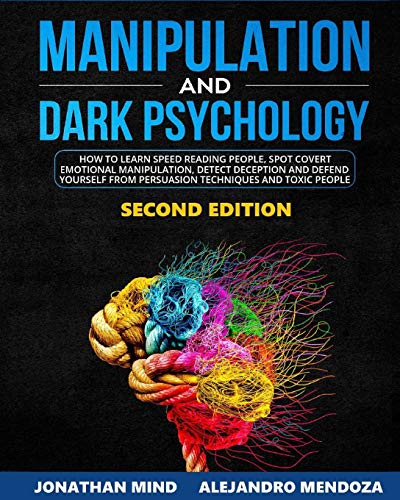
⚡️ What is Dark Psychology About?
Have you ever walked away from a conversation feeling slightly slimed, but you couldn’t put your finger on why? Maybe you agreed to a project you didn’t have time for, or you found yourself apologising to someone who actually wronged you. Amy Brown argues that these aren’t just social awkwardness—they’re the result of specific, often predatory, psychological tactics. In her book, More summaries by Amy Brown, she suggests that the world isn’t just full of ‘nice’ people; it’s populated by individuals who understand the human software better than we do and aren’t afraid to hack it for their own gain.
The central thesis here is that understanding these “dark” traits isn’t about becoming a villain yourself; it’s about developing the ‘night vision’ required to navigate a world where influence is the primary currency. Brown frames this within the broader context of human behavior, making it a staple in psychology book summaries for anyone tired of being a doormat. She breaks down the mechanics of the Dark Triad and explains how our own cognitive shortcuts make us sitting ducks for those with less-than-stellar intentions.
🚀 The Book in 3 Sentences
- Dark psychology is the study of the human condition as it relates to the nature of people to prey upon others for personal gain or satisfaction.
- The book identifies the ‘Dark Triad’—Narcissism, Machiavellianism, and Psychopathy—as the primary drivers of malicious manipulation in personal and professional spheres.
- By learning to recognize non-verbal cues and the specific patterns of emotional blackmail, you can build a defensive psychological perimeter that makes you much harder to exploit.
🎨 Impressions
I’ll be honest: reading this made me a bit paranoid at first. I found myself eyeing my barista and my boss with a newfound suspicion, wondering if that ‘free’ extra shot of espresso was actually an attempt at reciprocity-based manipulation. But once that initial ‘spy movie’ feeling wore off, I realized Brown is actually giving us a gift: the ability to see the strings. It’s not a comfortable read, but it’s an essential one if you’ve ever felt like you’re losing a game you didn’t even know you were playing.
What frustrated me occasionally was the broad brush Brown uses. Sometimes, it felt like she was suggesting that *every* act of persuasion is a step toward the dark side. However, the chapter on the Dark Triad was the one I dog-eared most. It’s a chillingly clinical look at why some people simply don’t have the ’empathy’ chip that the rest of us assume everyone possesses. If you’ve spent years trying to ‘understand’ a toxic person, this book will finally tell you to stop trying to apply logic to a person who operates on a completely different OS.
📖 Who Should Read Dark Psychology?
If you’re a chronic people-pleaser who constantly finds themselves doing ‘favors’ that feel like chores, this is your handbook. It’s also vital for managers who need to spot toxic hires before they destroy team culture. If you’re looking for a deep, academic dissertation on clinical psychopathy with peer-reviewed data on every page, you’ll probably find this too ‘pop-psych’ and should skip it. But if you want a practical field guide to not getting screwed over, keep reading.
☘️ How This Book Changed My Thinking
Before reading this, I assumed that manipulation was something rare, done by ‘evil’ people in movies. Afterward, I realized it’s a spectrum we all slide along, but some people live at the extreme end by choice.
- I stopped explaining my ‘No’—I realized that providing reasons just gives a manipulator ‘handles’ to grab onto and twist.
- I became much more observant of ‘micro-expressions’ during negotiations; once you see a flash of contempt, you can’t unsee it.
- I’ve replaced my ‘benefit of the doubt’ default with a ‘trust but verify’ framework when dealing with high-stakes personalities.
✍️ 3 Quotes That Stuck With Me
- “Knowledge of dark psychology is like a shield; you don’t use it to attack, but you’re a fool to walk into a battlefield without it.” — This perfectly captures the book’s defensive focus.
- “A manipulator’s greatest tool is your own desire to be a ‘nice’ person.” — This hit me hard because it exposes how our virtues are weaponized against us.
- “The mask of sanity is often worn most tightly by those who have the least of it.” — A haunting reminder that the most dangerous people often look the most ‘normal’.
📒 Summary + Notes
The book’s narrative arc moves from awareness to analysis to action. Brown starts by stripping away the taboo surrounding the term ‘dark psychology,’ arguing that these tactics are used every day in marketing, politics, and relationships. She builds a case that our modern world—with its constant digital noise and demand for quick decisions—has actually made us *more* susceptible to manipulation than our ancestors were. We rely on mental shortcuts, and those shortcuts are exactly what a ‘dark’ practitioner targets.
By the end of the book, Brown wants you to be a ‘hard target.’ She walks through the specific anatomy of a ‘gaslighting’ attempt and how to ground yourself in reality when someone is trying to rewrite your memories. The final third of the book is essentially a self-defense manual for your mind, focusing on boundary setting and emotional detachment. She isn’t just telling you that monsters exist; she’s handing you the silver bullets.
🧠 Core Ideas Explained Simply
Some of the concepts in the book sound like they belong in a forensics lab, so let’s break them down into plain English.
The Dark Triad (The Personality Predator)
Think of this as a three-legged stool of toxicity. You have Narcissism (extreme self-importance), Machiavellianism (manipulation as a lifestyle), and Psychopathy (zero empathy). When these three traits overlap in one person, they don’t see you as a human; they see you as a tool. The real-world implication is that you cannot ‘fix’ these people with kindness because they view your kindness as a weakness to be exploited.
Love Bombing and Devaluation
Ever had someone treat you like you’re the greatest person on Earth within five minutes of meeting you? That’s often love bombing. It creates an artificial high so that when they inevitably start treating you like garbage (devaluation), you’ll work twice as hard to get back to that ‘high’ you felt at the start. It’s a cycle of addiction used in cults and toxic romances alike.
Chapter 1: The Foundations of Dark Psychology
What exactly is ‘Dark Psychology’ beyond the edgy name? Brown opens by defining it as the study of the human condition as it relates to the psychological nature of people to prey upon others. She makes a sharp distinction between ‘influence’ (which can be positive) and ‘manipulation’ (which is always for the manipulator’s benefit). It’s a sobering introduction to the idea that some people use psychology the way a hacker uses code—to find backdoors into your decision-making process.
Chapter 2: Identifying the Dark Triad
Think of the Dark Triad as the ‘unholy trinity’ of personality traits. Brown spends a lot of time here because if you can’t spot the predator, you can’t defend against them. She breaks it down:
- Narcissists: They need your admiration to survive and will gaslight you to maintain their superior status.
- Machiavellians: The ultimate strategists. They are patient, cold, and see every social interaction as a chess move.
- Psychopaths: The most dangerous because they are often charming and lack any ‘brakes’ on their behavior.
Chapter 3: The Art of Manipulation and Persuasion
Why do we fall for scams even when we think we’re too smart for them? This chapter is a fascinating look at our ‘mental shortcuts.’ Brown explains that our brains are lazy; we use things like ‘authority’ or ‘scarcity’ to make quick choices. A manipulator simply creates a fake authority or a fake shortage to trigger our brain’s automatic ‘Yes’ button. She highlights that the most effective manipulation doesn’t feel like a push; it feels like you’re making your own choice.
Chapter 4: Emotional Manipulation Tactics
There’s a moment early on where Brown discusses ‘Guilt Tripping’ as a weapon, and it resonated with me immediately. This chapter focuses on the ‘soft’ tactics: the silent treatment, the backhanded compliment, and the ‘playing the victim’ card. These are the daily papercuts of dark psychology. She argues that these tactics are often more effective than overt aggression because they make the target feel like *they* are the ones in the wrong.
Chapter 5: Reading People and Non-Verbal Cues
Can you really spot a liar by looking at their eyes? Brown says it’s not that simple, but there are patterns. She moves away from ‘pop’ myths and focuses on clusters of behavior. If someone’s words say ‘I’m happy for you’ but their feet are pointed toward the exit and their jaw is tight, believe the body. This chapter serves as a practical primer on reading ‘leakage’—those tiny moments where the manipulator’s real intent slips through the cracks of their performance.
Chapter 6: How to Protect Yourself
Imagine your mind is a fortress. How do you reinforce the walls? This is the most actionable part of the book. Brown emphasizes that the best defense is a high level of self-awareness. If you know your own ‘buttons’ (your insecurities, your need for approval), nobody can push them without your permission. She provides a framework for setting ‘non-negotiable’ boundaries and, more importantly, what to do when someone tries to cross them.
⚖️ A Critical Perspective
While the book is incredibly practical, it occasionally dances on the edge of being overly cynical. Brown tends to treat all persuasion with a high degree of suspicion, which might make readers overly defensive in healthy relationships. Additionally, her clinical descriptions of the Dark Triad are a bit simplified for a lay audience—real-world personality disorders are often far more ‘grey’ than the ‘black-and-white’ predators she describes. It’s also worth noting that much of the ‘persuasion’ science she references is heavily borrowed from Robert Cialdini, so if you’ve read ‘Influence,’ some of this will feel like a retread.
🔄 How It Compares
Compared to Robert Cialdini’s *Influence*, which focuses on the mechanics of persuasion for marketing and general social settings, Amy Brown’s *Dark Psychology* is much more focused on the *malicious* actor. Cialdini teaches you how to sell a car; Brown teaches you how to avoid being emotionally destroyed by the person selling it. It’s a darker, more defensive take on the same psychological principles.
🔑 Key Takeaways
These are the core lessons for building your psychological armor.
- Trust your gut: If an interaction feels ‘off’ or ‘too good to be true,’ your subconscious has likely spotted a manipulation pattern before your conscious mind has.
- Silence is a boundary: You are not obligated to fill the silence or explain your choices to someone who is pressuring you.
- Watch the ‘Value’ exchange: Manipulators always try to make you feel like you owe them something; track the ‘ledger’ of your relationships carefully.
- Knowledge is the antidote: Once you can name a tactic (like ‘Gaslighting’ or ‘The Foot-in-the-Door’), it loses its power over you.
💬 Frequently Asked Questions
What is the main argument of Dark Psychology?
The main argument is that certain individuals use specific psychological tactics to exploit others for personal gain. Brown asserts that by understanding these methods—specifically the Dark Triad of personality traits—people can recognize manipulation in real-time and protect their mental and emotional well-being from predatory behavior.
What are the ‘Dark Triad’ traits mentioned in the book?
The Dark Triad consists of Narcissism (entitlement and superiority), Machiavellianism (manipulativeness and exploitation), and Psychopathy (lack of empathy and impulsivity). Brown explains how these three traits often overlap, creating a personality profile that is specifically designed to use other people as tools rather than seeing them as humans.
Is Dark Psychology actually useful for everyday people?
Yes, it is highly useful as a defensive tool. While the term sounds extreme, the book applies these concepts to common situations like workplace politics, toxic friendships, and deceptive marketing. It teaches you to spot red flags early, helping you avoid being drained of your time, money, and energy.
What is gaslighting according to Amy Brown?
Brown defines gaslighting as a manipulation tactic where the perpetrator makes the victim question their own reality, memory, or perceptions. By persistently denying facts or twisting the truth, the manipulator creates a sense of confusion and dependency, making the victim easier to control and influence over the long term.
Who should read this book?
This book is ideal for anyone who feels they are being taken advantage of in their personal or professional life. It’s particularly helpful for those who struggle with setting boundaries or who have a hard time saying ‘no’ to people who use guilt or pressure to get their way.
Conclusion
At its core, *Dark Psychology* is a book about power. It’s an admission that not everyone has your best interests at heart, and that ‘niceness’ is often used as a cloak for very different intentions. By reading Amy Brown’s work, you’re essentially taking a crash course in the things most people are too polite to talk about. It’s not about becoming a cynic; it’s about becoming someone who is too well-informed to be a victim.
The one thing you should carry away is this: your attention and your emotions are your most valuable assets. Don’t give them away for free to anyone who hasn’t earned your trust. The next time you feel that subtle ‘tweak’ in your gut during a conversation, remember the lessons from this summary. Dark Psychology isn’t just a fascinations with the ‘bad guys’; it’s the ultimate toolkit for the good guys who want to stay that way in a complicated world. It’s a foundational text in any modern study of psychology book summaries.
More From Amy Brown →
Discover more from AI Book Summary
Subscribe to get the latest posts sent to your email.