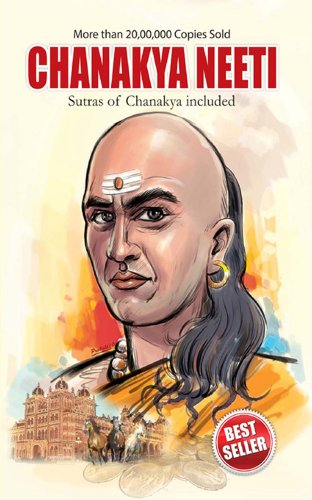
⚡️ What is Chanakya Neeti About?
How does a man from 2,300 years ago still sound like he’s giving advice to a modern CEO or a political strategist? Chanakya, also known as Kautilya, was the mastermind behind the Maurya Empire, and this book is his collection of aphorisms on how to live, lead, and survive in a world that isn’t always kind. It’s less of a spiritual guide and more of a tactical manual for reality. I’ve read a lot of self-help book summaries, but this one hits differently because it doesn’t try to be nice. It tries to be effective.
The central thesis is simple: the world is a complex web of self-interest, and if you don’t understand the rules of power, ethics, and human nature, you’ll be crushed by those who do. More summaries by Chanakya often point to his ruthless pragmatism, but there’s a deep undercurrent of personal discipline here too. He argues that you can’t control a kingdom—or even a small business—if you can’t control your own senses first. Is it cynical? Occasionally. Is it useful? Absolutely.
🚀 The Book in 3 Sentences
- True power stems from a combination of relentless self-discipline and an unsentimental understanding of how people actually behave.
- Wealth and education are the only two shields that consistently protect an individual from the volatility of life and the treachery of others.
- You must treat different people according to their specific nature—greed with money, arrogance with humility, and the wise with the truth.
🎨 Impressions
Reading the Chanakya Neeti felt like sitting across from a very old, very tired, but incredibly sharp grandfather who has seen every betrayal imaginable. It’s jarring at first. We’re so used to modern positivity that Chanakya’s bluntness about “wicked people” and the dangers of being too honest feels like a splash of cold water. He famously says that straight trees are cut down first, while crooked ones are left standing. It’s a cynical thought, but if you’ve ever worked in a toxic office, you know exactly what he’s talking about.
I’ll be honest: some parts are hard to stomach. His views on women are deeply dated and often misogynistic, reflecting the 4th-century BC context rather than any universal truth. If you can filter that out, however, the remaining 80% of the book is a masterclass in strategic thinking. I found myself dog-earing pages not because I agreed with everything, but because the logic was so airtight and practical. It’s a book about survival in the real world, not the world we wish we lived in.
📖 Who Should Read Chanakya Neeti?
If you’re a leader who feels like you’re being played by office politics, you need this. If you’re a student who thinks hard work is the only thing that matters, you need the reality check provided here. However, if you’re looking for a warm, fuzzy book about finding your inner light, skip this entirely. Chanakya isn’t here to give you a hug; he’s here to give you a sword and a shield.
☘️ How This Book Changed My Thinking
Before reading this, I used to think that being “good” meant being transparent with everyone. Chanakya cured me of that pretty quickly.
- I stopped sharing my long-term plans with people who haven’t earned my total trust; I realized that silence is a strategic asset.
- I began evaluating people based on their actions rather than their words, especially when it comes to those who flatter me.
- I shifted my focus toward “Vidya” (knowledge) as a tangible form of wealth that no one can steal, regardless of market crashes or career shifts.
✍️ 3 Quotes That Stuck With Me
- “A person should not be too honest. Just as straight trees are chopped down first, honest people are taken advantage of first.” — This serves as a brutal reminder that survival requires a level of tactical discretion.
- “Even if a snake is not poisonous, it should pretend to be venomous.” — I love this analogy for leadership; sometimes the perception of power is just as effective as power itself.
- “The world’s biggest power is the youth and beauty of a woman.” — While controversial, it highlights Chanakya’s obsession with identifying where true influence lies in human social structures.
📒 Summary + Notes
Chanakya Neeti isn’t a cohesive narrative; it’s a collection of 17 chapters filled with sharp, pithy observations. The overarching goal is to transform the reader into a “Pundit”—not in the religious sense, but as a wise, self-reliant individual who can navigate any social or political storm. He starts with the basics of personal character and slowly expands into the complexities of friendship, family, and statecraft. He wants you to believe that the only way to live a dignified life is through a combination of wealth, knowledge, and the ability to distinguish a friend from a hidden enemy.
The book builds a case for a life of “Dharma” (duty), but it’s a very pragmatic version of duty. It’s the duty to your family to be wealthy, the duty to yourself to be educated, and the duty to your country to be strong. By the end, Chanakya’s message is clear: the universe doesn’t care about your intentions, only your results. If you fail because you were “too nice” to see a trap, that’s on you.
🧠 Core Ideas Explained Simply
Chanakya’s philosophy boils down to a few fundamental psychological and strategic concepts.
The Concept of ‘Straight Tree’ Vulnerability
Think of a forest where a logger is looking for wood. He’s going to pick the straightest, easiest tree to cut first. Chanakya applies this to humans. If you are 100% predictable and transparent, you are the easiest target for exploitation. He isn’t telling you to be evil; he’s telling you to have some “curves” in your personality—secrets and boundaries—that make you harder to chop down.
Sama, Dana, Bheda, Danda
How do you deal with an opponent? Chanakya suggests a four-step escalation. First, try persuasion (Sama). If that fails, try incentives or bribery (Dana). If they still won’t budge, try creating internal division or sowing seeds of doubt (Bheda). Use force (Danda) only as a last resort. It’s a logical framework that prevents unnecessary conflict while ensuring you have the tools to win if a fight is inevitable.
The Primacy of Vidya (Knowledge)
Chanakya views education as the ultimate currency. Why? Because a king is only respected in his own kingdom, but a wise man is respected everywhere. Wealth can be stolen, beauty fades, and power is stripped away, but the mental models and skills you possess are portable and permanent assets. He argues that an uneducated person is like a dog’s tail—it neither covers the animal’s shame nor keeps the flies away.
1: The Foundation of Wisdom
Why start with prayer? Chanakya opens by bowing to the Almighty, but immediately pivots to the gritty reality of life. He makes a bold claim: even a wise man will come to grief if he tries to teach a dull student or live with a wicked woman. He isn’t interested in saving everyone. He’s interested in saving *you* from wasting your energy on lost causes.
2: Character and Company
Your environment dictates your destiny. Chanakya argues that living in a place without a livelihood, without fear of the law, and without a sense of shame is a recipe for disaster. He also lists the qualities of a true friend: someone who stands by you during illness, famine, and in the court of a king. If they aren’t there during the bad times, they aren’t friends; they’re just spectators.
3: The Dangers of Sentimentality
…And then there’s the realization that some things are just inherently dangerous. Chanakya lists them: a river, animals with horns, and people with weapons. But his most biting criticism is reserved for those who are overly attached to their family or possessions. He believes attachment is the root of all sorrow. If you want to be powerful, you have to be willing to walk away from anything that compromises your integrity.
4: Destiny and Effort
Imagine five things being decided while you’re still in the womb: your lifespan, your work, your wealth, your education, and your death. This sounds fatalistic, but Chanakya uses it to drive a different point home. If these things are set, why worry? Just focus on your duty. He emphasizes that just as a calf finds its mother in a crowd of a thousand cows, your past deeds (Karma) will always find you. You can’t outrun your actions.
5: The Worth of a Wise Son
“Better is one talented son than a hundred foolish ones.” Chanakya wastes no time explaining that quantity never beats quality. He compares a foolish son to a blind eye—it only causes pain. This chapter is a stern reminder to invest in the character of the next generation rather than just accumulating wealth to leave behind for them.6: Perception vs. Reality
Does a snake need to be poisonous to be feared? Not if it looks like it is. Chanakya explains that for a leader, the aura of authority is often more important than the actual exercise of it. He also discusses the concept of distance: fire should be kept at a distance, a teacher should be approached with respect, and a wife should be treated with affection. Managing the “space” between you and others is a key survival skill.
7: Practical Life Skills
You can learn a lot from animals if you’re paying attention. Chanakya suggests taking one virtue from a lion (doing a task with your whole heart), one from a crane (concentrating on your goal), four from a cock (getting up early, fighting, sharing with kin, and earning your own food), five from a crow, and six from a dog. It’s a bizarre but effective way of saying that wisdom is scattered everywhere in nature if you aren’t too arrogant to see it.
8: Identifying the Enemy
A hidden enemy is more dangerous than an open one. Chanakya warns that an enemy who speaks sweetly is like a pot of poison with milk on top. He advises destroying such enemies without hesitation. He also notes that you can win over a greedy man with money, a proud man with humility, and a fool by agreeing with him. But a wise man? You can only win him over with the truth.
9: The Power of Discipline
Control your senses or they will control you. Chanakya argues that the man who has conquered his own mind is the true emperor. He discusses the importance of time, saying that a single moment lost can never be bought back with millions of gold coins. Procrastination isn’t just a bad habit; it’s a form of self-sabotage that Chanakya has zero patience for.
10: Wealth and Poverty
Is poverty a sin? In Chanakya’s book, it’s certainly a curse. He claims that a poor man is abandoned by his friends, his relatives, and even his own servants. But as soon as he becomes wealthy, they all return. This isn’t a commentary on how things should be, but a brutal observation of how people operate. Wealth provides the “shell” that allows you to live your values in peace.
11: Social Conduct
How you behave in public determines your opportunities. Chanakya talks about the importance of being adaptable. You shouldn’t be so rigid that you break, but you shouldn’t be so flexible that you lose your shape. He also emphasizes that a person’s worth is known when they are in a position of power, just as the quality of gold is tested by fire.
12: The Burden of Family
Family can be your greatest strength or your biggest liability. Chanakya gives specific advice on choosing a partner and raising children. He suggests that for the first five years, a child should be treated with love; for the next ten, with strict discipline; and once they turn sixteen, they should be treated as a friend. It’s a sophisticated look at developmental psychology long before the field existed.
13: Survival of the Fittest
In a world of predators, you must be a strategist. Chanakya discusses the importance of knowing your territory and your timing. He says that a wise man should never settle in a place where he cannot find a living, where people have no fear of shame, and where there is no opportunity for charity or learning. Geography is destiny.
14: True Nobility
What makes a person noble? It’s not birth, but behavior. Chanakya states that a man becomes great by his deeds, not by his high birth. He contrasts the behavior of the noble with the low-minded, noting that the low-minded only seek wealth, while the noble seek honor. Honor is a currency that survives even after death.
15: The Nature of Evil People
Some people are just fundamentally toxic. Chanakya compares an evil person to a thorn—there are only two ways to deal with it: either crush it under your shoe or stay far away from it. He warns against trying to reform a truly wicked person, as you’ll only end up getting hurt in the process. It’s a harsh but necessary boundary for mental peace.
16: The Essence of Dharma
Religion and duty are the stabilizers of society. Chanakya argues that a kingdom without a ruler is better than a kingdom with a bad ruler. He emphasizes that the king’s happiness lies in the happiness of his subjects. This shows that his pragmatism was always aimed at a larger goal: a stable, prosperous society where people can live according to their Dharma.
17: Final Words of Wisdom
The book concludes with a reminder of the transience of life. Kings come and go, wealth flows like a river, and beauty is like a morning dewdrop. The only thing that remains is the merit of one’s actions. Chanakya leaves the reader with a call to action: don’t wait for tomorrow to be wise. Start today, because death doesn’t care if you’ve finished your chores.
⚖️ A Critical Perspective
While Chanakya Neeti is a goldmine of strategic wisdom, it’s not without its flaws. Its views on women are undeniably archaic and offensive to a modern reader, often portraying them as inherently untrustworthy. Additionally, his advice can sometimes veer into extreme paranoia, which might lead to a lonely, isolated life if followed too literally. It lacks the nuance of emotional intelligence that modern leadership books emphasize; it’s all about the “what” and the “how,” rarely touching on the “why” behind empathy and collaboration.
🔄 How It Compares
If you’ve read The Art of War, you’ll recognize the strategic DNA, but Chanakya is more concerned with daily life and social politics than pure military tactics. Compared to The Republic by Plato, Chanakya is far more cynical and realist; while Plato dreams of an ideal state, Chanakya tells you how to manage a broken one. It’s the Eastern precursor to Machiavelli’s *The Prince*, but with a stronger emphasis on personal spiritual discipline as the foundation of power.
🔑 Key Takeaways
These are the lessons that stick with you long after you close the book.
- **Self-Mastery is Pre-requisite:** You cannot lead others if you are a slave to your own greed, anger, or lust.
- **Strategic Silence:** Never broadcast your intentions; let your results be the first thing people see.
- **The Circle of Friends:** Audit your inner circle ruthlessly—bad company is a slow-acting poison.
- **Education as Ultimate Wealth:** Skills and knowledge are the only assets that are immune to theft and economic collapse.
💬 Frequently Asked Questions
What is the main message of Chanakya Neeti?
The main message is that a successful life requires a balance of spiritual duty, financial independence, and tactical pragmatism. Chanakya Neeti emphasizes that one must understand the darker side of human nature to protect oneself and effectively lead others in an unpredictable world.
Is Chanakya Neeti still relevant today?
Absolutely. While the social context has changed, human psychology remains the same. His advice on identifying fake friends, managing wealth, and the importance of self-discipline maps perfectly onto modern corporate leadership, personal finance, and social networking strategies in the 21st century.
Why is Chanakya Neeti considered controversial?
It’s controversial primarily due to its harsh, outdated views on women and its occasionally ruthless approach to dealing with enemies. Some readers find its pragmatism cynical or Machiavellian, as it often prioritizes survival and results over absolute, transparent honesty.
What does Chanakya say about wealth?
Chanakya views wealth as an essential tool for a dignified life. He argues that without money, a person loses respect and influence. However, he warns that wealth should be earned through honest labor and used for the welfare of the family and society.
Who should read Chanakya Neeti?
This book is ideal for anyone in a leadership role, students seeking life guidance, or individuals navigating high-stakes social environments. It’s perfect for readers who prefer direct, actionable wisdom over abstract philosophy and are willing to look past its historical biases.
Conclusion
Chanakya Neeti is a reminder that while the world changes, the human heart—with all its greed, ambition, and potential for greatness—stays the same. Reading it isn’t always comfortable, but growth rarely is. It challenges the “nice guy” trope and replaces it with the “wise leader” ideal, someone who is kind to the good but prepared for the bad. It’s a foundational text for anyone who wants to understand the mechanics of power without the sugar-coating.
Ultimately, the biggest lesson I took from Chanakya is that the quality of your life is determined by the quality of your decisions. If you choose your friends wisely, guard your secrets, and never stop learning, you’ll be ahead of 90% of the population. Just remember to be the “crooked tree” when the loggers are nearby. If you enjoyed this look into ancient strategy, check out our other self-help book summaries for more timeless wisdom.
More From Chanakya →
Discover more from AI Book Summary
Subscribe to get the latest posts sent to your email.