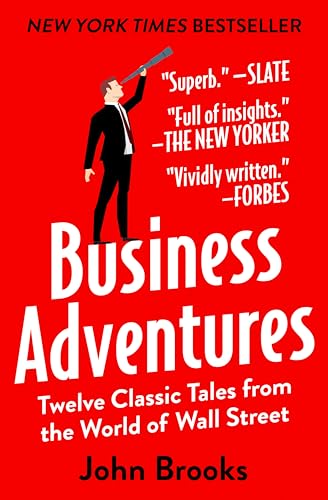
⚡️ What is Business Adventures About?
Have you ever wondered why some of the richest people on the planet obsess over a book written in 1969? It’s a valid question. When Warren Buffett lent his personal copy of this book to Bill Gates in 1991, he wasn’t handing over a dry manual on accounting. He was sharing a collection of character studies that prove one thing: business isn’t about numbers; it’s about people, their vanities, and their bizarre decisions under pressure. More summaries by John Brooks are available, but this is the undisputed heavyweight champion of his work.
The central thesis of Business Adventures is that while the tools of the trade evolve—from ticker tape to high-frequency trading—human fallibility remains constant. Brooks, a legendary New Yorker writer, doesn’t lecture. Instead, he tells twelve stories of corporate triumph and catastrophe that feel as fresh as today’s headlines. Whether it’s a market flash crash or a product launch gone wrong, the ghosts of the 1960s are still haunting our modern cubicles. If you’re looking for timeless business book summaries, you can’t start anywhere else.
🚀 The Book in 3 Sentences
- Business history is a cycle of human behavior where ego and groupthink consistently override logic and data.
- The most successful companies, like Xerox, often find their path through a mix of stubborn vision and sheer accidental timing.
- Market panics and corporate scandals aren’t glitches in the system; they are inevitable expressions of human psychology in a high-stakes environment.
🎨 Impressions
Honestly, I expected this to be a slog. Reading about the 1962 stock market or the intricacies of the British pound in the sixties sounded like a great way to cure insomnia. But I was wrong. Brooks writes with a dry, sharp wit that makes you feel like you’re sitting in a smoky lounge listening to the smartest guy in the room spill the tea on Wall Street’s biggest losers. It’s brilliant.
What hit me hardest was how little we’ve actually learned. You read the chapter on the Edsel and you think, “Wait, this is exactly how tech companies launch failed products today.” We still over-rely on flawed data and ignore the gut feelings of people on the ground. Brooks captures the drama of the boardroom better than any modern business journalist I’ve read lately. He focuses on the sweat on a CEO’s brow rather than just the balance sheet. It’s refreshing and, frankly, a bit terrifying.
📖 Who Should Read Business Adventures?
You should read this if you’re a leader who suspects your team is stuck in groupthink. It’s also for history buffs who want to see the DNA of modern Wall Street. If you’re looking for a “10-step guide to get rich,” you won’t find it here—skip this and go find a blog post. But if you want to understand the *why* behind corporate failure, this is your bible.
☘️ How This Book Changed My Thinking
Before reading this, I thought big corporations failed because they lacked data. Now, I realize they fail because they have too much data and not enough courage to ignore it when it feels wrong.
- I stopped looking at market crashes as “errors” and started seeing them as predictable psychological events.
- I became much more skeptical of “scientific” marketing after seeing how Ford used it to drive the Edsel into a ditch.
- I realized that great communication in a company isn’t about the tools you use, but the honesty you allow.
✍️ 3 Quotes That Stuck With Me
- “The stock market is a simplified, and therefore a distorted, version of the world.” — It’s a reminder that the ticker isn’t the truth; it’s just a mirror of our collective mood.
- “It is better to be roughly right than precisely wrong.” — This perfectly sums up why over-engineered business plans usually fail.
- “A man’s knowledge and his job are not separate.” — This highlights the messy, human overlap in trade secret law and corporate loyalty.
📒 Summary + Notes
The narrative arc of Business Adventures isn’t a straight line; it’s a series of deep dives into the soul of American commerce. Brooks wants you to see that the shiny veneer of corporate professionalism is often a mask for chaos. From the floor of the New York Stock Exchange to the inner sanctums of Ford and Xerox, the book builds a case that the “rational actor” theory is a myth. Every chapter serves as a witness to the fact that emotions drive the economy just as much as interest rates do.
By the time you finish, you’ll see the world of finance differently. It’s not a machine; it’s a theater. The actors change, the costumes get more expensive, but the play remains the same. Brooks doesn’t give you a checklist for success, but he gives you something better: a radar for detecting the kind of arrogance that precedes a fall. It’s a masterclass in watching the watchers.
01: The Fluctuation: The Little Crash in ’62
Why do markets suddenly decide to lose their minds? Brooks looks at the three-day market slide in May 1962, a panic that seemed to come from nowhere. There was no war, no sudden economic shift—just a collective shiver of fear that fed on itself. It reminds us that markets are essentially a giant, high-stakes game of “telephone” where the message gets scarier with every person it passes.
02: The Fate of the Edsel: A Cautionary Tale
Ford did everything the “right” way, and it still blew up in their faces. They spent millions on market research and let the data dictate the design of the Edsel. But they forgot that customers don’t always know what they want until they see it. The car was a punchline before it even hit the showroom floor. Is there a more perfect example of how over-thinking can kill a product? It’s a classic case of a company being too smart for its own good.
03: The Federal Income Tax: Its History and Peculiarities
Imagine a tax code so complex it starts to feel like a living, breathing monster. Brooks traces the history of the IRS and how a simple idea—taxing income—morphed into a labyrinth of loopholes and special interests. It’s less about finance and more about the strange ways we try to outsmart the government. Have we really progressed, or is the 1040 form just a more modern version of the same headache?
04: A Reasonable Amount of Time: Insiders at Texas Gulf Sulphur
When is a secret no longer a secret? This chapter covers the birth of modern insider trading laws. When Texas Gulf Sulphur found a massive deposit of minerals, the executives kept quiet while they scooped up stock. Brooks captures the ethical gray area where “doing your job” turns into “cheating the system.” It’s a fascinating look at how the law tries (and often fails) to keep pace with greed.
05: Xerox Xerox Xerox Xerox
Xerox was the original tech unicorn, but its path to glory was anything but smooth. They bet everything on a technology that everyone else thought was useless. This is the chapter Bill Gates loves because it shows how a company’s culture and its willingness to fail are what actually drive innovation. It’s a rare story of a gamble that actually paid off, changing the world of offices forever.
06: Making the Customers Whole: The Death of a President
What happens when a massive fraud is revealed at the exact moment a national tragedy strikes? The Salad Oil Scandal was a bizarre scheme involving fake tanks of oil that nearly toppled the market, all while the country was reeling from JFK’s assassination. Brooks shows how the financial community rallied to save itself from a total meltdown. It’s a gritty look at the “gentleman’s agreements” that once held Wall Street together.
07: The Impacted Philosophers: Non-communication at GE
Can a CEO really claim he didn’t know his subordinates were fixing prices? General Electric’s price-fixing scandal is a masterclass in what Brooks calls “non-communication.” It’s the art of speaking in code so that no one can be blamed when things go south. It raises a haunting question: is it possible for a corporation to be so large that the left hand genuinely doesn’t know what the right hand is doing? Honestly, it’s a terrifying look at corporate plausible deniability.
08: The Last Great Corner: A Company Called Piggly Wiggly
Clarence Saunders was a man who decided to fight Wall Street on its own turf. When bear raiders tried to tank his grocery store stock, he tried to “corner” the market by buying every single share available. It’s a wild, high-stakes story of a man who almost won it all but lost his shirt because he didn’t realize the house always wins. Saunders was the original rogue trader, and his story is a heart-pounding reminder of the dangers of pride.
09: A Second Sort of Life: David E. Lilienthal, Businessman
What does a public servant do when he moves into the private sector? Brooks follows Lilienthal, a man who ran the Tennessee Valley Authority and then tried to find meaning in the world of profit. It’s a thoughtful look at the tension between making money and serving the public good. It makes you wonder: can a person truly change their stripes, or is the pull of the boardroom too strong for even the most idealistic souls?
10: Stockholder Season: Annual Meetings and Corporate Power
…and then the corporate gadflies arrived. Brooks describes the chaotic annual meetings of the sixties where activist shareholders started making life miserable for CEOs. It’s the birth of modern shareholder activism. These meetings were part circus, part courtroom, and they proved that even the most powerful executives could be humbled by a single person with a microphone and a grudge.
11: One Free Bite: A Man, His Knowledge, and His Job
Does a company own the secrets inside your head? When a space-suit engineer left B.F. Goodrich for a competitor, he was sued to stop him from sharing what he knew. This chapter explores the very messy intersection of worker rights and corporate secrets. It’s a legal battle that feels incredibly relevant in an age where talent moves between tech giants every day. How do you protect a company without enslaving the employee?
12: In Defense of Sterling: The Bankers, the Pound, and the Dollar
The British Pound was on life support, and the world’s central bankers had to decide if they were going to pull the plug. Brooks makes international currency speculation sound like a thriller. It’s a story of midnight meetings and high-stakes gambling between nations. It shows that even the global economy rests on the fragile egos and shaky confidence of a few men in suits.
⚖️ A Critical Perspective
While the psychological lessons are timeless, the world Brooks describes is undeniably a “Mad Men” era relic. It’s heavily focused on male-dominated boardrooms and lacks any diversity of perspective. Some of the technical chapters, especially the one on the British pound, might feel a bit dense for anyone not familiar with the pre-1970s global gold standard. However, the biggest flaw might be that Brooks assumes the reader has a baseline level of financial literacy that modern readers might find challenging without a quick Google search.
🔄 How It Compares
If you liked Built to Last by Jim Collins, you might find Business Adventures both familiar and jarring. While Collins looks for patterns of success using modern data, Brooks looks for patterns of humanity through storytelling. The key difference is that Brooks doesn’t try to give you a formula; he wants you to develop an instinct for when things are about to go wrong.
🔑 Key Takeaways
These lessons are about the invisible forces that govern the corporate world.
- Ignore the “Safe” Path: Xerox succeeded because they ignored the skeptics and leaned into a niche no one else saw.
- Data Isn’t Destiny: The Edsel failure proves that even the best market research can’t save a product that lacks a soul.
- Communication is Culture: The GE scandal shows that when leaders stop being clear, corruption is inevitable.
- Markets are Human: Market crashes are rarely about math; they are about fear, and fear is infectious.
💬 Frequently Asked Questions
What is the main argument of Business Adventures?
The main argument is that human nature—including our pride, fear, and greed—is the primary driver of business outcomes. Brooks uses twelve historical case studies to show that despite technological advancements, corporate decision-making remains subject to the same psychological pitfalls and triumphs today as it did decades ago.
Why is Business Adventures Bill Gates’ favorite book?
Gates appreciates the book for its focus on the human element of business. He believes the lessons regarding personnel, communication, and the unpredictability of innovation are more relevant than technical business strategies. It taught him that successful companies are built on people, not just products or processes.
Is a book from 1969 still relevant in 2025?
Absolutely. While the specific financial instruments and regulations have changed, the patterns of groupthink, failed product launches, and market panics remain identical. The book serves as a timeless mirror for modern business leaders, showing that the core challenges of management haven’t actually changed in half a century.
What does the Edsel chapter teach us about modern marketing?
It teaches us that “scientific” marketing and heavy data collection can lead to disaster if they ignore consumer intuition. Ford’s reliance on flawed data created a product that satisfied researchers but alienated actual buyers, highlighting that numbers can never fully replace a deep, intuitive understanding of the market.
Who is the author John Brooks?
John Brooks was a long-time contributor to The New Yorker who specialized in financial and corporate narratives. He was known for his ability to turn complex economic topics into engaging, character-driven stories. His sharp observations on Wall Street’s inner workings made him one of the era’s most respected business journalists.
Conclusion
At the end of the day, Business Adventures is a reminder that we are all just monkeys in suits trying to predict the future. Brooks doesn’t look down on the failures he describes; he treats them with a kind of fascinated empathy. He understands that the line between a visionary like the founders of Xerox and a goat like the creators of the Edsel is razor-thin and often comes down to luck and timing. This book isn’t just about finance; it’s about the absurdity of the human condition played out on a global stage.
The one thing you should take away from this is a healthy dose of humility. If the smartest men in the world could drive a trillion-dollar economy into a ditch in 1962, we can certainly do it today. Carry that skepticism with you into your next meeting. It might just save you from your own “Edsel” moment. If you enjoyed this journey into corporate history, check out our other business book summaries for more timeless wisdom.
More From John Brooks →
Discover more from AI Book Summary
Subscribe to get the latest posts sent to your email.