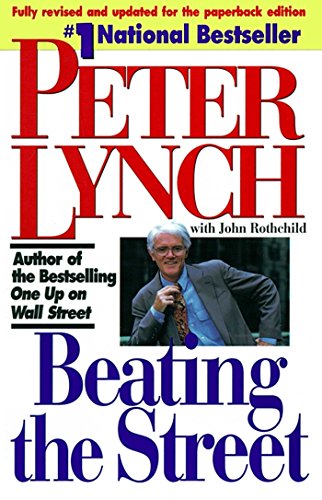
⚡️ What is Beating the Street About?
Have you ever stood in a crowded food court and wondered why everyone is suddenly eating at the same taco stand? Most people just see a lunch queue, but Peter Lynch sees a 20-bagger stock. In Beating the Street, the legendary former manager of the Fidelity Magellan Fund argues that your eyes and ears are better research tools than any Bloomberg terminal. It’s a follow-up to his classic Investing book summaries favorite, One Up On Wall Street, but this time he shows his actual homework.
Lynch managed Magellan from 1977 to 1990, racking up an insane 29.2% average annual return. How? By being a “stomach” investor. He didn’t just look at spreadsheets; he visited thousands of companies, talked to store managers, and listened to his wife and kids. More summaries by Peter Lynch reveal his core belief: if you can’t explain why you own a stock to a fifth-grader in under two minutes, you shouldn’t own it. The book is essentially a diary of his decision-making process, proving that a disciplined amateur can beat the pants off the suits.
🚀 The Book in 3 Sentences
- The individual investor’s greatest advantage isn’t insider info, but the ability to spot business trends at the mall, grocery store, or workplace months before Wall Street analysts notice them.
- Investment success is determined by the “stomach,” specifically the ability to ignore terrifying headlines and market downturns while keeping your money in great companies.
- A portfolio should be treated like a garden; you must pull the weeds (selling losers with broken stories) and water the flowers (buying more of your winners).
🎨 Impressions
Reading this felt like sitting in a dive bar with a billionaire who’s telling you that you’re actually smarter than his colleagues. Lynch’s writing is surprisingly funny and self-deprecating. He doesn’t pretend he was some oracle; he admits to selling winners too early and buying absolute duds. What struck me most was his obsession with “legwork.” He wasn’t just a lucky guesser—he was a guy who turned over more rocks than anyone else in the industry.
Honestly, some of the specific stock examples from the early ’90s feel a bit dated now, but the underlying logic is timeless. I found myself dog-earing the sections on S&Ls and cyclical stocks because they forced me to think about the unsexy parts of the economy I usually ignore. It’s a refreshing antidote to the complex “quant” models that dominate the conversation today. Lynch makes you feel like you can actually do this, provided you’re willing to do the sweat equity.
📖 Who Should Read Beating the Street?
If you’re a retail investor who feels intimidated by Wall Street jargon, this is your bible. It’s also perfect for people who want to understand the philosophy of value and growth investing without getting bogged down in high-level calculus. However, if you’re looking for a book on day trading or technical analysis, don’t bother. Lynch hates market timing and thinks charts are mostly a waste of time. This is for the long-term builder, not the weekend gambler.
☘️ How This Book Changed My Thinking
Before reading this, I thought “research” meant reading analyst reports on Yahoo Finance. Now I realize I was just consuming recycled opinions.
- I stopped looking for “the next big thing” in tech and started looking for great businesses in boring industries with high barriers to entry.
- I realized that a market crash is just a “January blizzard”—it’s annoying, but it’s a great time to buy the gear everyone else is throwing away in a panic.
- I’ve become much more patient with my “winners,” resisting the urge to take profits just because the price went up 20%.
✍️ 3 Quotes That Stuck With Me
- “Never invest in any idea you can’t illustrate with a crayon.” — This is the ultimate test for whether you actually understand what you’re buying.
- “The best stock may be the one you already own.” — A reminder that we often go chasing new shiny objects while ignoring the winners already in our portfolio.
- “It isn’t the head but the stomach that determines the fate of the stockpicker.” — Because even a genius will lose money if they sell at the bottom of a panic.
📒 Summary + Notes
The central thesis of Beating the Street is that the stock market is not a lottery; it is a collection of businesses. Lynch wants you to stop treating tickers like gambling chips and start treating them like fractional ownership in companies that sell actual products to actual people. He builds his case by showing how he grew Magellan by looking for “ten-baggers” (stocks that go up 10x) in places as mundane as donut shops and funeral homes.
He systematically demystifies the professional money manager’s advantage, arguing that their “herd mentality” and rigid rules actually make them less flexible than you. By the end of the book, Lynch wants you to believe that your personal experience as a consumer is your most valuable asset. If you can identify a superior product before it becomes a household name, you have all the data you need to start your research.
01: The Miracle of St. Agnes
How could a group of seventh-graders from St. Agnes School outperform the professional fund managers on Wall Street? In a simulated stock-picking contest, these kids chose companies they understood—Disney, Nike, Gap—and crushed the S&P 500. Lynch uses this to drive home his “Crayon Rule.” If you can’t explain the business to a child, you’re just gambling. He notes that we often ignore the “understandable profitable enterprise” in favor of the “inexplicable venture that loses money.”
02: The Weekend Worrier
Why do we let the Sunday newspaper scare us out of our life savings? Lynch identifies the “Weekend Worrier” as the investor who reads a few dire predictions about interest rates or the deficit and decides to sell everything on Monday morning. He argues that you can’t see the future through a rearview mirror. Success in stocks depends on your ability to “ignore the worries of the world” and stick to your plan. A market decline is as routine as a Minnesota winter; you don’t sell your house just because it’s snowing, do you?
03: A Tour of the Fund House
Is picking a mutual fund actually easier than picking a stock? Maybe not, given there are now more funds than individual stocks. Lynch walks through the different types—growth, value, emerging markets—and advises that you might as well pick a good one if you’re going to pay the fees. His big tip here: stay consistent. Switching funds constantly is an expensive habit that usually results in buying high and selling low.
04: Managing Magellan / The Early Years
Imagine being responsible for millions of dollars while the world thinks the economy is ending. Lynch recalls his early days at Magellan when he was attracted to fast-food restaurants like Taco Bell. They were easy to understand: if a restaurant works in one town, it can work in a thousand. He admits his biggest mistake was “pulling out the flowers and watering the weeds”—selling his great performers to buy more of the stocks that were already failing.
05: Magellan / The Middle Years
What does it take to sustain a 20% growth rate for a decade? Lynch dives into the math of the “Rule of 72” and emphasizes that earnings drive stock prices in the long run. He discusses his investigative reporting style—talking to competitors to find out who they respect most. This is often where the best leads come from. He also warns that when bond yields are much higher than stock dividends, it’s a sign to be cautious with your equity exposure.
06: Magellan / The Later Years
Does a fund becoming “too big” mean it can’t win anymore? As Magellan grew into a multi-billion-dollar behemoth, Lynch had to shift his tactics, but his core philosophy remained. He stresses that “not all common stocks are equally common” and that ease of divorce (selling) isn’t a good reason to buy. He also introduces a grim rule: never bet on a comeback while they’re playing “Taps.” If a company’s bonds are selling for pennies, the stock is likely worthless.
07: Art, Science, and Legwork
Is investing a calculation or an intuition? Lynch argues it’s both, but mostly it’s perspiration. He famously says that if you turn over 10 rocks, you’ll find one grub; if you turn over 20, you’ll find two. The person who researches the most companies usually wins. He details his grueling schedule of visiting hundreds of corporate headquarters every year, proving that “insight” is usually just the result of better data collection.
08: Shopping For Stocks / The Retail Sector
Can your local mall really be a laboratory for million-dollar ideas? Lynch loves retailers because their growth is visible and repeatable. He tracks “same-store sales” as the holy grail metric. If you love a store but the stock is too expensive, he suggests making a small commitment and waiting for a market sell-off to buy more. He points to Walmart as the ultimate example: even after it went up 50-fold, it was still a great buy because it hadn’t finished saturating the market.
09: Prospecting in Bad News
When everyone else is running away from a sector, should you be running in? Lynch explains how he found bargains in real estate and nursery stocks (like Sunbelt Nursery) when the prevailing opinion was that those industries were dead. He uses the “home buyer’s technique”—comparing a company to similar ones that recently sold—to find true value. The key is to buy the strongest company in a hated group.
10: My Restaurant Diary
Why are humans so predictable when they’re hungry? Lynch reviews his history with restaurant stocks, noting that as long as Americans eat half their meals outside the home, there will be new “20-baggers” in the food courts. He looks for expansion potential and low debt. It’s a simple model: find a concept that works, make sure management isn’t crazy, and ride the expansion wave for a decade.
11: Blossoms in the Desert
Would you rather own the best tech company in Silicon Valley or the best rock-crushing company in a slow-growth town? Lynch chooses the rock crusher every time. In a “lousy” industry, the weak players die off, leaving the survivors with total domination. He looks for low-cost operators who avoid debt and don’t have fancy corporate offices. If an annual report is filled with more color photos than financial data, he’s usually out.
12: It’s A Wonderful Buy
Is there any stock more boring than a Savings & Loan? Lynch loves them precisely because they are boring and overlooked. When even the analysts are bored, it’s time to start buying. He looks for a high equity-to-assets ratio (at least 7.5) and management that isn’t doing anything reckless with the depositors’ money.
13: A Closer Look at the S&Ls
How do you spot a banking disaster before it happens? Lynch gets into the weeds of S&L balance sheets, warning against companies that constantly issue new shares. Dilution is the enemy of the shareholder. He emphasizes that you don’t need a high-tech crystal ball to see if a bank is healthy; you just need to check if they’re lending to solid people and keeping their overhead low.
14: Master Limited Partnerships
What happens when a company decides to stop being a corporation? Lynch explores MLPs as a way to get direct distributions of cash flow. While a bit technical, the lesson is that tax structure matters. Investors who ignore how a business is legally organized often leave a lot of money on the table.
15: The Cyclicals
Can you predict when people will start buying cars again? Cyclical stocks (like GM) require different timing than growth stocks. Lynch watches “used-car prices” as a leading indicator—when they go up, new car sales usually follow. The most important question for a cyclical is whether the balance sheet is strong enough to survive the next inevitable downturn.
16: Nukes in Distress / CMS Energy
What do you do when a utility company is involved in a nuclear fiasco? Lynch looks for “fiasco plays.” Often, the public panic over a specific event (like a nuclear plant delay) drives the stock price way below the actual value of the company’s other assets. He notes that corporations often change their names after a fiasco to make people forget—which is a great time to start looking at them.
17: Uncle Sam’s Garage Sale
Why is the government usually a terrible businessman but a great seller? Lynch discusses privatizations—when the government sells off state-owned assets. He famously quips, “Whatever the Queen is selling, buy it.” These companies often have massive assets and are forced to become efficient once they hit the private market.
18: My Fannie Mae Diary
Could one stock define an entire career? Lynch walks through his multi-year journey with Fannie Mae. Despite constant worries from the “experts” and price fluctuations, he held on because he knew the story better than they did. It was a masterclass in patience; several years of boredom were rewarded with a massive gain in a single year.
19: Treasure in the Backyard
Why do we look for stocks in distant lands when the best ones are in our own neighborhood? Lynch encourages people to look at local companies they can actually visit and whose products they use. He argues that being a “local expert” gives you an edge over a Wall Street analyst who only sees the company through a computer screen.
20: Putting Your Money Where Your Mouth Is
Is your portfolio actually reflecting your convictions? Lynch summarizes his restaurant and retail strategies one last time. He reminds us that observing your own spending habits is the best market research you can do. If you find yourself going back to the same store every week, it’s time to check the balance sheet.
21: The Six-Month Checkup
How often should you poke your investments? Lynch suggests a checkup every six months. You aren’t checking the price; you’re checking the story. Has the company taken on too much debt? Are same-store sales slowing down? If the story has changed for the worse, sell. If the story is the same but the price is lower, buy more.
⚖️ A Critical Perspective
While Lynch’s “buy what you know” mantra is empowering, it’s also dangerous for the undisciplined. Knowing that a Starbucks latte tastes good isn’t the same as understanding Starbucks’ debt-to-equity ratio or its international expansion risks. Lynch glosses over the fact that he had a massive team at Fidelity to verify the numbers after he got a hunch at the mall. Furthermore, in the modern era of high-frequency trading and instant information, the “amateur edge” of spotting a trend is much narrower than it was in 1993. If you just buy what you like without looking at the P/E ratio, you’re likely to overpay for “hot” brands that have already peaked.
🔄 How It Compares
Compared to The Intelligent Investor by Benjamin Graham, Beating the Street is far more accessible and optimistic. While Graham focuses on avoiding loss through strict mathematical safety margins, Lynch focuses on finding the “ten-bagger” through qualitative observation and business growth. It’s the difference between a protective shield and an offensive weapon.
🔑 Key Takeaways
Here are the practical rules for navigating the market without losing your mind.
- Ignore the Macro: Stop trying to predict interest rates or the economy. No one can do it, and it distracts you from analyzing the actual companies.
- Look for the Boring: The best companies often have dull names, do unsexy things, and are ignored by the big institutional “herd.”
- The Dividend Signal: In a mature company, a rising dividend is often a better indicator of health than any press release.
- Hold for the Long Haul: Time is your greatest ally when you own superior companies, but it’s your enemy if you’re playing with options or short-term trades.
💬 Frequently Asked Questions
What is the main difference between One Up on Wall Street and Beating the Street?
One Up on Wall Street establishes the theory of the “amateur edge” and how to categorize stocks. Beating the Street is the practical application, providing a step-by-step look at Lynch’s actual picks for the Magellan Fund and his 1992 Barron’s selections to show how the theory works in practice.
What is Peter Lynch’s “Golden Rule” for individual investors?
The golden rule is “Know what you own and why you own it.” Lynch argues that if you can’t explain your investment thesis to a child in simple terms, you are merely speculating rather than investing, and you are likely to panic when the stock price fluctuates.
Is Peter Lynch’s “buy what you know” strategy still effective in 2025?
Yes, but with a caveat. While identifying a great product early still works, modern markets are faster. You must combine “what you know” with a rigorous look at financial fundamentals, particularly debt and valuation, because brand popularity alone doesn’t guarantee a profitable stock in a crowded market.
How many stocks does Peter Lynch recommend holding?
Lynch suggests that the part-time investor should follow 8-12 companies but only own as many as they can stay truly informed about. For most, this means a portfolio of 3 to 10 companies. He warns against “diworsification”—owning too many stocks just for the sake of variety.
What does Beating the Street say about bonds vs. stocks?
Lynch is staunchly pro-stock. He points out that over long periods, stocks outperform bonds by a massive margin (six to one). He famously notes that “gentlemen who prefer bonds don’t know what they’re missing,” and only recommends bonds when their yields significantly exceed stock dividends.
Conclusion
Beating the Street is more than just a book about finance; it’s a call to self-reliance. Lynch’s genuine enthusiasm for the “little guy” shines through on every page. He doesn’t want you to be a passive observer of your wealth; he wants you to be an active, curious detective of the economy around you. The stocks aren’t just numbers on a screen; they are the grocery stores where you buy your milk and the companies that build your car.
If you take only one thing from Beating the Street, let it be this: you have the brainpower to succeed in the market, but only if you have the stomach to stay the course. Stop listening to the “experts” on TV who change their minds every five minutes. Pick good businesses, watch them like a hawk, and let time do the heavy lifting. Now, go take a walk through your local mall—your next ten-bagger might be staring you right in the face.
More From Peter Lynch →
Discover more from AI Book Summary
Subscribe to get the latest posts sent to your email.